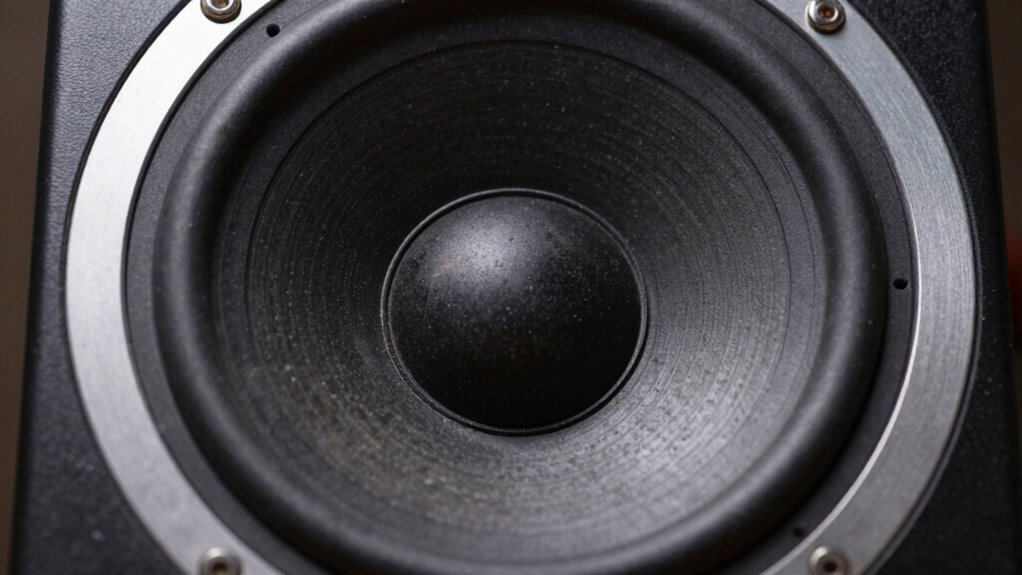

Speaker break-in is a real process that can subtly improve sound quality. As you play music over time, the cone diaphragms and surrounds become more flexible, allowing for more natural movement. This reduces stiffness and resonance, leading to clearer, more detailed audio. While some see it as mostly psychological, many high-end manufacturers suggest it helps speakers reach their full potential. Keep exploring to discover exactly what changes might be happening under the surface.
Key Takeaways
- Break-in increases speaker cone flexibility, leading to more natural movement and improved sound clarity.
- Components like surrounds and voice coils settle over time, reducing resonances and enhancing fidelity.
- Listeners may notice subtle improvements such as less harshness and more detailed, balanced sound.
- Manufacturers often recommend a break-in period, especially for high-end models, to achieve optimal performance.
- Scientific opinions vary; some experts see minimal technical change, while others believe break-in enhances overall listening experience.
Many audio enthusiasts believe that breaking in new speakers leads to better sound quality, but whether this process is a genuine necessity or just a myth remains debated. When it comes to speaker break-in, one of the key factors often discussed is material flexibility. New speakers, especially those with paper or poly cone diaphragms, tend to be stiff initially. As you play music over time, the material gradually becomes more pliable, allowing the cone to move more freely. This increased flexibility can help produce a more accurate and natural sound, enhancing overall sound clarity. The idea is that, before break-in, the speaker’s components might not be operating at their ideal capacity, potentially causing sound distortions or muddiness. Over time, as the material loosens up, you might notice a smoother, more refined audio output.
The process of break-in is believed to allow the driver’s suspension and surround materials to settle into their proper positions. This settling can reduce unwanted resonances and improve the speaker’s ability to reproduce sound with greater fidelity. You might not see immediate changes, but after several hours or days of playing music, you could notice subtle improvements in sound clarity—less harshness, more detail, and better tonal balance. Many manufacturers suggest that this period helps the speaker reach its full potential, especially for high-end models designed with more precise materials.
Breaking in speakers helps their components settle for clearer, more balanced sound over time.
However, some skeptics argue that the perceived improvements are more psychological than technical. They claim that the changes in sound are minimal or nonexistent and that your ears simply become accustomed to the speaker’s initial sound. Despite this, if you’re investing in quality speakers, giving them some time to break in might still be worthwhile. It’s not just about material flexibility; it’s about allowing all the components—voice coils, surrounds, and cones—to settle into their best operating states. This can translate into cleaner, more detailed sound, which is often the goal for audiophiles seeking pristine audio reproduction.
In the end, whether you believe in the break-in myth or not, it’s a process that doesn’t harm your speakers and might provide some benefits. If you’re serious about achieving the best sound clarity from your setup, playing your speakers regularly for a few dozen hours can’t hurt. It’s a simple, low-effort step that could lead to noticeable improvements in sound quality, especially in the clarity and naturalness of your music. So, while the scientific consensus might be divided, many find that a little patience during the break-in period pays off with a richer, more refined listening experience. Additionally, understanding the material properties involved can help you better appreciate why this process might be beneficial.
Top picks for "speaker break real"
Open Amazon search results for this keyword.
As an affiliate, we earn on qualifying purchases.
Frequently Asked Questions
How Long Does the Break-In Process Typically Take?
The break-in process typically takes around 20 to 50 hours, depending on the speaker material and construction. During this time, the material flexibility improves, allowing the speaker components to move more freely, which can subtly enhance sound calibration. As you play your speakers consistently, you might notice a smoother, more balanced sound, but patience is key, as the most noticeable changes occur gradually over this period.
Does Break-In Affect All Types of Speakers Equally?
Break-in affects different speaker types variably, depending on speaker material and cabinet resonance. For example, paper cone speakers might show more noticeable changes, while metal or synthetic materials may be less affected. Similarly, cabinet resonance impacts sound quality during break-in, with some designs requiring longer periods. You’ll notice that the specific materials and construction influence how much and how quickly your speakers improve after initial use.
Can Improper Break-In Damage My Speakers?
Improper break-in won’t typically damage your speakers if you follow the manufacturer’s guidelines, but it can affect their durability and warranty coverage. Pushing your speakers too hard or exposing them to extreme conditions during break-in might strain components, risking long-term damage. To protect your investment, guarantee you adhere to recommended break-in procedures, preserve speaker durability, and avoid voiding warranty implications by skipping proper guidelines.
Are There Specific Sounds or Music to Use During Break-In?
You can use any sound frequency or music genre during break-in, but it’s best to choose something with moderate volume and varied frequencies. Play different music genres like classical, jazz, or ambient to help the speaker cones loosen up evenly. Avoid loud, bass-heavy tracks, as excessive bass can strain the components. Stick to steady, gentle sounds for a smoother break-in process that benefits your speakers’ performance.
Is Professional Assistance Recommended for Speaker Break-In?
Think of your speakers as a delicate garden needing careful tending. While some might suggest DIY break-in, following manufacturer recommendations often offers the safest path. Professional assistance can be beneficial if you’re uncertain or dealing with high-end gear, ensuring proper care and avoiding damage. Ultimately, whether you choose DIY or professional help, understanding your speakers’ needs helps them flourish, like a well-nurtured bloom reaching its full potential.
Conclusion
So, whether you believe in the speaker break-in myth or not, remember that patience often pays off. Just like waiting for the perfect brew to steep, giving your speakers time can subtly improve sound quality—no magic wand needed. Don’t forget, even the greatest minds of the Enlightenment knew that sometimes, progress requires a bit of time and trust. In the end, what truly counts is your experience, not just the myth or the science behind it.