Many people mistakenly believe that placing surround speakers higher, like near the ceiling, improves sound. However, the key is to position them at ear level when you’re seated, ensuring clear, natural audio. Proper height helps you experience the intended sound effects and creates better immersion. Ignoring this rule can cause muffled or diffused sound. To get the best results, focus on aligning speakers at ear level; there’s more to discover about ideal setup techniques ahead.

Get audio and creator gear delivered free — and shop member deals
- Fast, free delivery on millions of items
- Access to Prime Big Deal Days deals on October 6–7
- Prime Video, Amazon Music and more included
Key Takeaways
- Surround speakers should be placed at ear level when seated for optimal sound clarity.
- Placing speakers above or below ear level can cause sound diffusion and reduce immersion.
- Room acoustics and sound propagation influence the ideal height, not just traditional “above eye level” rules.
- Calibration tools can help compensate for less-than-ideal speaker heights, but proper placement is still crucial.
- The common mistake is placing surround speakers too high; they should be aligned horizontally with the listening position.
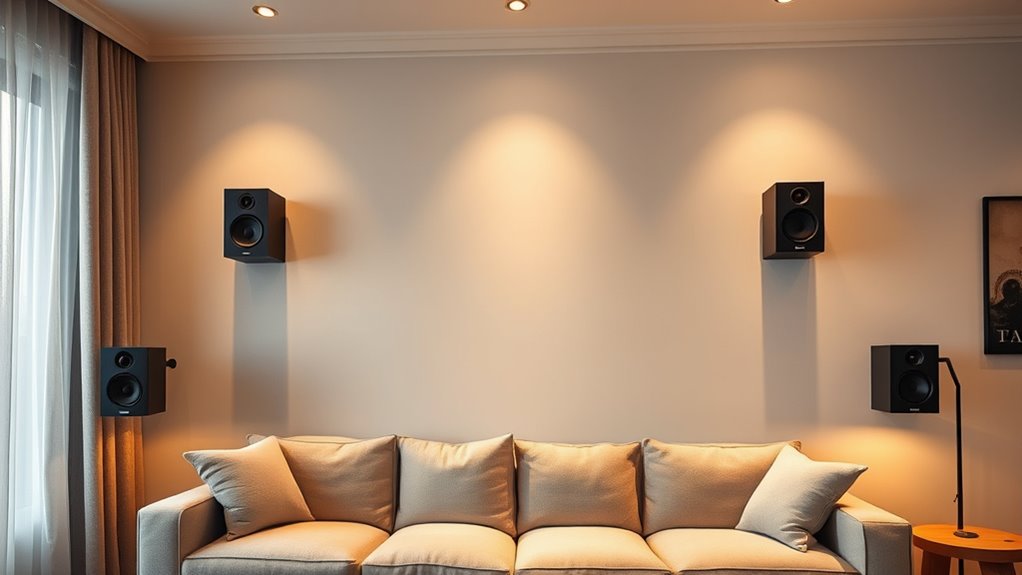
Have you ever wondered how the height of your surround speakers can impact your home theater experience? It’s a common question among enthusiasts, and the answer lies in understanding how room acoustics and speaker calibration work together. The placement of your surround speakers isn’t just about aesthetics or convenience; it’s about creating an immersive sound environment that matches how we naturally perceive audio around us.
When you set up your surround speakers, you might instinctively think they should be placed high up on the wall, near the ceiling, or even above ear level. However, this approach often overlooks the importance of room acoustics and the way sound travels and interacts within your space. Proper speaker height enhances sound clarity and directionality, helping you experience audio as the creators intended. If your speakers are too high or too low, sound may become diffused or echoey, diminishing the overall effect.
Proper speaker height enhances clarity and directionality for an immersive home theater experience.
Speaker calibration becomes a critical step in this process. Calibration involves adjusting your system’s settings to compensate for room acoustics and speaker placement. Many modern home theater receivers offer calibration tools that use microphones to analyze sound output and automatically fine-tune levels, delay, and equalization. This process ensures that, regardless of exact placement, your speakers deliver balanced sound to your listening position. If your speakers are placed higher or lower than recommended, calibration can help mitigate some issues, but it’s no substitute for thoughtful placement.
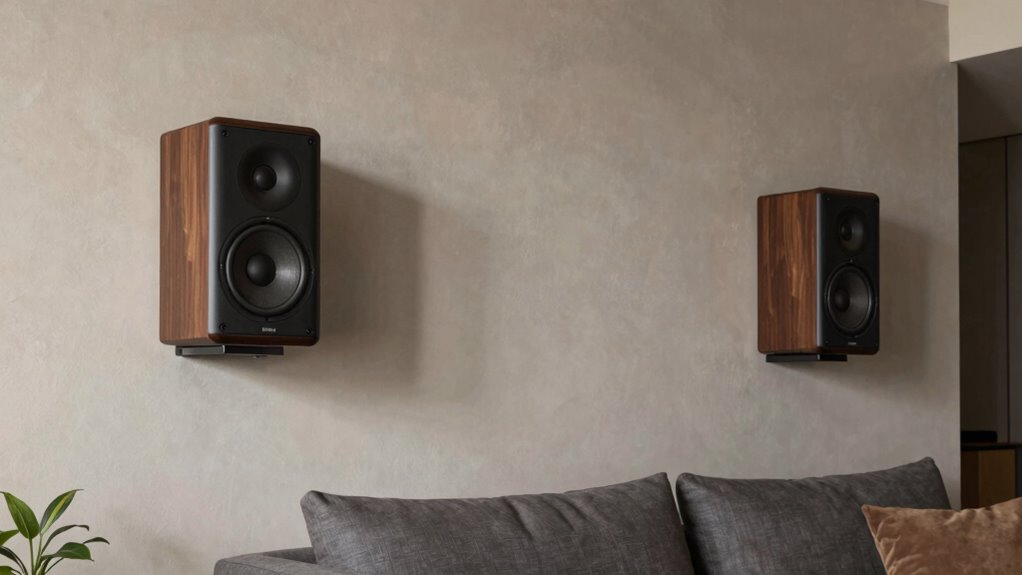
The key is to position your surround speakers at ear level when seated, ideally to the sides or slightly behind your listening position. This height allows sound to reach you naturally, mimicking how we perceive sounds in real life. When combined with proper calibration, this placement maximizes room acoustics, reducing echo and muddiness while clarifying dialogue and effects. Remember, the goal is to create a seamless soundscape, and that begins with understanding how speaker height influences sound propagation.
Ultimately, the rule people often get backwards is thinking that higher is always better. Instead, focus on aligning your surround speakers with your ear level, adjusting for room acoustics, and calibrating your system. This trifecta ensures your home theater delivers crisp, immersive sound that pulls you into the action, rather than distracting from it. By paying attention to these details, you’ll get a far more satisfying experience than simply placing speakers high up on the wall without consideration. Proper speaker height, combined with good calibration, transforms your setup from decent to exceptional. Recognizing the importance of room acoustics can significantly improve your listening environment.
As an affiliate, we earn on qualifying purchases.
Frequently Asked Questions
How Do Room Acoustics Affect Surround Speaker Height?
Room acoustics considerably impact surround speaker height by affecting room reflection and sound clarity. When you position speakers, consider how reflections from walls and ceilings can distort sound, making calibration necessary. Proper speaker calibration adjusts for these reflections, ensuring accurate sound positioning. By carefully selecting the height, you optimize the audio experience, reducing echo and improving the overall surround sound effect, making your setup more immersive and balanced.
What’s the Ideal Height for Different Room Sizes?
You’ll want your surround speakers ideally at ear level when seated, which is about 3 to 4 feet high for most rooms. In larger spaces, raise them slightly, but avoid overly high placement that distorts sound. Proper speaker calibration and soundproofing techniques help optimize sound quality. For smaller rooms, keep them closer to ear level; for bigger rooms, adjust height accordingly to ensure immersive audio without overwhelming your space.
Do Ceiling Angles Impact Surround Sound Effectiveness?
Ceiling angles definitely impact surround sound effectiveness, as they influence how sound reaches your ears and creates immersion. To optimize this, consider proper subwoofer positioning and wall mounting guidelines to direct sound precisely. Angled ceilings can enhance or hinder audio clarity, so experiment with speaker placement and adjust angles accordingly. This ensures a balanced, immersive experience by maximizing sound dispersion and clarity within your room.
How Does Furniture Placement Influence Speaker Height Choices?
You might think furniture placement doesn’t matter for speaker height, but ironically, it often causes the biggest myths—like needing ceiling-mounted speakers. In reality, furniture interference can block sound waves, making you choose speaker heights that seem logical but don’t deliver ideal surround sound. To avoid these speaker height myths, position your speakers so furniture doesn’t block them, ensuring clear, immersive audio and avoiding the trap of common misconceptions.
Are There Differences in Setup for Headphones Versus Speakers?
You set up headphones differently from speakers because headphone comfort is essential, and they don’t require calibration like speakers do. With headphones, focus on finding a comfortable fit and positioning them correctly on your ears. For speakers, proper calibration and placement—such as height and angle—are vital for maximum sound. While headphones offer direct audio, speakers need precise setup to guarantee the best surround sound experience.
As an affiliate, we earn on qualifying purchases.
Conclusion
Remember, getting your surround speakers at the right height is like tuning a musical instrument—you might think you’re doing it right, but the true harmony comes from the subtle adjustments. I once set mine too high, and it felt like I was listening from a balcony, missing the intimacy of the sound. When I lowered them, everything clicked. Small changes make a big difference—trust the rule, and your home theater will truly resonate with perfect balance.
home theater speaker calibration tools
As an affiliate, we earn on qualifying purchases.
As an affiliate, we earn on qualifying purchases.
best speaker stands for surround sound
As an affiliate, we earn on qualifying purchases.
As an affiliate, we earn on qualifying purchases.
Fall Picks
fall essentials
As an affiliate, we earn on qualifying purchases.