
Your channel layout choice directly impacts how sound fills your room, affecting clarity, immersion, and balance. Proper speaker placement, such as positioning speakers at ear level and angling them toward your listening spot, reduces reflections and dead zones. Room size, shape, and furnishings also play a role in shaping your soundscape. Making thoughtful decisions about your setup can transform your audio experience. Keep exploring to discover how to optimize your space for the best sound quality.
Key Takeaways
- Proper speaker positioning directs sound waves naturally, creating an immersive and balanced listening environment.
- Symmetrical placement and accurate measurements prevent sound disjointedness and enhance clarity.
- Elevating speakers to ear level and angling them toward the listening area improves sound quality.
- Managing room reflections with acoustic treatments reduces echoes and muddiness.
- Room size, shape, and furnishings influence how sound travels and reflects, shaping the overall audio experience.
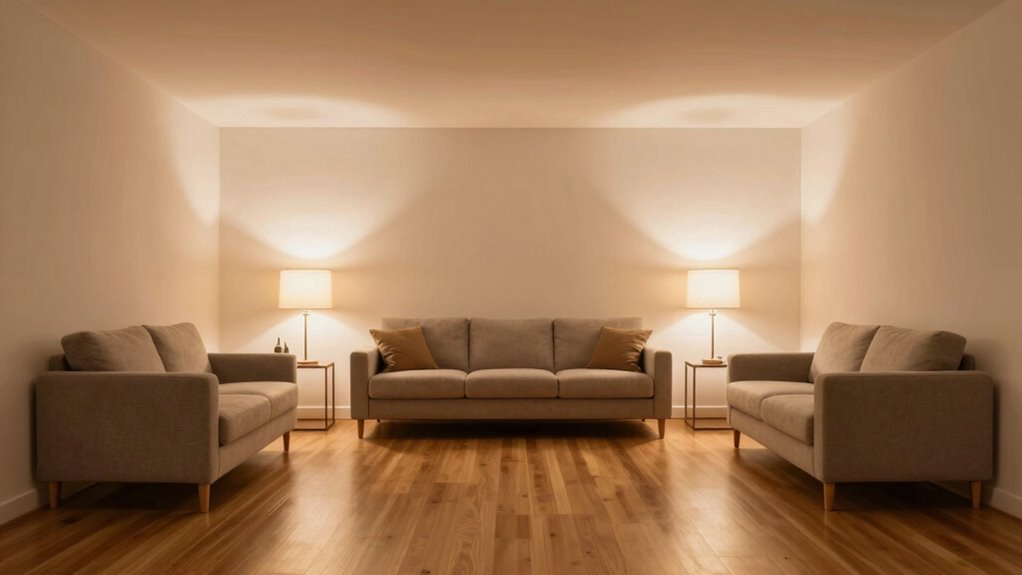
Have you ever wondered how the arrangement of your audio channels can impact the listening experience? It’s more than just choosing between stereo or surround sound; it’s about how you position your speakers and organize your channels to optimize audio clarity. The way you set up your channels shapes the entire room’s soundscape, influencing how immersive, balanced, and detailed your audio feels. When you focus on speaker placement, you’re essentially directing the sound waves to reach your ears in the most natural and precise way, reducing muddiness and enhancing clarity. Proper placement ensures that each speaker contributes to a cohesive sound field, making dialogue clear, music vibrant, and effects precise.
Proper speaker placement enhances clarity, balance, and immersion for a more natural and precise listening experience.
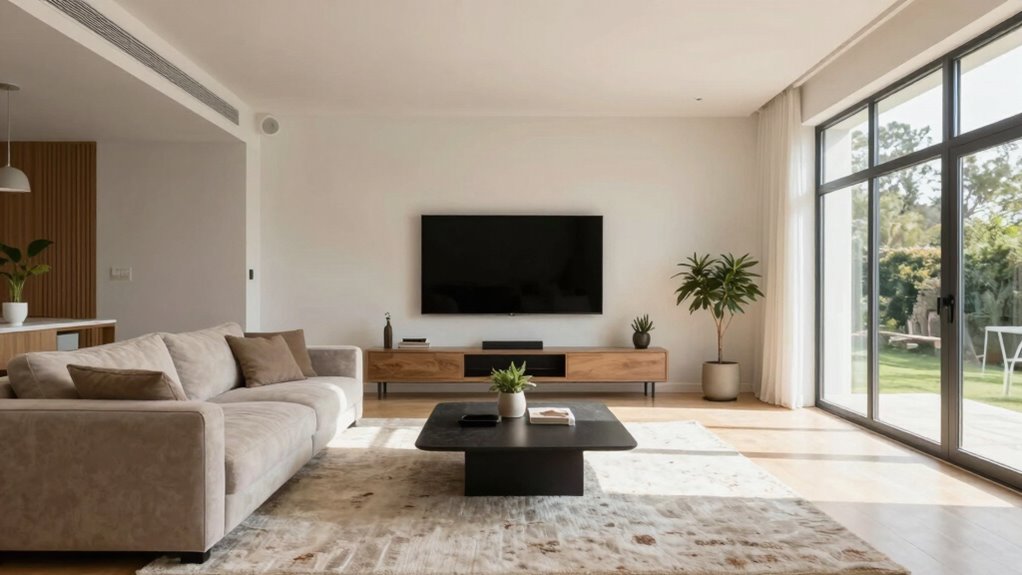
The key to a great channel layout starts with understanding your space. Consider the room size, shape, and furniture, as these factors influence how sound travels and reflects. You want your speakers positioned to minimize reflections and dead spots that can cause audio to sound muffled or uneven. For optimal results, measuring distances carefully and aiming for symmetrical placement is crucial. Use stands or mounts to elevate speakers to ear level, and ensure they’re angled toward your listening position. This setup helps your brain process sound more naturally, creating a more precise and immersive experience. Additionally, understanding room acoustics and the impact of room geometry can further enhance your listening experience by reducing unwanted reflections and echoes. Being aware of sound reflection principles allows you to better tailor your setup to your environment. Paying attention to sound absorption techniques, such as adding soft furnishings or acoustic panels, can also significantly improve sound quality. An informed approach to sound management can make all the difference in achieving optimal audio clarity.
Speaker placement is vital for maintaining audio clarity. If speakers are too close to walls or corners, bass can boom, and sound can become boomy or distorted. Conversely, placing them too far apart can cause sound to become disjointed, losing that seamless sense of space. To get it right, measure distances carefully and aim for symmetrical placement. Use stands or mounts to elevate speakers to ear level, and ensure they’re angled toward your listening position. This setup helps your brain process sound more naturally, creating a more precise and immersive experience. Moreover, considering room acoustics and how sound waves interact with your space can help you avoid common pitfalls like echoes or dead zones, ensuring a more balanced sound.

PERLESMITH Universal Speaker Stands for Surround Sound -Height Adjustable Extend 33.3”to 45.1”, Floor Speaker Stand for Satellite & Studio & Bookshelf Speakers up to 11LBS,1 Pair Black, PSSS2
- Wide Compatibility: Fits most small bookshelf and satellite speakers
- Adjustable Height: Range from 33.3" to 45" for optimal sound
- Easy Height Adjustment: Twist-lock design for tool-free setup
As an affiliate, we earn on qualifying purchases.
As an affiliate, we earn on qualifying purchases.
Frequently Asked Questions
How Does Channel Layout Affect Room Acoustics?
Channel layout directly impacts your room’s acoustics by influencing how sound surrounds you. Proper speaker positioning guarantees an immersive experience, allowing surround sound to fill the space evenly. When you arrange speakers thoughtfully, you reduce echoes and dead spots, creating a balanced audio environment. A well-planned channel layout enhances clarity, making dialogue sharper and music richer, so every sound reaches you clearly, no matter where you’re sitting.
Can I Change My Channel Layout After Installation?
Yes, you can change your channel layout after installation, but it might require some effort. You’ll need to reposition speakers, which could involve adjusting decorative accents and considering your color schemes to maintain aesthetic harmony. Keep in mind, changing the layout can affect acoustics and visual balance, so plan carefully. It’s worth consulting a professional to optimize both sound quality and room design when making these adjustments.
What Are the Cost Differences Between Layouts?
Think of your room as a canvas—your layout choice is the brushstroke. Cost comparison varies widely, with open layouts generally costing more due to additional materials and labor, while simpler, linear designs tend to be budget-friendly. Budget considerations should guide your decision, balancing aesthetic appeal with affordability. Remember, investing in a well-thought-out layout pays off in both style and functionality, making your space uniquely yours.
Which Layout Is Best for Small Rooms?
For small rooms, a linear or single-wall layout works best. It maximizes space and keeps decor placement simple, avoiding clutter. Stick to light color schemes to make the room feel larger and more open. Use strategic decor placement to create the illusion of depth, such as mirrors or vertical elements. This layout keeps the room functional and visually appealing without overwhelming the limited space.
How Do I Choose the Right Channel Layout for My Space?
Did you know 87% of room designs fail due to poor channel layout choices? To pick the right one, consider your space’s size and function. Focus on decor placement and furniture arrangement to create traffic flow and visual balance. For small rooms, opt for a linear or L-shaped layout to maximize space, while larger rooms benefit from a U-shaped or island setup. Tailor your channel layout to enhance both style and practicality.

Focusound 52 Pack Acoustic Foam Panels 1" x 12" x 12" Sound Proof Foam Panles Soundproofing Noise Cancelling Wedge Panels for Home Office Recoding Studio with 300PCS Double-Side Adhesive
- Soundproofing Design: Triangular grooves for noise absorption
- Includes Adhesive Tape: 300pcs double-sided adhesive for easy installation
- Easy Shape Recovery: Reforms after soaking in water
As an affiliate, we earn on qualifying purchases.
As an affiliate, we earn on qualifying purchases.
Conclusion
Choosing the right channel layout isn’t just about style—it’s about transforming your entire room into a sanctuary of perfect harmony. When you get it right, you open a world where every sound feels like it’s wrapping around you, creating an experience so immersive it could make even the loudest storms seem like whispers. Remember, your channel layout choices shape more than just your space; they craft the very heartbeat of your living environment, making it truly unforgettable.

HomeMount Speaker Wall Mount Brackets – Surround & Bookshelf Speaker Wall Mounts Kit, Holds up to 8 lbs, 2 Pack, Black
- Wide Range of Applications: Suitable for various environments
- Premium Durable Materials: Made of sturdy ABS plastic
- Strong Load Capacity: Holds up to 8 lbs
As an affiliate, we earn on qualifying purchases.
As an affiliate, we earn on qualifying purchases.

8" Speaker Foam Surround Repair Kit, 2Pcs 8inch Perforated Rubber Speaker Foam Surround Rings Replacement Parts for Speaker Repair or DIY (Black)
- Proper Fit Dimensions: Inside diameter 142mm, outside 196mm
- Flexible Rubber Material: Resists aging and tearing
- Surface Preparation Needed: Clean old glue for proper bonding
As an affiliate, we earn on qualifying purchases.
As an affiliate, we earn on qualifying purchases.