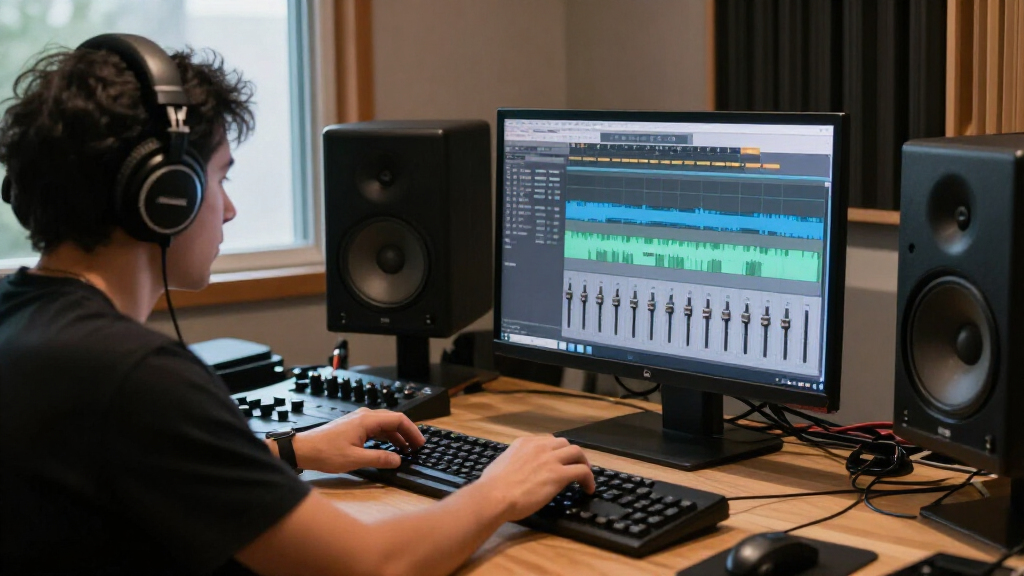
Mixing on headphones calls for a pair that reveals problems without making every decision feel harder than it needs to be. The Beyerdynamic DT 770 Pro (80 ohm) and Sony MDR-7506 are both closed-back studio staples, but they suit different working habits. The DT 770 Pro puts more emphasis on comfort, isolation, and a spacious presentation; the lighter MDR-7506 is easier to pack and has a bright, revealing character that many engineers use to catch edits, hiss, and detail.

Get audio and creator gear delivered free with Prime
- Fast, free delivery on millions of items
- Prime Video, Amazon Music and more included
- Member-only deals all year

Audio-Technica ATH-M50x Professional Studio Monitor Headphones, Black
- ✔ Driver size: 45 mm
- ✔ Driver type: Dynamic
- ✔ Frequency response: 20 Hz–28,000 Hz

Sony MDR-7506 Professional Closed-Back Studio Headphones
- ✔ Type: Wired over-ear studio headphones
- ✔ Driver size: 40 mm
- ✔ Frequency response: 10 Hz–20 kHz

Audio-Technica ATH-M20x Professional Studio Monitor Headphones
- ✔ Driver size: 40 mm
- ✔ Driver type: Dynamic
- ✔ Frequency response: 15 Hz–20 kHz
The central tradeoff is long-session comfort and isolation versus portability and a more forward presentation. Choose the DT 770 Pro if you mix for hours, record near a microphone, or need a substantial seal from outside noise. Choose the MDR-7506 if you travel, work in different rooms, or value a compact headphone that exposes small details. Neither replaces checking a mix on speakers or other playback systems: closed-back headphones can make stereo width, bass balance, and spatial effects harder to judge in isolation.
At a Glance
| Criteria | Beyerdynamic DT 770 Pro (80 ohm) | Sony MDR-7506 | Winner |
|---|---|---|---|
| Comfort over long sessions | Plush velour pads and a roomy fit; substantial but comfortable for many listeners | Very light, but smaller pads and clamp may fatigue some users over long sessions | A |
| Isolation and recording use | Closed-back design with good isolation for monitoring and recording | Closed-back design; useful for tracking, though isolation is not class-leading | A |
| Sound character for mixing | Broad, spacious presentation; bass can feel prominent and treble can sound sharp | Bright, forward detail helps expose noise and edits; tonal balance can be fatiguing | Depends |
| Portability | Larger earcups and a coiled cable make it less convenient to pack | Folds compactly and has a straight cable that is easy to carry | B |
| Repairability and parts | Replaceable pads and widely available parts support long service | Replaceable pads and a long-running service history; folding hinges are a wear point | A |
| Price and value | Usually costs more; worth it when comfort and isolation matter daily | Usually less expensive; strong value for portable monitoring | Depends |
Audio-Technica ATH-M50x Professional Studio Monitor Headphones, Black
The ATH-M50x earns the top spot because its design supports more ways of working than the other two picks. Its detachable cable makes storage and replacement simpler than the fixed cords on the ATH-M20x and Sony MDR-7506. The 90-degree swiveling earcups also help when we need to monitor with one ear, a practical distinction from the other models in this lineup. For a mix session that includes tracking, editing, and repeated listening checks, those features can make the headphones easier to adapt to the task.Audio-Technica specifies 45 mm dynamic drivers and a 20 Hz–28,000 Hz response, while describing the sound as clear with deep, accurate bass. Those figures and claims indicate the intended presentation, but they do not tell us exactly how a mix will translate on another system. Like the ATH-M20x and Sony, the M50x is closed-back and relies on passive isolation; it does not offer active noise cancellation. We should still check low-end balance and other important choices on speakers or familiar references.The tradeoff is that its flexibility may be unnecessary for a simple home setup, where the less feature-rich ATH-M20x can cover basic monitoring. Its over-ear format is also the wrong direction for anyone wanting an in-ear option, and the supplied details list no water resistance. Choose the M50x when its replaceable cable and one-ear monitoring are useful workflow features, rather than expecting its driver size alone to settle mixing decisions.
Pros:
- Detachable cable offers more flexibility than the fixed cords on the other two models.
- 90-degree swiveling earcups support one-ear monitoring.
- Circumaural closed-back fit provides passive sound isolation.
- 45 mm drivers and a stated response up to 28,000 Hz.
Cons:
- Over-ear format is unsuitable for buyers seeking a compact in-ear fit.
- No water resistance is listed.
- Closed-back passive isolation does not provide active noise cancellation.
Best for: Mixers who want closed-back headphones with a detachable cable and swiveling earcups for varied studio tasks.
Not ideal for: Listeners who want an in-ear or water-resistant design, or who do not need its added handling flexibility.
Bottom line: Choose the ATH-M50x when detachable cabling and swiveling cups make it the most adaptable fit for your mixing routine.
“Choose the ATH-M50x when detachable cabling and swiveling cups make it the most adaptable fit for your mixing routine.”
Sony MDR-7506 Professional Closed-Back Studio Headphones
The Sony MDR-7506 makes the most sense when we need closed-ear monitoring that can be packed away between sessions. Its foldable design and included soft case give it a storage advantage over the two Audio-Technica models as described here. The long 9.8-foot cord also suits a desk or recording station where we need some room to move. A 1/4-inch adapter is included, which helps connect the headphones to common studio equipment without relying on a separate adapter.Compared with the ATH-M50x, the MDR-7506 gives up the detachable cable and swiveling earcups, so it is less flexible for cable replacement or one-ear monitoring. Compared with the simpler ATH-M20x, it adds a foldable body and case for people who move their gear. Its 40 mm drivers and stated 10 Hz–20 kHz frequency response describe its specification, not a guarantee that mixes will translate. As with any closed-back headphone, we should use familiar tracks and other playback systems to check our decisions.The fixed, non-detachable cord is the clearest compromise: if it becomes inconvenient or damaged, it is not as easily swapped as the M50x cable. Buyers who leave headphones at one desk may prefer the M50x’s handling options or the uncomplicated M20x. But for a portable wired monitor with a case and adapter included, the MDR-7506 has a distinct role in this group.
Pros:
- Foldable design and included soft case make storage easier.
- 9.8-foot cord suits stationary studio monitoring.
- Includes a 1/4-inch adapter for studio connections.
- Closed-ear design helps reduce external noise.
Cons:
- Non-detachable cord is less convenient to replace than the ATH-M50x cable.
- No swiveling earcups are listed for one-ear monitoring.
- No active noise cancellation is listed.
Best for: Studio users who want foldable closed-back headphones with a long cable, carrying case, and 1/4-inch adapter.
Not ideal for: Buyers who want a detachable cable, swiveling earcups, or a more customizable monitoring setup.
Bottom line: Pick the MDR-7506 if foldable storage and included connection accessories matter more than a detachable cable.
“Pick the MDR-7506 if foldable storage and included connection accessories matter more than a detachable cable.”
Audio-Technica ATH-M20x Professional Studio Monitor Headphones
The ATH-M20x is our uncomplicated starting point for wired, closed-back monitoring. Its 40 mm dynamic drivers and circumaural earcups put it in the same broad category as the Sony MDR-7506, while the supplied description says its tuning emphasizes low-frequency performance. That can make it useful for tracking and monitoring, but bass emphasis is not a substitute for checking whether a mix’s low end carries over to speakers or other headphones.Against the ATH-M50x, the M20x gives up the detachable cable and 90-degree swivel cups. Against the Sony, it lacks the listed foldable design, soft case, and 1/4-inch adapter. In return, it keeps the feature set direct: a single-sided 9.8-foot cable, passive isolation, and a suspension headband intended for longer listening sessions. That is enough for someone learning a studio workflow without needing one-ear monitoring or frequent transport.There are limits to that simplicity. The fixed cable can restrict flexibility, and the headphones include neither a microphone nor inline controls for mobile use. They also do not have active noise cancellation, just like the other models in this comparison. Choose the M20x when our priority is a basic monitoring pair; move up to the M50x for more session flexibility or choose the MDR-7506 if folding and included accessories matter more.
Pros:
- 40 mm dynamic drivers in a circumaural closed-back design.
- Single-sided 9.8-foot cable suits a studio desk.
- Passive isolation helps limit outside noise.
- Suspension headband is intended for extended listening.
Cons:
- Fixed cable offers less flexibility than the ATH-M50x detachable cable.
- No active noise cancellation, inline controls, or microphone.
- Does not list the Sony’s foldable design, case, or included adapter.
Best for: New home-studio users who want a basic closed-back wired pair for tracking and monitoring.
Not ideal for: Buyers who need a detachable cable, foldable storage, one-ear monitoring, or mobile call controls.
Bottom line: Choose the ATH-M20x for a simple first monitoring pair when advanced handling features are not a priority.
“Choose the ATH-M20x for a simple first monitoring pair when advanced handling features are not a priority.”
As an Amazon Associate we earn from qualifying purchases.
Key Differences
The clearest practical difference is how each pair feels and fits into a working day. The DT 770 Pro’s velour cushions and larger cups tend to suit longer sessions, while its bulk and coiled cable are less convenient in a bag. The MDR-7506 is exceptionally light and folds down, but its smaller pads and stronger sense of clamp can become tiring for some listeners. Fit varies by head shape, so comfort is a personal decision rather than a guaranteed win.
For sound, neither is a neutral reference in the strict sense. The Sony’s bright, direct presentation can bring vocal consonants, clicks, and background noise forward, which is useful when editing or tracking. The Beyerdynamic can feel wider and more spacious, with a fuller low end, but those traits may encourage choices that do not translate if you treat it as your only reference. Both are closed-back models and are better suited to tracking and private work than open-back designs, but use speakers or another familiar system to check tonal balance and stereo image.
Price should follow the workflow. The Sony is often the more economical and portable buy; the Beyerdynamic earns its higher cost when comfort, isolation, and replaceable components matter enough to affect daily use. If you rarely work in headphones, neither premium claim matters as much as fit, a reliable return policy, and checking your mixes elsewhere.
Detailed Comparison
Comfort over long sessions (Beyerdynamic DT 770 Pro (80 ohm) wins — moderate)
The DT 770 Pro generally wins for extended wear: its broad velour pads and roomy cups reduce pressure for many users. The MDR-7506 is lighter, which helps on short sessions and while traveling, but its smaller pads and clamp can press on ears. This is a moderate advantage for the Beyerdynamic, with head shape and glasses making a real difference.Isolation and recording use (Beyerdynamic DT 770 Pro (80 ohm) wins — moderate)
Both are closed-back and suitable for tracking, but the DT 770 Pro usually provides a more substantial seal and keeps outside sound less intrusive. The MDR-7506 works well in studios and location setups, though its isolation is less of a selling point. The gap is moderate; either can be useful near a microphone, but check for headphone bleed at the volume you use.Sound character for mixing (major difference)
The Sony’s forward treble and midrange detail can expose hiss, clicks, and vocal edits quickly, a minor-to-moderate practical advantage for cleanup work. The DT 770 Pro sounds more spacious and full, which some mixers prefer, but its bass and treble emphasis can skew tonal choices. There is no universal winner: choose by the weaknesses you need to hear, then cross-check elsewhere.Portability (Sony MDR-7506 wins — major)
The MDR-7506 folds and weighs little, making it easier to carry between studios or pack for travel. The DT 770 Pro is bulkier, and its coiled cable is less tidy in a small bag. This is a major Sony advantage for mobile work; at a fixed desk, it matters much less.Repairability and parts (Beyerdynamic DT 770 Pro (80 ohm) wins — moderate)
Both have replaceable ear pads, but the DT 770 Pro is especially well supported with service parts, which helps extend its working life. The Sony also has a long service history and replaceable pads, although its folding hinges deserve care. The Beyerdynamic has a moderate edge for buyers who prioritize straightforward maintenance.Price and value (moderate difference)
The MDR-7506 is commonly the cheaper purchase and delivers useful detail in a compact package, so it is strong value for travel, tracking, and editing. The DT 770 Pro costs more, but can justify the difference for regular long sessions or greater isolation. The winner depends on whether those comfort and isolation gains solve a frequent problem.Beyerdynamic DT 770 Pro (80 ohm): Pros and Cons
Pros:
- Comfortable velour pads and roomy earcups suit long sessions for many listeners
- Good isolation for closed-back tracking and noisy rooms
- Broad presentation and replaceable parts support regular studio use
Cons:
- Bulkier and less convenient to pack than the Sony
- Bass and treble emphasis can bias mix decisions without cross-checks
- Costs more, and the coiled cable can feel cumbersome at a desk
Sony MDR-7506: Pros and Cons
Pros:
- Lightweight, folding design is easy to carry
- Forward detail can help reveal edits, hiss, and vocal noise
- Often costs less and has a long record in studios
Cons:
- Smaller pads and clamp may be uncomfortable for extended sessions
- Bright presentation can become fatiguing and may skew tonal judgments
- Folding hinges are a wear point, and isolation is not its strongest advantage
Who Should Choose What
Choose Beyerdynamic DT 770 Pro (80 ohm) if:
- You wear headphones for long mixing or editing sessions and value plush, roomy pads.
- You record near a microphone or work where stronger isolation is useful.
- You want replaceable parts and expect the headphones to see regular studio use.
Choose Sony MDR-7506 if:
- You carry headphones between rooms, studios, or travel jobs and want a compact foldable pair.
- You often edit vocals or clean recordings and like a bright presentation that brings small details forward.
- Your budget is tighter and you prefer a proven, lightweight monitoring option.
Skip both if: You need one headphone to provide a reliably neutral final mix reference, or you primarily mix wide, spatial material without speaker checks. Compare open-back models for a home mixing room, and use speakers or multiple familiar playback systems to confirm balance.
Value for Money
The MDR-7506 is usually the better value for portable work, occasional tracking, and detail editing: it costs less while remaining light and practical. Paying more for the DT 770 Pro makes sense if you spend long stretches wearing headphones or need its stronger isolation often. Those benefits are daily-use improvements, not a guarantee of more accurate mixes. If neither comfort nor isolation is a recurring problem, the Sony is the more economical choice; if the Sony’s fit becomes distracting, the cheaper price stops being good value.
Final Verdict
For most people choosing a closed-back studio headphone primarily for mixing, the DT 770 Pro is the stronger daily-work option when comfort and isolation matter. Its larger, softer fit is a meaningful advantage across long sessions, though its roomy sound and emphasized bass and treble still call for cross-checks. Choose the MDR-7506 if portability, lower cost, and a forward sound for detail work matter more than plush comfort. The deciding factor is your working pattern: long stationary sessions favor Beyerdynamic; frequent travel and short monitoring tasks favor Sony.
Frequently Asked Questions
Which is better for mixing, the DT 770 Pro or MDR-7506?
Neither is a neutral final authority. The DT 770 Pro is often more comfortable for long sessions and has a spacious presentation; the MDR-7506 is portable and its bright detail can help with editing. Cross-check tonal balance on speakers or another familiar system with either pair.
Can I use either headphone for recording vocals?
Yes. Both are closed-back and can work for vocal tracking. Keep headphone volume as low as practical and check for sound leaking into the microphone. The DT 770 Pro generally offers stronger isolation, which can help in a sensitive recording setup.
Is the MDR-7506 too bright for mixing?
Its forward treble can sound bright or tiring to some listeners. That character can help reveal hiss and consonants, but it may also lead you to reduce treble more than needed. Learn how your mixes translate and check them on other playback systems.
Is the DT 770 Pro worth paying more for?
It can be worth the added cost if you wear headphones for long sessions or need stronger isolation regularly. If you mainly need a light pair for travel, tracking, and editing, the MDR-7506 is often the better value.