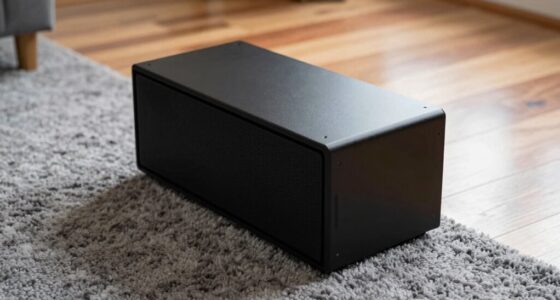
A poorly designed or placed subwoofer corner trap can cause bass to feel muddy, sloppy, and uncontrolled because it doesn’t absorb enough low-frequency energy or disrupts the room’s acoustic balance. When corner traps aren’t properly positioned or are ineffective, excess bass buildup and reflections create muddiness and interfere with clear sound. To improve your bass response, focus on the right placement and design. Keep exploring to discover more ways to tame sloppy bass and optimize your sound.
Key Takeaways
- Poorly designed or incorrectly placed corner traps can over-absorb or unevenly distribute low frequencies, causing sloppy, disconnected bass.
- Using overly thick or dense materials in corner traps may dampen bass too much, reducing clarity and making it feel muffled.
- Inadequate or poorly installed corner traps can create uneven bass response, leading to muddiness and a “sloppy” sound.
- Improper placement of corner traps might disrupt low-frequency balance, causing bass to feel loose or uncontrolled.
- Excessive or improper treatment can interfere with subwoofer performance, resulting in less precise, sloppy bass reproduction.
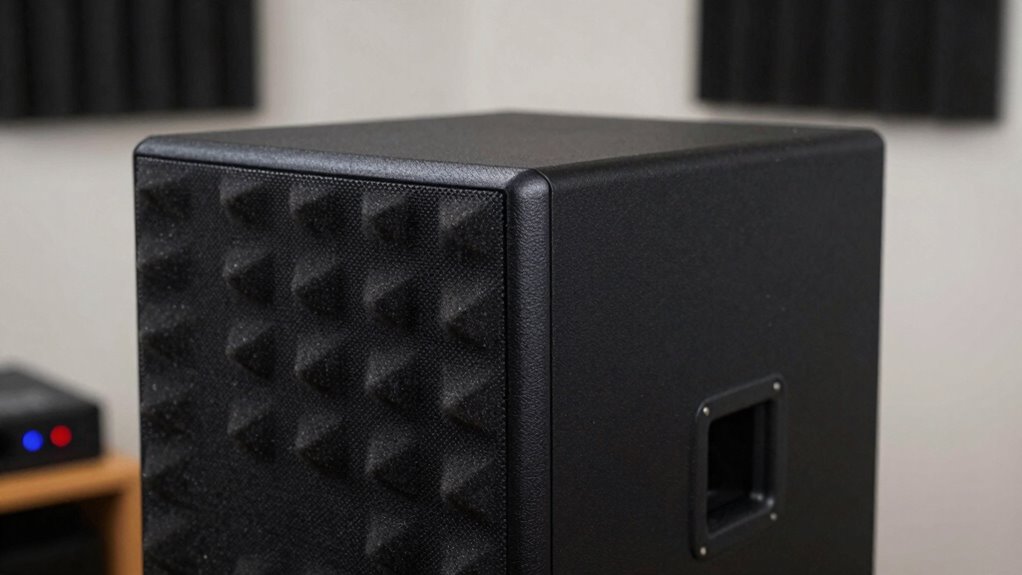
If you’re looking to enhance your bass response, a subwoofer corner trap can be a game-changer. These traps are designed to optimize your room’s acoustic environment, ensuring your subwoofer’s sound is clear, deep, and powerful. Without proper treatment, your room can create uneven bass response, causing sound distortion and making your bass sound bloated or muddy. That’s where a well-placed corner trap comes in, effectively absorbing low-frequency energy that tends to accumulate in corners. By doing so, it smooths out the room’s acoustic response, preventing bass from becoming sloppy or overbearing. Additionally, proper placement helps prevent sound reflections****, which are a common cause of bass muddiness.
A corner trap enhances bass clarity by absorbing low-frequency buildup and smoothing your room’s acoustic response.
In a typical room, corners are natural hotspots for bass buildup because sound waves naturally concentrate there. When your subwoofer pushes low frequencies into the room, these frequencies bounce around, reflecting off walls and ceilings. If left unaddressed, these reflections cause interference, which distorts the sound you hear. Instead of a tight, punchy bass, you get a blurry, sloppy feeling that diminishes clarity. A subwoofer corner trap absorbs some of that excess low-frequency energy, reducing reflections before they bounce back into the room. This results in a cleaner, more precise sound, where each bass note feels more controlled and less like a muddled mess. Room acoustic treatment plays a crucial role in achieving optimal sound quality and preventing such issues. Incorporating proper acoustic design can further enhance the effectiveness of your treatments and optimize your listening environment. Properly designed traps can also help in controlling low-frequency energy, making your listening environment more balanced. Proper placement of these traps is essential to maximize their effectiveness and ensure a balanced acoustic environment.
You’ll notice a significant difference in how your music or movies sound once you install a corner trap. The bass becomes more defined, with better articulation of the low end. Instead of feeling like the bass is just rumbling aimlessly, it feels more deliberate and impactful. A properly designed corner trap doesn’t just absorb sound; it helps balance the room’s acoustic profile, giving your subwoofer room to breathe without creating sound distortion. This balance allows you to enjoy deeper, more accurate bass without sacrificing clarity or risking that sloppy, overwhelming feel.
Keep in mind, the key is placement and quality. A corner trap placed correctly can make all the difference, especially in smaller or untreated rooms. By controlling the room’s acoustic environment, you prevent sound distortion caused by overly lively or boomy corners. As a result, your bass becomes more precise, tight, and enjoyable. No more dealing with muddy lows or feeling like your bass is just a sloppy rumble. Instead, you get a balanced, immersive experience where every low note hits with clarity and punch, transforming your listening or viewing experience into something truly satisfying.

8 Pack – Bass Traps Acoustic Foam Corner, 8''x8''x12'' Black Bass Traps Corner Studio Foam, High Density and Fire-Proof Acoustic Panels Recording Studio Acoustical Treatments
Acoustic Principle- Bass Trap is a kind of sound absorbing structure specially used to absorb specific low-frequency standing…
As an affiliate, we earn on qualifying purchases.
As an affiliate, we earn on qualifying purchases.
Frequently Asked Questions
How Do I Know if My Corner Trap Is Correctly Installed?
You’ll know your corner trap is correctly installed if it effectively reduces bass muddiness and improves overall sound clarity. Use proper installation techniques aligned with acoustic treatment principles, ensuring the trap fits snugly into the corner without gaps or air leaks. You should notice a tighter, more controlled bass response, and sound reflections diminish. Regularly test your setup with frequency sweeps or reference tracks to confirm your installation optimizes your room’s acoustics.
Can I Use Multiple Corner Traps for Better Bass?
Yes, you can use multiple corner traps to improve your bass. Think of it like building a fortress; the more walls you add, the better the protection. Proper trap placement helps prevent bass distortion and creates a tighter, more controlled sound. Just be careful not to overdo it, as too many traps can cause other acoustic issues. Experiment with placement to find the perfect balance for your space.
Will a Corner Trap Affect High-Frequency Sounds?
Yes, a corner trap can affect high-frequency sounds by reducing acoustic reflections, but its primary purpose is to control low frequencies. If the trap is designed with materials that absorb high frequencies, you’ll notice less harshness and clearer treble. However, if it’s purely bass-focused, high-frequency absorption might be minimal. Proper placement and material choice guarantee you get balanced sound without dulling the high end.
How Often Should I Replace or Upgrade My Corner Trap?
You should consider replacing or upgrading your corner trap every 5 to 10 years, as materials can degrade and affect sound quality considerably—it’s like your audio setup’s secret weapon, but only if it stays in top shape. When choosing a new trap, think about aesthetic design to match your space and consider cost considerations, ensuring you get the best bang for your buck without sacrificing performance or style.
Are There Specific Materials That Work Best for Corner Traps?
You should choose materials that balance durability and aesthetic integration for your corner traps. Rigid mineral wool or high-density foam offers excellent sound absorption and withstands time without degrading. For a seamless look, consider fabric-covered panels that match your room decor. These materials guarantee your traps stay effective, maintain their appearance, and prevent the sloppy bass issues caused by less durable or mismatched options.

ATS Acoustics Corner Bass Trap, Low Frequency Range, NRC 1.40, 24" x 48" x 13" (Ivory)
Provides clearer, more enjoyable sound by effectively controlling unwanted reverb and echo
As an affiliate, we earn on qualifying purchases.
As an affiliate, we earn on qualifying purchases.
Conclusion
Imagine setting up your subwoofer corner trap and suddenly bass feels tight and powerful, not sloppy. For instance, a home theater enthusiast once added this trap and experienced clearer, more precise sound during movies, transforming their listening experience. Don’t let bass feel muddled—use a corner trap to optimize your sound. It’s a small tweak that makes a huge difference, turning your space into a true audio haven. Give it a try and feel the difference yourself.
8 Pack – Bass Traps Acoustic Foam Corner, 8''x8''x12'' Black Bass Traps Corner Studio Foam, High Density and Fire-Proof Acoustic Panels Recording Studio Acoustical Treatments
Acoustic Principle- Bass Trap is a kind of sound absorbing structure specially used to absorb specific low-frequency standing…
As an affiliate, we earn on qualifying purchases.
As an affiliate, we earn on qualifying purchases.
8 Pack – Bass Traps Acoustic Foam Corner, 8''x8''x12'' Black Bass Traps Corner Studio Foam, High Density and Fire-Proof Acoustic Panels Recording Studio Acoustical Treatments
Acoustic Principle- Bass Trap is a kind of sound absorbing structure specially used to absorb specific low-frequency standing…
As an affiliate, we earn on qualifying purchases.
As an affiliate, we earn on qualifying purchases.