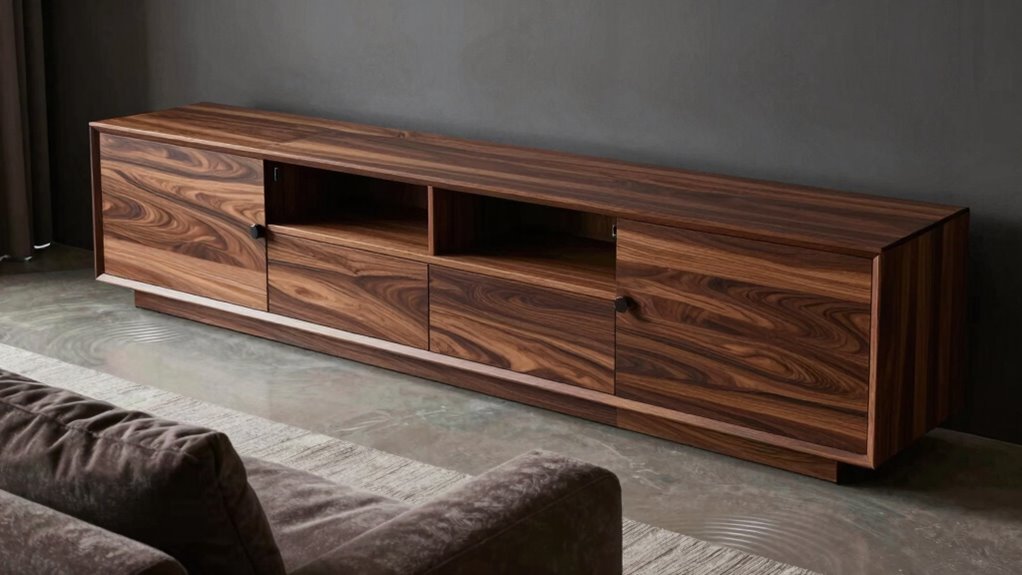

Large furniture can change your bass more than you expect because it acts as both an absorber and reflector of sound waves. Bulky pieces soak up low-frequency energy, making bass sounds less full and resonant. Conversely, moving or removing furniture can boost reflections that enhance bass response. The way furniture interacts with room size and shape also affects sound. Keep exploring, and you’ll discover how adjusting your space can optimize your sound experience.

Get audio and creator gear delivered free with Prime
- Fast, free delivery on millions of items
- Prime Video, Amazon Music and more included
- Member-only deals all year
Key Takeaways
- Large furniture absorbs low-frequency sound waves, reducing bass resonance and fullness in the room.
- Bulky pieces reflect sound, altering how bass frequencies behave and potentially amplifying or dampening them.
- Furniture placement affects sound reflection and absorption, significantly impacting bass clarity and depth.
- Soft, upholstered furniture dampens bass more than hard surfaces, changing the room’s acoustic balance.
- Removing or repositioning large furniture can enhance bass response by allowing sound waves to bounce freely.

If you’ve ever noticed that your bass sounds different when large furniture is in the room, you’re not imagining it. Big pieces like couches, bookshelves, and cabinets can significantly influence how your bass feels and resonates. This change happens because furniture affects the room’s acoustics, particularly acoustic absorption. When you add bulky furniture, it absorbs some of the sound energy, especially at lower frequencies, which can make the bass seem softer or less full. Conversely, removing or rearranging furniture can make the bass more pronounced and powerful.
Room acoustics are key to understanding why this happens. Every room has its own unique way of reflecting, absorbing, and diffusing sound waves. Large furniture acts as an acoustic absorber that disrupts these sound waves, especially in the lower frequency range. Instead of bouncing around freely, bass frequencies get absorbed or scattered, reducing the intensity of sound that reaches your ears. This can create a noticeable difference in how your sound system performs, especially if you’re tuning for clarity or depth. When furniture is added, it can soften the overall sound, making the bass feel less punchy. When furniture is removed, the sound waves bounce more freely, often resulting in a fuller, more resonant bass response.
The shape and material of furniture also play a role. Soft, upholstered pieces tend to absorb more sound, dampening bass more effectively than hard surfaces like wood or metal. This absorption can be beneficial if your room has too much echo or muddiness, but it can also diminish the richness of your bass if overdone. On the other hand, open spaces with minimal furniture allow sound waves to reflect and reinforce each other, often enhancing bass response. Additionally, understanding the concept of acoustic absorption helps you predict how different furniture choices will influence your sound environment. Recognizing the room’s acoustic profile can help you make more informed decisions about furniture placement and material choices to optimize your listening experience.
Adjusting furniture placement can also influence how sound waves interact within the room, making spatial arrangement an important factor in acoustic optimization. Understanding the relationship between furniture and room acoustics helps you control your sound environment better. If your goal is to achieve deep, powerful bass, you might want to strategically place or remove certain pieces to optimize acoustic absorption. Conversely, if you prefer a softer, more subdued bass, adding furniture can help tame overly boomy sounds. In addition, experimenting with furniture placement can reveal how small adjustments can significantly impact your sound quality. To further optimize your space, it’s useful to consider how room size and shape influence sound behavior, as these factors can greatly affect bass response. In any case, the key is recognizing that large furniture isn’t just about aesthetics or comfort; it actively shapes how sound behaves in your space. By paying attention to these effects, you can fine-tune your room to get the best possible bass experience.
As an affiliate, we earn on qualifying purchases.
Frequently Asked Questions
How Does Furniture Material Affect Bass Perception?
Furniture material directly affects bass perception through acoustic reflections and absorption. Heavier materials like wood or upholstered furniture absorb more bass, reducing muddiness, while lighter or reflective surfaces like glass or metal cause stronger reflections, amplifying bass. Your room’s furniture aesthetics influence sound clarity, making it essential to choose materials that complement your desired acoustic environment to optimize bass quality and overall sound experience.
Can Furniture Placement Improve Bass Clarity?
Yes, furniture placement can improve bass clarity. Studies show that symmetrical room layouts enhance acoustic reflection, reducing standing waves and bass muddiness. By arranging large furniture to balance the space, you create a more even distribution of sound waves, minimizing destructive interference. Proper placement around walls and corners helps absorb excess bass, resulting in clearer, more focused sound. So, experiment with your furniture setup for a noticeable boost in bass quality.
Does Furniture Size Influence Sound Absorption?
Yes, furniture size influences sound absorption. Larger furniture, like big sofas or bookshelves, acts as acoustic treatments by absorbing and diffusing sound waves, reducing echoes and improving clarity. Decorative accessories, such as thick curtains or plush rugs, also help absorb sound. By strategically placing big furniture and accessories, you can enhance your room’s acoustics, making your space sound warmer and more balanced without needing professional treatments.
How Quickly Does Furniture Impact Sound Quality?
Furniture quickly impacts sound quality by affecting acoustic reflections and sound diffusion in your space. As soon as you add or rearrange furniture, it alters how sound waves bounce and scatter, often within minutes. Soft furnishings absorb sound, reducing echo, while larger pieces diffuse acoustic reflections, creating a warmer, more balanced sound environment. This means your room’s acoustics can change almost immediately, enhancing overall sound clarity and bass response.
Are Some Furniture Types Better for Bass Enhancement?
Some furniture types are better for bass enhancement, especially those made from dense decor materials like solid wood or thick upholstery. Darker furniture colors, such as deep browns or blacks, often absorb sound, but heavier pieces like large sofas or bookshelves can reflect and amplify bass frequencies effectively. Choosing furniture with solid construction and dense materials helps improve bass response, making your sound experience richer and more immersive.
As an affiliate, we earn on qualifying purchases.
Conclusion
Incorporating large furniture into your space can unexpectedly enhance bass performance, transforming your listening experience. Did you know that studies show rooms with substantial furniture can reduce sound reflections by up to 50%, leading to clearer, more resonant bass? So, next time you’re tweaking your setup, remember that your bulky couch or bookshelf isn’t just decor—it’s a powerful tool to improve sound quality. Embrace your furniture’s role in creating richer, fuller bass and enjoy a more immersive audio experience.
large upholstered furniture for sound dampening
As an affiliate, we earn on qualifying purchases.
As an affiliate, we earn on qualifying purchases.
As an affiliate, we earn on qualifying purchases.
Fall Picks
fall essentials
As an affiliate, we earn on qualifying purchases.