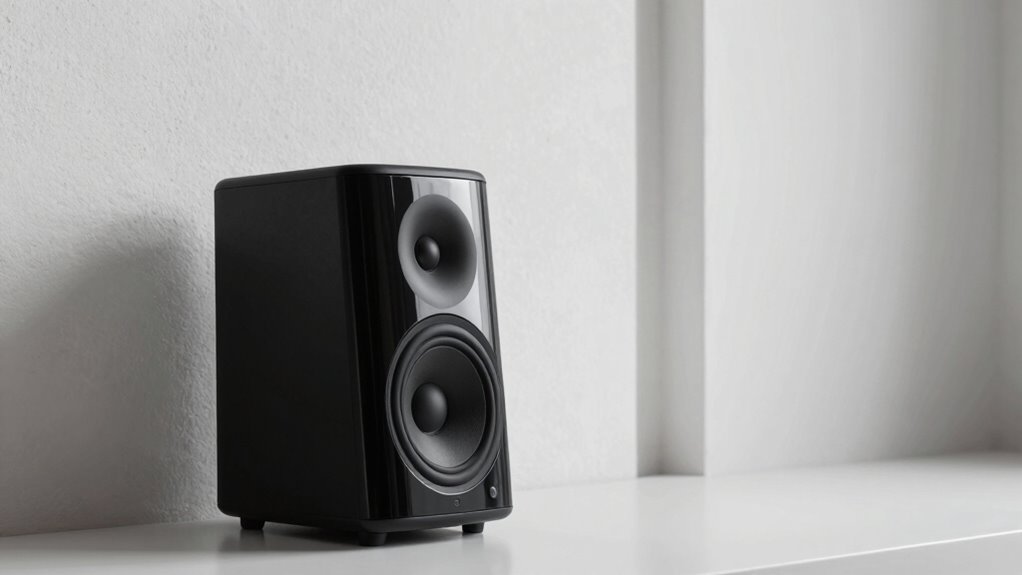

Walls impact your speakers more than you might think because reflections and boundary interactions occur right at the surface, changing sound waves immediately. When placed close to a wall, reflections can cause boomy bass or muddled midrange, while too far away makes sound hollow. Small adjustments in wall distance can greatly improve clarity and balance. Keep exploring to discover how mastering wall placement can transform your listening experience.

Get audio and creator gear delivered free with Prime
- Fast, free delivery on millions of items
- Prime Video, Amazon Music and more included
- Member-only deals all year
Key Takeaways
- Reflections from walls cause phase cancellations or reinforcement, significantly altering sound quality beyond simple distance effects.
- Close walls create early reflections that can muddy midrange and bass, impacting clarity unexpectedly.
- Room acoustics and materials influence how reflections interact with direct sound, amplifying wall distance effects.
- Small changes in wall proximity can dramatically shift sound balance due to standing waves and interference patterns.
- Proper speaker placement considers room features to minimize adverse reflections and optimize performance.
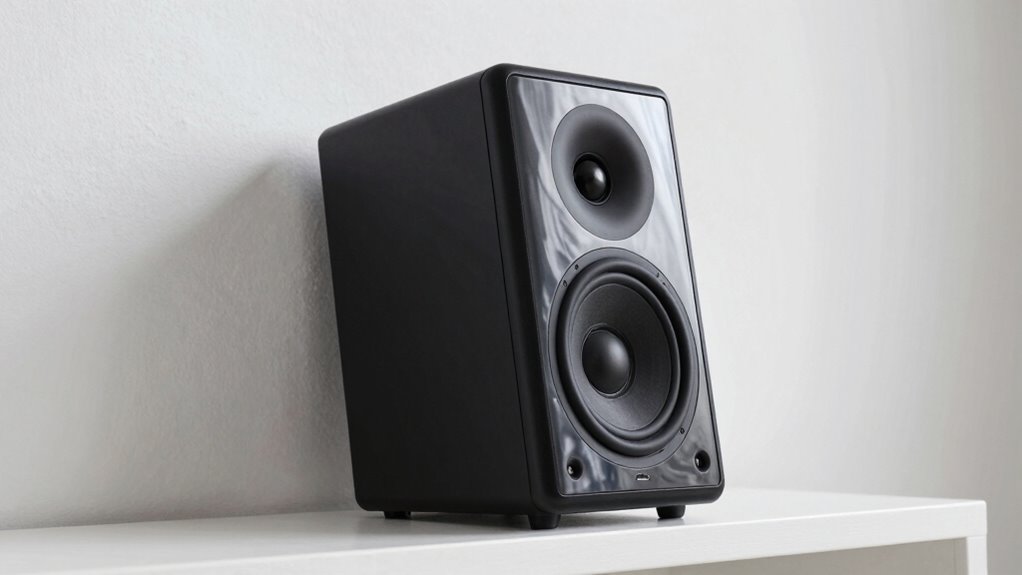
The distance between your speakers and the walls around them can considerably impact their performance. Many people overlook how essential speaker placement is, but in reality, it plays a pivotal role in shaping your listening experience. Your room’s acoustics, including how sound waves bounce and interact within the space, are directly influenced by where your speakers are positioned in relation to the walls. Small adjustments in speaker placement can lead to noticeable changes in sound clarity, bass response, and overall balance.
Speaker placement near walls significantly influences sound clarity, bass, and overall listening experience.
When your speakers are too close to a wall, especially the rear wall, sound waves reflect back into the room almost immediately. These reflections can cause phase cancellations or reinforce certain frequencies, leading to boomy bass or muddled mids. Conversely, placing your speakers too far from the walls can make the sound feel distant or hollow because the direct sound isn’t reinforced by early reflections, which are essential for natural room acoustics. Striking the right balance requires understanding how room acoustics influence sound behavior. The way sound waves reflect and interact with surfaces shapes the acoustic environment, impacting clarity and stereo imaging. Additionally, the room’s size and shape can influence how sound waves travel and interfere, making it important to consider these factors when positioning your speakers.
Speaker placement isn’t just about distance; it’s also about how those distances interact with the room’s dimensions and materials. For example, a small, carpeted room might absorb some reflections, allowing you to place speakers closer to walls without negative effects. In contrast, a large, bare room could require more careful positioning to prevent unwanted echoes or standing waves. Your goal should be to find a position where sound waves blend naturally, avoiding excessive reflections that muddy the sound. This often involves experimenting with distances, slight angling of speakers, and considering furniture or other room features that influence acoustics. room features can significantly influence how sound waves behave, making it essential to tailor your setup accordingly. Properly accounting for these features can help you achieve a more balanced sound environment.
Understanding the nuances of room acoustics helps you optimize speaker placement. It’s not just about distance; it’s about how that distance interacts with your room’s shape, size, and materials. For example, certain room features can significantly influence how sound waves behave, making it essential to tailor your setup accordingly. The right placement reduces unwanted reflections and standing waves, making your audio clearer and more precise. Small shifts in wall distance can dramatically change the sound quality. By paying close attention to how your speakers sit relative to the walls, you can improve your listening experience profoundly—achieving a more balanced, natural sound that truly captures your music or movies’ essence. Recognizing room acoustics as a key factor can help you make more informed adjustments for optimal sound quality.
As an affiliate, we earn on qualifying purchases.
Frequently Asked Questions
How Does Wall Material Affect Speaker Performance at Different Distances?
Wall material considerably impacts your speaker performance at different distances because room acoustics and material absorption influence sound reflection and absorption. Softer materials like fabric or foam absorb more sound, reducing reflections and echo, which can improve clarity at close distances. Harder surfaces like concrete or tile reflect sound, causing distortions or muddiness further away. Understanding these effects helps you optimize speaker placement for better sound quality based on wall material.
Can Room Size Influence How Wall Distance Impacts Sound Quality?
Yes, room size influences how wall distance impacts sound quality. Larger rooms tend to have more complex room acoustics, causing reflections that can either enhance or muddy the sound depending on your speaker placement. In smaller spaces, closer walls can create unwanted bass reinforcement or echo, so adjusting your speaker placement relative to room size helps optimize sound clarity and balance, ensuring better overall speaker performance.
Do Speaker Types Respond Differently to Wall Proximity?
Yes, different speaker types respond differently to wall proximity due to their design and placement needs. For example, bookshelf speakers are more sensitive to wall placement because acoustic interference can cause bass boomy or muddled sound. Tower speakers often handle wall proximity better, but improper speaker placement can still lead to acoustic interference, affecting overall sound quality. Adjusting placement based on speaker type optimizes performance and reduces unwanted effects.
How Quickly Does Speaker Performance Change as Wall Distance Varies?
A wise man once said, “Timing is everything,” and that’s true for speaker performance too. As you move a speaker closer or farther from walls, acoustic reflections and sound absorption change almost instantly, impacting sound quality. Performance can shift within seconds, especially with reflective surfaces nearby. Even small adjustments in wall distance influence how sound interacts with your environment, making speaker positioning a quick, yet critical, factor in ideal listening.
Are There Optimal Wall Distances for Specific Genres of Audio?
Yes, there are ideal wall distances for specific genres of audio. For example, classical music benefits from closer wall placement to enhance reverberation, while podcasts and vocals often sound clearer with more space from walls. You should consider room acoustics and speaker placement to fine-tune your setup. Experimenting with distances helps you find the sweet spot, maximizing sound quality tailored to each genre’s unique audio characteristics.
As an affiliate, we earn on qualifying purchases.
Conclusion
In fact, moving your speaker just a foot closer to the wall can boost bass response by up to 20%. That’s a significant change that can dramatically alter your listening experience. So, next time you set up your system, don’t overlook the wall distance—it’s a simple tweak with powerful results. Small adjustments can make a big difference, ensuring you get the best sound possible from your setup. Experiment, and hear the difference for yourself.
speaker placement distance tools
As an affiliate, we earn on qualifying purchases.
As an affiliate, we earn on qualifying purchases.
room acoustic treatment for speakers
As an affiliate, we earn on qualifying purchases.
As an affiliate, we earn on qualifying purchases.
Halloween Picks
halloween
As an affiliate, we earn on qualifying purchases.