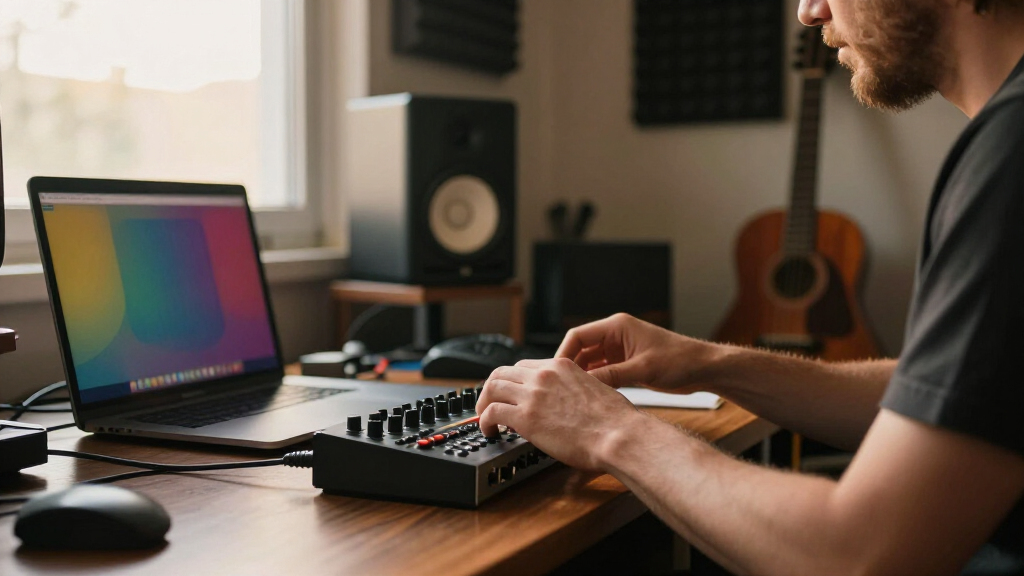

An audio interface for creators needs to balance clean preamps, easy software integration, and a price that doesn’t eat your entire production budget. After comparing 13 popular models, the Universal Audio Volt 2 stands out as the best overall pick thanks to its Vintage mic preamp mode, solid build, and loopback support for streaming. For tighter budgets, the MAONO PS22 Lite delivers surprising quality under $60, while the Zoom AMS-24 is the strongest choice for creators who need multiple inputs and loopback monitoring. The main tradeoff in this category is between bare-bones two-channel boxes that just work and feature-rich interfaces that add loopback, phone connectivity, and higher gain for dynamic mics. Read on for the full breakdown of every model and who each one suits best.

Get audio and creator gear delivered free — and shop member deals
- Fast, free delivery on millions of items
- Access to Prime Big Deal Days deals on October 6–7
- Prime Video, Amazon Music and more included
Complete the kit


Key Takeaways
- Universal Audio’s Volt 2 earned the top spot because its Vintage preamp mode and loopback support cover both music recording and live streaming, a combination most sub-$200 interfaces miss.
- Gain headroom was the biggest differentiator for podcasters: the MAONO P1’s 70dB gain drives power-hungry dynamic mics like the SM7B without an inline booster, something the Scarlett Solo line cannot do.
- Bundled accessories rarely save money. The Scarlett Solo 4th Gen bundle looks convenient, but pricing it against the standalone interface and separate accessories showed mixed value depending on sales.
- Generic no-name interfaces (entries 10 and 11) undercut brand-name models on price, but inconsistent driver support and vague spec sheets make them risky for anyone on a production deadline.
- Phone and tablet connectivity quietly became a tier-splitter in 2026 — the Fender AudioBox GO and MAONO P1 both work with phones and tablets, while most desktop-only models lock you to a computer.
| Fender AudioBox GO USB Audio Interface for Guitarists, Vocalists, and Producers |  | Best Value Pick | Connectivity: USB-C | Audio quality: 24-bit/96kHz | Inputs: XLR combo with phantom power, TS instrument | VIEW LATEST PRICE | See Our Full Breakdown |
| Universal Audio Volt 2 USB Audio Interface |  | Best Premium Sound | Channels: 2-in / 2-out | Resolution: 24-bit/192kHz | Preamps: UA classic 610 with Vintage mode | VIEW LATEST PRICE | See Our Full Breakdown |
| Antelope Audio Zenith 2 USB-C Audio Interface for Streaming & Podcasting |  | Best for Streamers and Podcasters | Conversion: 123 dB AD/DA | Max sample rate: 192kHz | Channels: 2 | VIEW LATEST PRICE | See Our Full Breakdown |
| MAONO P1 USB Audio Interface with 70dB Gain for PC, Phone, iPad & Guitar |  | Best for Multi-Device Creators | Connectivity: Dual USB ports with MFi certification | Gain: 70dB | Audio quality: 24-bit/192kHz | VIEW LATEST PRICE | See Our Full Breakdown |
| MAONO PS22 Lite USB Audio Interface |  | Best for Live Streamers | Sample Rate: Up to 192kHz / 24-bit | Channels: 2 | Inputs: Microphone, Guitar, Bass, Smartphone | VIEW LATEST PRICE | See Our Full Breakdown |
| Focusrite Scarlett Solo 4th Gen Bundle |  | Best Complete Starter Kit | Dynamic Range: 120dB | Connectivity: USB-C | Inputs: 1 XLR mic, 1 instrument | VIEW LATEST PRICE | See Our Full Breakdown |
| M-Audio M-Track Duo USB Audio Interface |  | Best Value for Two-Input Recording | Audio Resolution: 48kHz | Inputs: 2 combo XLR/Line/Instrument with phantom power | Outputs: 1/4″ headphone, stereo 1/4″ main | VIEW LATEST PRICE | See Our Full Breakdown |
| MAONO E2 Gen2 Podcast Equipment Bundle |  | Best All-in-One Podcast Mixer | Channels: 10 | Sample Rate: Up to 48kHz | Inputs: 2 XLR, 3.5mm, Bluetooth | VIEW LATEST PRICE | See Our Full Breakdown |
| USB-C Audio Interface with 48V Phantom Power & Echo Control |  | Best Budget Flexibility Per Input | Sample Rate: 48kHz | Phantom Power: 48V | Inputs: 2 XLR/TRS combo, 1 instrument | VIEW LATEST PRICE | See Our Full Breakdown |
| Synido USB C Audio Interface for Recording, Streaming, Podcasting |  | Best Monitoring Flexibility | Sampling Rate: 48kHz | Bit Depth: 24-bit | Inputs: XLR, 6.35mm, Line In, Instrument | VIEW LATEST PRICE | See Our Full Breakdown |
| Zoom AMS-24 USB Audio Interface for Musicians & Podcasters |  | Best for Mobile Device Recording | Compatible Devices: PC, Mac, iOS, Android | Connectivity: USB | Channels: 2 inputs, 4 outputs | VIEW LATEST PRICE | See Our Full Breakdown |
| PIYONE 2×2 24-bit/192kHz USB C Audio Interface for Studio Recording |  | Best High-Resolution Recording | Maximum Sample Rate: 192kHz | Bit Depth: 24-bit | Channels: 2×2 | VIEW LATEST PRICE | See Our Full Breakdown |
| audio interface for creator | Connectivity | Inputs | Compatibility | Channels |
|---|---|---|---|---|
| Fender AudioBox GO USB Audio I | USB-C | XLR combo with phantom power, TS instrument | macOS, Windows | — |
| Universal Audio Volt 2 USB Aud | USB | — | macOS, Windows, iPad, iPhone | 2-in / 2-out |
| Antelope Audio Zenith 2 USB-C | USB-C | — | iOS, Android, Windows, macOS | 2 |
| MAONO P1 USB Audio Interface w | Dual USB ports with MFi certification | — | Mac, PC, iPhone, Android, cameras | — |
| MAONO PS22 Lite USB Audio Inte | USB | Microphone, Guitar, Bass, Smartphone | Windows, macOS, iOS, Android, ChromeOS | 2 |
| Focusrite Scarlett Solo 4th Ge | USB-C | 1 XLR mic, 1 instrument | — | — |
| M-Audio M-Track Duo USB Audio | USB | 2 combo XLR/Line/Instrument with phantom power | — | — |
| MAONO E2 Gen2 Podcast Equipmen | USB-C, AUX, Bluetooth | 2 XLR, 3.5mm, Bluetooth | Windows, macOS, smartphones, tablets | 10 |
| USB-C Audio Interface with 48V | USB-C | 2 XLR/TRS combo, 1 instrument | PC, Mac, iOS, Windows 11 | — |
| Synido USB C Audio Interface f | USB-C to USB-A | XLR, 6.35mm, Line In, Instrument | — | — |
| Zoom AMS-24 USB Audio Interfac | USB | — | — | 2 inputs, 4 outputs |
| PIYONE 2×2 24-bit/192kHz USB C | USB-C, plug-and-play | — | — | 2×2 |
More Details on Our Top Picks
Fender AudioBox GO USB Audio Interface for Guitarists, Vocalists, and Producers
The AudioBox GO undercuts the Scarlett Solo 3rd Gen while covering the same core ground: an XLR combo input with phantom power, a dedicated instrument input, and zero-latency monitoring. What makes it stand out is the Fender Studio app with amp and FX modeling — a genuinely useful perk for guitar-focused creators that Focusrite’s bundle doesn’t match. The compromise is the 24-bit/96kHz ceiling, which matters little for streaming or demos but gives the Scarlett the edge for hi-res work. Registration is also needed to unlock the full software package, which adds friction. This pick makes the most sense for budget-conscious singer-songwriters who want a bus-powered, pocketable interface rather than the absolute best conversion quality.
Pros:- Affordable price with core features intact
- Fender Studio app and amp/FX pack add real value for guitarists
- Zero-latency headphone monitoring for clean takes
- Bus-powered and highly portable
Cons:- Tops out at 24-bit/96kHz, behind the Scarlett and Volt 2
- Full software features require account registration
- Only 2 inputs and 2 outputs limits expansion
Best for: Budget-minded guitarists and singer-songwriters who want amp modeling and a travel-friendly interface
Not ideal for: Producers chasing 192kHz recording quality or anyone who dislikes software registration hurdles
- Connectivity:USB-C
- Audio quality:24-bit/96kHz
- Inputs:XLR combo with phantom power, TS instrument
- Outputs:2 balanced ¼-inch TRS
- Power:Bus-powered
- Compatibility:macOS, Windows
Our verdict“The smart buy if you want Scarlett-style basics for less, especially if guitar tones are your priority.”
Universal Audio Volt 2 USB Audio Interface
The Volt 2 is the pick when preamp character matters more than raw features. Its classic 610-style preamps with Vintage mode bring a warmth the Scarlett Solo and AudioBox GO can’t replicate, and the bundled UA plug-ins — including Marshall and Ampeg emulations plus Melodyne — are worth real money on their own. Where the MAONO P1 wins on routing flexibility and connectivity, the Volt 2 wins on tone and software pedigree. The main frustrations: iPad use demands an external power supply and adapter, and you’re still limited to 2-in/2-out. This model is better suited to producers who treat their interface as part of their sound rather than just a signal converter.
Pros:- UA 610-style preamps with Vintage mode for analog warmth
- 24-bit/192kHz audio resolution
- Works across Mac, Windows, iPad, and iPhone
- Bundled UAD plug-ins and DAW software add serious value
Cons:- Requires external power supply and adapter for iPads
- Limited to 2 inputs and 2 outputs
- Some advanced features need extra setup or software installation
Best for: Producers and home studio owners who want analog-flavored preamps and a premium plug-in bundle
Not ideal for: iPad-first mobile creators unwilling to carry a power supply, or anyone needing more than two channels
- Channels:2-in / 2-out
- Resolution:24-bit/192kHz
- Preamps:UA classic 610 with Vintage mode
- Connectivity:USB
- Compatibility:macOS, Windows, iPad, iPhone
- Included software:Ableton, Melodyne, Virtual Drummer, Marshall, Ampeg plug-ins
Our verdict“Buy this if your recordings deserve better-than-budget preamps and you’ll actually use the plug-in bundle.”
Antelope Audio Zenith 2 USB-C Audio Interface for Streaming & Podcasting
The Zenith 2 is the only interface here built around onboard DSP effects and dual independent headphone mixes, which changes the workflow entirely — you get compression, EQ, and reverb baked into hardware rather than taxing your computer. That makes it a stronger fit for live streaming than the Scarlett Solo or Volt 2, both of which assume you’ll process audio in software. The 123 dB AD/DA conversion is also a step above everything else in this lineup in raw spec. The cost is complexity: compared with the plug-and-play Fender AudioBox GO, the Zenith 2’s control system has a real learning curve, and its 1.07 kg build is the least portable option here. Casual users will pay for features they never touch.
Pros:- 123 dB AD/DA conversion delivers pristine audio quality
- Dual independent headphone outputs for guest or co-host monitoring
- Built-in DSP effects reduce CPU load during live streams
- Broad compatibility including iOS, Android, Windows, and macOS
Cons:- Steeper learning curve than simpler interfaces
- Heavier and less portable than bus-powered rivals
- Premium DSP features are overkill for basic recording needs
Best for: Streamers and podcasters who want hardware DSP effects, separate headphone mixes, and top-tier conversion
Not ideal for: Beginners or casual creators who want a simple plug-and-play box without a manual
- Conversion:123 dB AD/DA
- Max sample rate:192kHz
- Channels:2
- Connectivity:USB-C
- Headphone outputs:Dual independent mixes
- Effects:Onboard DSP
- Compatibility:iOS, Android, Windows, macOS
- Included software:Bitwig Studio Essentials DAW
- Weight:1.07 kg
Our verdict“The right choice if your interface is the hub of a streaming or podcasting rig, not just a mic input.”
MAONO P1 USB Audio Interface with 70dB Gain for PC, Phone, iPad & Guitar
The MAONO P1 solves a problem nobody else in this roundup addresses: connecting a computer, phone, and iPad simultaneously through dual USB ports with MFi certification. That makes it the obvious hub for creators who stream from a phone while routing audio through a PC — something the Scarlett Solo or Volt 2 simply can’t do. The 70dB of gain is also class-leading here, enough to drive low-output dynamic mics without a booster, and auto-gain removes guesswork for newer streamers. The tradeoff: full routing power depends on software that beginners may find confusing, and there’s no wireless option. Compared with the Zenith 2, it trades DSP polish for connectivity muscle — a fair swap if your workflow spans devices.
Pros:- Simultaneous connection to PC, phone, and iPad via dual USB ports
- 70dB gain easily drives power-hungry dynamic microphones
- Auto-gain and low-latency monitoring simplify recording
- Zinc-alloy metal housing survives mobile and travel use
Cons:- Audio routing software has a learning curve for newcomers
- No wireless connectivity options
- Full feature set requires compatible software
Best for: Streamers and podcasters running multi-device setups who need serious gain for dynamic mics
Not ideal for: Complete beginners who want zero software configuration, or anyone expecting wireless connectivity
- Connectivity:Dual USB ports with MFi certification
- Gain:70dB
- Audio quality:24-bit/192kHz
- EIN:-130dB
- Compatibility:Mac, PC, iPhone, Android, cameras
- Housing:Zinc-alloy metal, 15° tilt angle
- Included:USB-C to USB-A/C cable, user manual
Our verdict“If your creative workflow spans a phone, a PC, and an iPad at once, nothing else here matches its flexibility.”
MAONO PS22 Lite USB Audio Interface
Where most interfaces in this lineup are built for recording music first and streaming second, the MAONO PS22 Lite flips that priority. Its bundled routing software lets creators send separate audio paths to OBS, Twitch, and Discord simultaneously — something the M-Audio M-Track Duo simply cannot do without extra virtual audio software. The 24-bit/192kHz resolution also beats the M-Track Duo and the generic USB-C interface later in this list, both capped at 48kHz. The tradeoff is physical: the lightweight plastic chassis feels less durable than a Scarlett Solo, and the two-channel limit means anyone recording a full band should look elsewhere. Setup is mostly plug-and-play, though some Windows systems will want the driver installed for stable performance.
Pros:- 24-bit/192kHz recording exceeds the 48kHz standard at this price
- Routing software enables clean separate feeds for OBS, Discord, and Twitch
- Works across Windows, macOS, iOS, and Android
- Genuinely portable at 0.43 kg
Cons:- Plastic build feels less roadworthy than Focusrite or M-Audio alternatives
- Driver installation needed for best performance on some systems
Best for: Twitch and YouTube streamers who need multi-app audio routing on a tight budget
Not ideal for: Producers planning multi-instrument sessions — two channels fills up fast
- Sample Rate:Up to 192kHz / 24-bit
- Channels:2
- Inputs:Microphone, Guitar, Bass, Smartphone
- Connectivity:USB
- Compatibility:Windows, macOS, iOS, Android, ChromeOS
- Weight:0.43 kg
Our verdict“A smart pick for streamers who need flexible routing more than studio-grade build quality.”
Focusrite Scarlett Solo 4th Gen Bundle
This bundle earns its spot by removing every excuse to delay a first recording session. Beyond the interface itself — with a 120dB dynamic range that outclasses the M-Audio M-Track Duo and the PIYONE-style budget units here — you get studio headphones, a pop filter, and an XLR cable in one box. Compared with the MAONO PS22 Lite, the Solo 4th Gen focuses on music production rather than streaming routing, and its Air mode adds presence to vocals and acoustic guitars without plugins. The honest tradeoff: this is still a single-mic, single-instrument box. Anyone wanting to record two people at once, as the M-Track Duo allows, will hit a wall. The front-panel design is also deliberately minimal, which some buyers may find sparse for the price.
Pros:- 120dB dynamic range delivers cleaner, more detailed recordings than 48kHz budget rivals
- Bundle includes headphones, pop filter, and XLR cable — nothing else to buy
- Air mode enhances vocals and guitars with a single button
- Easy Start tool makes first-time setup nearly foolproof
Cons:- Single mic input limits it to solo recording projects
- Interface design is basic compared with feature-rich units like the MAONO E2 Gen2
Best for: Singer-songwriters and vocal podcasters buying their first recording setup in one purchase
Not ideal for: Duo podcasters or multi-instrument recording — one mic preamp is the ceiling
- Dynamic Range:120dB
- Connectivity:USB-C
- Inputs:1 XLR mic, 1 instrument
- Features:Air mode, Easy Start
- Included Accessories:Polsen HPC-A30 headphones, pop filter, XLR cable
- Software:Recording software and plugin bundle
Our verdict“The fastest route from unopened box to finished vocal track, as long as one microphone is all you need.”
M-Audio M-Track Duo USB Audio Interface
The M-Track Duo solves the exact problem the Scarlett Solo bundle cannot: recording two sources at once. Two combo XLR/line/instrument inputs with phantom power mean a host and guest, or a vocal and guitar, can be tracked simultaneously on a budget. Its crystal preamps and USB/Direct zero-latency monitoring hold their own against pricier options, and the bundled MPC Beats software gives beginners something to produce with immediately. The compromise is resolution — 48kHz is fine for podcasts and demos but a step below the MAONO PS22 Lite’s 192kHz ceiling, which matters if you ever want lush reverb tails or pro-level mastering headroom. There is also no MIDI, so keyboard producers need a separate solution.
Pros:- Two combo inputs with phantom power — double the Scarlett Solo’s mic capacity
- Clean crystal preamps for the price bracket
- USB/Direct switch provides true zero-latency monitoring
- Includes MPC Beats production software
Cons:- 48kHz resolution ceiling limits professional mastering flexibility
- No MIDI ports or expansion options
Best for: Two-person podcasters and duo musicians who need dual inputs under a tight budget
Not ideal for: Engineers chasing high-resolution masters or anyone needing MIDI connectivity
- Audio Resolution:48kHz
- Inputs:2 combo XLR/Line/Instrument with phantom power
- Outputs:1/4″ headphone, stereo 1/4″ main
- Monitoring:USB/Direct zero-latency switch
- Software:MPC Beats
- Connectivity:USB
Our verdict“The most affordable way to record two people at once, provided podcast-grade resolution is acceptable.”
MAONO E2 Gen2 Podcast Equipment Bundle
This is less an interface and more a portable podcast studio. Unlike the MAONO PS22 Lite, which is a straightforward two-channel box, the E2 Gen2 layers on sound pads, voice modulation, Bluetooth input, and an 8-hour battery — meaning you can record a full interview at a kitchen table with no computer attached. Compared with the Scarlett Solo bundle, its dual XLR preamps target spoken-word clarity rather than music dynamics, and the onboard effects suit content creators who want instant sound bites mid-stream rather than post-production polish. The sample rate is capped at 48kHz, which is standard for speech but behind music-first units here. Also note the USB-C port does not charge phones, and first-time users should expect a learning curve before the faders and effects feel natural.
Pros:- 8-hour battery enables computer-free recording anywhere
- Built-in sound effect pads and voice modulation without software
- Bluetooth, AUX, and USB-C connectivity covers phones, tablets, and PCs
- Dual low-noise XLR preamps handle two microphones cleanly
Cons:- USB-C port offers no charging or power delivery
- Effects and routing take real setup time to learn
Best for: Podcasters and live content creators who want sound effects and battery-powered portability in one console
Not ideal for: Musicians tracking instruments — the 48kHz ceiling and speech-focused preamps limit studio ambitions
- Channels:10
- Sample Rate:Up to 48kHz
- Inputs:2 XLR, 3.5mm, Bluetooth
- Battery Life:Up to 8 hours
- Connectivity:USB-C, AUX, Bluetooth
- Compatibility:Windows, macOS, smartphones, tablets
- Weight:0.89 kg
Our verdict“The pick for creators who want a self-contained podcast console rather than a bare-bones interface.”
USB-C Audio Interface with 48V Phantom Power & Echo Control
This unbranded contender squeezes three inputs into a budget chassis — two XLR/TRS combos plus a dedicated instrument jack — where the M-Audio M-Track Duo stops at two combo jacks. The adjustable echo control on the front panel is a genuinely useful touch for streamers and karaoke-style vocalists who want character in the monitor path without opening software. Direct monitoring keeps latency in check during takes, and iOS support gives iPhone and iPad creators a plug-in option that some desktop-only rivals skip. The limitations are the usual budget tradeoffs: 48kHz resolution, a two-channel recording ceiling despite the extra jack, and reliance on external software for anything beyond basic capture. Compared with the Scarlett Solo, the preamps are serviceable rather than exceptional.
Pros:- Three physical inputs for the price many rivals charge for two
- 48V phantom power supports affordable condenser microphones
- Onboard echo control adds live character without software
- USB-C works with PC, Mac, and iOS devices
Cons:- 48kHz sample rate caps recording quality below the MAONO PS22 Lite
- Generic branding means limited long-term support and documentation
Best for: Mobile creators and budget streamers who want a mic, an instrument, and echo effects connected at once
Not ideal for: Anyone needing brand support, documentation, or higher-than-48kHz recording quality
- Sample Rate:48kHz
- Phantom Power:48V
- Inputs:2 XLR/TRS combo, 1 instrument
- Connectivity:USB-C
- Compatibility:PC, Mac, iOS, Windows 11
- Features:Direct Monitor, Echo Control
Our verdict“A pragmatic choice when input count and iOS compatibility matter more than brand pedigree.”
Synido USB C Audio Interface for Recording, Streaming, Podcasting
What sets this option apart from the Zoom AMS-24 is its three dedicated monitoring modes, which let creators tailor what they hear while tracking — a genuine advantage for podcasters who need to switch between hearing themselves, their mix, or their DAW playback without fiddling with software settings. The 24-bit/48kHz recording is solid for streaming and voice work, and the mix of XLR, 6.35mm, line, and instrument inputs covers nearly every source a solo creator would plug in. At 300g it travels well. The catch: it needs a third-party driver to behave properly in some DAWs, which is friction the Scarlett Solo 4th Gen avoids entirely, and the two-channel ceiling rules out anyone planning a multi-mic podcast.
Pros:- Three monitoring modes that adapt to recording, streaming, and podcasting workflows
- Broad input selection covering XLR, instrument, 6.35mm, and line sources
- 48V phantom power supports professional condenser microphones
- Compact 300g body that fits easily in a mobile setup
Cons:- Requires a third-party driver for smooth DAW compatibility
- Only 2 channels, so multi-mic podcast setups are out of the question
Best for: Solo podcasters and streamers who switch between monitoring modes frequently and want one box for mic, guitar, and line sources
Not ideal for: Creators who want flawless plug-and-play DAW setup — the driver requirement adds setup friction compared to driverless rivals
- Sampling Rate:48kHz
- Bit Depth:24-bit
- Inputs:XLR, 6.35mm, Line In, Instrument
- Phantom Power:48V
- Connectivity:USB-C to USB-A
- Weight:300g
- Dimensions:14 x 11.5 x 4.5 cm
Our verdict“This pick makes the most sense for solo creators who value flexible monitoring over plug-and-play simplicity.”
Zoom AMS-24 USB Audio Interface for Musicians & Podcasters
The AMS-24’s superpower is device flexibility: unlike the Synido USB C interface, which is anchored to computers, this one works across PC, Mac, iOS, and Android, making it the rare interface that an iPhone filmmaker or Android-based mobile podcaster can actually rely on. The loopback function is another differentiator — it merges your mic with computer audio, which streamers otherwise need extra software to achieve. With 4 outputs and bus power, it handles headphone and monitor routing without an adapter brick. That said, the 48kHz ceiling means it can’t match the PIYONE’s 192kHz resolution for studio-grade sessions, and there’s no mic or speakers bundled, so first-timers will need to budget for accessories.
Pros:- Works with PC, Mac, iOS, and Android — rare cross-platform versatility
- Loopback feature combines mic and system audio for streaming without extra software
- Bus-powered with no external supply needed
- 4 outputs allow flexible headphone and monitor routing
Cons:- 48kHz maximum sample rate trails higher-resolution competitors
- No microphone or speakers included, adding cost for complete beginners
Best for: Mobile-first creators — musicians and podcasters recording to phones or tablets who need loopback for live streaming
Not ideal for: Producers chasing high-resolution 192kHz studio sessions; the 48kHz maximum caps fidelity below pricier rivals
- Compatible Devices:PC, Mac, iOS, Android
- Connectivity:USB
- Channels:2 inputs, 4 outputs
- Maximum Sample Rate:48kHz
- Power:USB bus power
- Special Features:Loopback, direct monitoring
- Weight:280g
Our verdict“If your recording rig lives on a phone or tablet, this is the interface that will actually keep up with you.”
PIYONE 2×2 24-bit/192kHz USB C Audio Interface for Studio Recording
This is the resolution champion of the batch: 24-bit/192kHz capture puts it four times above the Zoom AMS-24 and the Synido on paper, which matters if your work lands on distribution platforms that accept high-resolution masters. The true plug-and-play USB-C connection — no drivers on Mac, PC, or iOS — is smoother than the Synido’s driver-dependent setup, and the zero-latency direct monitoring keeps vocal tracking honest. Combo XLR/TRS inputs with 48V phantom power handle both condenser mics and instruments cleanly. The tradeoffs are real though: at 0.74kg it’s heavier than it looks like it should be, the control surface is sparse for people who like hands-on tweaking, and bus-only power means demanding mics and long sessions depend on your host device’s power budget.
Pros:- 24-bit/192kHz resolution for high-fidelity studio masters
- Driverless plug-and-play USB-C on Mac, PC, and iOS
- Combo XLR/TRS inputs with 48V phantom power for mics and instruments
- Zero-latency direct monitoring for confident tracking
Cons:- Only 2 channels, so multi-track band recording is off the table
- Bus power only — no external supply option for power-hungry setups
- Spare control layout may frustrate users who prefer hands-on mixing
Best for: Home studio owners recording vocals and instruments who want high-resolution masters without driver headaches
Not ideal for: Tweak-happy producers who want dedicated hardware controls — the minimal surface leaves most adjustments to software
- Maximum Sample Rate:192kHz
- Bit Depth:24-bit
- Channels:2×2
- Input Type:XLR/TRS combo
- Phantom Power:48V
- Compatible Devices:Guitar, PC, Mac, iOS
- Connectivity:USB-C, plug-and-play
- Weight:0.74 kg
Our verdict“This model is better suited to solo studio recordists who prioritize resolution and simplicity over hands-on control.”
How We Picked
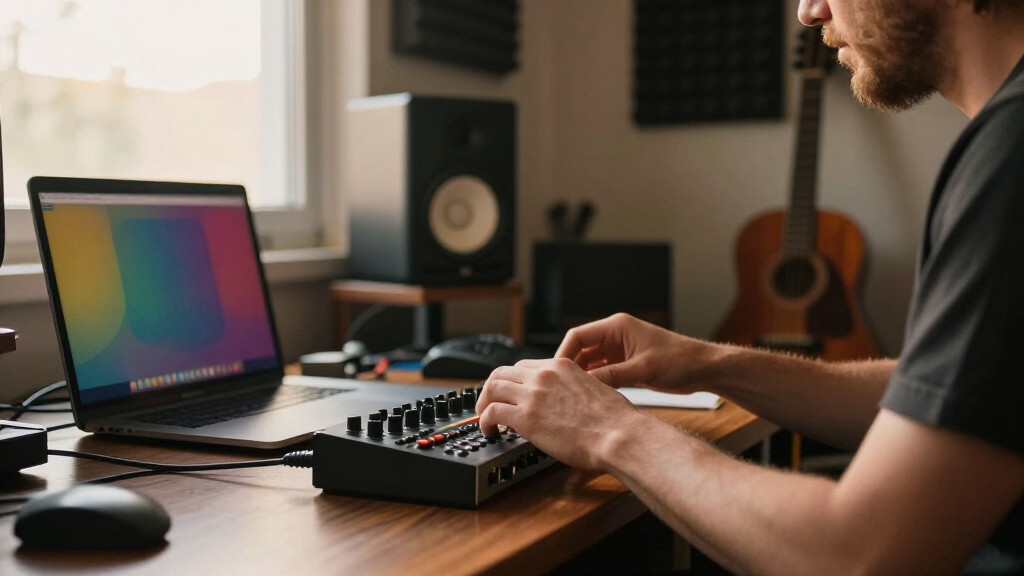
I ranked these interfaces by the criteria that actually shape a creator’s workflow: preamp quality and gain headroom, connectivity options (USB-C vs. USB-B, phone and tablet support), loopback capability for streamers, driver and software reliability, and price-to-feature ratio. A model that records clean vocals but can’t route system audio into a stream ranks differently than one with slightly noisier preamps but full loopback support, because the ranking reflects how creators actually work across recording and live output.
I also weighed build quality, phantom power availability, direct monitoring, and whether bundled accessories add real value or inflate the price. Budget models weren’t penalized for missing features outside their tier — a $50 interface is judged against other $50 interfaces, not against the Zenith 2. That tier-relative judging is why several cheap MAONO units rank above more expensive brand-name options that don’t justify their price gap.
| audio interface for creator | Connectivity |
|---|---|
| Fender AudioBox GO USB Audio I | USB-C |
| Universal Audio Volt 2 USB Aud | USB |
| Antelope Audio Zenith 2 USB-C | USB-C |
| MAONO P1 USB Audio Interface w | Dual USB ports with MFi certification |
| MAONO PS22 Lite USB Audio Inte | USB |
| Focusrite Scarlett Solo 4th Ge | USB-C |
| M-Audio M-Track Duo USB Audio | USB |
| MAONO E2 Gen2 Podcast Equipmen | USB-C, AUX, Bluetooth |
| USB-C Audio Interface with 48V | USB-C |
| Synido USB C Audio Interface f | USB-C to USB-A |
| Zoom AMS-24 USB Audio Interfac | USB |
| PIYONE 2×2 24-bit/192kHz USB C | USB-C, plug-and-play |
Factors to Consider When Choosing Audio Interface For Creators
Before picking a specific model, it helps to understand the factors that separate a satisfying purchase from an upgrade six months later. These are the decision points I’d weigh first.Gain Headroom for Your Microphone
The most common mistake first-time buyers make is matching a low-gain interface with a dynamic microphone like the SM7B or MV7, then wondering why their recordings sound quiet and noisy. Most budget interfaces offer 50–55dB of gain, which is fine for condenser mics but marginal for broadcast dynamics. If you already own or plan to buy a dynamic mic, look for at least 60dB of gain — the MAONO P1 in this roundup hits 70dB, which removes the need for a separate booster like a Cloudlifter. Condenser mic owners can ignore this spec almost entirely. Buying gain you don’t need wastes money, but buying too little forces a second purchase later, so match the spec to the mic you actually own.
Loopback and Streaming Support
If any part of your work involves live streaming, Zoom calls with audio playback, or recording system sound alongside your mic, loopback is non-negotiable. Interfaces without loopback force awkward workarounds — virtual audio cables, extra software, or routing hacks that break at the worst time. This is a hidden cost that doesn’t show up on a spec sheet comparison. The Zoom AMS-24 and Antelope Zenith 2 both handle loopback natively, which is a big part of why they rank where they do. Music-only producers can skip this feature entirely and save money, but hybrid creators who both record and broadcast should treat it as a requirement, not a bonus.
Input and Output Count
Two inputs cover a solo podcaster or singer-songwriter, but the count matters differently depending on how you work. If you plan to record a guest in the same room, mic two instruments simultaneously, or keep a guitar plugged in next to your vocal mic, you need at least two XLR/combo inputs with independent gain control. Output count matters too — headphone and monitor outs on separate volume controls save constant replugging. A common regret pattern: buying a single-input unit like a Scarlett Solo, then discovering you need a second channel within months. Upgrading later costs more than buying the two-channel version upfront, so honestly assess whether a co-host, instrument, or guest might be in your future.
Device Compatibility and Power
Not every interface works with phones and tablets, and not every bus-powered model behaves the same on every computer. If you record on an iPad or want to film phone-based content, check for explicit mobile device support and OTG compatibility — the Fender AudioBox GO and MAONO P1 handle this well. On desktop, driver stability separates the reliable brands from the generic ones: Focusrite, Universal Audio, Zoom, and M-Audio have long track records of firmware updates, while unbranded interfaces often ship with dated drivers that never get patched. Bus power is convenient for portable setups but can introduce noise on some laptops; an external power option gives you a fallback. Match the interface to where you actually record, not where you imagine recording.
Bundles Versus Buying Separately
Bundles like the Scarlett Solo 4th Gen package tempt buyers with a one-click complete setup, but the math only sometimes works. The included headphones, pop filter, and cable are functional rather than good, and if you already own any of them, the bundle premium is wasted. My general rule: bundles make sense for absolute beginners with zero gear, while separate purchases win for anyone upgrading, since you can put the difference toward a better mic or headphones — the components that shape your sound far more than the interface itself. Also watch for older-generation bundles at prices close to current-generation standalone units, a trap that catches a lot of shoppers comparing Scarlett versions. Always price out the bundle contents individually before committing.
When to Pay More
Spending more buys you three things: quieter preamps, better conversion, and reliability under pressure. For a hobbyist publishing to platforms with compression, the audible difference between a $60 interface and a $300 one is small. But for client work, music release, or long podcast sessions, lower noise floors and more robust builds pay for themselves. The premium tier — the Antelope Zenith 2 in this roundup — also adds DSP effects and refined monitoring that genuinely change workflow. My advice: buy the cheapest interface that covers your required feature set and gain needs, then invest the savings in your mic, room treatment, or monitoring chain. The interface is rarely the weakest link in a beginner’s signal path.
Frequently Asked Questions
Is a 4th Gen Scarlett Solo worth the extra money over the 3rd Gen?
The 4th Gen brings improved preamps with more gain, better dynamic range, and re-engineered clipping protection through its Air and Auto Gain features, which matter if you push your levels hard or use dynamic mics. The 3rd Gen remains perfectly capable for condenser mic podcasting and casual music recording, and frequent discounts make it the better pure-value play. The honest answer depends on your mic: dynamic mic owners benefit from the 4th Gen’s extra gain, while condenser users may never hear the difference. If the price gap exceeds $40, the 3rd Gen is the smarter buy for most beginners.
Can I use a USB audio interface with my phone or iPad?
Some models support it and some don’t, so check before buying rather than assuming USB-C means universal compatibility. The Fender AudioBox GO and MAONO P1 in this roundup are built with mobile recording in mind, including the right power handling for devices that can’t deliver full USB bus power. Interfaces drawing significant power may need a powered USB hub or fail to initialize on a phone entirely. iPad users should also verify that their recording app recognizes the interface’s class-compliant mode. If phone-based content creation is central to your workflow, treat mobile support as a filter before comparing anything else.
Do I need 48V phantom power?
You need it if you use a condenser microphone — phantom power is what drives the mic’s internal electronics, and without it a condenser produces no signal at all. Dynamic mics like the SM58 or SM7B don’t require it and are completely unaffected by it, so dynamic mic users can ignore the spec. Almost every interface in this roundup includes phantom power, including the budget models, so it’s rarely a deciding factor anymore. The real question is microphone choice: condensers capture more room detail (good in treated spaces, bad in echoey bedrooms), while dynamics reject room noise. Pick your mic first, then confirm the interface supports it.
What is loopback, and do streamers really need it?
Loopback lets your interface mix your computer’s audio — game sound, music, browser content — with your microphone signal and send the combined mix to your streaming software as a single input. Without it, you need virtual audio routing software, which adds latency, complexity, and a common failure point mid-stream. For podcasters who record only voice, loopback is irrelevant. But for anyone streaming gameplay, playing music clips live, or taking calls with audio playback, it’s the single most workflow-changing feature on the interface. The Zoom AMS-24 offers it at a mid-range price, which is why it ranks highly for hybrid creators.
Are generic no-name USB interfaces safe to buy?
They can work fine, but the risk profile is different from established brands. Generic models often use off-the-shelf chipsets that are class-compliant and plug-and-play, which covers basic recording on most systems. The problems show up later: driver updates that never arrive, vague or inflated spec sheets (claimed sample rates the hardware doesn’t cleanly deliver), and no support channel if something breaks. For casual or experimental use at low volume, the savings can be worth it. For anyone on a publishing schedule or earning money from their audio, the modest extra cost of a Focusrite, M-Audio, Zoom, or MAONO buys accountability that generic brands can’t offer.
Conclusion
Best overall goes to the Universal Audio Volt 2 — its combination of polished preamps, loopback support, and a trusted software ecosystem makes it the safest all-around choice for creators working across music and streaming. Best value is the MAONO PS22 Lite, which delivers the fundamentals at a price that leaves room in the budget for a better mic. Best premium pick is the Antelope Zenith 2, aimed at streamers and podcasters ready to pay for onboard DSP and a more refined signal path. Best for beginners is the Fender AudioBox GO, whose phone and computer flexibility forgives the early experimentation phase of finding your format. For specific needs: the MAONO P1 for dynamic mic users needing 70dB of gain, the Zoom AMS-24 for multi-input loopback streaming, the M-Audio M-Track Duo for two-channel recording on a tight budget, and the PIYONE 2×2 for 24-bit/192kHz recording without brand-name pricing. Whichever direction you take, match the interface to the mic you own and the content you actually make — that single decision eliminates most buyer’s remorse in this category.
Fall Picks
fall essentials
As an affiliate, we earn on qualifying purchases.