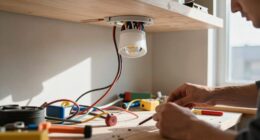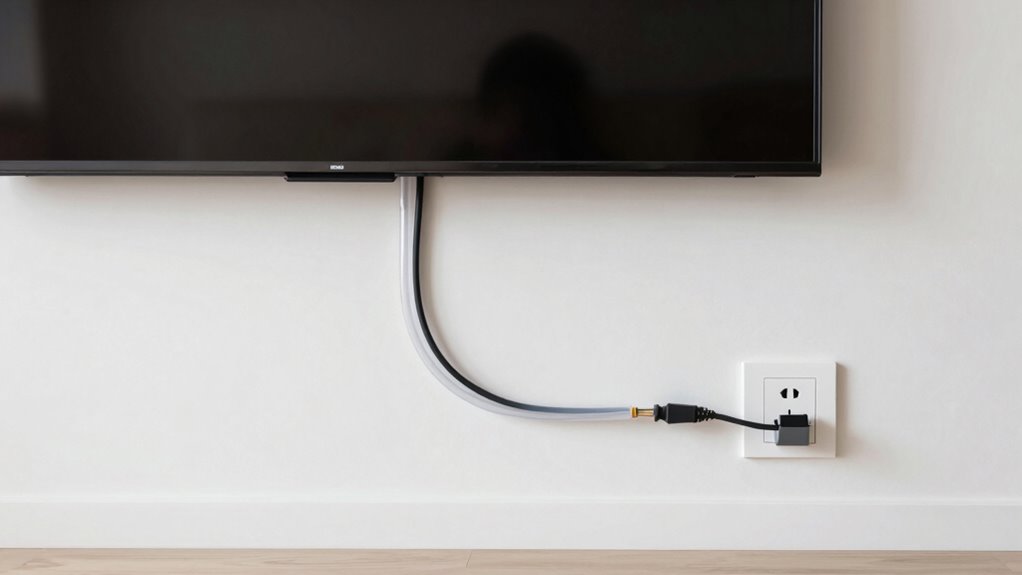
When wall-mounting cables safely, you should only run approved in-wall rated cables like Ethernet (Cat5e, Cat6), low-voltage speaker wires, or fire-retardant electrical wiring. Avoid extension cords, damaged cables, or non-rated wires, as these pose fire and shock hazards. Proper planning, following local codes, and using the right tools are essential for safety and longevity. For detailed tips on what to do and what to avoid, keep exploring these guidelines.
Key Takeaways
- Use only in-wall rated cables like CM, CMR, CL2, or CL3 for safety and compliance.
- Avoid extension cords, non-rated speaker wires, damaged cables, and metallic or foil-wrapped wiring.
- Follow local electrical codes, obtain permits, and have inspections to ensure legal installation.
- Always turn off power, use proper tools, and detect existing wiring before drilling or cutting.
- Secure cables properly, avoid sharp bends, and regularly inspect for wear to ensure long-term safety.

Golf Simulator Projector Cover - Floor Mounted Enclosure with Cooling Fan for Optimal Protection of Outdoor Golf Simulation Projectors - Compatible with Leading Golf Simulators and Projectors
✅【Economical Solution】The Golf Simulator Projector Cover offers a budget-friendly alternative to ceiling installations, allowing you to easily position...
As an affiliate, we earn on qualifying purchases.
Understanding In-Wall Cable Types and Materials

When you’re planning to run cables behind your walls, understanding the different types and materials available is essential. You need to know which cables are designed for in-wall use and which aren’t. For example, Ethernet cables like Cat5e, Cat6, and Cat6a are common choices, but make sure they’re rated for in-wall installation, often marked as CMR or CL2/3. For audio and video, look for HDMI cables with in-wall ratings or specialized low-voltage cables. The materials matter too; cables with fire-retardant insulation and jackets help prevent hazards. Avoid cheap or non-rated cables, as they may not meet safety standards. Choosing the right type and material guarantees your wiring is safe, compliant, and durable, reducing fire risks and ensuring ideal performance. Additionally, understanding the contrast ratio of your projectors can help optimize your home theater setup for better image quality. It’s also important to verify that your cables conform to the relevant fire safety standards, as non-compliant cables can pose significant fire hazards in your home or office.

Projector Dust Cover for Ceiling Video Projector at Home or Outdoor Installation, Waterproof Dustproof Protection Case, 14"x14"x 9"
Ultimate Protection: waterproof cover protects your video projector from dust, scratches, and water damage or other possible factors...
As an affiliate, we earn on qualifying purchases.
Building Codes and Safety Regulations for In-Wall Cabling
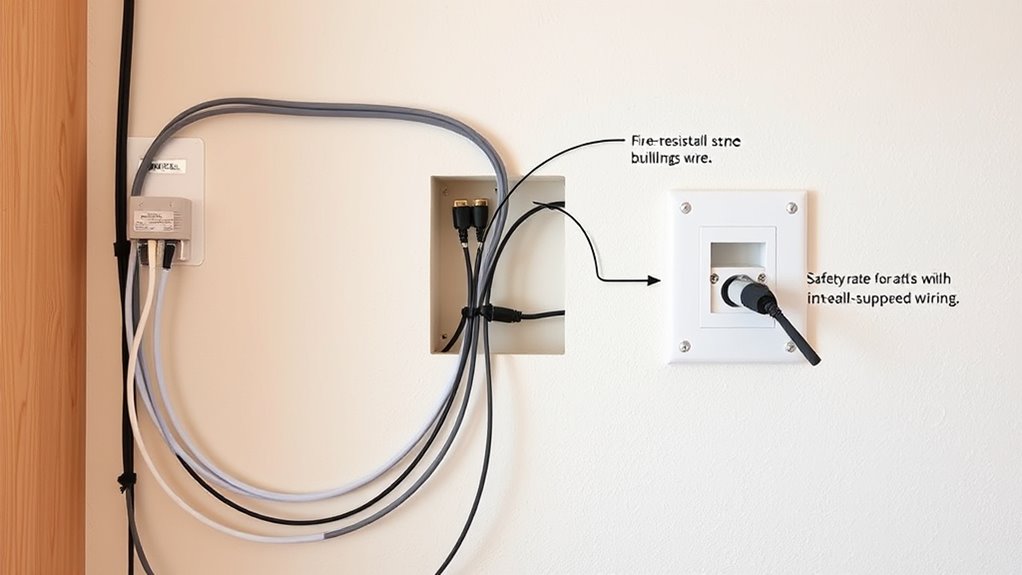
You need to follow local building codes to guarantee your in-wall cabling is safe and legal. Make sure you use only approved cable types that meet current safety standards. Ignoring these regulations can lead to costly fines or hazards down the line. Additionally, selecting the appropriate cable type for in-wall installation is essential to ensure safety and compliance with regulations. Always verify that your wiring methods adhere to electrical code requirements to prevent potential hazards and ensure the longevity of your installation. Proper fire safety standards should also be maintained to minimize risks associated with electrical wiring in concealed spaces. Incorporating security considerations in your planning can further enhance your home’s safety and protect against potential threats.
Local Code Compliance
Making sure your in-wall cabling complies with local building codes and safety regulations is essential to prevent hazards and ensure legal adherence. Check your area’s specific codes before starting, as rules vary by location. Many jurisdictions require using approved materials and following proper installation methods to avoid fire risks or code violations. Ignoring local requirements can lead to fines or the need to redo work. To illustrate, consider the following key points:
| Regulation Aspect | Requirement | Potential Consequence |
|---|---|---|
| Permits | Obtain before work | Fines or work halts |
| Approved Materials | Use listed cables | Fire hazards |
| Inspection | Pass inspection | Legal issues |
| Electrical Codes | Follow NEC standards | Safety risks |
Always verify local codes and consult professionals if unsure. Understanding electrical codes helps ensure your project remains compliant and safe. Additionally, staying informed about building safety regulations can help prevent unforeseen complications during installation. Being aware of specific installation guidelines for in-wall cabling also supports safe and code-compliant work practices. Incorporating proper installation techniques can further reduce the risk of future problems. Ensuring you are familiar with local permit requirements can streamline the process and avoid delays.
Approved Cable Types
Choosing the right cables for in-wall installation is essential to meet building codes and guarantee safety. You should select cables specifically rated for in-wall use, such as CL2 or CL3 rated cables, which are designed to limit fire risk and meet safety standards. These cables are made with fire-retardant materials and are tested for in-wall applications. Avoid using non-rated cables or those not labeled for in-wall installation, as they can pose fire hazards or fail to meet code requirements. When installing, ensure that cables are properly protected with conduit or cable raceways if required. Always verify that your selected cables comply with local building codes and safety regulations to prevent future issues and ensure a safe, reliable setup. In-wall cable ratings are crucial for maintaining safety and compliance.

Projector Dust Cover,Projector Cover Outdoor Case Protective,Dust-Proof,UV-Resistant,Moisture-Proof,Fit for Ceiling Video Mounted Equipment Enclosure Oxford,Cloth Drawstring(13.7" X 13.7" X 8.6")
【Projector Dust Cover Material and Design】: Mainly made of waterproof elastic Oxford cloth, with a sturdy and durable...
As an affiliate, we earn on qualifying purchases.
Approved Cables for In-Wall Installation
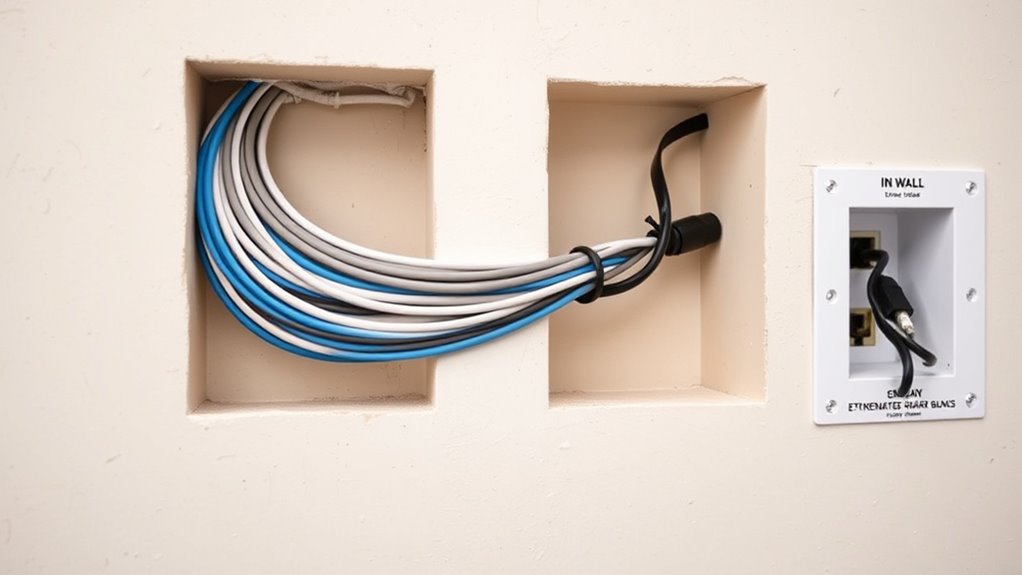
Choosing the right cables for in-wall installation is vital for safety and code compliance. You need to select cable types that meet local regulations and have proper insulation to prevent hazards. Understanding these requirements helps guarantee your wiring is safe and reliable. Additionally, selecting cables with appropriate fire-resistant properties ensures safety in case of electrical faults or emergencies.
Code-Compliant Cable Types
When installing cables in walls, it’s essential to use only those types approved by electrical codes to guarantee safety and compliance. The right cables ensure your wiring is safe, durable, and up to code. Here are four common types approved for in-wall use:
- Non-metallic sheathed cable (NM), like Romex
- Metal-clad cable (MC)
- Armored cable (AC)
- Underground feeder cable (UF)
These cables have the necessary fire ratings, insulation, and durability for concealed installation. Always verify that your chosen cable meets local electrical codes and manufacturer specifications. Avoid using flexible extension cords or non-listed cables, which aren’t rated for in-wall use. Proper cable selection minimizes fire hazards and guarantees your installation is safe and compliant. Additionally, selecting cables designed for specific environments, such as water-resistant or outdoor-rated cables, can further enhance safety when wiring in areas exposed to moisture or weather. Opting for cables with the correct fire ratings and insulation is crucial to prevent potential hazards in concealed spaces.
Proper Cable Insulation
Using the right cables is only part of guaranteeing a safe in-wall installation; proper insulation plays a vital role in preventing electrical hazards. You need cables with insulation rated specifically for in-wall use, such as NM (non-metallic sheathed) or CL2/CL3-rated cables, which meet fire safety standards. Avoid cables with flimsy or damaged insulation, as they increase the risk of shorts and fires. Look for labels indicating compliance with building codes and UL listing. Insulation compliance prevents accidental contact with live wires and minimizes the risk of electrical shock. Always choose cables with insulation designed to withstand heat and potential physical damage within walls. proper insulation not only keeps your installation safe but also ensures long-term durability and safety. Additionally, selecting cables with fire-resistant insulation provides extra protection in case of fire, further enhancing your home’s safety standards.

Projector Dust Cover,Fit for Ceiling Mounted Projector and Universa Projector Waterproof,Dust-Proof, UV-Resistant Cover Oxford Cloth,Dimensions13.7" x 13.7" X 8.6"
Projector dust cover: Protect the projector surface from damage. Keep the projector clean and prevent it from being...
As an affiliate, we earn on qualifying purchases.
Cables and Materials to Avoid Running Behind Walls

Running certain cables behind walls can pose safety hazards and cause damage over time. You should avoid installing:
- Extension cords – They aren’t rated for in-wall use and can overheat or catch fire.
- Speaker wire not rated for in-wall installation – Some wires lack proper insulation, increasing fire risk.
- Old or damaged cables – Frayed or degraded insulation can cause shorts or electrical fires.
- Metallic or foil-wrapped cables – These can interfere with other wiring and pose electrical hazards.
Additionally, using cables that aren’t specifically rated for in-wall use can compromise safety and compliance with electrical codes. Using improper materials may lead to overheating, fire, or electrical shock. Always choose cables specifically designed for in-wall installation and follow safety guidelines. It’s also important to consider local electrical codes and consult a professional when in doubt to ensure your wiring is safe and compliant.
Proper Planning and Measuring for In-Wall Wiring
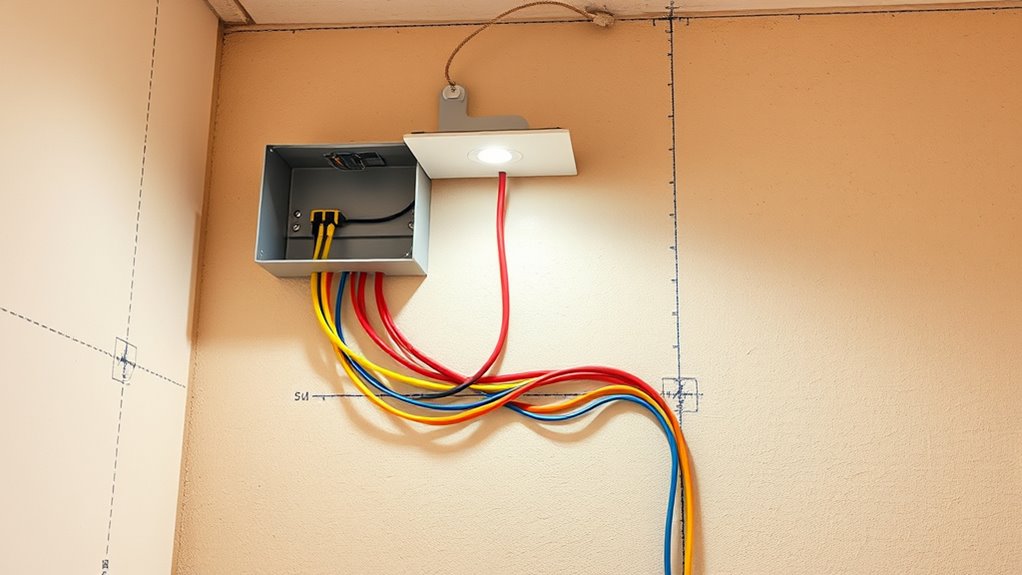
Proper planning and measuring are essential steps before installing in-wall wiring to guarantee safety and functionality. Begin by mapping out where you want your cables, considering the most suitable locations for outlets, switches, and devices. Use a tape measure to determine exact distances between power sources, devices, and wall openings. Mark these points clearly on your wall to ensure accurate placement. Double-check measurements to avoid mistakes that could cause the need for costly adjustments later. Confirm that your planned routes avoid existing electrical wiring, plumbing, or structural elements. Planning ahead helps you determine the right cable lengths and prevents over- or under-estimating. Taking the time to measure and plan carefully reduces risks and ensures your in-wall wiring will work efficiently and safely. Incorporating smart technology into your wiring plan can enhance your home gym’s connectivity and usability. Additionally, understanding building codes and regulations is crucial for a compliant and safe installation. To further ensure a safe and efficient setup, familiarize yourself with circuit load capacity to prevent overloading your home’s electrical system.
Tools and Techniques for Safe In-Wall Cable Installation

To guarantee a safe and efficient in-wall cable installation, you need the right tools and techniques. First, invest in a high-quality stud finder to locate framing and avoid hidden hazards. Second, use a drywall saw or oscillating tool to cut clean, precise holes without damaging surrounding material. Third, employ fish tapes or wire pullers to guide cables smoothly through walls, reducing the risk of damage. Fourth, always wear safety gear such as gloves and goggles to protect yourself during drilling and cutting. Proper technique also matters: measure carefully before cutting, avoid forcing cables through tight spaces, and keep cables away from electrical boxes and wiring. Using these tools and techniques guarantees your installation is safe, professional, and up to code.
Identifying Potential Hazards and How to Prevent Them
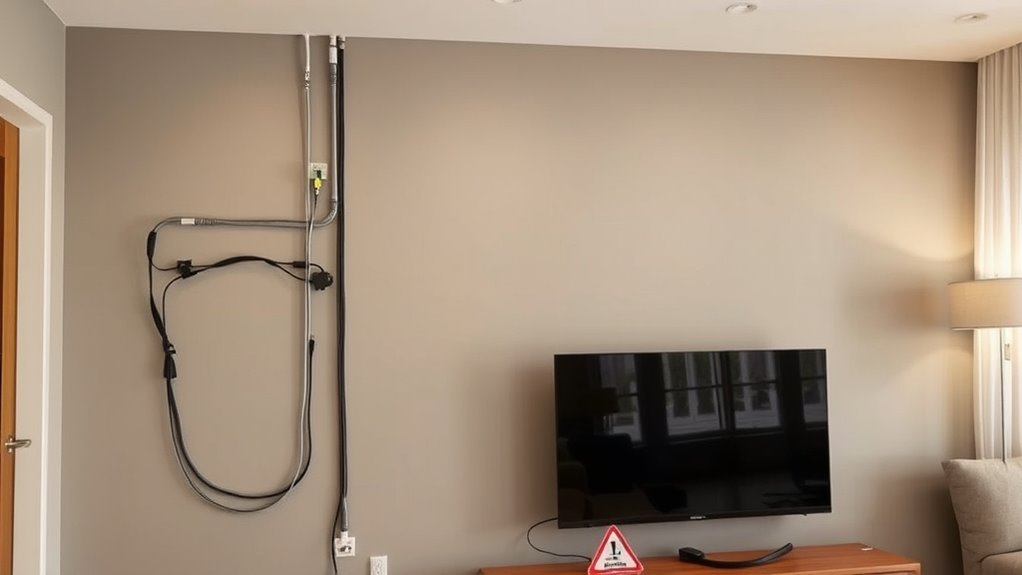
Even with the right tools and techniques, overlooking potential hazards can lead to serious problems during in-wall cable installation. You need to identify risks like electrical wiring, plumbing, or structural elements. Ignoring these can cause damage or dangerous situations. To help, review your wall’s layout carefully before drilling or running cables. Use a stud finder with electrical detection, and always turn off power in the area.
| Hazard | Prevention |
|---|---|
| Electrical wiring | Use a detector to locate wires before drilling. |
| Plumbing | Check wall plans and avoid pipes. |
| Structural elements | Confirm wall framing to prevent damage. |
Tips for Ensuring Long-Term Safety and Durability
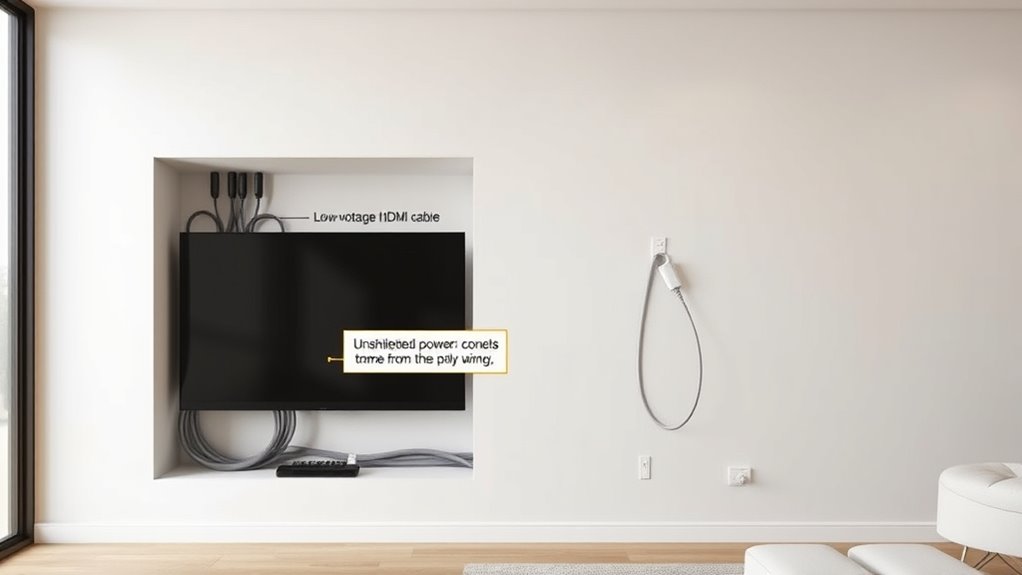
Ensuring long-term safety and durability starts with choosing quality cables and connectors designed for your specific needs. Proper selection prevents deterioration and maintains performance over time. To maximize longevity, consider these tips:
- Use cables rated for in-wall use and appropriate for your environment, such as fire-resistant options.
- Secure cables properly with clips or conduit to prevent movement and mechanical stress.
- Avoid sharp bends or kinks that can damage internal wiring and reduce lifespan.
- Regularly inspect your in-wall cables for signs of wear or damage, replacing them when necessary.
Following these steps helps ensure your cabling remains safe, functional, and durable for years to come. Proper maintenance and mindful installation are key to long-term success.
Troubleshooting Common In-Wall Cabling Issues
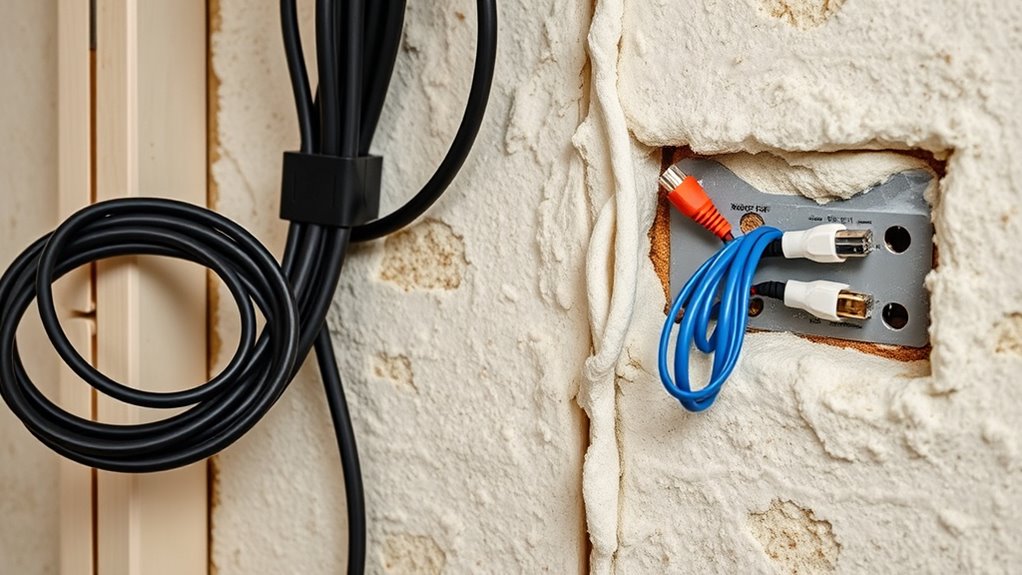
When in-wall cables stop working or exhibit issues, troubleshooting quickly becomes essential to identify and resolve the problem. First, check for visible damage or loose connections at both ends. Use a cable tester to verify continuity and signal integrity. Make sure the cable isn’t kinked or pinched, which can cause interference or breaks. Keep in mind, improper grounding or interference from nearby electronics can also cause problems. Here’s a quick guide:
| Issue | Solution |
|---|---|
| No signal or image | Reseat connections and test with a different device |
| Intermittent performance | Check for damage, replace if needed |
| Slow data transfer | Confirm cable type and specs are correct |
| Interference or noise | Move cables away from power sources |
| Visible damage | Replace damaged cables |
Frequently Asked Questions
Can I Run Ethernet Cables Through Wall Cavities?
Yes, you can run Ethernet cables through wall cavities, but you need to follow safety guidelines. Use cables rated for in-wall use, like Cat6 or Cat6a, which are designed for this purpose. Avoid running cables near electrical wiring or sources of interference. Make sure to follow local building codes and use proper cable clips or conduit to secure them. This guarantees a safe, efficient, and reliable network connection.
Are There Any Restrictions on Running Power Cables In-Wall?
Yes, there are restrictions on running power cables in-wall. You need to follow local electrical codes and manufacturer guidelines to guarantee safety. Avoid running power cables through areas with high moisture, near plumbing, or in contact with insulation that can cause overheating. Use proper conduit or junction boxes, and consult a licensed electrician if you’re unsure. This helps prevent electrical hazards and ensures your installation is safe and compliant.
How Do I Identify Existing Wiring Hazards Before Installation?
Like a detective seeking clues, start by turning off power at the breaker. Use a voltage tester to check for live wires before you touch anything. Inspect the wiring for any signs of damage, corrosion, or outdated insulation. Look for loose connections or strange burn marks. If unsure, call a professional—it’s better to avoid risking a shocking surprise or fire hazard. Safety first, always.
What Are the Signs of Cable Damage Inside the Wall?
You’ll notice signs like frayed or exposed wires, scorch marks, or melted insulation, which indicate cable damage inside the wall. If you hear crackling sounds, see sparks, or smell burning odors when near the wall, stop immediately. Discoloration or bubbling paint can also signal heat damage. Always exercise caution—if you suspect damage, turn off power and consult a professional to inspect and safely handle the wiring.
Is It Safe to Install In-Wall Cables Myself or Should I Hire a Professional?
It’s safer to hire a professional for in-wall cable installation, especially if you’re unfamiliar with electrical codes and building regulations. While DIY might seem tempting, improper wiring can cause hazards like fire or electrical shock. Professionals have the right tools, experience, and knowledge to guarantee your cables are installed correctly and safely. Prioritize safety and compliance by trusting an expert rather than risking DIY mistakes.
Conclusion
By following safety guidelines and using the right cables, you can enjoy a clutter-free, professional-looking setup. Did you know that improper wiring can cause fires or damage your equipment? In fact, electrical fires caused by faulty wiring account for nearly 50% of home fires annually. Stay informed, plan carefully, and prioritize safety to keep your home secure and your tech running smoothly for years to come.