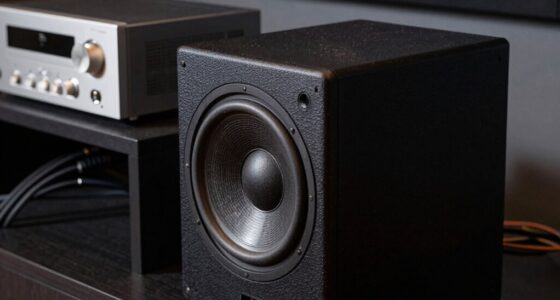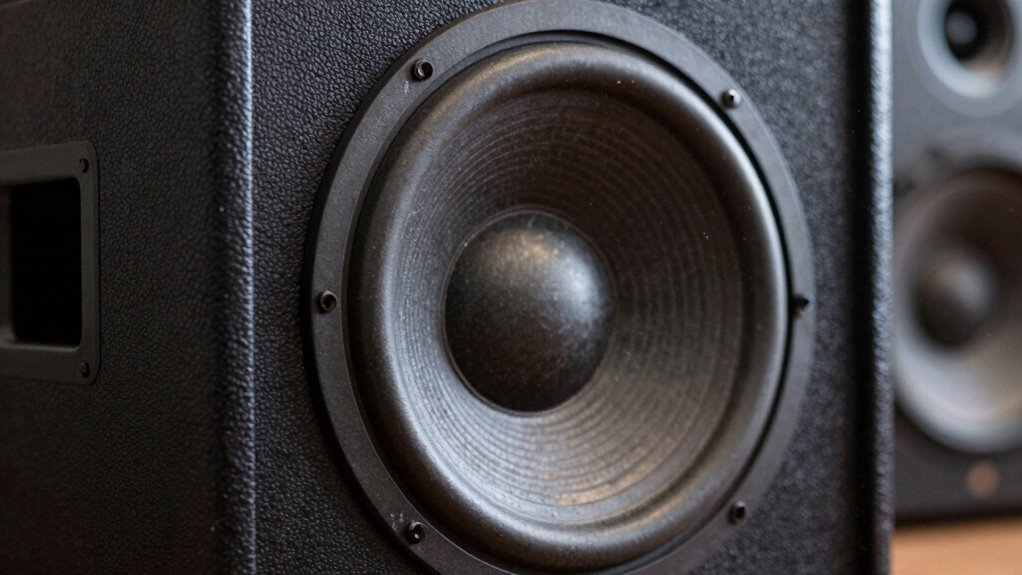
When your subwoofer makes a sharp, rattling noise, it’s likely bottoming out, meaning the cone hits its mechanical limits. This often happens from too much power, poor enclosure design, or incorrect settings that push the driver beyond its safe range. To stop it, you should lower the gain, check your crossover and bass boost settings, and make certain your enclosure matches your sub’s specifications. If you keep going, you’ll discover how to fix and prevent this issue effectively.
Key Takeaways
- Bottoming out occurs when the subwoofer cone hits its mechanical limits, causing distortion and potential damage.
- Insufficient enclosure space or poor design increases air pressure, restricting cone movement and leading to bottoming out.
- Excessive amplifier gain or bass boost can push the subwoofer beyond its safe operating range, causing noise.
- Properly tuning the enclosure and setting appropriate crossover frequencies help prevent cone overexertion.
- Reducing gain, moderating bass boost, and ensuring correct system setup can stop the noise and protect the subwoofer.
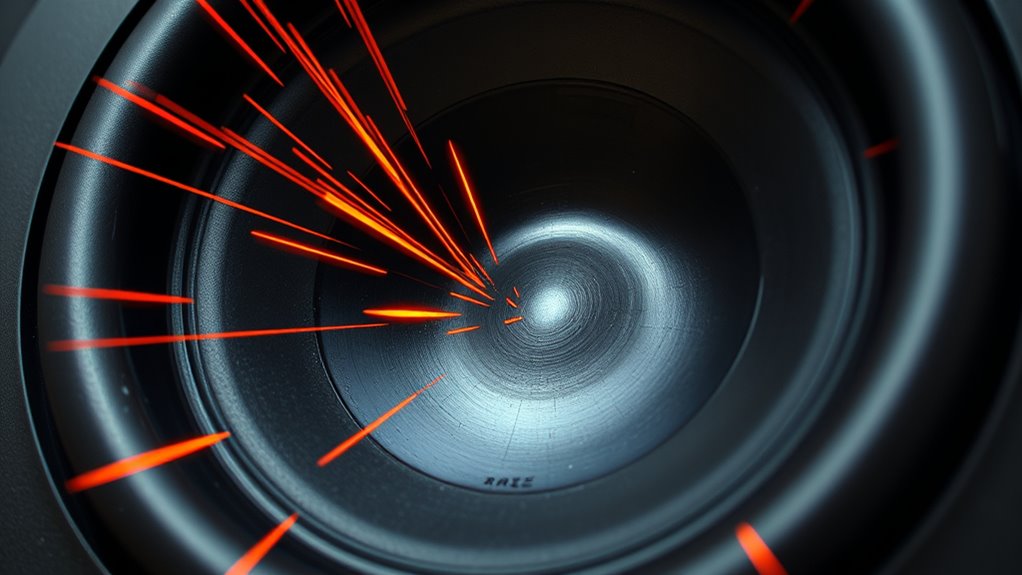
If your subwoofer is bottoming out, it means the cone is hitting its mechanical limits, causing distortion and potential damage. This usually happens when the subwoofer is pushed beyond its capacity, either by too much power or insufficient space in the enclosure. To prevent this, you need to look into your enclosure design. A poorly designed enclosure can restrict the cone’s movement, making it more likely to bottom out. For example, a sealed enclosure that’s too small can increase air pressure around the driver, limiting its excursion and causing harsh sounds. On the other hand, a ported or vented box that isn’t properly tuned might not allow the subwoofer to handle deep bass frequencies efficiently, leading to bottoming out during heavy bass notes. Guaranteeing your enclosure design matches your subwoofer’s specifications is vital. You should also consider how your amplifier settings contribute to this problem. If your gain is set too high, it can send excessive power to the subwoofer, making it work harder than it’s designed for. This can cause the cone to travel too far, hitting the mechanical limits. Adjusting your amplifier’s gain and crossover frequency can help keep the subwoofer within its safe operating range. Turning down the gain reduces the risk of bottoming out, while setting the crossover properly ensures the subwoofer isn’t trying to reproduce frequencies it isn’t built for. Additionally, check your amplifier’s bass boost settings. Boosting bass frequencies excessively can cause the cone to overexert itself, especially during loud, deep bass hits. To avoid damage, keep these settings moderate and match them to your subwoofer’s recommended power ratings. If you notice persistent bottoming out despite adjustments, consider upgrading your enclosure or your amplifier’s power handling. Sometimes, a larger or more precisely tuned enclosure can give the subwoofer the space it needs to operate smoothly. Similarly, using an amplifier with more accurate power control can prevent overdriving the driver. Remember, the goal is to balance the enclosure design and amplifier settings so your subwoofer performs efficiently without risking damage. Properly tuning your system not only prevents bottoming out but also enhances overall sound quality. If you’re unsure about the right enclosure or settings, consult your subwoofer’s manufacturer guidelines or seek advice from a professional installer. In essence, addressing the root causes—like enclosure design and amplifier settings—can save your subwoofer from damage and guarantee you enjoy deep, clean bass without unwanted noise or risks. Additionally, understanding the importance of navigation and mapping can help in choosing the right setup for your specific subwoofer and space requirements.

Q Power 12 Inch Dual Subwoofer Box, High-Performance Vented Speaker Enclosure, Black – Car Audio and Sound System Accessories – Portable Equipment for Subwoofers
Dual 12 Inch Sub Box vented enclosures designed to hold 2 Subwoofers (not included) playing your music; Rock…
As an affiliate, we earn on qualifying purchases.
As an affiliate, we earn on qualifying purchases.
Frequently Asked Questions
Can Subwoofer Bottoming Out Damage My Equipment?
Yes, subwoofer bottoming out can damage your equipment if left unchecked. The sudden impact can strain the subwoofer’s cone and voice coil, potentially leading to costly subwoofer repair. To prevent this, guarantee proper audio optimization by adjusting volume levels and using a subsonic filter. Keeping your system within safe limits helps protect your gear and maintains sound quality. Always address bottoming out promptly to avoid long-term damage.
How Do I Prevent My Subwoofer From Bottoming Out?
To prevent your subwoofer from bottoming out, first adjust your amplifier settings to avoid overpowering it. Proper speaker placement also helps by reducing excessive vibrations and pressure. Keep the volume at a moderate level and avoid pushing the subwoofer to its limits. Regularly check your wiring and make certain the subwoofer is positioned correctly in the room. These steps will protect your equipment and deliver cleaner, more balanced sound.
Does Bottoming Out Affect Sound Quality?
Yes, bottoming out can affect your sound quality by causing distortion and reducing sound clarity. When your subwoofer hits its limit, it can’t accurately reproduce deep bass, which impacts overall bass response. This can make your audio sound muddy or muffled. To maintain ideal sound quality, ensure your subwoofer isn’t overdriven and avoid pushing it beyond its capacity. Properly tuning and protecting it helps keep your sound crisp and clear.
What Are Signs of a Damaged Subwoofer After Bottoming Out?
Like a broken record, you notice signs of damage after your subwoofer bottoms out. If the woofer cone looks torn or warped, it’s a clear sign, and you might also hear distorted or less punchy bass. Coil damage can cause overheating or a burning smell. These issues mean your subwoofer isn’t performing properly, and ignoring them could lead to further damage or complete failure. Check for these signs to prevent more costly repairs.
Is It Safe to Keep Playing When the Subwoofer Bottoms Out?
It’s not safe to keep playing when your subwoofer bottoms out. Doing so can damage the speaker and amplifier. First, check your speaker placement to avoid overloading the subwoofer, and then adjust your amplifier settings—lower the gain or crossover frequency—to prevent excessive movement. If the noise persists, turn off your system and inspect for damage. Protect your equipment by addressing the issue promptly instead of risking further harm.
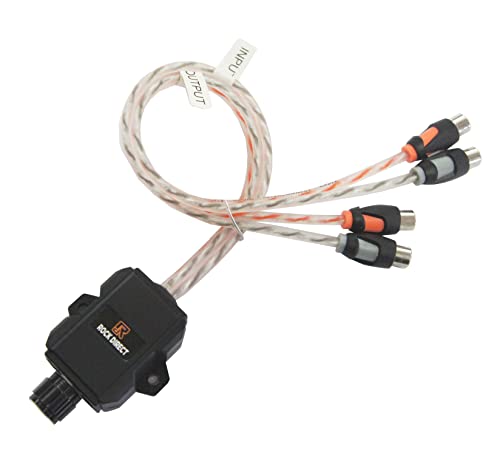
RonDexy Universal Car Bass Regulator Level Control, 2-Channel Amplifier Bass Knob Control Via RCA, Surface Mount, RD01-RVC
1. Universal car bass regulator level control car bass controller,ideal for amplifier system control.
As an affiliate, we earn on qualifying purchases.
As an affiliate, we earn on qualifying purchases.
Conclusion
Understanding why your subwoofer bottoms out helps you protect your gear and enjoy richer sound. Imagine a car’s suspension hitting the bump stops—sound becomes harsh and jarring instead of smooth. Now picture a well-tuned subwoofer gliding effortlessly through deep bass, filling your room without strain. By addressing the causes, you guarantee your setup delivers powerful lows without damage. Think of it as fine-tuning a musical instrument—precision keeps your sound pristine and your equipment safe.

1200W Subwoofer, Slim Underseat Car Subwoofer and Amp Package with Ambient Light, Individual Control for Low Pass/Gain/Boost Bass, Loud Stereo Sound, Deep Bass Perfect for Truck/SUV/Jeep/MPV (Black)
[1200W Max Booming Bass]–Feel the power of the bass in every song thanks to a racetrack car subwoofer…
As an affiliate, we earn on qualifying purchases.
As an affiliate, we earn on qualifying purchases.

Speaker Repair Glue, Flexible Speaker Adhesive, Strong Speaker Glues for Assembling and Repairing Loudspeaker Equipment, 50ml (Pack of 1)
Strong and Flexible: Nexkayee speaker glue is designed to solve the problems of cracking and debonding of speaker…
As an affiliate, we earn on qualifying purchases.
As an affiliate, we earn on qualifying purchases.