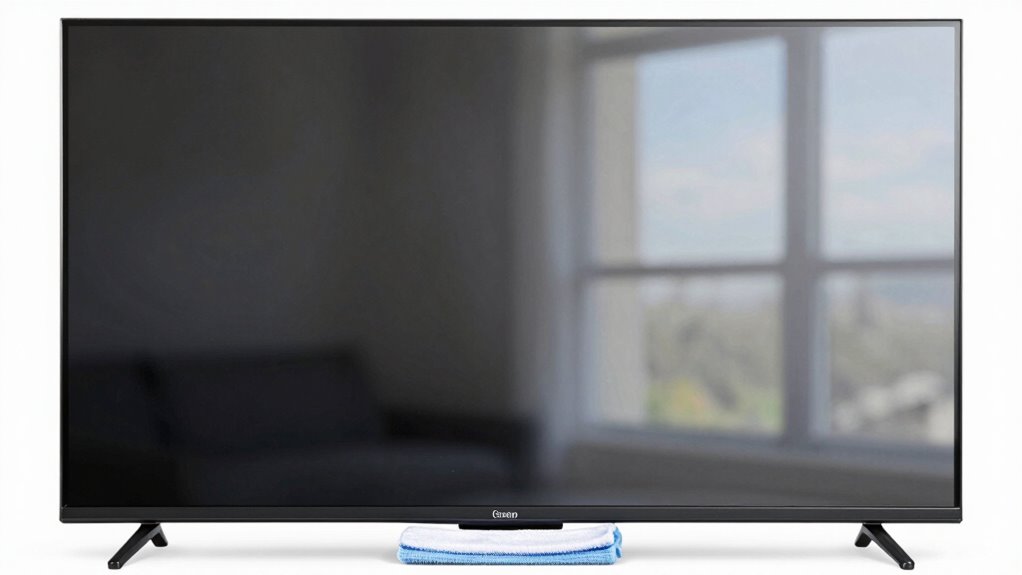

To clean your TV screen without streaks or damaging the coating, turn off and unplug it first. Gently wipe the surface with a microfiber cloth slightly dampened with distilled water mixed with a small amount of white vinegar or alcohol-free cleaner. Avoid spraying liquids directly and never scrub hard. Use circular motions, be patient, and finish with a dry cloth to buff out streaks. Keep these tips in mind to maintain a pristine, coating-safe display—there’s more to learn for perfect results.

Get audio and creator gear delivered free — and shop member deals
- Fast, free delivery on millions of items
- Access to Prime Big Deal Days deals on October 6–7
- Prime Video, Amazon Music and more included
Key Takeaways
- Use a lightly damp microfiber cloth with distilled water and a small amount of white vinegar or gentle cleaner.
- Wipe the screen gently in circular motions with minimal pressure to prevent streaks and coating damage.
- Avoid spraying liquids directly onto the screen; apply them to the cloth instead.
- Follow up with a dry microfiber cloth to buff the surface and remove any remaining moisture or streaks.
- Regularly clean using proper techniques to maintain display clarity without damaging the coating.
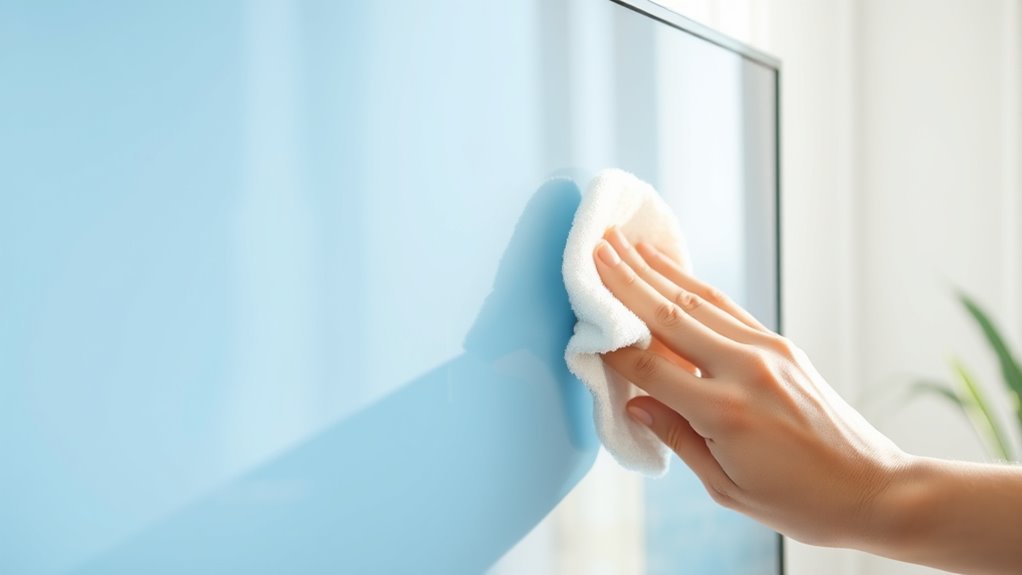
Cleaning a TV screen might seem straightforward, but using the wrong methods can damage your display. To keep your screen looking its best without streaks or stripping the coating, it’s essential to follow proper cleaning techniques. The first step is understanding some key screen cleaning tips that help you avoid surface damage. You should always turn off your TV and unplug it before cleaning. This not only prevents electrical issues but also makes it easier to see dirt and smudges clearly. Wait a few minutes for the screen to cool down; a warm screen can be more susceptible to damage.
When it comes to cleaning, never spray liquids directly onto the screen. Instead, lightly dampen a microfiber cloth with a mixture of distilled water and a small amount of white vinegar or a gentle, alcohol-free screen cleaner. Using distilled water prevents mineral deposits that can cause streaks or spots. The goal is to use a minimal amount of liquid; excess moisture is a common cause of surface damage. Gently wipe the screen in a circular motion, applying only light pressure. Avoid pressing hard or scrubbing aggressively, as this can scratch or strip the coating on your display.
Take care to avoid using paper towels, tissue, or rough cloths, which can scratch the surface. Microfiber cloths are specially designed to lift dirt without harming delicate coatings. When cleaning edges and corners, be gentle, and don’t let liquid seep into vents or seams, as this can cause internal damage. If you notice stubborn smudges or fingerprints, lightly reapply the damp cloth and wipe again, avoiding any harsh scrubbing. After wiping, use a dry microfiber cloth to buff the screen gently, removing any remaining streaks or moisture.
Additionally, regularly checking screen coatings to ensure they are intact can help prevent long-term damage. Regularly cleaning your screen with these techniques helps maintain picture quality and prolongs the life of your TV. Remember, avoiding surface damage is all about using the right tools and methods, not harsh chemicals or abrasive materials. Be patient and gentle; rushing through the process can lead to scratches or coating removal. If you follow these screen cleaning tips, you’ll keep your TV looking pristine and avoid the costly repairs that come with careless cleaning. Keep your cleaning routine simple, use the correct cloths and cleaners, and your TV will reward you with a clear, streak-free picture for years to come.
microfiber screen cleaning cloth for TV
As an affiliate, we earn on qualifying purchases.
As an affiliate, we earn on qualifying purchases.
Frequently Asked Questions
Can I Use Household Window Cleaners on My TV Screen?
No, you shouldn’t use household window cleaners on your TV screen. These cleaners often contain harsh chemicals that can damage the screen’s coating, leading to streaks or discoloration. Instead, follow proper screen cleaning tips, like using a soft microfiber cloth and a gentle, screen-safe cleaner. This approach keeps your TV looking clear and streak-free without risking damage from household cleaner dangers.
How Often Should I Clean My TV Screen?
Think of your TV screen as a reflective pond; the more often you skim its surface, the clearer your view. You should clean your screen once every two weeks to prevent dust accumulation and smudges from building up. Regular screen cleaning frequency keeps your display bright and vibrant, ensuring every scene looks pristine. Remember, gentle dust cleanup avoids streaks and preserves your screen’s coating for long-lasting clarity.
Are There Specific Cloths Recommended for Cleaning Screens?
You should use microfiber cloths or screen-specific wipes for cleaning your TV screen. Microfiber cloths are gentle, non-abrasive, and trap dust and oils effectively, preventing streaks. Screen-specific wipes are formulated to clean without damaging coatings. Avoid using paper towels or household cleaners. Gently wipe the screen in a circular motion, ensuring no residue or streaks remain. This keeps your TV clean without harming its delicate surface.
Will Cleaning Solution Damage the Screen’s Anti-Reflective Coating?
Cleaning solutions, if used correctly, won’t damage your screen’s anti-reflective coating. Many experts confirm that gentle, screen-safe cleaning solutions preserve the coating’s integrity while removing smudges. To guarantee screen coating preservation, avoid harsh chemicals and alcohol-based cleaners. Instead, opt for a soft microfiber cloth lightly dampened with water or a specially formulated screen cleaner. This approach ensures safety and keeps your TV looking pristine without risking damage.
Is It Safe to Spray Liquid Directly Onto the Screen?
You should avoid spraying liquid directly onto your TV screen, as it’s a common screen cleaning myth that this method is safe. Instead, lightly spray a microfiber cloth with a safe DIY cleaning solution, then gently wipe the screen. This prevents streaks and protects the anti-reflective coating. Always follow proper cleaning tips to avoid damaging your TV, and remember, indirect methods are the safest approach for a streak-free clean.
As an affiliate, we earn on qualifying purchases.
Conclusion
Think of your TV screen like a delicate mirror reflecting a world of stories. When you clean it gently and correctly, you’re not just removing dust—you’re maintaining its ability to show you vibrant scenes and memories. Treat it with care, just like you’d cherish a fragile treasure. By doing so, you ensure that your viewing experience remains clear and bright, reminding you that sometimes, the smallest acts of kindness can keep the magic alive for years to come.
TV screen cleaning spray alcohol-free
As an affiliate, we earn on qualifying purchases.
As an affiliate, we earn on qualifying purchases.
anti-streak microfiber cloth for screens
As an affiliate, we earn on qualifying purchases.
As an affiliate, we earn on qualifying purchases.
Fall Picks
fall essentials
As an affiliate, we earn on qualifying purchases.