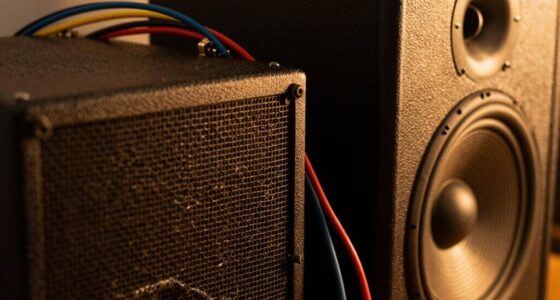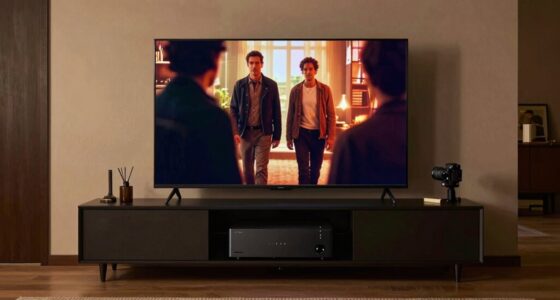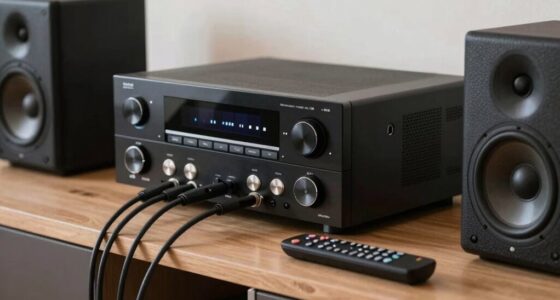
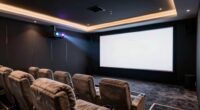
Keeping detailed notes and photos of your home theater setup helps you easily troubleshoot issues, track improvements, and plan upgrades in the future. By documenting acoustic treatments, seating arrangements, and equipment placements, you prevent repeating mistakes and guarantee consistent quality. Visual records make it simple to compare before and after changes. If you want to learn how to make the most of this documentation for your theater, keep exploring this helpful guide.

Get audio and creator gear delivered free — and shop member deals
- Fast, free delivery on millions of items
- Access to Prime Big Deal Days deals on October 6–7
- Prime Video, Amazon Music and more included
Key Takeaways
- They provide a visual record of setup changes to replicate or revert configurations easily.
- Detailed notes help identify effective soundproofing and acoustic improvements over time.
- Photos and measurements ensure consistent seating comfort and optimal viewing angles.
- Documentation streamlines troubleshooting, upgrades, and maintenance tasks efficiently.
- Organized records facilitate future renovations and sharing project details with professionals or friends.
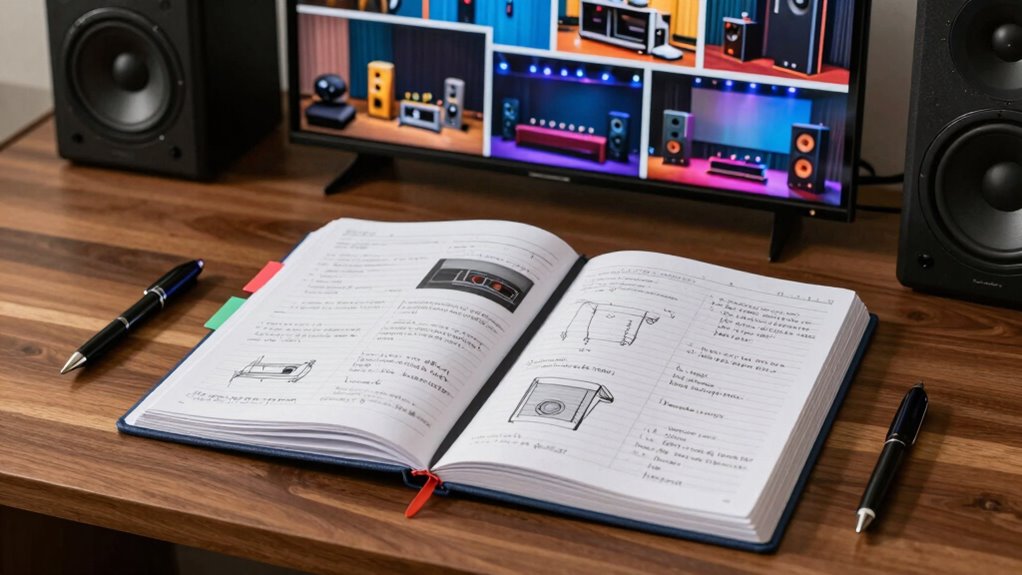
Have you ever dreamed of transforming your living space into a cinematic paradise? If so, keeping detailed home theater notes and photos can be your secret weapon. When planning your setup, these notes help you remember exactly what worked and what didn’t, making future adjustments much easier. For instance, if you’ve experimented with different soundproofing techniques, jotting down which methods reduced sound leakage and which didn’t can save you hours of trial and error later. You might discover that installing acoustic panels in specific spots had a significant impact, or that sealing gaps around doors made a big difference. Photos complement these notes by visually documenting your setup at each stage, so you can see how your soundproofing improvements look and function over time.
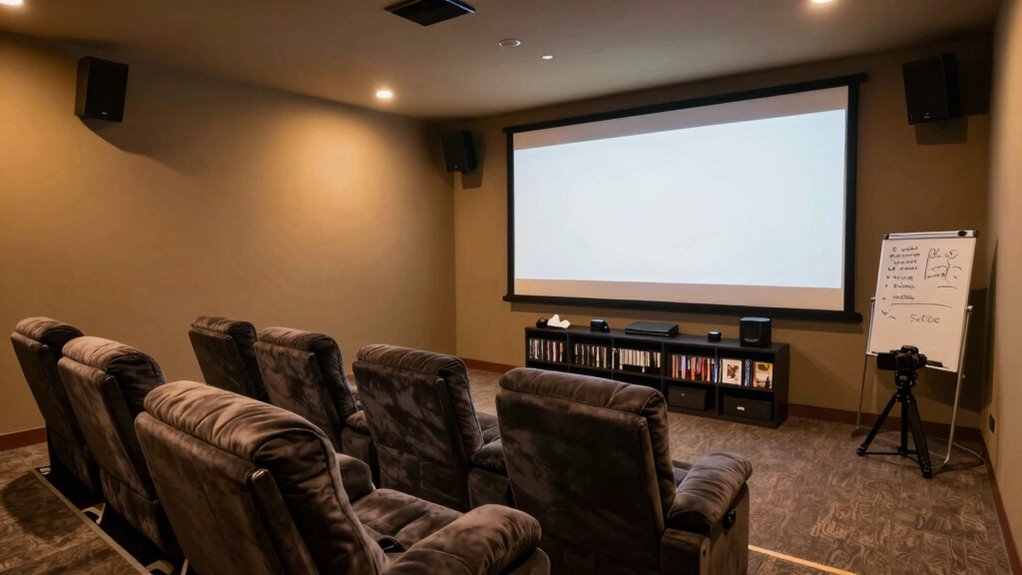
Your seating arrangement is another critical aspect to document. When you first set up your home theater, you may try several configurations to find the perfect balance of comfort and ideal viewing angles. By recording the exact placement of your seats, along with measurements and angles, you create a reference point for future tweaks. If you decide to add a row or reposition your seats, your notes help you avoid guesswork. Photos of your seating layout can reveal how well everyone can see the screen and whether the acoustics are evenly balanced. Over time, these visual and written records allow you to refine your theater, ensuring every seat offers a premium experience.
Having clear notes and photos also proves invaluable when upgrading equipment or troubleshooting issues. For example, if you notice sound quality or visual problems, you can refer back to your previous configurations to identify potential causes. Maybe you changed your speaker placement or added soundproofing that affected acoustics. Your documentation helps you track these changes systematically, preventing you from repeating mistakes or overlooking effective solutions. Additionally, understanding biodiversity principles can inspire eco-friendly choices in your home theater setup, like selecting sustainable materials or energy-efficient equipment. Incorporating proper lighting considerations can also enhance your viewing experience while reducing energy consumption. A well-maintained record can also help you plan for future upgrades, ensuring your setup stays current and efficient. Moreover, keeping detailed notes about soundproofing techniques can guide you in making eco-conscious decisions that align with sustainable living principles.
Furthermore, keeping a record of your home theater notes and photos makes maintenance and future renovations more manageable. When you decide to upgrade your projector or replace speakers, your detailed documentation provides a roadmap to restore your setup efficiently. It’s also handy if you share your project with friends or professionals; clear notes and images give them a comprehensive understanding of your current configuration. Adding digital organization methods to your documentation can further streamline the process, making it easier to access specific details quickly.
In short, maintaining detailed notes and photos of your home theater isn’t just about bragging rights—it’s about saving time, reducing frustration, and ensuring your space continually evolves into the cinematic haven you envision. Whether it’s refining your soundproofing techniques or perfecting your seating arrangement, documentation keeps your project organized, focused, and ultimately more enjoyable.
As an affiliate, we earn on qualifying purchases.
Frequently Asked Questions
How Detailed Should My Home Theater Notes Be?
Your home theater notes should be detailed enough to cover soundproofing techniques, seating arrangements, and equipment placement. Include measurements, material types, and specific locations for soundproofing, so you can easily replicate or adjust the setup later. Document seating configurations, angles, and distances for ideal viewing. This thoroughness guarantees you save time and avoid guesswork during future upgrades or repairs, making your home theater experience seamless and personalized.
What Types of Photos Are Most Helpful?
The most helpful photos are clear shots of your theater lighting setup and speaker placement. Take wide-angle images of the entire room to capture layout, then close-ups of lighting fixtures and speaker positions. These photos help you remember exact locations, wiring, and adjustments, making future upgrades or troubleshooting easier. Ensuring good lighting and focus in your photos guarantees you can replicate or modify your setup without confusion later.
How Often Should I Update My Notes and Photos?
You should update your notes and photos whenever you make changes, like new equipment or soundproofing tips. Regular updates help you stay organized and keep track of your budget considerations. If you notice issues with soundproofing or equipment setup, update your notes immediately to avoid future problems. Periodic reviews—say, every few months—ensure your home theater remains optimized, saving you time and money in the long run.
Can Notes Help With Future Upgrades or Repairs?
Yes, notes can help with future upgrades or repairs. By documenting details like equipment compatibility and wiring diagrams, you create a clear reference that saves time and prevents mistakes. When you’re upgrading components or troubleshooting issues, these notes guide you through the setup, ensuring compatibility and correct wiring. This proactive approach makes repairs smoother and upgrades more efficient, ultimately keeping your home theater system running seamlessly.
What Tools Are Best for Organizing Theater Photos and Notes?
If you want to organize your theater photos and notes, use digital tools like Evernote or Google Drive—they’re smarter than your messy desk. These tools let you categorize by soundproofing techniques or seating arrangements, saving you from future chaos. For the truly ambitious, creating a detailed catalog with photos, notes, and upgrades keeps everything at your fingertips, so you’ll never forget that perfect soundproofing trick or ideal seating setup again.
home theater seating arrangement measurement tools
As an affiliate, we earn on qualifying purchases.
As an affiliate, we earn on qualifying purchases.
Conclusion
By taking thorough notes and snapping photos of your home theater setup, you’ll save yourself stress and struggles down the line. Documenting details helps you remember specs, setups, and solutions, simplifying future tweaks and troubleshooting. This small step secures your space’s success and satisfaction, ensuring your sanctuary stays spectacular. So, stay sharp, snap smart, and scribble specifics—your future self will thank you for the organized, optimized oasis you create today.
home theater equipment organization kit
As an affiliate, we earn on qualifying purchases.
As an affiliate, we earn on qualifying purchases.
soundproofing materials for home theater
As an affiliate, we earn on qualifying purchases.
As an affiliate, we earn on qualifying purchases.
Fall Picks
fall essentials
As an affiliate, we earn on qualifying purchases.