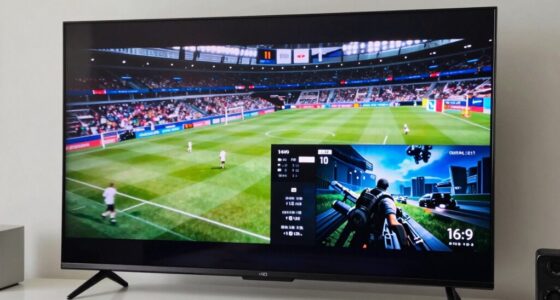
If you have real windows and lamps, ALR screens can still give you a clear, bright picture. They work by reflecting projector light back to you while minimizing the impact of ambient light from sunlight or lamps. This means you don’t need to turn off lamps or close curtains for great image quality. ALR screens are designed to handle these conditions and improve contrast and color accuracy. Keep exploring to discover how they can transform your viewing space even more.

Get audio and creator gear delivered free with Prime
- Fast, free delivery on millions of items
- Prime Video, Amazon Music and more included
- Member-only deals all year
Key Takeaways
- ALR screens reflect projector light toward the viewer, enhancing brightness even with windows and lamps on.
- They minimize outside visibility, providing privacy during daytime in rooms with natural light.
- Specialized coatings help absorb or scatter ambient light, maintaining image clarity despite external lighting.
- ALR screens improve contrast and color accuracy in well-lit environments, reducing the need to block windows or turn off lamps.
- Proper installation and design selection maximize the benefits of ALR screens in rooms with real windows and lamps.

If you have real windows and lamps in your space, understanding how ALR (Ambient Light Rejecting) screens work can seem confusing at first. These screens are designed specifically to improve your viewing experience in environments with plenty of ambient light, but they also have unique features that influence your privacy and lighting setup. When it comes to window privacy, ALR screens play a subtle yet impactful role. They are engineered to reflect light back toward the projector, which means they reduce the amount of outside light seeping through your windows and bouncing around your room. This helps prevent passersby from seeing your screen content clearly, offering a level of privacy that traditional screens cannot match, especially during daytime or in well-lit rooms. So, if you’re worried about people outside catching a glimpse of your favorite shows or presentations, an ALR screen can help you feel more secure while still enjoying natural light from your windows.
Lamp illumination is another critical aspect to consider. In a room filled with lamps or other light sources, standard screens often struggle because their surfaces reflect ambient light, washing out the projected image. ALR screens are designed with specialized optical coatings that selectively reflect the projector’s light while absorbing or scattering ambient light from lamps or windows. This means your image remains bright, sharp, and clear, even when lamps are on or sunlight streams in through your windows. Instead of competing with nearby light sources, the ALR screen works with them, enhancing contrast and color accuracy. You’ll notice a much more vivid picture without needing to turn off lamps or cover your windows, making your space more versatile and comfortable. Additionally, their ability to manage ambient light effectively makes them ideal for rooms with multiple light sources or inconsistent lighting conditions. Understanding ambient light control techniques can further optimize your viewing experience, especially in spaces with fluctuating lighting conditions. Moreover, selecting the right screen type can significantly impact how well it performs in your specific environment, so it’s worth researching different screen optical designs to find the best fit. Investing in the proper screen installation can also contribute to maximizing its benefits and ensuring optimal performance over time.
Products Worth Considering

Bose TV Speaker (2nd Gen) Compact Soundbar with Bluetooth and HDMI Connectivity, Black

Jackery Explorer 300 Portable Power Station with 40W Solar Panel, 292Wh

Samsung Odyssey OLED G5 27-Inch QHD Gaming Monitor
As an affiliate, we earn on qualifying purchases.
Frequently Asked Questions
How Do ALR Screens Differ From Traditional Projector Screens?
You’ll find that ALR screens differ from traditional projector screens mainly in how they handle ambient light, improving image quality in bright environments. They use specialized materials that reject ambient light, providing a clearer picture. Installation procedures are often more straightforward, as ALR screens are designed to maximize contrast and brightness even with windows and lamps nearby. This makes them ideal for spaces with uncontrolled lighting, enhancing your viewing experience considerably.
Can ALR Screens Be Used Outdoors?
Sure, you can try using ALR screens outdoors, but don’t expect them to handle a sudden rainstorm or scorching sun. Their outdoor durability and weather resistance are usually limited, making them less ideal for unpredictable weather. Ironically, these screens perform best in controlled environments where ambient light is managed. If you want a true outdoor experience, look for screens specifically designed with waterproof materials and UV protection.
What Maintenance Is Required for ALR Screens?
You should regularly clean your ALR screen using gentle cleaning routines, like a soft cloth and mild detergent, to keep it clear and functioning well. Consider durability, as some screens may require more careful handling to prevent damage. Avoid harsh chemicals or abrasive materials, and check for any signs of wear or dirt buildup. Proper maintenance ensures your ALR screen stays effective and lasts longer, providing ideal viewing.
Are ALR Screens Compatible With All Projector Types?
You’re in luck—ALR screens are quite versatile, but not all are compatible with every projector. While many work well with different projector types, compatibility issues can arise due to screen material and projector brightness. It’s a case of fitting the puzzle pieces together; check your projector’s specifications against the ALR screen’s requirements. When properly matched, you’ll enjoy sharp images without hitting any snags.
How Do Ambient Lighting Conditions Affect ALR Screen Performance?
Ambient lighting greatly impacts ALR screen performance by reducing screen contrast and image clarity. When ambient light is high, it washes out the projected image, making details harder to see. To get the best performance, you should control ambient light, like dimming lamps or closing curtains. ALR screens are designed to reject ambient light, but minimizing it ensures vibrant colors and sharp contrast, enhancing your viewing experience.
Conclusion
So, now you’re armed with the scoop on ALR screens, even if your windows and lamps still stubbornly exist. Who knew that battling glare and reflections could be so sophisticated? Remember, it’s not about hiding the real world — it’s about making it look better on your screen. So go ahead, embrace your high-tech fortress. After all, who needs sunlight and lamps when you’ve got the perfect view of your perfectly optimized, glare-free cinematic universe?