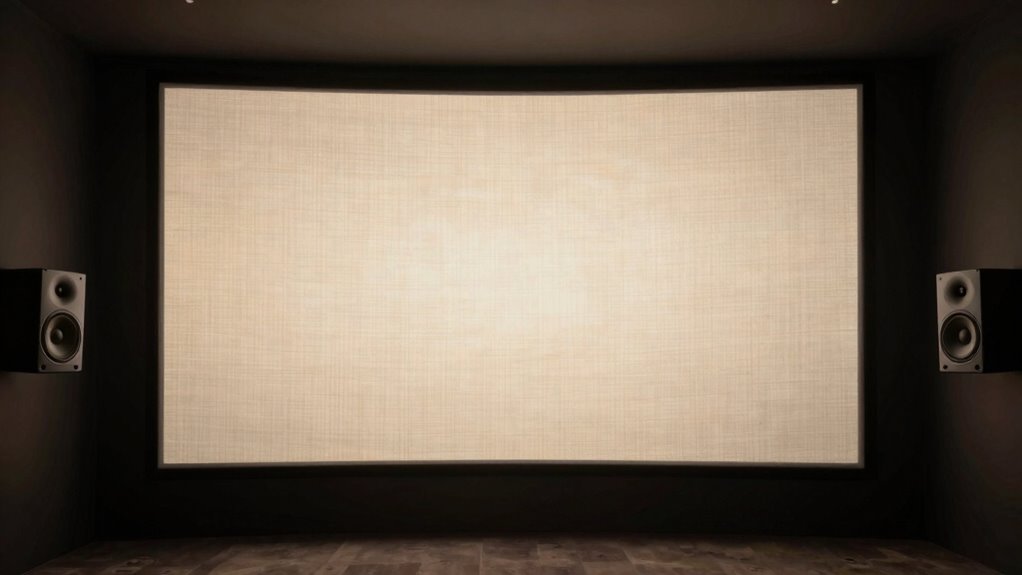
Acoustically transparent screens let you hide your speakers behind the screen, creating a clean, seamless look. This means you can position speakers directly behind the screen, aligning sound more precisely with what’s on display. Proper installation and calibration are key to avoiding sound distortion and maintaining clarity. If you continue exploring, you’ll discover how these screens enhance both audio quality and visual experience, making your home theater setup truly immersive.
Listen free for 30 days with Audible
Thousands of audiobooks and originals — cancel anytime.
As an affiliate, we earn on qualifying purchases.
Key Takeaways
- Speakers can be placed directly behind the screen, creating a clean, clutter-free viewing area.
- Proper placement behind the screen maintains sound clarity and prevents distortion.
- Accurate alignment of speakers behind the screen enhances immersive, theater-like audio experiences.
- Professional installation ensures optimal positioning for balanced sound and visual performance.
- Material selection supports both transparency and hardware support, influencing speaker placement flexibility.

One of the key benefits of using acoustically transparent screens is improved visual clarity. Since your speakers are hidden behind the screen, there’s less clutter in your viewing space, and the focus remains on the screen itself. This setup allows for a more natural, theater-like experience, as the sound appears to originate directly from the screen, increasing the sense of immersion. However, achieving this level of integration requires careful planning, especially regarding installation challenges. You need to confirm that the screen’s mounting is precise and secure, and that the speakers are positioned correctly behind it. Improper installation can lead to issues such as sound distortion, reduced clarity, or uneven audio dispersion, which can detract from your viewing experience. Proper installation practices are essential to maximize both visual and audio performance. Installation challenges with acoustically transparent screens are not insurmountable, but they do require attention to detail. You’ll need to work with professionals who understand the nuances of speaker placement behind these screens to optimize sound quality. The process involves selecting the right type of screen material that maintains transparency while supporting the weight and tension of mounting hardware. Additionally, the mounting process must be meticulous to prevent creases, warping, or sagging that could interfere with both visual clarity and sound transmission. Achieving perfect alignment is crucial for both visual and audio quality, ensuring that the immersive experience is not compromised once installed. Proper installation techniques can also help prevent potential sound distortion, which might arise from incorrect positioning or material choices. Paying close attention to material compatibility can further enhance the overall performance of your system. Ensuring proper audio calibration after installation can make a significant difference in achieving optimal sound clarity and balance. Once installed correctly, however, you benefit from a seamless integration of audio and visual elements that enhances your entertainment system’s overall effectiveness.
acoustically transparent projection screen
As an affiliate, we earn on qualifying purchases.
As an affiliate, we earn on qualifying purchases.
Frequently Asked Questions
Do Acoustically Transparent Screens Affect Sound Quality?
Acoustically transparent screens don’t considerably affect sound quality, so you still enjoy clear audio. They’re designed with materials that maintain sound clarity, allowing your speakers’ true sound to pass through without distortion. Plus, these screens are durable, so they stand up to regular use and wear. You get a seamless blend of aesthetics and function, ensuring your listening experience remains high-quality while the screen’s material durability keeps it looking good over time.
Can I Install These Screens Myself?
Yes, you can install these screens yourself, but beware—the process isn’t as simple as it looks. With DIY installation, you’ll need to pay close attention to mounting considerations, like ensuring the screen is perfectly aligned and securely attached. Rushing could compromise sound quality or damage the screen. Take your time, follow instructions carefully, and consider seeking help if you’re unsure—your audio experience depends on it.
Are There Size Limitations for Acoustically Transparent Screens?
Yes, there are size limitations for acoustically transparent screens, mainly due to screen durability and installation challenges. Larger screens can be more fragile and harder to handle, which increases the risk of damage during setup. You should consider these factors when choosing a size, ensuring the screen’s durability matches your space requirements and that you’re comfortable managing the installation challenges that come with bigger sizes.
How Do Screens Impact Room Acoustics Overall?
Have you noticed how a screen can transform a room’s vibe? Acoustically transparent screens improve room acoustics by allowing sound to pass through, reducing echoes and dead spots. They also enhance visual perception and aesthetic integration, creating a seamless look that doesn’t compromise sound quality. By controlling reflections and sound dispersion, these screens make your space sound clearer and look more cohesive — isn’t that the perfect balance?
What Materials Are Used in Acoustically Transparent Screens?
Acoustically transparent screens are made from materials like woven fabrics, perforated metals, or specialized meshes. These materials offer good material durability, ensuring the screen withstands regular use and handling. They also provide a variety of aesthetic options, allowing you to choose textures and colors that match your decor. The key is selecting a material that balances durability with visual appeal, so your setup looks great without compromising sound quality.
speaker behind screen home theater
As an affiliate, we earn on qualifying purchases.
As an affiliate, we earn on qualifying purchases.
Conclusion
With acoustically transparent screens, you can enjoy the sleek look of a wall-mounted TV without sacrificing sound quality. Unlike traditional setups, these screens let you place your speakers behind them, creating a seamless aesthetic. It’s a balancing act—beauty meets function—where your room’s design isn’t compromised for sound. Embrace this innovation, and you’ll find that clarity and style can coexist, transforming your entertainment space into a sleek, immersive haven.
professional projector screen mounting kit
As an affiliate, we earn on qualifying purchases.
As an affiliate, we earn on qualifying purchases.
audio calibration tools for home theater
As an affiliate, we earn on qualifying purchases.
As an affiliate, we earn on qualifying purchases.
NFL season / tailgating Picks
team gear
As an affiliate, we earn on qualifying purchases.





![2026 Emmy Awards Winners Revealed [Updating Live]](https://beamandbass.com/wp-content/uploads/2026/09/2026-emmy-awards-winners-revealed-updating-live-featured-260x140.jpg)