
When choosing furniture for your center speaker, make sure it’s stable, supportive, and complements your room’s style. Pick a piece with a flat, wide surface that’s proportionate to your speaker to prevent wobbling or sagging. Aim for furniture with sound-absorbing qualities and vibration dampening features to improve acoustics. Guarantee easy cable access and proper height alignment for ideal sound. Keep exploring to discover more tips that can help you set up perfect audio support.

Get audio and creator gear delivered free — and shop member deals
- Fast, free delivery on millions of items
- Access to Prime Big Deal Days deals on October 6–7
- Prime Video, Amazon Music and more included
Key Takeaways
- Ensure the furniture has a wide, flat surface to securely cradle the center speaker without wobbling.
- Choose sturdy, durable materials like solid wood or metal to support weight and prevent sagging over time.
- Select furniture that allows easy access to cables and connections, reducing clutter and ensuring proper setup.
- Position the speaker at ear level using adjustable stands or low-profile furniture for optimal sound quality.
- Opt for pieces with sound-absorbing or vibration-dampening features to enhance audio clarity and reduce unwanted noise.
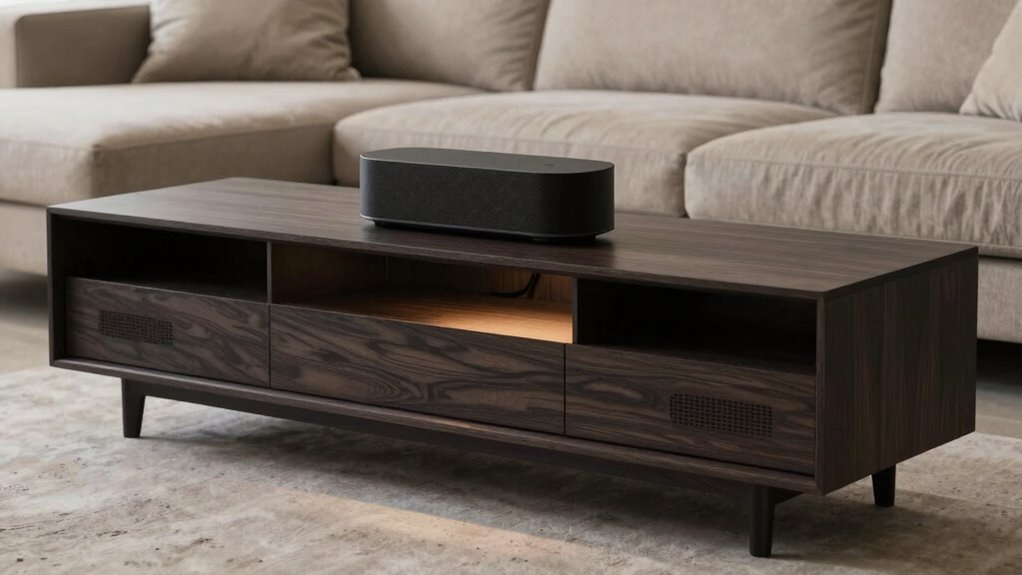
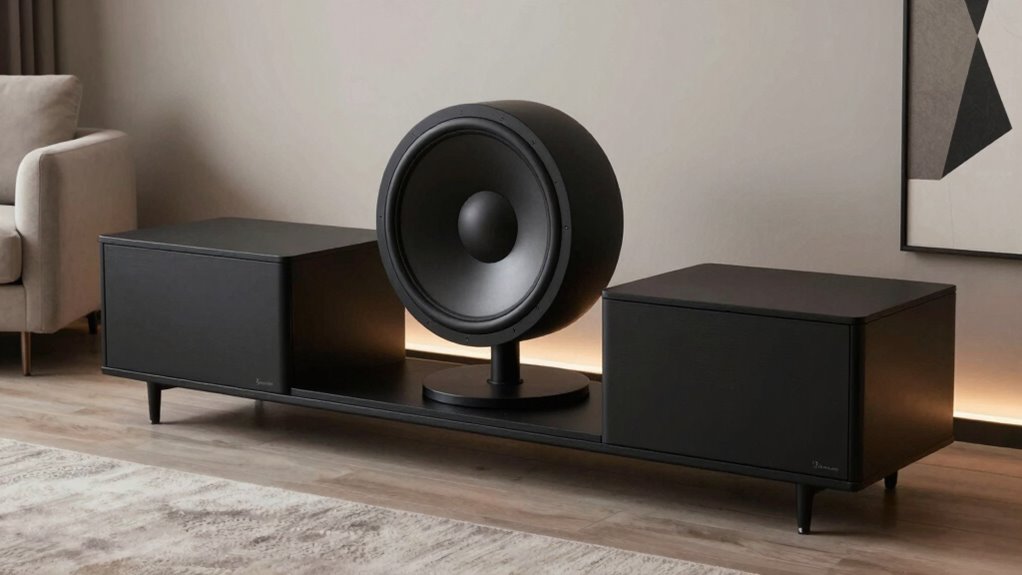
Have you ever wondered how to select the perfect furniture for your center speaker? The right piece can considerably enhance your audio experience while complementing your room’s decor. When choosing furniture, it’s essential to consider both decorative accents and material durability. Decorative accents help your setup blend seamlessly with your overall interior design, adding personality and style. Think about the finishes, colors, and textures that match or contrast with your existing furniture. Whether you prefer sleek modern lines or rustic charm, selecting a piece with the right accents makes your entertainment area feel intentional and curated.
Material durability is another key factor. Center speakers can be hefty, and the furniture you choose needs to support this weight without wobbling or sagging over time. Opt for sturdy materials like solid wood, high-quality MDF, or metal frames. These materials stand up to daily use and prevent vibrations that can interfere with sound quality. Avoid flimsy or hollow furniture that might seem inexpensive but won’t provide the stability you need. Durable materials also resist scratches and dents, keeping your setup looking fresh for years. Additionally, choosing furniture with sound-absorbing qualities can help reduce unwanted reflections and improve overall acoustics. Incorporating acoustic properties into your furniture selection can further optimize your sound environment. Moreover, considering furniture with vibration dampening features can further enhance audio clarity by minimizing unwanted movement and noise.
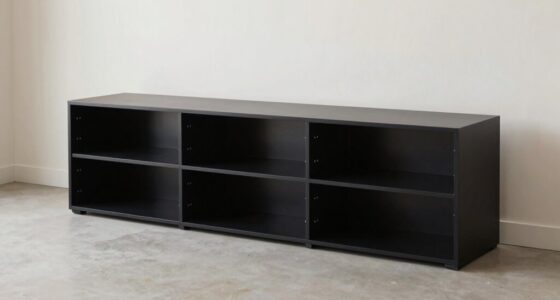
Size and design are equally important. Your furniture should be proportionate to your speaker and the space available. Too small, and it might not support the weight properly; too large, and it could overpower the room. Look for a piece that’s wide enough to cradle your speaker securely, with a flat, stable surface. The design should also facilitate easy access to cables and connections, reducing clutter and making adjustments simple. An open-back or vented design can improve airflow and prevent overheating, especially if your speaker generates heat during extended use. Proper ventilation can also extend the lifespan of your equipment.
Placement is essential for ideal sound. You want your center speaker to be at ear level when seated and positioned directly above or below your TV for the best audio clarity. Your furniture choice should facilitate this placement without obstructing sound waves or blocking the speaker’s front. Consider adjustable stands or low-profile units that keep your speaker at the perfect height. Additionally, decorative accents like trim or decorative molding can add a touch of elegance, but they shouldn’t compromise stability or sound performance.
Furthermore, selecting furniture with a focus on acoustic properties can help optimize sound quality by minimizing vibrations and sound reflections that interfere with clarity. Keep in mind that the room acoustics and furniture placement work together to create an optimal listening environment.
As an affiliate, we earn on qualifying purchases.
Frequently Asked Questions
Can Any Furniture Support a Center Speaker Effectively?
Not every piece of furniture can support a center speaker effectively. You should look for decorative furniture designed with stability and sound quality in mind, ensuring it won’t vibrate or wobble. Aesthetic considerations matter too—you want a piece that complements your room’s decor without compromising sound clarity. Ideally, choose a sturdy, low-profile stand or cabinet that provides a solid, flat surface, enhancing both function and style in your setup.
How Do I Prevent Vibrations From Affecting Sound Quality?
To prevent vibrations from affecting sound quality, you should focus on vibration isolation and acoustic damping. Use stands with rubber or foam padding to absorb vibrations, preventing them from transferring to your speaker. Additionally, add acoustic damping materials like foam or mass-loaded vinyl around the speaker’s base. This combination minimizes vibrations, keeps your sound clear, and guarantees your center speaker performs at its best without unwanted resonance.
Should the Furniture Be Adjustable for Optimal Speaker Positioning?
Yes, adjustable furniture can help you achieve the best speaker positioning, enhancing sound quality. By customizing height and angle, you can align the speaker perfectly with your listening position. Incorporate acoustic insulation into the furniture to minimize vibrations and improve clarity. Choose pieces that blend well aesthetically, ensuring your setup looks good while supporting exceptional sound. Adjustability allows you to fine-tune for the superior audio experience without sacrificing style or acoustic performance.
What Materials Are Best for Speaker-Supporting Furniture?
You should look for furniture made from sturdy materials like solid wood, metal, or high-quality MDF to guarantee durability and support for your center speaker. Choose pieces with an aesthetic design that complements your room decor while providing stability. Avoid cheap or flimsy materials, as they can compromise speaker placement. Durable, well-crafted furniture not only protects your equipment but also enhances the overall look of your entertainment space.
How Does Furniture Height Impact Sound Dispersion?
Think of your furniture as a tuning fork — its height influences sound dispersion. If it’s too tall or short, it distorts the sound waves, causing uneven distribution. A well-chosen height keeps the center speaker at ear level, ensuring clear audio. Prioritize acoustic insulation and furniture stability to prevent vibrations and unwanted resonance. Properly heighted furniture creates a stable platform, so your sound remains focused and balanced across the room.
As an affiliate, we earn on qualifying purchases.
Conclusion
Now that you know how to select the right furniture for your center speaker, you’re well on your way to creating a home theater that hits all the right notes. Just remember, the perfect setup isn’t built in a day—it’s about finding that sweet spot where sound and style meet. When you strike that balance, your entertainment space will be singing in harmony, making every movie night feel like front-row seats to your favorite show.
As an affiliate, we earn on qualifying purchases.
vibration dampening media console
As an affiliate, we earn on qualifying purchases.
As an affiliate, we earn on qualifying purchases.
Fall Picks
fall essentials
As an affiliate, we earn on qualifying purchases.