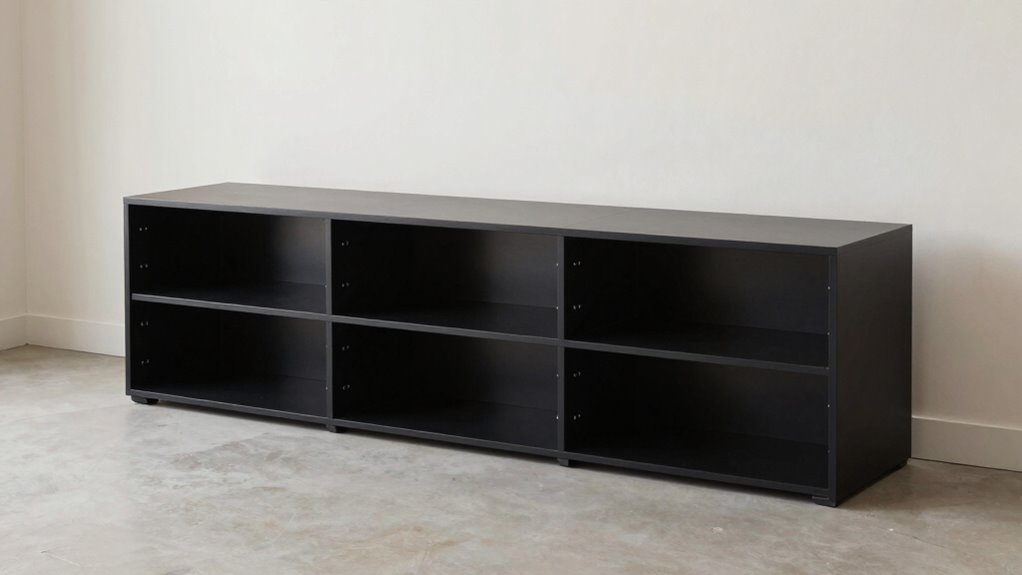

To prevent your AV furniture from trapping heat, choose breathable materials like perforated metal or open-cell foam, and avoid dense plastics. Incorporate vents or grille openings to promote airflow near heat sources, and consider installing exhaust fans or passive ventilation. Keep furniture away from external heat sources and space it from walls to enhance air circulation. Proper equipment placement and regular maintenance help keep temperatures in check. For more tips, you’ll discover additional strategies to improve airflow and protect your gear.

Get audio and creator gear delivered free with Prime
- Fast, free delivery on millions of items
- Prime Video, Amazon Music and more included
- Member-only deals all year
Key Takeaways
- Use breathable, perforated, or open-cell materials to promote airflow and heat dissipation.
- Incorporate vents, grille openings, or mesh panels to facilitate air exchange.
- Avoid stacking heat-generating devices; maintain proper spacing and placement.
- Install exhaust fans or passive ventilation systems to improve airflow around equipment.
- Regularly inspect and clean ventilation features to ensure continuous effective cooling.
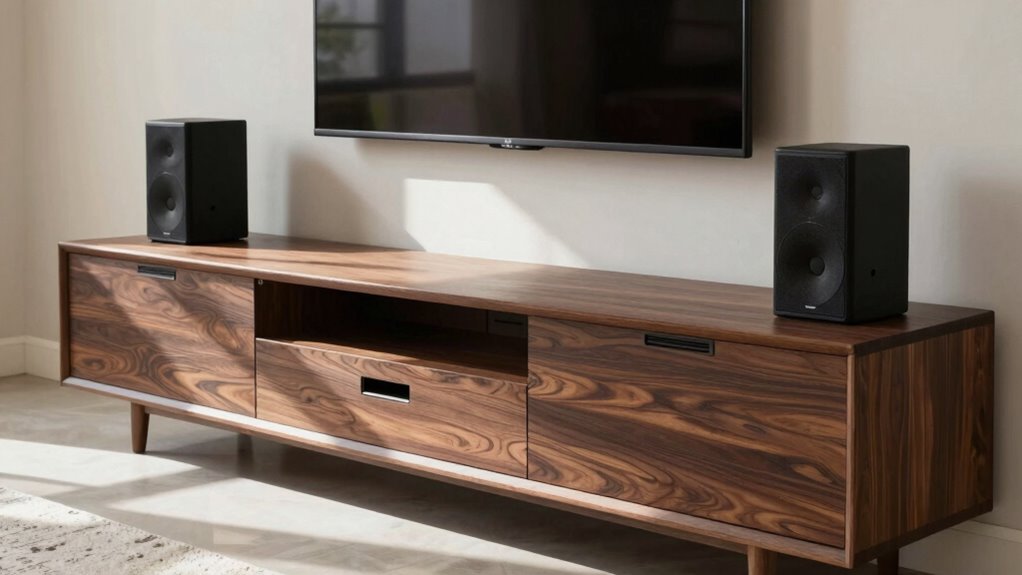
AV furniture can quickly turn into a heat trap if not properly managed, which can lead to damage and reduced lifespan of your equipment. To prevent this, you need to pay close attention to material selection and ventilation strategies. The materials you choose for your furniture play an essential role in heat dissipation. Opt for lightweight, breathable materials like perforated metal, open-cell foam, or ventilated wood panels, which allow heat to escape rather than trap it inside. Avoid dense or non-porous materials like solid plastics or lacquered finishes that can insulate heat, making it harder for airflow to circulate and cool your equipment.
Once you’ve selected the right materials, focus on implementing effective ventilation strategies. Proper airflow is vital to prevent heat buildup. You might consider designing your AV furniture with built-in vents or grille openings that encourage air exchange. These openings should be strategically placed near heat sources such as amplifiers, receivers, or projectors. Installing exhaust fans or passive ventilation systems can also notably improve airflow, helping heat escape more efficiently. If your furniture has enclosed compartments, ensure they have vents or mesh panels that facilitate air movement without compromising security or aesthetics. Regular maintenance of these ventilation features ensures they continue to operate effectively over time. Additionally, understanding heat dissipation principles can help you optimize your furniture setup for better cooling performance.
Positioning your furniture correctly contributes to better ventilation as well. Keep it away from external heat sources like windows with direct sunlight, radiators, or fireplaces. Space it out from walls to allow air to circulate freely behind and around the unit. Elevating the furniture slightly off the floor using risers or stands can improve airflow underneath, preventing heat from accumulating at the base. Understanding ventilation design features in your furniture can further enhance airflow and prevent overheating. Incorporating proper airflow management techniques can make a significant difference in maintaining optimal temperatures for your equipment. Proper placement and airflow techniques can also help you identify potential hot spots before they cause damage.
Additionally, consider the placement of your AV equipment within the furniture. Arrange devices so that heat-generating units aren’t stacked directly on top of each other, which can create hot spots. Use cooling accessories like fan trays or active cooling pads if necessary, especially for high-powered equipment. Maintaining an environment with stable room temperature also helps; avoid placing your AV furniture in overly warm or humid spaces, as these conditions can exacerbate heat retention. Ensuring proper airflow management around your setup can significantly prolong the lifespan of your electronics.
As an affiliate, we earn on qualifying purchases.
Frequently Asked Questions
Can Specific Materials Help Prevent Heat Buildup in AV Furniture?
Yes, choosing specific materials can help prevent heat buildup in AV furniture. Opt for durable materials that resist heat, like heat-resistant fabrics, which can withstand higher temperatures without damage. Additionally, selecting furniture made from materials with good airflow properties, such as perforated or ventilated designs, allows heat to dissipate more effectively. This combination of durable, heat-resistant fabrics and ventilated materials minimizes heat trapping, keeping your AV setup cooler and safer.
How Often Should I Inspect My AV Furniture for Heat Damage?
You should inspect your AV furniture monthly, especially if it’s exposed to continuous use or high temperatures. Keep an eye on material durability and look for signs of heat damage like warping or discoloration. Use effective insulation techniques to prevent heat buildup. Regular checks help catch early issues, ensuring your equipment stays safe and functional, avoiding costly repairs. Stay vigilant—preventing damage is always easier than fixing it.
Are There Any Safety Concerns With Heat Traps in AV Furniture?
Yes, heat traps in AV furniture can pose safety concerns. They increase the fire risk if materials aren’t heat-resistant or if ventilation is inadequate. Always check that your furniture uses safe, fire-retardant materials and ensure proper airflow to prevent heat buildup. Regular inspections help identify potential hazards early. Prioritizing material safety and addressing heat accumulation can greatly reduce fire risks and keep your setup safe.
What Signs Indicate My AV Furniture Is Overheating?
If your AV furniture starts feeling warmer than a summer picnic, you’re likely noticing signs of overheating. Look for discolored surfaces, a strange smell, or even the furniture feeling unnervingly warm to the touch. To prevent this, use heat-resistant coatings and guarantee proper ventilation fans are working. If you spot these signs, it’s time to act—because nobody wants their high-tech furniture turning into a fiery disaster.
Does Room Ventilation Affect Heat Accumulation in AV Furniture?
Yes, room ventilation greatly affects heat buildup in AV furniture. Proper airflow optimization helps dissipate heat, preventing overheating. Using effective ventilation systems ensures fresh air circulates around your equipment, reducing heat accumulation. Keep vents clear, and consider installing fans or exhaust systems to enhance airflow. Regularly monitoring temperature levels can also help you identify and address potential heat issues before they cause damage, maintaining your AV furniture’s performance and longevity.
As an affiliate, we earn on qualifying purchases.
Conclusion
To keep your AV furniture from turning into a heat trap, regular ventilation and strategic placement are key. Did you know that electronic devices generate up to 75% of their heat in the first hour of use? By ensuring proper airflow and avoiding clutter, you can prevent overheating and extend the lifespan of your equipment. Stay proactive with these tips, and your AV setup will stay cool, efficient, and safe for years to come.
perforated metal furniture panels
As an affiliate, we earn on qualifying purchases.
As an affiliate, we earn on qualifying purchases.
passive ventilation system for electronics
As an affiliate, we earn on qualifying purchases.
As an affiliate, we earn on qualifying purchases.
Columbus Day / Indigenous Peoples' Day Picks
long weekend sales
As an affiliate, we earn on qualifying purchases.