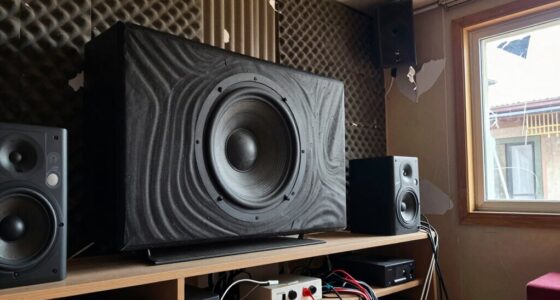
Your subwoofer’s powerful vibrations come from its cone moving rapidly to produce deep bass sounds. These vibrations travel through walls, floors, and furniture, especially if placed near weak or hollow structures. Factors like nearby objects, room construction, and placement amplify rattling. Using vibration isolation, proper positioning, and damping materials can help minimize this effect. Explore further to discover effective ways to keep your home quiet and vibrations under control.
Key Takeaways
- Subwoofers produce vibrations by moving the cone rapidly, which can transfer through structures and cause rattling.
- Placement near walls or corners amplifies vibrations, increasing the likelihood of rattling in the house.
- Loose objects and unstable furniture can resonate with subwoofer vibrations, intensifying rattling sounds.
- Building materials and structural weaknesses affect how vibrations travel, influencing the extent of house rattling.
- Using isolation pads, proper placement, and damping techniques helps reduce vibrations and prevent house rattling.
iBirdie Outdoor TV Cover 52 to 55 inch Weatherproof, Cover Size 52''L x 31''H, Waterproof for Outside Flat Screen 52 to 55 inch TV, Black, 600D Thick Fabric Screen Protector with Bottom
Protect Your Outdoor TV: Protect your outdoor TV with our outdoor TV cover, featuring a long-lasting design and...
As an affiliate, we earn on qualifying purchases.
How Subwoofers Generate Vibrations

Subwoofers generate vibrations by converting electrical signals into mechanical energy. When you send an audio signal to the subwoofer, it energizes a coil inside the speaker. This coil interacts with a magnet, creating a force that moves the cone back and forth rapidly. As the cone moves, it pushes and pulls the surrounding air and the structure of your speaker enclosure. These movements produce sound waves that you hear as deep bass. However, they also cause physical vibrations in the subwoofer itself and everything connected to it. The faster and more forceful these cone movements, the stronger the vibrations. This mechanical action is essential for producing low-frequency sounds but can also lead to unwanted rattling if not managed properly. Additionally, the design of soundproofing materials can help mitigate these vibrations and prevent noise disturbance. Proper placement and vibration isolation techniques are crucial for minimizing the impact on your home environment. Using vibration damping solutions can further reduce the transfer of vibrations to surrounding structures, enhancing overall comfort. Employing resilient mounts can also help absorb some of these vibrations before they spread throughout your home. Understanding the thermal behavior of your subwoofer and enclosure can also inform better vibration management strategies, especially during extended listening sessions.

iBirdie Outdoor TV Cover 48 to 50 inch Weatherproof, Cover Size 47.5''L x 30''H, Waterproof for Outside Flat Screen 48 to 50 inch TV, Black, 600D Thick Fabric Screen Protector with Bottom
Protect Your Outdoor TV: Protect your outdoor TV with our outdoor TV cover, featuring a long-lasting design and...
As an affiliate, we earn on qualifying purchases.
Factors That Amplify Rattling Effects

Certain factors can substantially amplify rattling effects when your subwoofer operates at high volumes or deep bass levels. One key factor is the proximity of the subwoofer to loose or fragile objects, which can easily vibrate and produce noise. Additionally, the material and construction of your room play a role; thin walls or ceilings transfer vibrations more readily, increasing rattling. The subwoofer’s placement also matters—placing it near corners or on uneven surfaces intensifies vibrations. Poorly secured or unstable furniture can act as amplifiers, turning vibrations into rattles. Finally, the subwoofer’s design and power output influence rattling; more powerful units create stronger vibrations, making any weaknesses in your room or setup more noticeable. Ensuring proper soundproofing techniques can help mitigate these issues and reduce unwanted rattling effects considerably. Taking steps to optimize subwoofer placement can further minimize vibrations and rattling in your space. Proper electrical grounding is also crucial to prevent additional vibrations caused by electrical interference, especially in high-powered setups. Using vibration dampers or isolation pads can help absorb unwanted vibrations and protect your environment from excessive rattling, while the choice of room materials can also play a significant role in vibration transfer.

ULTCOVER Waterproof Outdoor TV Cover for 55-59 inch Outside Flat Screen Televisions with Mounts and Stands
Fits flat screen tv with cables size up to 54”(W)x33”(H)x5”(D).
As an affiliate, we earn on qualifying purchases.
Structural Elements and Their Role in Vibration Transmission

Structural elements such as walls, floors, and ceilings play an essential role in transmitting vibrations from your subwoofer throughout your space. When your subwoofer produces bass, these elements act as pathways, carrying vibrations beyond the immediate vicinity. Thick or solid materials can amplify this effect, making vibrations travel farther and stronger. Hollow or poorly isolated structures, on the other hand, allow vibrations to escape more easily, causing rattling and unwanted noise. The way these elements connect also matters; rigid connections transfer vibrations more efficiently than flexible ones. Understanding how your space’s building materials handle vibrations helps you identify potential weak points. Additionally, considering structural damping techniques can significantly reduce vibration transmission. Incorporating mass loaded vinyl or other damping materials into walls and floors can further minimize sound transmission. Recognizing the vibration transmission pathways within your space can help you target specific areas for improvement. By recognizing how walls, floors, and ceilings influence vibration transmission, you can better address rattling issues and improve overall sound quality. Designing for vibration control involves considering structural choices that minimize unwanted vibration transmission.
iBirdie Outdoor TV Cover 70 to 75 inch Weatherproof, Cover Size 68''L x 42''H, Waterproof for Outside Flat Screen 70 to 75 inch TV, Black, 600D Thick Fabric Screen Protector with Bottom
Protect Your Outdoor TV: Protect your outdoor TV with our outdoor TV cover, featuring a long-lasting design and...
As an affiliate, we earn on qualifying purchases.
Techniques to Minimize Unwanted Vibrations

To effectively minimize unwanted vibrations, start by isolating your subwoofer from surrounding surfaces. Use rubber pads, isolators, or platforms designed to absorb vibrations and prevent them from transferring to your floors or furniture. Make certain your sub is placed on a stable, level surface to reduce movement and resonance. Consider positioning it away from walls and corners, as these areas can amplify vibrations. Tighten all mounting screws and connections to avoid loose components that can create additional noise. Also, check that your subwoofer’s feet or pads are in good condition and replace them if worn. The goal is to create a barrier that dampens vibrations at their source and prevents them from spreading throughout your space. Additionally, understanding your load‑planning can help you optimize placement and reduce excess vibrations. This simple step can substantially reduce rattling and improve sound quality, especially when combined with knowledge about vibration control techniques. Being aware of sound isolation principles can further enhance your efforts to prevent vibrations from affecting other parts of your home. Proper vibration mitigation strategies are essential for maintaining a peaceful living environment. Incorporating material selection can also play a significant role in dampening vibrations and improving overall sound quality.
Practical Tips for Managing Subwoofer Vibrations

Managing subwoofer vibrations effectively involves applying practical strategies that you can implement easily. First, place your subwoofer on a solid, level surface, like a hardwood floor or a sturdy platform, to reduce movement. Using isolation pads or stands can absorb vibrations before they spread through your house. Avoid placing the sub directly on the carpet or enclosed cabinets, as these can amplify vibrations. Tighten all mounting screws and check for loose parts regularly to prevent rattling. Adjust your subwoofer’s volume and crossover settings to avoid excessive bass that causes rattling. Also, experiment with positioning—moving your sub slightly away from walls or corners can help minimize vibrations traveling through the structure. These simple steps can considerably reduce unwanted rattle and improve your listening experience. Additionally, understanding how vibration transmission occurs can help you better address the sources of rattling. Recognizing how credit card security measures protect your payment information can also prevent issues related to unauthorized access. Furthermore, exploring modern home automation solutions can enable you to monitor and control your audio setup remotely for optimal performance. Being aware of precious metal investments can guide you in safeguarding your assets against market fluctuations.
Frequently Asked Questions
Can Placement Adjustments Reduce Subwoofer Rattling Effectively?
Yes, adjusting your subwoofer’s placement can markedly reduce rattling. You should experiment with moving it away from walls and corners, which tend to amplify vibrations. Elevate the sub on a platform or isolation pad to dampen vibrations further. Avoid placing it directly on floors prone to resonance. By fine-tuning its position, you’ll minimize vibrations transmitted through your house, leading to a clearer sound and less rattling.
Do Different Flooring Materials Impact Vibration Transmission?
Surprisingly, your flooring material definitely impacts vibration transmission. Hard surfaces like concrete or hardwood bounce vibrations more, making your sub’s rattle feel louder and more widespread. Softer materials like carpet or cork absorb some energy, reducing the rattle’s reach. So, if you want less chaos, consider upgrading to plush carpets or adding rugs—your sub will thank you, and your neighbors will appreciate the quieter, less earthquake-like experience.
How Do Room Acoustics Influence Vibration Amplification?
Room acoustics considerably influence vibration amplification by affecting how sound waves and vibrations move through your space. If your room has hard, reflective surfaces like bare walls or tile, vibrations from your subwoofer bounce around, amplifying noise and rattles. Conversely, adding soft furnishings, carpets, or acoustic panels absorbs vibrations, reducing their spread. To minimize rattling, optimize your room’s acoustics with treatments that dampen vibrations and prevent them from resonating throughout your house.
Are There Specific Subwoofer Models Less Prone to Rattling?
Yes, some subwoofers are less prone to rattling. Look for models with solid enclosures and sturdy materials like MDF or high-quality wood, which act as armor against vibrations. Brands like SVS, REL, and Klipsch often design subs with reinforced cabinets and advanced damping, reducing unwanted rattles. Think of these subs as the calm in a storm—built to handle deep bass without shaking your house apart.
What Are the Long-Term Effects of Persistent Vibrations on Home Structures?
Persistent vibrations can weaken your home’s structure over time, causing cracks in walls, ceilings, and foundations. They may loosen joints and fasteners, leading to costly repairs. Continuous vibrations also stress building materials, reducing their lifespan. You might notice increased noise or instability if vibrations are unchecked. To protect your home, consider installing vibration dampers or isolators, and regularly inspect key structural elements for signs of damage.
Conclusion
By understanding how your subwoofer creates and transmits vibrations, you can prevent your entire house from shaking like an earthquake. Implementing simple techniques and paying attention to your setup lets you tame those monstrous rattles and enjoy deep bass without turning your home into a seismic event. Remember, with the right adjustments, your sub can deliver powerful sound without causing chaos—making your listening experience smooth, clear, and surprisingly peaceful.