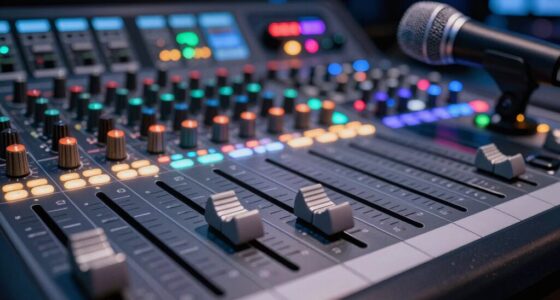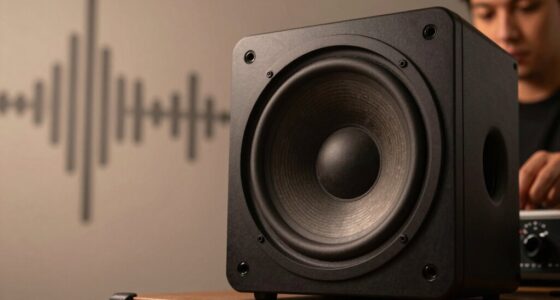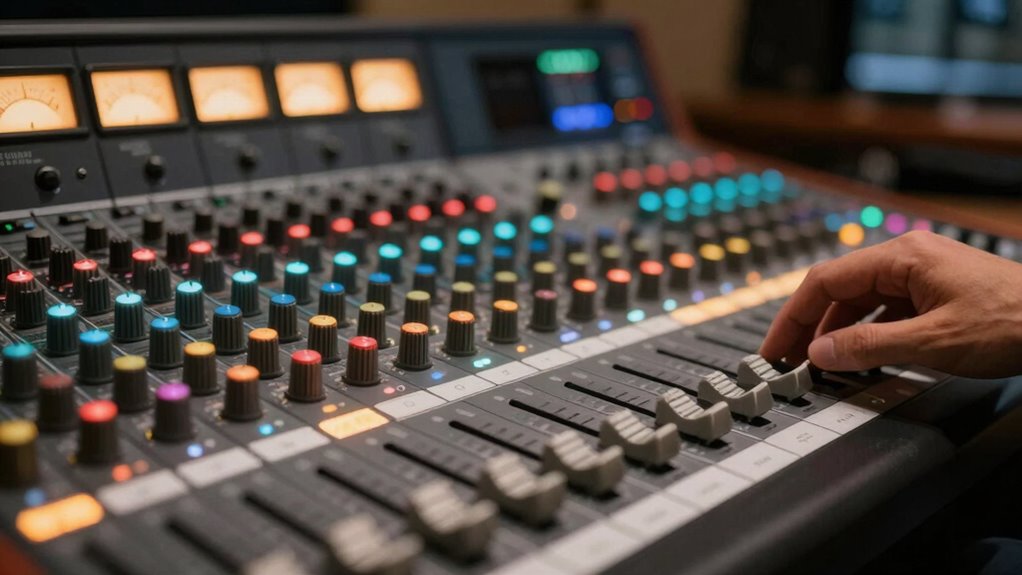

Reference level audio is a standard baseline you use to set sound levels consistently across different devices and environments. It helps make certain your audio sounds clear, balanced, and natural without being too loud or soft. Remember, loudness isn’t the goal—maintaining proper dynamic range and clarity is. When you understand how this calibration works, you’ll see how it keeps your audio sharp and enjoyable, no matter where or how you listen. Keep exploring to learn more.
Key Takeaways
- Reference level audio provides a standardized baseline for consistent sound quality and balance across different systems.
- Achieving the reference level ensures optimal clarity without excessive loudness or distortion.
- Loudness alone doesn’t guarantee better audio; proper calibration maintains fidelity and prevents clipping.
- Managing dynamic range at the reference level preserves audio detail and prevents overwhelming peaks.
- The goal is balanced, immersive sound, not simply increasing volume beyond appropriate levels.
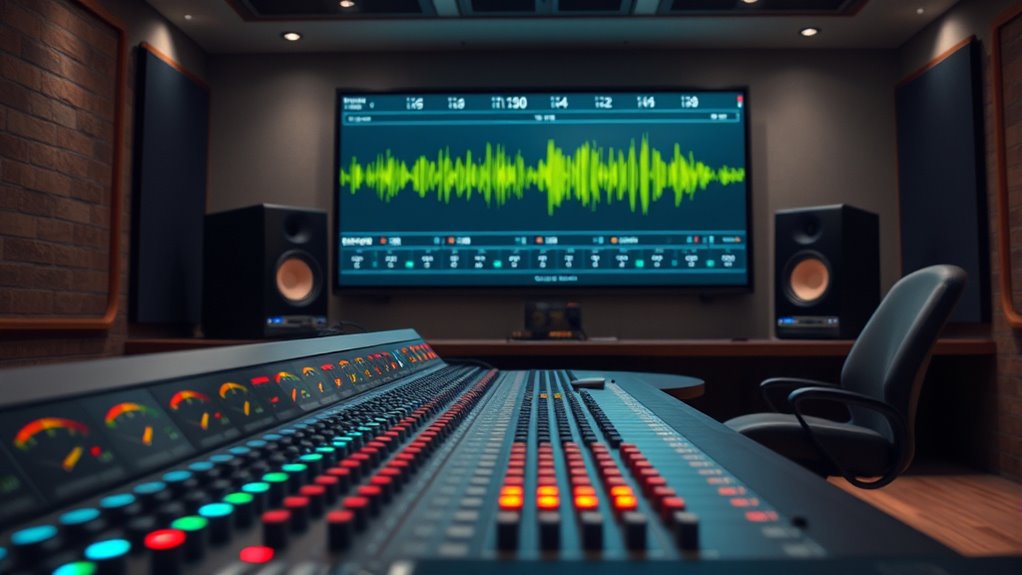
Have you ever wondered what makes professional audio sound so clear and balanced? It all comes down to understanding and maintaining a proper reference level. This concept isn’t just about turning up the volume; it’s about establishing a consistent baseline that guarantees your audio sounds its best across different systems and environments. One key aspect of this is managing the dynamic range, which is the difference between the quietest and loudest sounds in your audio. A well-controlled dynamic range prevents sudden loud noises from becoming overwhelming and ensures softer sounds remain audible, creating a more natural listening experience. To achieve this, audio engineers rely on calibration standards—precise guidelines used to set levels during recording, mixing, and playback. These standards serve as a universal language, so whether you’re listening on high-end studio monitors or consumer headphones, the audio maintains its intended balance and clarity. calibration standards are essential for maintaining consistency across different playback environments.
When you think about loudness, it’s tempting to equate volume with quality. But loud doesn’t necessarily mean better. In fact, aiming for the loudest possible sound often sacrifices the overall fidelity of the audio. Instead, reference level audio is about hitting a specific, calibrated loudness that preserves detail and nuance without distortion. For example, in professional settings, audio is calibrated to a standard level—often measured in decibels relative to a reference point—so that all components of the mix are aligned. This calibration ensures that soft sounds are still perceptible, and loud sounds stay within a controlled range, preventing clipping or distortion. By setting a consistent reference level, you create a reliable benchmark that guides mixing decisions and playback levels.
Understanding reference level also helps you better appreciate how audio is consumed across various platforms. When you listen to music, watch movies, or record content, the system’s calibration standards ensure that the sound remains consistent. This consistency allows you to enjoy the full depth and detail of the audio as intended by the creator. It’s not about cranking the volume to maximum, but about ensuring every element—dialogue, music, effects—fits within an ideal dynamic range. This balance is what produces clarity, width, and depth, making the listening experience engaging and immersive. So, next time you notice how professional audio sounds so precise and natural, remember it’s the careful application of reference levels, calibration standards, and dynamic range management that makes it possible.

Portable Power Station 300W, GRECELL 230.88Wh Solar Generator with 60W USB-C PD Output, 110V Pure Sine Wave AC Outlet Backup Lithium Battery for Outdoors Camping Travel Home Blackout
【230.88Wh Capacity, 330W Output】330W (600W surge) pure sine wave supports most laptops, tablets, phones, lights, fans, CPAP medical...
As an affiliate, we earn on qualifying purchases.
Frequently Asked Questions
How Does Reference Level Audio Differ From Standard Listening Levels?
Reference level audio differs from standard listening levels by providing a consistent volume calibration that aligns with industry loudness standards. You set your system to a specific level, usually 0 dB on your meter, ensuring accurate sound reproduction across devices. Unlike simply turning up the volume to be loud, this calibration helps you perceive audio as intended, maintaining clarity and balance without unnecessary loudness. It’s about precision, not just loudness.
Can Reference Level Audio Improve Home Theater Sound Quality?
Yes, reference level audio can improve your home theater sound quality. When you calibrate your system using proper calibration techniques, it accounts for room acoustics, ensuring balanced sound at standard reference levels. This process helps you hear dialogue clearly, enjoy full dynamic range, and prevent distortions from overdriving your speakers. By focusing on accurate levels rather than loudness, you create a more immersive, realistic listening experience that maximizes your setup’s potential.
What Equipment Is Necessary to Achieve Reference Level Audio?
Did you know that professional studios often calibrate audio to exactly 85 dB? To achieve reference level audio at home, you’ll need a quality receiver, calibrated speakers, and tools for studio calibration. Proper speaker placement is essential, so position your speakers at ear level and avoid walls. Invest in a calibration microphone and sound meter for precise tuning, ensuring your system hits that perfect reference level without distortion.
Is Reference Level Audio Suitable for Casual Listening?
Reference level audio isn’t ideal for casual listening because ambient noise can interfere, making it hard to enjoy at peak clarity. You might find it too precise or loud for relaxed settings, especially if your environment isn’t controlled. For casual listening, lower volumes with some ambient sound might suit you better, allowing you to enjoy your music or movies comfortably without feeling overwhelmed or distracted by background noise.
How Does Reference Level Impact Audio Mixing and Production?
You’ll find that reference level considerably influences your audio mixing, as it helps maintain a consistent dynamic range across tracks. Studies show that properly calibrated levels reduce listener fatigue and improve clarity. By using calibration techniques, you guarantee your audio sits at the ideal reference level, allowing for accurate decisions on loudness and dynamics. This precision results in cleaner mixes, better balance, and a more professional sound in your production process.

Herdio 6.5 Inch 800W Outdoor Bluetooth Speakers Wired Waterproof with Multifunctional Amplifier, Wall Mount Speaker System for Patio Home Poolside Deck Backyard(2 Pairs,Black)
【Full-Range Speakers】The high powered full range indoor outdoor speakers wired waterproof has a maximum power output of 800...
As an affiliate, we earn on qualifying purchases.
Conclusion
So, next time you listen to your favorite track, remember that loud isn’t everything. The reference level guarantees your audio sounds balanced and true to the original, not just ear-splitting. Isn’t it better to experience music the way it was meant to be heard? Paying attention to these levels helps you enjoy clearer, more accurate sound—without sacrificing quality for volume. After all, isn’t true listening about quality, not just loudness?

STUDIOFINIX 6.5 Inch Outdoor Speakers Wall-Mounted 800W - Waterproof and High-Performance Audio Solution for Indoor/Outdoor,Home,Patio,Garden,Backyard(4 Passive Speakers Bundle/Black)
〖Powerful Performance〗: Boasting a peak power handling of 800 watts, it delivers a full range of dynamic sound...
As an affiliate, we earn on qualifying purchases.

Polk Audio Atrium 4 Weatherproof Outdoor Speakers with Powerful Bass (Pair, Black), All-Weather Durability, Broad Sound Coverage, Speed-Lock Mounting System
EASY INSTALLATION - One-click speed-lock mounting bracket offers anti-slip, one-handed installation. Mount these outdoor speakers wired vertically or...
As an affiliate, we earn on qualifying purchases.