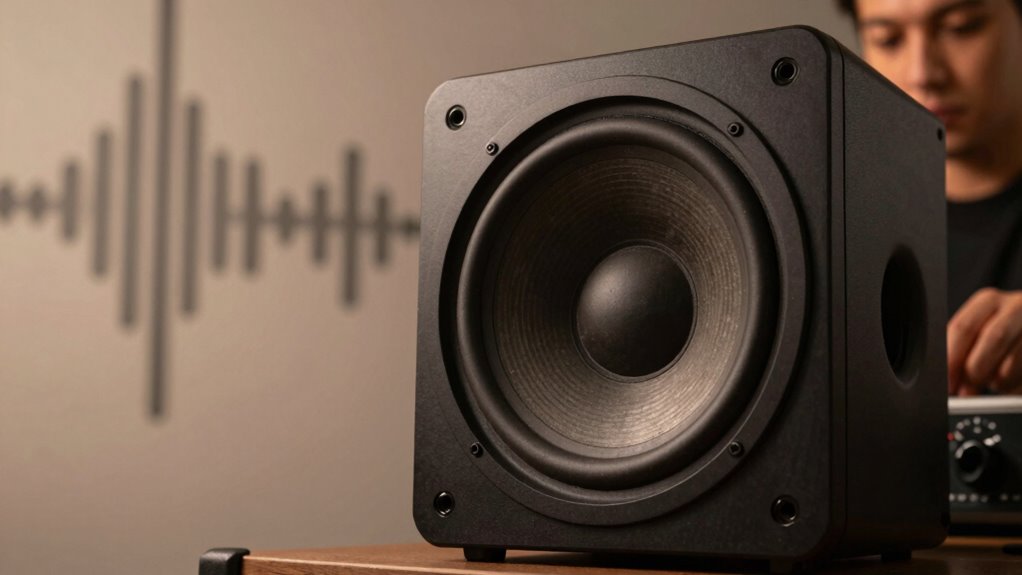
To find your subwoofer’s volume limit without bothering neighbors, start by playing music at a moderate level and walk around your space, paying attention to shared walls and floors. Adjust the volume lower if you notice vibrations or sound leakage outside. Experiment with different placements, avoiding corners and walls that amplify bass. Keep testing until you find the highest volume that maintains sound quality without causing disturbances. Continue exploring these tips to master noise control effectively.

Get audio and creator gear delivered free — and shop member deals
- Fast, free delivery on millions of items
- Access to Prime Big Deal Days deals on October 6–7
- Prime Video, Amazon Music and more included
Key Takeaways
- Play audio at moderate volume and walk around to detect vibrations or sound leakage outside the room.
- Adjust subwoofer placement, avoiding corners and shared walls, to minimize bass transmission.
- Use soundproof barriers like acoustic panels or mass-loaded vinyl to contain sound within the space.
- Repeatedly test at different volumes until reaching the highest level that causes no neighbor disturbances.
- Reposition the subwoofer closer to the room’s center and elevate it to reduce vibrations reaching shared boundaries.

If you’ve ever wondered whether your subwoofer’s bass vibrations disturb your neighbors, conducting a simple neighbor test can help. The goal is to determine the volume level that stays within acceptable limits before causing complaints. One effective way to do this is by paying close attention to how your subwoofer’s placement and soundproof barriers influence the sound transmission. Start by choosing a spot for your subwoofer that minimizes disturbance. Avoid placing it directly against shared walls or floors, as these areas transmit vibrations more easily. Instead, position it away from common walls and consider elevating it slightly or placing it on a platform. This small change can considerably reduce the amount of bass that leaks into neighboring spaces.
Next, focus on your subwoofer placement within your room. Experiment with moving the sub around to find the spot where it produces the fullest sound without overburdening the walls and floors. Often, placing the subwoofer near a corner amplifies bass, which might be tempting, but it can also increase vibrations that disturb neighbors. Instead, place it centrally or away from shared walls to contain the vibrations. Once you’ve found a good position, think about implementing soundproof barriers. These barriers, whether specialized acoustic panels or mass-loaded vinyl, help absorb and block sound waves, preventing them from traveling through walls and floors. Combining strategic placement with soundproof barriers creates a more controlled environment that minimizes noise leakage.
To further optimize your setup, consider soundproofing techniques that are designed to reduce sound transmission even more effectively. Now, to perform the neighbor test, play your usual music or movie soundtrack at a moderate volume. Walk around your home, especially near shared walls or floors, and listen carefully for vibrations or sound leakage. If you notice substantial bass vibrations or hear the bass through the walls, lower your volume slightly and reposition your subwoofer further from shared boundaries. Repeat this process until you find the highest volume level that doesn’t cause noticeable vibrations or sound transmission outside your space. This is your personal volume limit before risking neighbor complaints.
As an affiliate, we earn on qualifying purchases.
Frequently Asked Questions
How Do I Detect Subtle Vibrations Caused by My Subwoofer?
To detect subtle vibrations caused by your subwoofer, increase the sound pressure gradually while paying close attention to any physical sensations. Use your vibration sensitivity by feeling for tiny shifts or tremors in nearby surfaces, like floors or walls. Placing a piece of lightweight paper or a thin object on these surfaces can help you notice even minor vibrations. This way, you can gauge the volume limit before disturbing your neighbors.
What Are the Best Times to Perform a Neighbor Test?
Did you know most noise complaints happen during late evenings? The best times to perform a neighbor test are early mornings or late afternoons when your neighbors are less likely to be disturbed. Use soundproofing techniques and carefully consider subwoofer placement to minimize vibrations. Testing during these times helps you find your volume limit without risking complaints, ensuring a good balance between enjoying your music and maintaining neighborly peace.
How Does Wall Insulation Affect the Test Results?
Wall insulation considerably impacts your neighbor test results by reducing sound transmission, making your subwoofer’s noise less noticeable through walls. Good soundproofing materials, like dense insulation, block or absorb bass vibrations, allowing you to play louder without disturbing neighbors. If your walls lack proper insulation, your test might show lower safe volume limits. As a result, enhancing wall insulation helps you find the true volume threshold before complaints, ensuring a balance between enjoyment and neighbor consideration.
Can I Use a Smartphone App for Accurate Measurements?
Yes, you can use a smartphone app for measurements, but keep in mind that app accuracy varies. Make certain to calibrate your app properly with a known sound level to improve precision. Use reputable apps designed for sound measurement, and always double-check results with a dedicated decibel meter if possible. Proper smartphone calibration helps assure your readings are as accurate as possible, making it easier to find your subwoofer’s volume limit without disturbing neighbors.
What Legal Limits Exist for Residential Subwoofer Volume?
Legal regulations and noise ordinances vary depending on your location, but generally, you should keep your subwoofer volume within acceptable limits to avoid complaints. Many areas set maximum decibel levels for residential noise, especially during quiet hours. You’re responsible for monitoring your volume, especially if neighbors complain. Use a smartphone app or a decibel meter to stay within legal limits and prevent issues. Always check your local laws for specific restrictions.
acoustic panels for bass reduction
As an affiliate, we earn on qualifying purchases.
As an affiliate, we earn on qualifying purchases.
Conclusion
Remember, everyone’s comfort levels vary, and a little thoughtfulness can go a long way. By tuning your subwoofer just right, you create a space where your beats can be enjoyed without unintentionally disturbing others. It’s like finding that perfect balance—letting your music thrive while quietly respecting your neighbors’ peace. When in doubt, a gentle approach keeps the good vibes flowing and helps you avoid any awkward moments. After all, harmony benefits everyone.
As an affiliate, we earn on qualifying purchases.
As an affiliate, we earn on qualifying purchases.
Fall Picks
fall essentials
As an affiliate, we earn on qualifying purchases.