The center channel is vital for ensuring your dialogue sounds clear and focused, especially when watching TV. It anchors voices so they come directly from the screen, making conversations easier to follow amid effects and music. Without it, sounds can feel scattered or muffled, reducing immersion. Proper placement and calibration amplify its impact, creating a cohesive and realistic soundstage. Keep exploring to discover how optimizing your center channel can dramatically enhance your viewing experience.
Key Takeaways
- Center channels deliver most dialogue, ensuring voices stay clear and focused amid effects and music.
- Properly calibrated center speakers create a cohesive soundstage, anchoring dialogue to the screen.
- Without a dedicated center, dialogue can sound muffled, scattered, or disconnected from on-screen action.
- The center channel enhances immersion by seamlessly blending sounds from all directions.
- Correct placement and tuning of the center speaker significantly improve overall sound clarity and viewer experience.
The Critical Role of the Center Channel in Dialogue Clarity
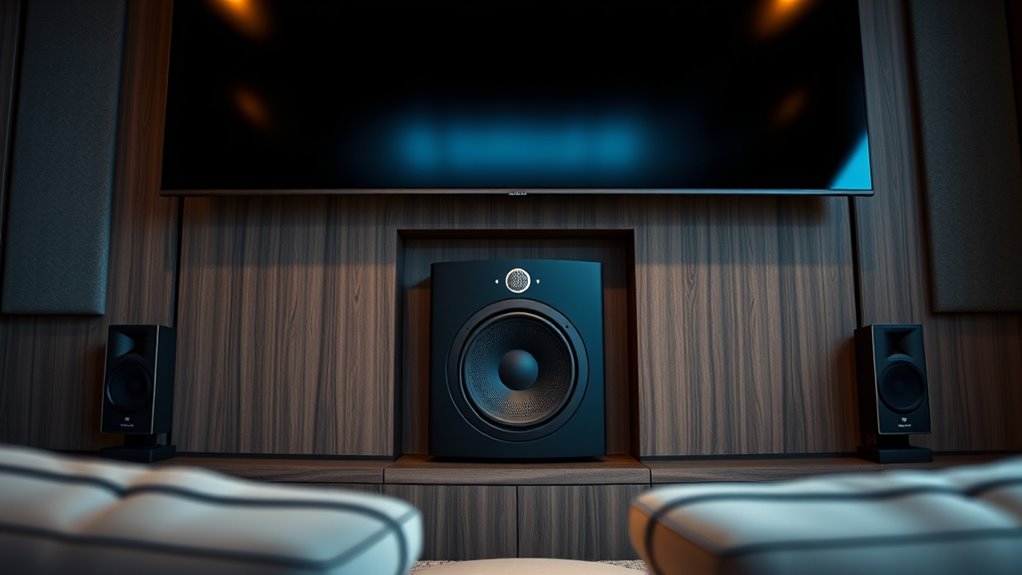
Have you ever struggled to understand dialogue during a movie or TV show? That’s often because the center channel isn’t doing its job. It’s designed to carry most of the dialogue, keeping it clear and focused. Without a strong center channel, voices can seem muffled or lost amid sound effects and music. This imbalance can also be caused by poor sound system calibration, which affects how sound frequencies are distributed across your speakers. Proper calibration ensures that the sound frequencies are balanced correctly, making dialogue clearer. Additionally, navigation and mapping in your audio setup can help optimize speaker placement for better sound staging. When your system effectively uses the center speaker, dialogue feels anchored in the middle of the screen, making it easier to understand every word. A well-placed and calibrated center channel can also help minimize phase issues, which can distort or weaken sound clarity. Dialogue is clearer, and voices stay centered, making it easier to follow conversations, especially during fast-paced scenes. When your system effectively uses the center speaker, dialogue feels anchored in the middle of the screen, making it easier to understand every word. You won’t have to strain to catch important lines or miss subtle details. Properly functioning center channels ensure your hearing experience is crisp, balanced, and immersive, so you stay engaged with what’s happening on screen.
How Center Speakers Create a Cohesive Soundstage

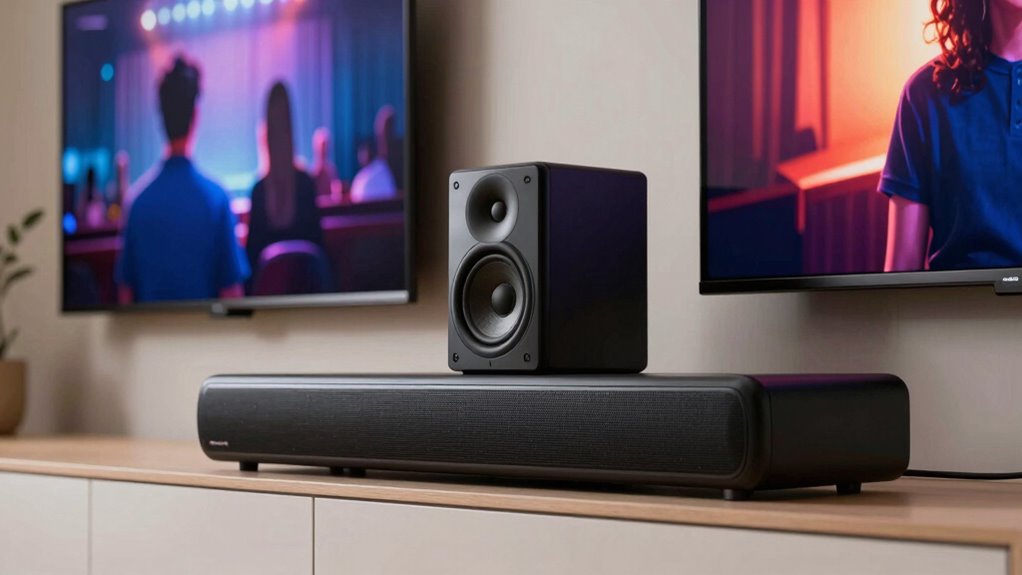
Center speakers play a essential role in creating a cohesive soundstage by seamlessly blending sounds from all directions. They anchor dialogue and key audio elements, ensuring they come from the screen’s center rather than floating awkwardly or seeming disconnected. This placement allows sound effects, music, and ambient noises to integrate smoothly, giving you a more realistic and immersive experience. When the center channel functions properly, voices sound anchored to the action, making scenes feel more natural and engaging. Without it, audio can feel scattered or imbalanced, pulling you out of the moment. A well-placed center speaker acts like a sonic bridge, tying all elements together and creating a unified soundscape that enhances your overall viewing experience. Additionally, understanding trusted businesses and services near you can help you find quality audio equipment to optimize your home theater setup. Recognizing the importance of sound system design can further improve your listening environment and overall audio quality. Incorporating connected home audio technology, such as smart speakers and integrated systems, can elevate your entire sound experience and make setup more seamless. Proper calibration of your audio equipment also ensures that the center channel performs optimally, providing clarity and balance across your system. Exploring specialized audio retailers can lead you to expert advice and high-quality components to enhance your setup further.
Common Myths About Center Channels and Why They Persist
Many people believe that a dedicated center channel isn’t essential for good sound, but this is a common myth rooted in misconceptions about home theater setups. Some think that surround speakers alone can handle dialogue and vocals, or that a soundbar can replace a proper center. Others believe that adding a center channel won’t make a noticeable difference or that it’s only necessary for high-end systems. These ideas persist because many low-quality systems lack proper speaker placement or ignore the importance of precise sound staging. In reality, without a dedicated center, dialogue can sound disconnected from the action, and sound effects may feel scattered. Properly measuring and fitting the body jewelry during installation ensures optimal sound clarity and comfort. Clearing up these misconceptions helps you understand why investing in a center channel can dramatically improve your TV listening experience.
Choosing the Right Center Channel for Your TV Setup
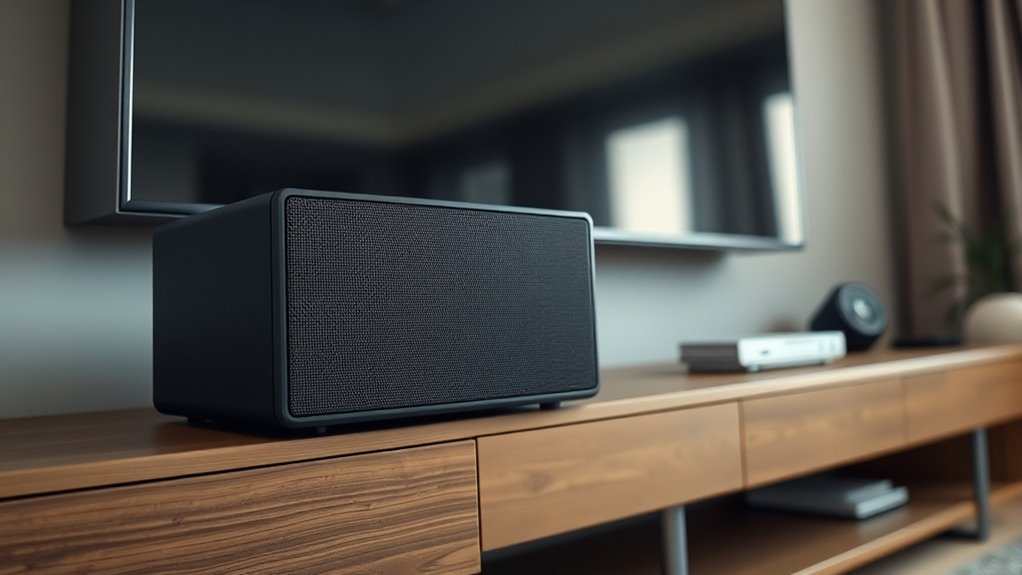
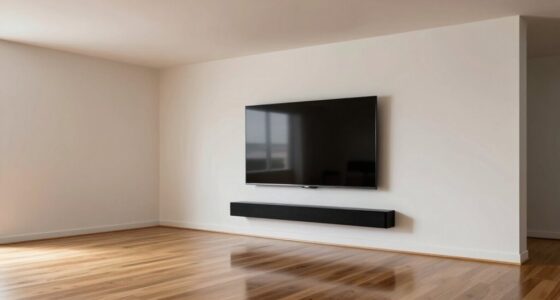
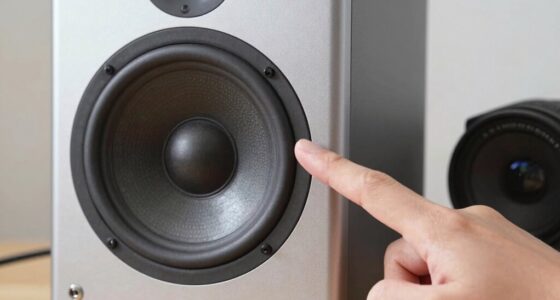
Choosing the right center channel is essential for achieving clear, balanced dialogue and seamless sound integration in your home theater. First, consider your room size and shape, as larger rooms may require more powerful or multiple center speakers. Match your center channel with your existing speakers in terms of size, power, and style to ensure cohesive sound. Pay attention to the speaker’s frequency response—aim for a model that clearly reproduces vocal range without muddiness. Placement is key: position the center speaker directly above or below your TV, centered with the screen, to optimize dialogue clarity. Additionally, understanding acoustic design principles can help you make more informed choices for your setup. Proper placement and speaker matching are crucial steps to achieve a balanced sound profile. Incorporating smart audio calibration tools can further optimize your home theater sound for your specific room environment. Considering audio system compatibility ensures that all components work harmoniously, enhancing overall sound quality. Ultimately, choose a speaker that fits your budget but doesn’t compromise on quality, as a good center channel makes all the difference in your viewing experience. Being aware of room acoustics can also help you tailor your setup for the best possible sound.
Tips for Optimizing Your Center Channel for Better Viewing Experience
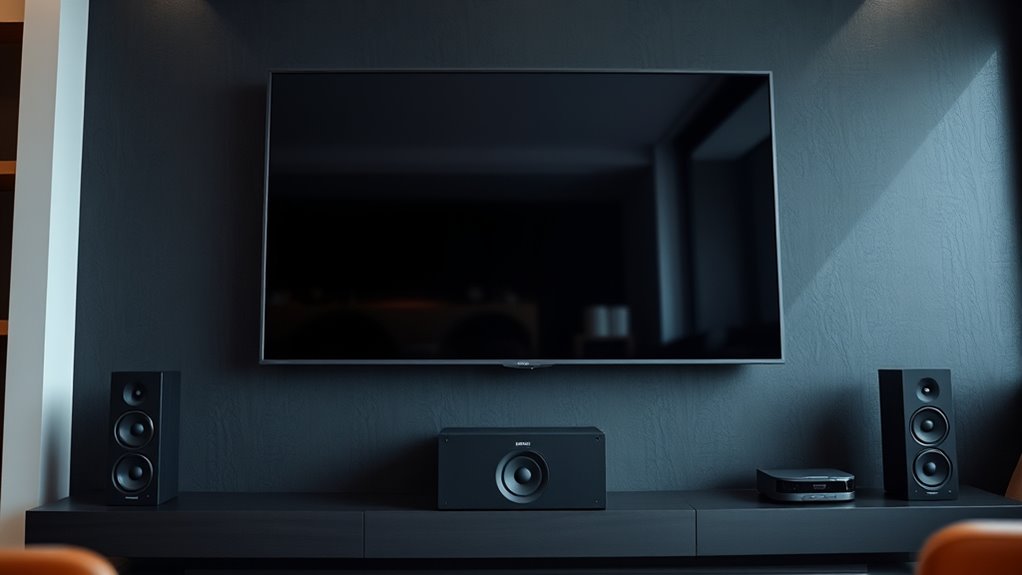
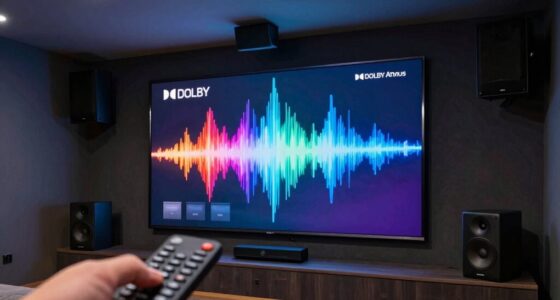
To get the most out of your center channel, start by fine-tuning its placement to guarantee the sound aligns perfectly with your TV. Position the speaker directly above or below your screen, ensuring it’s centered with your viewing area. Avoid placing it too high or low, which can distort dialogue and lessen clarity. Adjust the tilt or angle if needed to direct sound toward your listening position. Keep the speaker at ear level when seated for ideal audio accuracy. Also, check your receiver settings to calibrate the center channel’s volume and balance. Use a calibration microphone if available. Regularly test your setup with dialogue-heavy scenes to ensure voices are clear and centered, enhancing your overall TV watching experience. Proper audio calibration can significantly improve your sound quality and overall viewing enjoyment. Additionally, understanding the importance of speaker positioning helps optimize your soundstage for immersive audio. Remember that speaker placement directly impacts how well you perceive dialogue and spatial effects, making it a crucial step in achieving a balanced sound environment. Ensuring correct acoustic treatment around your viewing area can further refine sound clarity and reduce echo or unwanted reverberations. Paying attention to room acoustics can make a noticeable difference in your listening experience, especially in less-than-ideal spaces.
Frequently Asked Questions
Can a Center Channel Improve Sound Quality for Movies Without a Home Theater System?
Yes, a center channel can improve your movie sound quality even without a full home theater system. It focuses on delivering dialogue clearly and anchors the main audio, making scenes sound more immersive. By adding a dedicated center speaker, you’ll notice crisper voices and better overall sound balance. It’s a simple upgrade that enhances your viewing experience, ensuring you catch every word and enjoy richer, more realistic sound.
Do Smaller Rooms Require Different Center Channel Setups Than Larger Spaces?
Yes, smaller rooms often need a different center channel setup than larger spaces. In compact areas, opt for a smaller, more focused center speaker to avoid overwhelming the space and maintain clear dialogue. Larger rooms can handle bigger or multiple center channels for richer sound. Adjusting your setup guarantees balanced audio, so you hear dialogue clearly without overpowering the room’s acoustics. Proper placement and size are key for ideal sound quality.
How Does Speaker Placement Affect Center Channel Performance?
You should place your center channel speaker directly above or below your TV, facing forward, for ideal performance. Proper placement ensures clear dialogue and balanced sound. Avoid positioning it too close to walls or in corners, which can cause sound reflections and muddiness. Experiment with height and angle to find the sweet spot where dialogue is crisp, and sound feels natural, giving you an immersive viewing experience.
Are Expensive Center Channels Worth the Investment for Casual Viewers?
Absolutely, investing in a good center channel is worth it, even if you’re a casual viewer. It’s the heart of your TV sound, delivering clear dialogue and balanced audio. While it may seem like a splurge, it really elevates your experience and keeps you from missing important details. In the end, it’s a small price to pay for richer, more immersive sound — you get what you pay for.
Can a Center Channel Help With Audio Issues on Streaming Platforms?
Yes, a center channel can help improve audio issues on streaming platforms. It clarifies dialogue, making voices stand out against background sounds, which is especially useful if your TV’s built-in speakers struggle. By focusing the dialogue in the center speaker, you’ll experience clearer conversations and less muddled sound. This enhancement guarantees you catch every word, even during complex scenes, creating a more immersive and enjoyable viewing experience.
Conclusion
Don’t underestimate your center channel—it’s the secret weapon that turns your TV into a cinematic powerhouse. Without it, dialogue sounds like it’s coming from another room, and your entire viewing experience suffers. When you optimize and choose the right center speaker, you’ll hear every word crystal clear, making movies feel like live performances. Trust me, once you activate its full potential, you’ll wonder how you ever watched without it—your TV world will never be the same!