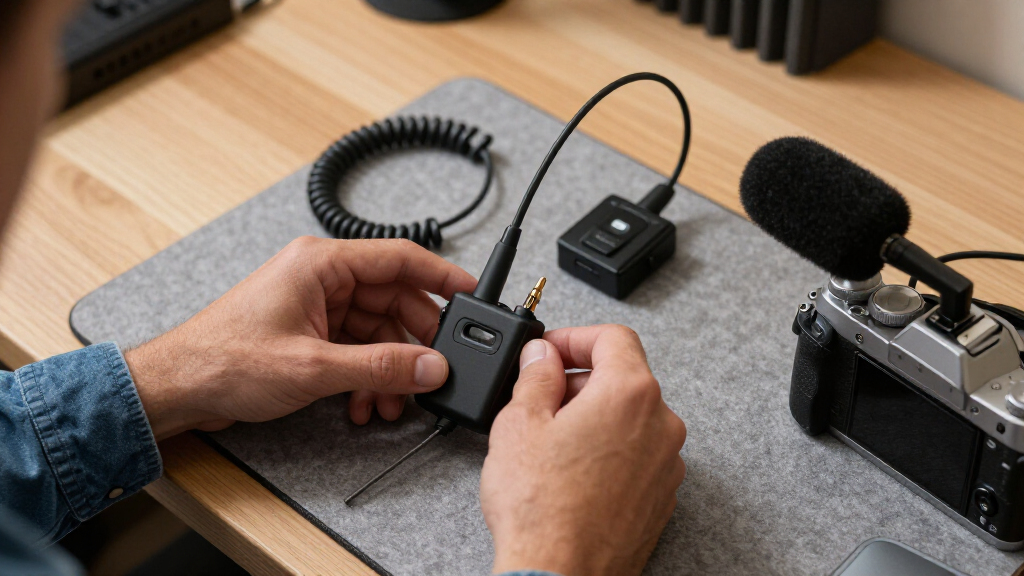

Choosing a wireless microphone system is really a choice about how it will behave in your rooms, how many channels you need, and how much setup complexity you can manage. Digital and analog systems can both deliver professional results, but they handle audio and radio spectrum differently. Digital models often offer efficient spectrum use, encryption, and flexible channel coordination; analog systems have a long track record, straightforward operation, and can suit existing equipment. The right choice depends less on a broad claim that one sounds better and more on your channel count, local radio conditions, compatibility needs, and budget.

Get audio and creator gear delivered free with Prime
- Fast, free delivery on millions of items
- Prime Video, Amazon Music and more included
- Member-only deals all year

Phenyx Pro PTU-71-2H Dual UHF Auto Scan Handheld Wireless Microphone System
- ✔ System type: Dual UHF handheld wireless
- ✔ Selectable frequencies: 2 × 100 UHF frequencies
- ✔ Frequency ranges: 536.57–561.32 MHz and 562.37–587.12 MHz

JBL Wireless Two-Microphone System with Dual-Channel Receiver, Black
- ✔ Microphones: 2 handheld microphones
- ✔ Receiver: Rechargeable dual-channel UHF
- ✔ Playback time: Up to 6 hours

Phenyx Pro PTU-52-2H Dual UHF Wireless Microphone System
- ✔ System type: Dual-channel UHF wireless
- ✔ Tunable frequency groups: 30
- ✔ Operating band: 500 MHz
For most new installations and channel-dense events, a capable digital system is the stronger starting point. Analog remains a sensible choice for users with compatible equipment, modest channel needs, or a workflow built around its predictable operation. Both still require frequency planning: wireless microphones share regulated radio bands with other services, and availability varies by location. Always check local rules and the manufacturer’s frequency guidance before buying.
At a Glance
| Criteria | Digital wireless microphone systems | Analog wireless microphone systems | Winner |
|---|---|---|---|
| Audio behavior | Digital conversion can provide clean, consistent audio within the system’s limits. | Continuous transmission can sound natural; noise may increase as the radio signal weakens. | Depends |
| Spectrum efficiency | Often supports more channels in a given band, depending on model and local conditions. | Usually uses more spectrum per channel than comparable digital systems. | A |
| Latency | Adds processing delay; the amount varies by system. | Typically very low processing delay. | B |
| RF coordination | Many systems offer scanning and coordination tools, though planning remains necessary. | Can be straightforward for small setups, but dense channel plans may be harder. | A |
| Compatibility | Requires matching digital transmitters and receivers; protocols may be proprietary. | Established equipment may be easier to integrate within a compatible analog family. | B |
| Security and features | May offer encryption, remote control, and additional audio settings. | Feature sets vary; encryption and network control are less common. | A |
| Cost and ownership | Often costs more for feature-rich systems, but can reduce channel and setup constraints. | Can be a good value when compatible gear is already owned or channel needs are modest. | Depends |
Phenyx Pro PTU-71-2H Dual UHF Auto Scan Handheld Wireless Microphone System
For buyers who expect to use two microphones at events where wireless coordination matters, the PTU-71-2H is the most capable choice in this group. Its auto scan helps identify a usable frequency, while the system lists 200 selectable UHF frequencies across two channels. That gives us more room to coordinate than the PTU-52-2H, which specifies 30 tunable frequency groups and says up to three units can operate simultaneously without interference.The receiver and handheld microphones have metal construction, and the dynamic cardioid microphones are intended to focus on the speaker or singer while reducing pickup from surrounding sound. The listed line-of-sight range of 290 to 328 feet is the longest stated here, though it should not be read as an indoor guarantee. Walls, audience movement, and nearby wireless equipment can reduce usable distance. JBL’s description provides no comparable range figure, but it does offer a simpler plug-and-play proposition.We should choose this model when flexible frequency selection, longer stated range, and a metal build are more important than rechargeable handhelds. It uses four AA batteries and calls for careful coordination when several transmitters are involved. Its extensive options bring more setup responsibility than JBL’s, and buyers still need an audio system to amplify the receiver’s output.
Pros:
- Auto scan and 200 selectable UHF frequencies give more coordination options than the PTU-52-2H.
- Dynamic cardioid handheld microphones are designed to emphasize voices and reduce ambient pickup.
- Metal receiver and microphone bodies suit frequent event handling.
- Up to 16 hours of stated battery life and a long stated line-of-sight range.
Cons:
- Handheld microphones use AA batteries, so we need to keep replacements available.
- Multi-microphone configurations need frequency coordination, and obstacles can reduce the stated range.
- Requires a separate compatible speaker or audio setup.
Best for: Event hosts, DJs, worship teams, and speakers who need two handheld channels and want frequency scanning and selection options.
Not ideal for: Buyers who want rechargeable handheld microphones, the simplest possible setup, or a system that works without a compatible speaker or mixer.
Bottom line: We recommend the PTU-71-2H for buyers who value frequency flexibility and event-ready features more than the shortest setup process.
“We recommend the PTU-71-2H for buyers who value frequency flexibility and event-ready features more than the shortest setup process.”
JBL Wireless Two-Microphone System with Dual-Channel Receiver, Black
The JBL system makes the most sense when we want two microphones with minimal setup and already have a compatible speaker. Its plug-and-play design is the clearest advantage over the two Phenyx Pro systems, whose scanning, frequency selection, or receiver connections make them more suitable for buyers managing a broader audio setup. The dual-channel receiver mixes both voices through a speaker, keeping the basic path from microphones to sound uncomplicated.Its receiver is rechargeable and offers up to six hours of playback, while the handheld microphones use replaceable AA batteries. That split matters: charging the receiver reduces one routine battery task, but it does not remove the need to carry spare cells for the microphones. The PTU-71-2H states up to 16 hours of battery life and gives more frequency-management detail, which favors longer or more demanding event use. JBL’s description does not specify a wireless range or selectable-frequency count, so we have less information for planning around interference or distance.This pick is strongest for casual karaoke, gatherings, and simple two-person speaking setups where ease matters more than advanced coordination. We should skip it if our priority is detailed frequency control, multiple-system operation, or direct mixer connections. The package still depends on a compatible speaker, and its stated receiver playback time is shorter than the Phenyx PTU-71-2H’s microphone battery life figure, though these figures describe different components.
Pros:
- Plug-and-play setup is the most straightforward among these three options.
- Dual-channel receiver handles two microphones and mixes both voices through a speaker.
- Rechargeable receiver supports up to 6 hours of playback.
- Microphones use replaceable AA batteries for quick swaps.
Cons:
- Requires a compatible speaker, which is not part of the described system.
- Handheld microphones still require AA batteries.
- Description does not specify range or selectable-frequency details for planning more complex use.
Best for: Casual hosts and karaoke users who have a compatible speaker and want a straightforward two-microphone setup.
Not ideal for: Buyers who need explicit frequency coordination options, detailed range planning, or more connection choices for a mixer-based system.
Bottom line: We would choose JBL for uncomplicated two-microphone use with a compatible speaker, while buyers needing wireless coordination should favor the PTU-71-2H.
“We would choose JBL for uncomplicated two-microphone use with a compatible speaker, while buyers needing wireless coordination should favor the PTU-71-2H.”
Phenyx Pro PTU-52-2H Dual UHF Wireless Microphone System
The PTU-52-2H is the practical pick when we want a dual wireless handheld system that can connect to a mixer through two separate XLR outputs. Unlike JBL’s receiver, which is described as mixing both voices through a speaker, the PTU-52-2H gives us distinct outputs as well as a mixed 1/4-inch connection. That can make it easier to route or manage the two microphone channels in a compatible audio setup.Its frequency hopping supports automatic pairing, and the metal receiver and microphones are designed for regular handling. The system lists up to 200 feet of line-of-sight operating distance, below the PTU-71-2H’s stated 290 to 328 feet. It also offers 30 tunable frequency groups, but its stated guidance of up to three units operating simultaneously is more restrictive than the PTU-71-2H’s maximum of up to 16 transmitters. Buyers planning multi-system events should take that difference seriously.Included batteries, adapters, windscreens, and antennas make this a ready-to-connect package, but it remains a more hands-on option than JBL. We need to confirm the outputs match our mixer or speaker, and the open-space range is not a promise for rooms with obstructions. Choose it for its useful routing flexibility and simple frequency hopping; look to the PTU-71-2H if frequency coordination or maximum stated range is the larger concern.
Pros:
- Two XLR outputs enable separate channel routing, with a mixed 1/4-inch output as another option.
- Frequency hopping supports automatic pairing.
- Metal receiver and microphones are designed for frequent handling.
- Package includes batteries, adapters, windscreens, and antennas.
Cons:
- Up to three units are stated to operate simultaneously without interference.
- Its up to 200 ft range is specified for line-of-sight conditions.
- Uses AA batteries and requires a compatible audio system.
Best for: Small venues and audio operators who want two handheld channels with separate XLR outputs and a mixed output option.
Not ideal for: Buyers planning several simultaneous wireless systems, needing the longest stated range, or wanting rechargeable handheld microphones.
Bottom line: We favor the PTU-52-2H when separate XLR routing matters more than the PTU-71-2H’s broader frequency options and longer stated range.
“We favor the PTU-52-2H when separate XLR routing matters more than the PTU-71-2H’s broader frequency options and longer stated range.”
As an Amazon Associate we earn from qualifying purchases.
Key Differences
The largest practical difference is how the systems use scarce radio spectrum. Digital systems can often fit more usable channels into a band, which matters at conferences, theaters, houses of worship, and productions with many performers. That advantage is model-dependent, though. Digital does not make a crowded or unavailable frequency band usable, and careful coordination is still needed. Analog can be entirely adequate for a small event with a few microphones and a clean, planned frequency set.
Audio behavior and delay are the next tradeoff. Analog systems usually add little processing latency, which can help when monitoring through complex signal chains. Digital systems add some delay, but many current models keep it low enough for typical stage and presentation work; check the specification when performers hear their own amplified voice or when several digital devices are chained. Digital audio can remain clean until reception fails, while analog noise can rise as signal quality declines. Neither behavior makes one universally superior.
Price and compatibility can settle the decision. Existing analog transmitters and receivers, spare parts, and established workflows can make analog the lower-cost route. A digital system may justify a higher purchase price when it provides needed channel capacity, secure transmission, remote management, or simpler coordination. Compare complete system costs, including compatible microphones, batteries, antennas, accessories, and any frequency-management tools.
Detailed Comparison
Audio behavior (moderate difference)
Digital systems can deliver a clean signal while reception is adequate, then may mute or drop out once it is not. Analog systems tend to degrade more gradually, often with more audible hiss or noise as the signal weakens. This is a moderate, situation-dependent difference: digital favors clean audio in a stable link, while analog’s gradual change can be easier to recognize during marginal reception. Microphone capsule quality, gain staging, and placement still matter more than the transmission format for many users.
Spectrum efficiency (Digital wireless microphone systems wins — major)
Digital systems commonly fit more channels into limited spectrum than comparable analog setups. That can make a major difference for productions with many simultaneous microphones, provided the system and local band support the required channel plan. Analog is less efficient in many comparisons, so a small setup may work comfortably while a larger one needs more careful spacing or additional bands. No format removes local licensing or frequency-availability limits.
Latency (Analog wireless microphone systems wins — minor)
Analog generally wins because it introduces very little processing delay. Digital adds conversion and processing time, with performance varying by product. For speech reinforcement and most live performance, the delay may be negligible, but musicians using in-ear monitoring or systems with multiple digital stages should check total latency rather than assume. The gap is minor for many users and potentially moderate for latency-sensitive performers.
RF coordination (Digital wireless microphone systems wins — moderate)
Digital systems often include scanning, network control, or coordination software that helps users manage channels. These tools can make larger setups easier to plan, giving digital a moderate advantage. Analog can be simpler when only a few compatible channels are in use, but dense deployments require careful frequency coordination too. Scanning is a planning aid, not a guarantee against interference or changing radio conditions.
Compatibility (Analog wireless microphone systems wins — major)
Analog can be a better fit when a venue already owns compatible transmitters, receivers, antennas, and service parts. Digital systems require matching equipment and may use manufacturer-specific protocols, so mixing brands or product families can be difficult. This is a major practical difference for an existing inventory, but a minor one for a new system bought as a matched kit. Confirm compatibility at the exact model level before adding components.
Security and remote features (Digital wireless microphone systems wins — moderate)
Digital models are more likely to offer encryption, remote monitoring, and network-based control. Those features can matter for confidential speech, managed venues, or crews responsible for many channels, giving digital a moderate edge. Analog products vary, and a simple setup may not need these functions. Check whether encryption is enabled and supported across every part of the signal chain if privacy is a requirement.
Cost and ownership (major difference)
Analog can provide better value when compatible equipment is already on hand or the system only needs a few channels. Digital may cost more initially, yet the extra spend can be justified if channel density, security, or management features solve a real operational need. This is a major budget consideration but not a universal win for either type. Compare total ownership cost, including accessories, replacement parts, batteries, and future expansion.
Digital wireless microphone systems: Pros and Cons
Pros:
- Often supports higher channel density within a band
- Can provide encryption and remote management
- Clean audio while the radio link remains stable
Cons:
- Adds processing latency
- May require matching, brand-specific equipment
- Can cost more for advanced feature sets
Analog wireless microphone systems: Pros and Cons
Pros:
- Very low processing latency
- Can integrate well with existing compatible inventory
- Gradual noise increase can reveal a weakening link
Cons:
- Often uses more spectrum per channel
- Dense channel plans can be harder to manage
- Security and network features may be limited
Who Should Choose What
Choose Digital wireless microphone systems if:
- You need many simultaneous microphones in a limited frequency band.
- You want encryption, remote monitoring, or network control.
- You are building a new system and can buy compatible digital components together.
Choose Analog wireless microphone systems if:
- You already own compatible analog gear and want to extend its life.
- You run a small channel count and value minimal latency.
- Your team prefers a familiar system and does not need advanced coordination features.
Skip both if: Neither type is a fit until you confirm legal frequency availability and reliable coverage for your location, or if a wired microphone meets your needs at lower cost and with less setup.
Value for Money
Pay more for digital when its specific advantages reduce real operating constraints: more channels in a crowded band, encryption for sensitive speech, or network tools that save time managing a large setup. Those benefits can outweigh the price difference for touring crews, busy venues, and productions that regularly deploy many microphones. For a few channels in a manageable environment, a well-matched analog system can be better value, especially when it works with equipment you already own. Compare complete compatible packages and local frequency support rather than paying a premium for features you will not use.
Final Verdict
For most new systems with several channels or plans to expand, choose digital: its spectrum efficiency and management features are more useful as setups grow. Choose analog when compatibility with existing gear, low latency, and a modest channel count matter more than those features. The deciding factor is your channel plan in the radio bands available where you work. Pay extra for digital only when its capacity, security, or control features solve a specific need; otherwise, a compatible analog system remains a sound, practical purchase.
Frequently Asked Questions
Do digital wireless microphones sound better than analog?
Not automatically. Digital systems can deliver clean audio while the link is stable; analog systems can have a natural sound and may develop more noise as reception weakens. Capsule choice, placement, and gain settings also shape sound.
Which type is better for a large stage production?
Digital is often the better fit because many systems can use spectrum efficiently and provide coordination tools. Check the exact system’s channel capacity and local frequency conditions before committing.
Is analog wireless becoming obsolete?
No. Analog remains useful for compatible existing inventories, small setups, and users who prioritize very low latency. Its long-term suitability depends on equipment support and the radio bands available in your area.
Can I mix analog and digital microphones?
You can use both types in one sound system if each transmitter has a compatible receiver and the outputs connect to the same mixer. They do not generally share transmitters or receivers, and all wireless frequencies still need coordination.
Halloween Picks
halloween
As an affiliate, we earn on qualifying purchases.