
To achieve a calm bass setup in your apartment, set your crossover around 80Hz to filter out the deepest bass frequencies that cause disturbance. Keep your volume moderate, enough for quality sound but not overwhelming your space or neighbors. Experiment with small adjustments to these settings and listen from different spots to find the sweet spot. Maintaining this balance creates satisfying bass without being disruptive—keep exploring for more tips on mastering your sound environment.
Key Takeaways
- Set the crossover frequency around 80Hz to filter out low bass that causes disturbance.
- Keep volume levels moderate to reduce sound pressure transmission through walls and ceilings.
- Use DSP to fine-tune crossover points and volume for a balanced, neighbor-friendly bass response.
- Position speakers away from walls and corners to prevent bass amplification and leakage.
- Incorporate soft furnishings and acoustic panels to absorb excess bass and improve overall sound quality.
Living in an apartment often means being mindful of your neighbors, especially when it comes to sound. To enjoy your favorite music or movies without disturbing others, you need to pay attention to your room acoustics and speaker placement. These factors profoundly influence how bass sounds travel and how much they bother your neighbors. By optimizing these, you can achieve a calm bass setup that’s both satisfying and considerate.
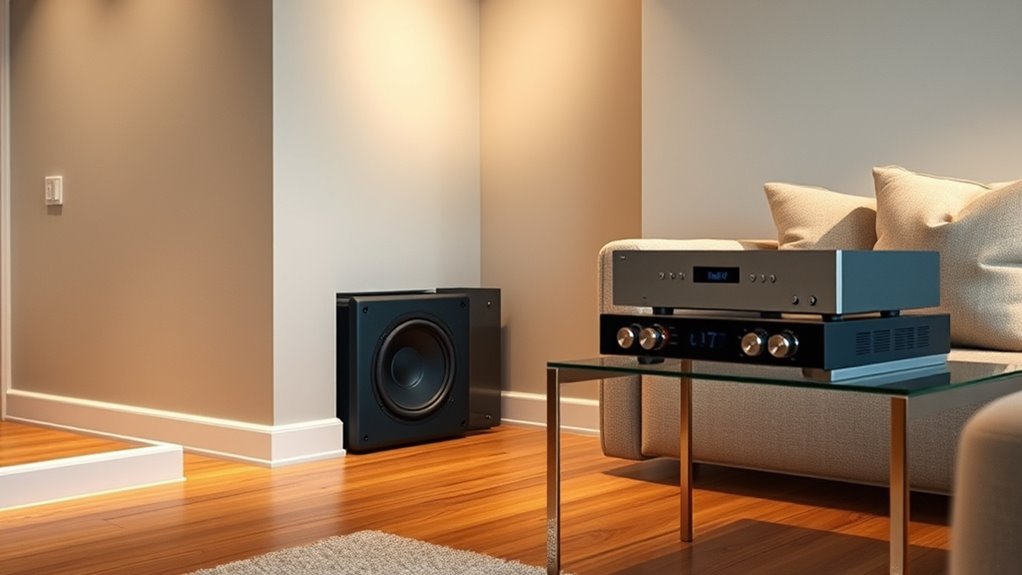
Start by considering your room acoustics. Hard surfaces like glass, tile, or bare walls reflect sound waves, which can amplify bass and make it more intrusive. Adding soft furnishings such as carpets, curtains, or acoustic panels helps absorb excess sound, reducing the overall bass impact. Positioning furniture strategically can also help break up sound waves, preventing them from bouncing around excessively. The goal is to create a balanced environment where bass is present but not overwhelming or echoing excessively.
Soft furnishings and strategic furniture placement help absorb sound and reduce bass distortion in your apartment.
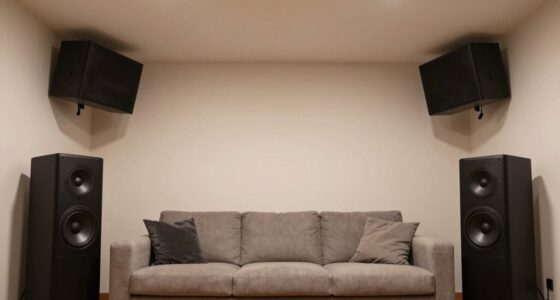
Next, focus on speaker placement. Proper positioning is essential for controlling bass levels and ensuring sound is directed away from shared walls or ceilings. Keep your speakers at ear level and avoid placing them directly against walls or corners, as these spots tend to amplify bass frequencies. Instead, position your speakers a few feet away from walls, angling them slightly inward toward your listening area. This placement helps distribute sound evenly and reduces the likelihood of bass leakage into neighboring units.
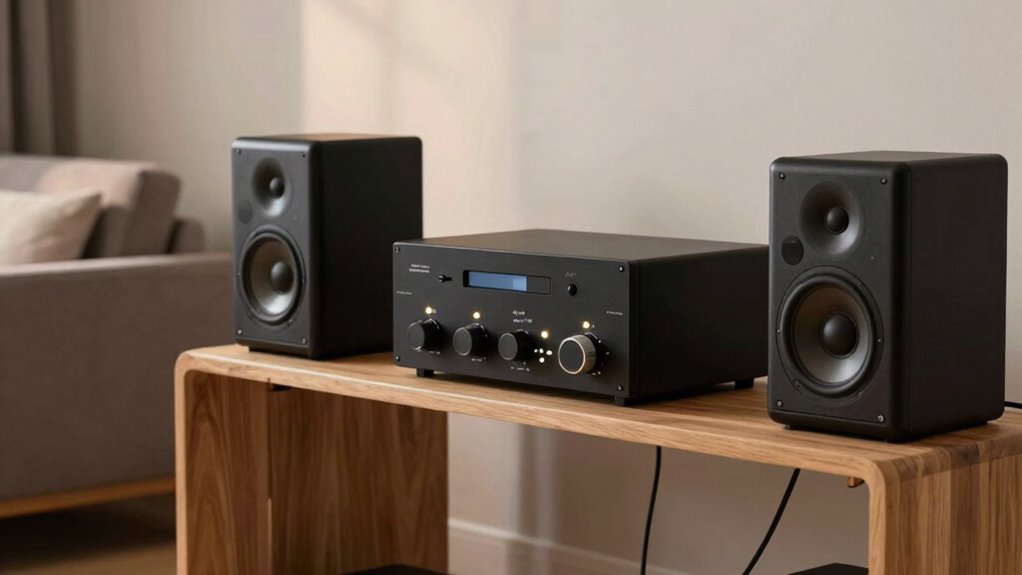
Adjusting your crossover and volume settings is equally important. Set your crossover to filter out the very low frequencies that tend to cause the most disturbance. A good starting point is around 80Hz, which allows your main speakers to handle midrange and higher frequencies while a subwoofer manages the bass. Keep the volume at moderate levels to prevent overwhelming your space and your neighbors. Listening at lower volumes minimizes the sound pressure that travels through walls and ceilings, making for a more peaceful coexistence.
Additionally, modern digital signal processing (DSP) technology can help tailor your sound output for a more precise and neighbor-friendly bass response. Experiment with your setup. Play music or test tones at different crossover points and volume levels, and listen from various spots within your apartment. This trial-and-error process helps you find the sweet spot where bass sounds full and satisfying without being intrusive. Remember, small adjustments can make a big difference in maintaining a calm, neighbor-friendly bass setup. With patience and attention to detail, you can enjoy rich sound that respects your living environment.
Frequently Asked Questions
Can I Customize the Crossover Settings for Different Music Genres?
Yes, you can customize the crossover settings for different music genres. Crossover flexibility allows you to adjust the frequency ranges to better suit each genre’s characteristics. For genre-specific tuning, lower frequencies work well for bass-heavy music, while higher settings suit vocals and treble-focused tracks. By fine-tuning these settings, you guarantee a balanced, calming bass experience tailored to each type of music, enhancing your overall listening pleasure.
How Often Should I Recalibrate My Bass Setup?
You should recalibrate your bass setup whenever you notice changes in sound quality or inconsistency in bass performance. Regular bass calibration helps maintain sound consistency, especially if you move your speakers or change room acoustics. Aim to calibrate at least once every few months or after any significant adjustments. This ensures your bass remains balanced and clear, providing a peaceful listening experience without overwhelming your apartment.
Will Adjusting Volume Settings Affect Sound Quality Over Time?
Did you know that inconsistent volume settings can cause sound fatigue over time? Yes, adjusting volume settings can impact sound quality if done improperly. Frequent changes may disrupt volume consistency, leading to listener fatigue and reduced clarity. To avoid this, keep your volume stable and calibrated. Regularly check your settings to maintain ideal sound quality and prevent audio fatigue, ensuring a smooth, enjoyable listening experience in your apartment.
Are There Recommended Brands for Apartment-Friendly Bass Equipment?
You should look for compact speakers and wireless subwoofers from reputable brands like Sonos, Bose, or Klipsch. These brands offer apartment-friendly options that deliver good bass without overwhelming your space or neighbors. Wireless subwoofers are especially convenient, as they connect seamlessly and reduce clutter. Prioritize models with adjustable crossover and volume controls to fine-tune your sound for a balanced, calm bass experience.
How Do I Prevent Bass From Disturbing Neighbors?
To prevent bass from disturbing neighbors, you should focus on soundproofing techniques and strategic speaker placement. Use bass traps, rugs, or curtains to absorb low frequencies, and position your speakers away from shared walls. Keep the volume moderate, especially at lower frequencies, and experiment with placement to minimize vibrations. These steps help contain the bass sound within your apartment, making it less likely to bother neighbors.
Conclusion
With the right crossover and volume settings, you can enjoy a rich, calming bass without disturbing your neighbors. It’s easy to create a peaceful sound environment that suits apartment living, even if you love music. Don’t let fears of noise hold you back—your perfect listening experience is just a few tweaks away. Embrace these settings and feel confident knowing you’re respecting both your space and your neighbors’ peace. Happy listening!