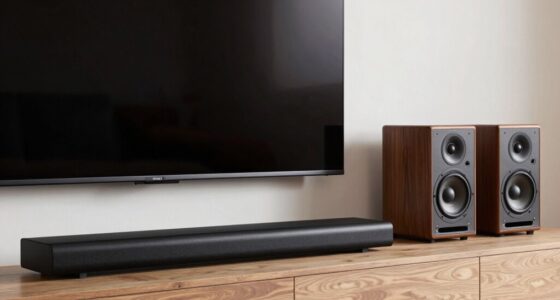

Your movie sounds flat on some systems because of reduced dynamic range, which is the difference between loud and soft sounds. Loudness normalization, compression, and system settings often flatten this contrast, making sounds feel less immersive and lifelike. Many devices automatically apply these effects, dulling the impact of key moments. Understanding how these processes work lets you make better choices for maintaining natural sound depth—keep exploring to uncover how to preserve that cinematic intensity.
Key Takeaways
- Loudness normalization and compression reduce the contrast between loud and soft sounds, making audio feel flat.
- Many playback systems automatically apply their own processing, further diminishing dynamic range.
- Preserving natural dynamic contrast enhances the emotional impact and realism of movie soundtracks.
- Audio processing settings can unintentionally flatten sound dynamics, leading to a less immersive experience.
- Choosing equipment and settings that maintain original audio dynamics helps prevent a flat, dull sound.

Have you ever wondered why some photos capture both bright highlights and dark shadows with remarkable detail? The same idea applies to sound, especially when it comes to dynamic range in movies. Dynamic range refers to the difference between the loudest and quietest sounds in an audio track. When you experience a film that sounds “flat” or lacks impact, it’s often because your system isn’t accurately reproducing this range. This can happen for several reasons, but one key factor is how loudness normalization and compression effects are handled during playback.
Loudness normalization and compression can flatten audio, reducing dynamic range and diminishing movie impact.
Loudness normalization is designed to make audio levels consistent across different sources, so you don’t have to constantly adjust your volume. While this sounds helpful, it can sometimes diminish the dynamic range by bringing loud sounds down and quiet sounds up to a standard level. Imagine a scene with a whisper and a thunderclap; loudness normalization might tame the thunder’s roar, making it less impactful, and boost the whisper, making it more noticeable. The result is a less dramatic soundscape, which feels “flat” because the natural contrast between loud and soft sounds is reduced.
Compression effects are another common culprit. Compression works by automatically reducing the volume of loud sounds and increasing the volume of quieter ones. This process helps prevent sudden loud noises from startling you or causing distortion, but it also shrinks the overall dynamic range. If a movie uses heavy compression, you might notice that the audio lacks nuance—intense action scenes don’t hit as hard, and subtle background sounds get lost. Instead of a lively, vibrant mix, you get a more uniform, subdued sound that doesn’t fully convey the original emotional impact.
Your playback system’s design can also influence how well it reproduces the dynamic range. Many consumer audio systems apply their own compression or normalize loudness automatically, which can further flatten the sound. Additionally, settings like auto-volume or sound modes may prioritize clarity or loudness over preserving the full dynamic range, contributing to that “flat” feeling.
In essence, when movies sound flat on some systems, it’s often because loudness normalization and compression effects are reducing the contrast between quiet and loud sounds. To experience a more natural and immersive sound, you might need to adjust your system’s settings or choose equipment that preserves the original dynamic range. Understanding these effects helps you appreciate why some movies lose their sonic depth and what you can do to restore it, making your viewing experience richer and more lifelike. Recognizing the impact of audio processing techniques can help you make informed choices to enhance your home theater experience.

Sony STRDH590 5.2 Channel Surround Sound Home Theater Receiver: 4K HDR AV Receiver with Bluetooth,Black
- Cinematic Sound Experience: Enjoy theater-like sound at home
- Virtual Surround Sound: S Force PRO creates virtual surround with 2 speakers
- 4K HDR Pass Through: Supports 4K HDR with HDCP 2.2 for sharp images
As an affiliate, we earn on qualifying purchases.
As an affiliate, we earn on qualifying purchases.
Frequently Asked Questions
How Does Room Acoustics Affect Perceived Dynamic Range?
Room acoustics greatly impact your perceived dynamic range by influencing how sound reflections and speaker placement interact. If reflections bounce off walls or furniture, they can muddy sounds and make the audio seem less dynamic. Proper speaker placement minimizes unwanted reflections and enhances direct sound, allowing you to experience a fuller, more accurate dynamic range. Adjusting your room setup helps make certain you get the most from your audio system’s capabilities.
Can Audio Compression Improve Movie Sound Quality?
Yes, audio compression can improve movie sound quality by balancing the dynamic range. It reduces loud sounds and boosts quieter ones, making dialogue clearer and effects more consistent. You’ll notice that with compression, the overall audio feels fuller and less ‘flat,’ especially on systems with limited dynamic range. Just keep in mind, over-compression may sacrifice some audio detail, so finding the right balance is key for ideal sound quality.
What Equipment Best Preserves Dynamic Range in Home Theaters?
A stitch in time saves nine, so choose equipment that preserves your dynamic range. Opt for high-quality speakers with wide frequency response, and guarantee proper speaker placement for ideal sound. Invest in room treatments like bass traps and diffusers to minimize acoustical issues. These steps help maintain the full depth of your audio, preventing sound from sounding flat and ensuring your home theater delivers dynamic, immersive experiences every time you watch.
How Do Different Audio Formats Impact Dynamic Range?
Different audio formats notably impact your dynamic range and overall audio fidelity. High-quality formats like Dolby Atmos and DTS:X preserve more dynamic range, making sounds richer and more immersive. However, your system’s format compatibility determines whether you experience these benefits, so make certain your equipment supports advanced formats. Using compatible, high-fidelity formats allows you to enjoy the full depth of sound, avoiding the flat, compressed audio common with lower-quality or incompatible formats.
Is Dynamic Range More Important for Music or Movies?
Think of dynamic range as the heartbeat of audio; it’s vital for both music and movies. For movies, dynamic range enhances audio clarity during intense scenes, making you feel immersed. For music, it preserves the artist’s expression and emotional depth. While both benefit, you might find movies rely more on dynamic range to deliver cinematic impact, ensuring every whisper and roar hits you with full emotional punch.

FULODE DP-26 2-In/6-Out Professional Digital Audio Processor, DSP Loudspeaker Management for Line Array Systems, All-in-One Matrix System with Equalizer, Crossover, Mixer, Effect Processor & Delayer.
- Compact 1U Rack-Mount Design: High-performance all-in-one audio processor
- Multiple Connectivity Options: USB, RS485, RS232 interfaces for versatile control
- Large Network Capacity: Connect up to 250 units via RS485
As an affiliate, we earn on qualifying purchases.
As an affiliate, we earn on qualifying purchases.
Conclusion
Now that you understand dynamic range, you can avoid that frustrating “flat” sound on certain systems—like trying to enjoy your favorite movie on an old tube TV. It’s like expecting a flying car in 2023; the tech just isn’t there yet. By adjusting your settings or upgrading gear, you’ll bring your audio experience to life, making every scene feel as immersive as a Holodeck adventure. Don’t settle for less—your ears deserve the best!

Yamaha RX300A 5.2-Channel Home Theater AV Receiver with Dolby Atmos, 4K120/8K HDMI and Bluetooth Multipoint (Black)
- Power Output: 70W per channel
- Audio Technology: Dolby Atmos and DTS Virtual:X
- Video Support: 4K120/8K60 HDMI, HDR, Dolby Vision
As an affiliate, we earn on qualifying purchases.
As an affiliate, we earn on qualifying purchases.

Assistrust Sound Bar for Smart TV, Soundbar with Bluetooth/ARC/Opt/AUX Connect, Auto Volume Boost, 3 Equalizer Modes, 2 in 1 Detachable Soundbar for TV/PC/Gaming/Projectors
- Volume Boost: Automatic loudness enhancement for clear sound
- Versatile Placement: Horizontal, vertical, tabletop, wall mount options
- Powerful Sound Output: 80W with 4 high-performance drivers
As an affiliate, we earn on qualifying purchases.
As an affiliate, we earn on qualifying purchases.