
Choosing the right wireless open ear headphones requires balancing audio fidelity with situational awareness, a tradeoff that defines this entire category. My top overall pick is the SHOKZ OpenRun Pro 2, which delivers surprisingly rich bass for a bone conduction device while maintaining a secure, sweat-resistant fit. For those who prefer traditional air conduction, the SHOKZ OpenFit 2+ offers a more natural sound signature with a lightweight ear-hook design that stays put during intense movement. The JBL Endurance Zone stands out for runners who need maximum visibility and a stable fit without the pressure of in-ear seals. Readers should continue reading to understand how these models differ in sound quality, battery endurance, and comfort, ensuring you select the pair that matches your specific activity level and auditory preferences.

Get audio and creator gear delivered free with Prime
- Fast, free delivery on millions of items
- Prime Video, Amazon Music and more included
- Member-only deals all year
Complete the kit


Key Takeaways
- Bone conduction models like the SHOKZ OpenRun Pro 2 excel in waterproofing and secure fit but generally lack the bass depth of air-conduction open-ear buds.
- Air-conduction open-ear designs (e.g., Soundcore C50i and TOZO OpenEarRing) provide better tonal balance but often sacrifice waterproofing ratings.
- Battery life varies drastically, with clip-on and neckband styles offering up to 80 hours of total playtime compared to 10-20 hours for standard ear-hook buds.
- Fit stability is the primary differentiator for sports use; models with ear hooks or neck bands outperform simple clip-ons during high-impact activities.
- Price correlates strongly with sound quality in open-ear tech, as cheaper models frequently suffer from sound leakage and poor microphone performance in wind.
| SHOKZ OpenRun Air 2 Bone Conduction Open-Ear Bluetooth Headphones, Black |  | Best for Lightweight Bone-Conduction Training | Type: Bone-conduction Bluetooth headphones | Bluetooth: Version 6.0 | Weight: 26.4 g | VIEW LATEST PRICE | See Our Full Breakdown |
| JBL Endurance Zone True Wireless Open-Ear Sport Headphones, Black/Grey |  | Best for Rugged, Case-Backed Workout Battery | Type: True wireless open-ear sport headphones | Driver: 18 × 11 mm dynamic driver | Water and dust resistance: IP68 | VIEW LATEST PRICE | See Our Full Breakdown |
| SHOKZ OpenRun Pro 2 Bone Conduction Bluetooth Sport Headphones, Black |  | Best for Longer Bone-Conduction Sessions | Audio technology: Bone conduction and air conduction | Battery life: Up to 12 hours | Weight: 30.3 g | VIEW LATEST PRICE | See Our Full Breakdown |
| TOZO OpenEarRing Open-Ear Wireless Earbuds with Bluetooth 5.4 and 40-Hour Battery |  | Best for Glasses-Friendly Clip-On Comfort | Design: Open-ear clip-on | Bluetooth: Version 5.4 | Weight: 5.1 g per earbud | VIEW LATEST PRICE | See Our Full Breakdown |
| SHOKZ OpenFit 2+ Open-Ear Earbuds with Dolby Audio and Wireless Charging, Black |  | Best Premium Feature Set | Design: Open-ear, ear-hook | Driver: 17.3 mm low-frequency driver with independent tweeter | Audio: Dolby Audio, OpenBass 2.0, DirectPitch 2.0 | VIEW LATEST PRICE | See Our Full Breakdown |
| Soundcore C50i Open-Ear Clip-On Earbuds by Anker |  | Best Clip-On Fit | Design: Open-ear clip-on | Driver size: 12 mm | Bluetooth: 6.0 | VIEW LATEST PRICE | See Our Full Breakdown |
| Soundcore V20i Open-Ear True Wireless Earbuds |  | Best for Adjustable Fit | Design: Open-ear true wireless | Fit: Adjustable ear hooks with four positions | Driver size: 16 mm dynamic | VIEW LATEST PRICE | See Our Full Breakdown |
| TRAUSI T6 Open-Ear Wireless Earbuds with Earhooks, Bluetooth 5.4, 80-Hour Playtime, and IPX7 Waterproofing |  | Best for Long Trips Between Charges | Design: Open-ear with hook-shaped earpieces | Bluetooth: 5.4 | Total playtime: Up to 80 hours with charging case | VIEW LATEST PRICE | See Our Full Breakdown |
| TEDELON F9 Open-Ear Wireless Earbuds with Bluetooth 5.4 |  | Best for Wet-Weather Workouts | Design: Open-ear with adjustable ear hooks | Bluetooth: 5.4 | Driver size: 16.2 mm | VIEW LATEST PRICE | See Our Full Breakdown |
| SHOKZ OpenRun Bone Conduction Open-Ear Bluetooth Sport Headphones, Black |  | Best for Secure Running Fit | Design: Open-ear wraparound frame | Audio technology: 8th-generation bone conduction | Water resistance: IP67; not suitable for swimming | VIEW LATEST PRICE | See Our Full Breakdown |
| SHOKZ OpenRun Pro 2 Mini Open-Ear Bluetooth Sport Headphones, Black | 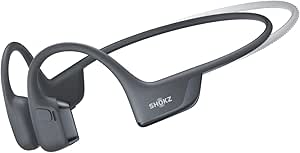 | Best Premium Hybrid | Audio Technology: Bone and Air Conduction | Battery Life: Up to 12 hours | Water Resistance: IP55 | VIEW LATEST PRICE | See Our Full Breakdown |
| Tuemvia Open-Ear Wireless Headphones with Digital Display and Microphone |  | Best Battery Life | Total Battery Life: Up to 35 hours | Charge Time: 2 hours | Connectivity: Bluetooth (10m range) | VIEW LATEST PRICE | See Our Full Breakdown |
| SHOKZ OpenMove Open-Ear Bone Conduction Bluetooth Headphones, Grey |  | Best Entry-Level | Audio Technology: Bone Conduction | Battery Life: Up to 6 hours | Charge Time: 2 hours | VIEW LATEST PRICE | See Our Full Breakdown |
| Soundcore V20i Open-Ear True Wireless Earbuds |  | Best for Feature-Rich Audio | Drivers: 16 mm Titanium-Coated | Total Playtime: Up to 36 hours | Battery Life: Up to 8 hours | VIEW LATEST PRICE | See Our Full Breakdown |
| MJOFFIN X19S Bone Conduction Open-Ear Headphones, Bluetooth 6.0, IP55 |  | Best Lightweight Design | Weight: 22 g | Bluetooth: 6.0 | Battery Life: Up to 10 hours | VIEW LATEST PRICE | See Our Full Breakdown |
| wireless open ear headphone | Water resistance | Battery life | Bluetooth | Design |
|---|---|---|---|---|
| SHOKZ OpenRun Air 2 Bone Condu | IP67 | Up to 10 hours | Version 6.0 | — |
| JBL Endurance Zone True Wirele | — | Up to 8 hours in earbuds; up to 32 hours including charging case | — | — |
| SHOKZ OpenRun Pro 2 Bone Condu | IP55 | Up to 12 hours | — | — |
| TOZO OpenEarRing Open-Ear Wire | IPX5 | Up to 10 hours per charge; up to 40 hours with charging case | Version 5.4 | Open-ear clip-on |
| SHOKZ OpenFit 2+ Open-Ear Earb | IP55 | — | — | Open-ear, ear-hook |
| Soundcore C50i Open-Ear Clip-O | IP55 | Up to 7 hours per charge; 28 hours with case | 6.0 | Open-ear clip-on |
| Soundcore V20i Open-Ear True W | IP55 | Up to 8 hours | 5.4 | Open-ear true wireless |
| TRAUSI T6 Open-Ear Wireless Ea | — | — | 5.4 | Open-ear with hook-shaped earpieces |
| TEDELON F9 Open-Ear Wireless E | IPX6 | Up to 50 hours stated | 5.4 | Open-ear with adjustable ear hooks |
| SHOKZ OpenRun Bone Conduction | IP67; not suitable for swimming | Up to 8 hours | — | Open-ear wraparound frame |
| SHOKZ OpenRun Pro 2 Mini Open- | IP55 | Up to 12 hours | — | — |
| Tuemvia Open-Ear Wireless Head | Sweat and splash resistant | — | — | Open-ear earbuds with ear hooks |
| SHOKZ OpenMove Open-Ear Bone C | Sweat Resistant | Up to 6 hours | — | — |
| Soundcore V20i Open-Ear True W | IP55 | Up to 8 hours | 5.4 with Multipoint | — |
| MJOFFIN X19S Bone Conduction O | IP55 | Up to 10 hours | 6.0 | — |
More Details on Our Top Picks
SHOKZ OpenRun Air 2 Bone Conduction Open-Ear Bluetooth Headphones, Black
The OpenRun Air 2 is the clearest fit for runners who want a light, stable frame and an open ear without wearing separate earbuds. At 26.4 g, it is lighter than the OpenRun Pro 2, while its memory-alloy earhooks help keep it in place during movement. Its IP67 rating also offers stronger water protection than the Pro 2’s IP55, though neither model is meant for swimming. Battery life reaches 10 hours, with a five-minute charge adding up to two hours of use—handy before heading out. Physical buttons may be easier to operate mid-run than touch controls. The tradeoffs are a cable-free purchase that lacks a charging cable and less isolation from traffic or gym noise, which is part of the open-ear design.
Pros:- Lightweight 26.4 g frame with memory-alloy earhooks for a secure fit.
- Open-ear bone conduction lets wearers remain aware of nearby sounds.
- IP67 water resistance suits wet-weather workouts and rinsing.
- Up to 10 hours of playback, with a five-minute quick charge for up to two hours.
Cons:- Not designed for swimming or underwater use.
- Charging cable is not included.
- Open-ear listening offers less isolation from surrounding noise than sealed earbuds.
Best for: Runners and outdoor exercisers who want a lightweight bone-conduction frame, physical buttons, and strong protection from rain and sweat.
Not ideal for: Swimmers, people who need isolation in loud settings, and buyers who expect a charging cable in the box.
- Type:Bone-conduction Bluetooth headphones
- Bluetooth:Version 6.0
- Weight:26.4 g
- Battery life:Up to 10 hours
- Water resistance:IP67
- Audio:PremiumPitch 3.0; 4 preset and 2 custom EQ profiles
- Microphones:Dual noise-cancelling microphones with AI noise reduction
- Charging:1-hour charge; 5-minute charge provides up to 2 hours of use
Our verdict“Choose the OpenRun Air 2 for a light, secure bone-conduction fit and strong water resistance, but skip it if you need swimming headphones or noise isolation.”
JBL Endurance Zone True Wireless Open-Ear Sport Headphones, Black/Grey
The JBL Endurance Zone suits training in mixed conditions, pairing an open-ear fit with IP68 water and dust resistance and up to 32 hours of playback when the case is included. Its silicone earhooks and adaptable memory wire are geared toward movement, while four beamforming microphones support calls. Compared with the SHOKZ OpenRun Air 2, this is a true-wireless set with a charging case and much longer stated total playback, but its earbuds run for up to eight hours before they need that case. JBL’s 10-band app EQ also offers more adjustment than the SHOKZ model’s listed preset and custom profiles. The earhooks and case add another item to carry, and the open design cannot block ambient noise. A USB-C cable is not included.
Pros:- IP68 water and dust resistance for demanding outdoor workouts.
- Adaptable memory-wire earhooks are designed to stay secure during exercise.
- Up to 32 hours of playback with the charging case and a 10-minute quick charge for up to three hours.
- Four beamforming microphones and app-based 10-band EQ.
Cons:- Earbuds provide up to eight hours per charge; the longer total runtime depends on the case.
- USB-C charging cable is not included.
- Open-ear audio provides limited isolation in noisy environments.
Best for: Outdoor athletes who need dust and water protection, an earhook fit, and extra playback available from a charging case.
Not ideal for: Buyers who want a cable in the box, long listening stretches without returning earbuds to a case, or isolation from busy surroundings.
- Type:True wireless open-ear sport headphones
- Driver:18 × 11 mm dynamic driver
- Water and dust resistance:IP68
- Battery life:Up to 8 hours in earbuds; up to 32 hours including charging case
- Quick charge:10 minutes provides up to 3 hours of playback
- Microphones:4 beamforming microphones
- Fit:Liquid silicone earhooks with adaptable memory wire
- Sound customization:10-band EQ via JBL Headphones app
Our verdict“Pick the Endurance Zone if workout durability and case-backed runtime matter more than a cable in the box or uninterrupted listening between charges.”
SHOKZ OpenRun Pro 2 Bone Conduction Bluetooth Sport Headphones, Black
For buyers who prefer a neckband-style frame but want more listening time, the OpenRun Pro 2 offers up to 12 hours per charge, two hours beyond the OpenRun Air 2. Its combination of bone and air conduction drivers is intended to bring more bass presence while keeping the ears open, a useful distinction for music-focused training. The Ni-Ti alloy memory wire and ergonomic hooks support a secure fit, and wind-resistant microphones with AI noise reduction target clearer outdoor calls. Compared with the JBL Endurance Zone, the Pro 2 avoids a charging case and has a wearable unibody frame, but it has a lower IP55 rating than JBL’s IP68 and is not foldable. Open-ear listening still leaves surrounding sound audible, so it is not a choice for quiet listening in noisy places.
Pros:- Up to 12 hours of playback without relying on a charging case.
- Bone and air conduction drivers are designed to balance open awareness with fuller sound.
- Ni-Ti alloy memory wire and ergonomic earhooks support a secure fit.
- Wind-resistant microphones with AI noise reduction support outdoor calls.
Cons:- IP55 protection is below the JBL Endurance Zone’s IP68 rating.
- The unibody frame does not fold for compact storage.
- Open-ear fit provides limited sound isolation in noisy environments.
Best for: Runners and cyclists who want a secure bone-conduction frame, longer single-charge playback, and a sound design aimed at fuller bass.
Not ideal for: People who need a compact folding headset, stronger dust and water protection, or isolation from ambient noise.
- Audio technology:Bone conduction and air conduction
- Battery life:Up to 12 hours
- Weight:30.3 g
- Water resistance:IP55
- Frame material:Ni-Ti alloy memory wire
- Fit:Open-ear with ergonomic earhooks
- Microphones:Dual wind-resistant microphones with AI noise reduction
- Controls:Volume control and remote controller
Our verdict“Choose the OpenRun Pro 2 for longer bone-conduction listening and a fuller-sound approach, but favor the JBL Endurance Zone for higher water and dust protection.”
TOZO OpenEarRing Open-Ear Wireless Earbuds with Bluetooth 5.4 and 40-Hour Battery
The TOZO OpenEarRing takes a different route from the SHOKZ frame-style models: each lightweight earbud clips on independently, weighing 5.1 g and avoiding an over-head band. That makes it a practical option for glasses wearers who want open-ear playback without placing a frame behind the head. Its stated 40-hour total runtime comes from up to 10 hours per charge plus the case’s additional capacity, so listeners who want long sessions without case breaks should look at the SHOKZ OpenRun Pro 2 instead. TOZO adds 32 EQ modes through its app and IPX5 water resistance for sweat and splashes. The clip-on design does not seal the ear, so it cannot isolate the listener from busy surroundings, and its protection is below the JBL Endurance Zone’s IP68 rating.
Pros:- Lightweight 5.1 g clip-on earbuds designed to work with glasses.
- Up to 10 hours of playback per charge and up to 40 hours with the case.
- 32 app-based EQ modes allow sound adjustments.
- IPX5 water resistance suits sweat and splashes.
Cons:- The 40-hour figure includes charging case capacity; earbuds provide up to 10 hours per charge.
- IPX5 protection is lower than the JBL Endurance Zone’s IP68 rating.
- Open-ear fit provides little isolation from surrounding noise.
Best for: Glasses wearers and casual active listeners who want lightweight clip-on earbuds, app EQ choices, and a compact case for added runtime.
Not ideal for: Listeners who want high dust and water protection, strong noise isolation, or a full listening day without using the charging case.
- Design:Open-ear clip-on
- Bluetooth:Version 5.4
- Weight:5.1 g per earbud
- Battery life:Up to 10 hours per charge; up to 40 hours with charging case
- Water resistance:IPX5
- Charging:USB-C
- EQ modes:32
- Wireless range:15 m
Our verdict“Choose the OpenEarRing for a glasses-friendly clip-on fit and flexible EQ, but pick a frame-style model for stronger protection or more secure isolation.”
SHOKZ OpenFit 2+ Open-Ear Earbuds with Dolby Audio and Wireless Charging, Black
The OpenFit 2+ is the feature-rich earhook choice for listeners who want true-wireless convenience without closing off the ear. Its separate low-frequency driver and tweeter, plus Dolby Audio and OpenBass 2.0, give it a more elaborate audio setup than the TOZO OpenEarRing’s clip-on design. It also supports multipoint pairing, wireless charging, and up to 48 hours of total playback with the case—useful for switching between two devices and reducing cable handling. Each earbud weighs 9.4 g, heavier than TOZO’s 5.1 g units, and the 48-hour figure includes the case; standalone playback is up to 11 hours. Its IP55 rating suits sweat and splashes but falls short of the JBL Endurance Zone’s IP68 protection. Like the other open-ear picks, it cannot isolate ambient noise.
Pros:- Separate low-frequency driver and tweeter with Dolby Audio and OpenBass 2.0.
- Multipoint pairing supports connection to up to two devices.
- Wireless charging case and quick charge add convenient charging options.
- Up to 11 hours per charge and up to 48 hours with the case.
Cons:- Each earbud weighs 9.4 g, more than the TOZO OpenEarRing’s 5.1 g per earbud.
- The 48-hour total includes the charging case; earbuds provide up to 11 hours per charge.
- IP55 protection is lower than the JBL Endurance Zone’s IP68 rating.
Best for: Listeners who want premium open-ear audio features, wireless case charging, multipoint pairing, and a secure earhook for everyday use and workouts.
Not ideal for: Buyers prioritizing the lightest clip-on fit, maximum water and dust protection, or quiet listening in noisy environments.
- Design:Open-ear, ear-hook
- Driver:17.3 mm low-frequency driver with independent tweeter
- Audio:Dolby Audio, OpenBass 2.0, DirectPitch 2.0
- Weight:9.4 g per earbud
- Water resistance:IP55
- Playback time:Up to 11 hours per charge; up to 48 hours with charging case
- Connectivity:Multipoint pairing with up to two devices
- Charging:Wireless charging case; 10-minute quick charge provides up to 2 hours
Our verdict“Choose the OpenFit 2+ for a feature-rich open-ear set with wireless charging and multipoint, but favor TOZO for lighter clip-ons or JBL for higher-rated protection.”
Soundcore C50i Open-Ear Clip-On Earbuds by Anker
The Soundcore C50i takes a different approach from the hook-style Soundcore V20i: its flexible memory-titanium supports clip over the ear, keeping the canal open without a full ear hook. That makes it a strong pick for buyers who want a less prominent fit while still having a design intended to stay put across different ear shapes. Its 12 mm drivers, app-based EQ and HearID give listeners more sound customization than the simpler feature set listed for the TRAUSI T6. The case brings total listening time to 28 hours, and IP55 protection suits sweat and light rain. The tradeoff is typical of open-ear listening: nearby noise remains audible, and each charge lasts up to seven hours before the buds need the case.
Pros:- Memory-titanium clip is designed to fit a range of ear shapes
- Open design leaves the ear canal unblocked for environmental awareness
- Up to 28 hours of total playtime with the charging case
- Soundcore app includes EQ, HearID, and Spatial Audio
Cons:- Open fit offers no noise control or isolation
- Standalone playback is limited to up to seven hours per charge
- Maximum output is listed at 86 dB
Best for: Listeners who want open-ear awareness and a compact clip-on fit, plus app-based sound adjustments for everyday listening.
Not ideal for: Commuters seeking noise isolation or people who need more than seven hours of playback between case charges.
- Design:Open-ear clip-on
- Driver size:12 mm
- Bluetooth:6.0
- Battery life:Up to 7 hours per charge; 28 hours with case
- Water resistance:IP55
- Controls:Push-button
- Case battery capacity:580 mAh
- Maximum output:86 dB
Our verdict“Choose the C50i if you prefer a clip-on open-ear fit and app customization over the V20i’s adjustable ear hooks.”
Soundcore V20i Open-Ear True Wireless Earbuds
The Soundcore V20i is the more adjustable choice for listeners who find fixed open-ear shapes uncomfortable: its ear hooks offer four fit positions, unlike the C50i’s clip-on support. The 16 mm drivers and BassUp processing also give it a bass-focused feature set, while the app adds EQ and HearID for further tuning. For calls, four microphones with AI enhancement provide more call-specific hardware detail than the TRAUSI T6 listing, which does not state a microphone count. Multipoint connection is useful when switching between a phone and computer. The tradeoffs are a shorter stated battery life of up to eight hours with no case-total figure provided, and no noise control or isolation. Its touch controls may also suit some buyers less than the C50i’s physical buttons.
Pros:- Four-position adjustable ear hooks allow fit changes
- 16 mm drivers with BassUp technology
- Four microphones with AI call enhancement
- Multipoint connection and Soundcore app features
Cons:- Open-ear design provides no noise isolation or noise control
- Battery life is listed as up to eight hours, with no case-total runtime specified
- Touch controls may be less appealing to buyers who prefer physical buttons
Best for: People who want to fine-tune an ear-hook fit and regularly switch between two Bluetooth devices.
Not ideal for: Buyers who want noise isolation, physical button controls, or a clearly stated extended runtime with the charging case.
- Design:Open-ear true wireless
- Fit:Adjustable ear hooks with four positions
- Driver size:16 mm dynamic
- Microphones:4
- Battery life:Up to 8 hours
- Bluetooth:5.4
- Water resistance:IP55
- Connectivity:Multipoint connection
Our verdict“Pick the V20i over the C50i if adjustable hooks and multipoint matter more to you than clip-on styling and push-button controls.”
TRAUSI T6 Open-Ear Wireless Earbuds with Earhooks, Bluetooth 5.4, 80-Hour Playtime, and IPX7 Waterproofing
The TRAUSI T6 is the endurance-focused option here, with up to 80 hours of total playtime claimed when the charging case is included. That figure could suit travelers or frequent exercisers who would rather recharge the case less often, but it should not be read as 80 hours from the earbuds alone; standalone runtime is not specified. Its hook-shaped fit is aimed at staying secure during movement, much like the TEDELON F9’s adjustable hooks, while the T6 listing keeps its controls and connectivity simpler. Bluetooth 5.4 and touch controls cover the basics, and the open design helps preserve awareness of nearby sounds. Unlike the Soundcore C50i, however, the supplied details do not list an app, call-enhancement features, or a specific standalone battery figure.
Pros:- Up to 80 hours of total playtime claimed with the charging case
- Hook-shaped design is intended to stay secure during workouts
- Bluetooth 5.4 connectivity
- USB-C charging cable is included
Cons:- The 80-hour figure includes the case, and standalone battery life is not stated
- Open fit provides less isolation from surrounding noise
- Warranty is listed as 90 days
Best for: Runners and travelers who value a large stated combined runtime and a hook-style fit more than detailed app or call features.
Not ideal for: Buyers who need a verified long playback time per charge, noise isolation, or clearly documented call and sound customization features.
- Design:Open-ear with hook-shaped earpieces
- Bluetooth:5.4
- Total playtime:Up to 80 hours with charging case
- Controls:Touch
- Charging:USB-C
- Warranty:90 days
- Included items:Charging case, USB-C cable, user manual
Our verdict“Choose the T6 if case-inclusive runtime is your main priority, but favor the TEDELON F9 if stated water resistance and call features matter more.”
TEDELON F9 Open-Ear Wireless Earbuds with Bluetooth 5.4
The TEDELON F9 combines a workout-friendly ear-hook design with IPX6 water resistance, making it the more clearly specified choice for sweat and sudden showers compared with the TRAUSI T6, whose provided specs do not state a water-resistance rating. Its 16.2 mm drivers and directional audio are intended to deliver sound while leaving nearby sounds audible, though open-ear listening will not block gym noise or traffic. AI call noise reduction is another practical addition that is not listed for the T6. TEDELON claims up to 50 hours of playtime, but the supplied details do not break out earbud runtime from case-assisted total time. That makes the number harder to compare directly with the Soundcore V20i’s stated eight hours per charge.
Pros:- IPX6 water resistance is specified for sweat and sudden showers
- Adjustable ear hooks support a secure workout fit
- 16.2 mm drivers with directional audio
- AI call noise reduction and up to 50 hours of stated playtime
Cons:- Open-ear design does not isolate surrounding noise
- The 50-hour figure is not broken down by earbud versus case runtime
- The supplied specs do not state standalone battery life
Best for: Outdoor exercisers who want ear hooks, a stated IPX6 rating, and call noise reduction without sealing their ears.
Not ideal for: Listeners who need noise isolation or want a clearly specified per-charge runtime before choosing.
- Design:Open-ear with adjustable ear hooks
- Bluetooth:5.4
- Driver size:16.2 mm
- Water resistance:IPX6
- Battery life:Up to 50 hours stated
- Controls:Touch
- Call feature:AI noise reduction
- Included items:Two earbuds, wireless charging case, built-in media charging cable, user manual
Our verdict“Pick the F9 over the TRAUSI T6 if a stated water-resistance rating and call noise reduction matter more than the T6’s larger case-inclusive playtime claim.”
SHOKZ OpenRun Bone Conduction Open-Ear Bluetooth Sport Headphones, Black
The SHOKZ OpenRun stands apart from the clip-on C50i and hook-style TEDELON F9: its wraparound frame uses bone conduction and leaves both ears unobstructed, rather than placing earbuds around the outer ear. That design may appeal to runners who want a stable sport-oriented fit and clear awareness of their surroundings. Its IP67 rating offers stronger stated water protection than the F9’s IPX6, though SHOKZ explicitly says the OpenRun is not suitable for swimming. Up to eight hours of battery life is modest next to the case-inclusive totals claimed by the T6 and F9, but a 10-minute quick charge adds up to 1.5 hours of use. The tradeoff is that this design offers no noise control, and bone-conduction sound differs from conventional open-ear earbuds.
Pros:- Wraparound frame is designed to stay secure during sport
- Bone-conduction audio leaves the ears unobstructed
- IP67-rated sweat and water resistance
- Quick charge provides up to 1.5 hours of use from 10 minutes
Cons:- Not suitable for swimming despite its IP67 rating
- No noise control or isolation
- Up to eight hours of battery life is below the stated case-inclusive totals of the T6 and F9
Best for: Runners and outdoor athletes who prefer a wraparound frame, want both ears unobstructed, and value a quick top-up before exercise.
Not ideal for: Swimmers, listeners seeking noise isolation, or buyers who want pocketable earbuds and extended case-assisted runtime.
- Design:Open-ear wraparound frame
- Audio technology:8th-generation bone conduction
- Water resistance:IP67; not suitable for swimming
- Battery life:Up to 8 hours
- Quick charge:10 minutes for up to 1.5 hours of use
- Charging:Magnetic induction
- Compatibility:Android, iOS, Windows, and other Bluetooth-enabled devices
- Warranty:2 years
Our verdict“Choose the OpenRun over the earbud-style picks if you want a wraparound running fit and quick charging, not a swim-ready or noise-isolating headset.”
SHOKZ OpenRun Pro 2 Mini Open-Ear Bluetooth Sport Headphones, Black
This model stands out for its hybrid bone and air conduction drivers, which resolve the common criticism of muddy bass in bone conduction headphones. Compared to the SHOKZ OpenMove, the OpenRun Pro 2 Mini delivers significantly richer audio depth, making it suitable for users who refuse to sacrifice sound quality for awareness. The titanium alloy frame ensures a secure fit during intense movement, though it may feel heavier than the ultra-light MJOFFIN X19S. While the IP55 rating handles sweat well, it does not offer the swimming protection found in some competitors. This is the choice for athletes who demand professional-grade audio clarity without blocking out traffic or gym machines.
Pros:- Hybrid drivers provide clearer highs and deeper bass than standard bone conduction
- Titanium memory wire offers a secure, all-day comfortable fit
- AI noise reduction on microphones improves call quality in windy conditions
Cons:- Higher price point compared to entry-level open-ear models
- IP55 rating is not sufficient for swimming or heavy rain immersion
Best for: Serious runners and cyclists who want bass-heavy sound while maintaining full environmental awareness
Not ideal for: Swimmers or those who need total noise isolation in loud environments
- Audio Technology:Bone and Air Conduction
- Battery Life:Up to 12 hours
- Water Resistance:IP55
- Weight:30 g
- Frame Material:Silicone and Titanium Alloy
- Microphones:Dual with AI Noise Reduction
- Warranty:2 years
Our verdict“The definitive choice for athletes who want premium sound quality without sealing their ears.”
Tuemvia Open-Ear Wireless Headphones with Digital Display and Microphone
With 35 hours of total battery life, this option dominates the endurance category, far outlasting the SHOKZ OpenRun Pro 2 Mini. The LED digital display on the charging case is a practical feature that eliminates guesswork about remaining power, a convenience missing in many premium competitors. However, the lack of a specific IP rating is a notable drawback; while it resists sweat, users should avoid submerging them unlike the IP55-rated Soundcore V20i. The ear-hook design provides stability, but the audio profile is tuned for clarity rather than bass depth. This is ideal for long-haul travelers or commuters who prioritize staying charged over audiophile-grade sound reproduction.
Pros:- Extended 35-hour total battery life with charging case
- LED display clearly shows remaining battery percentage
- Touch controls offer intuitive playback and call management
Cons:- No specific IP water resistance rating provided
- Sound quality lacks the bass depth of hybrid driver models
Best for: Commuters and travelers who need multi-day battery life and visible power status
Not ideal for: Swimmers or heavy sweaters who need certified water resistance ratings
- Total Battery Life:Up to 35 hours
- Charge Time:2 hours
- Connectivity:Bluetooth (10m range)
- Controls:Touch
- Design:Open-ear earbuds with ear hooks
- Water Resistance:Sweat and splash resistant
Our verdict“A reliable companion for long days away from an outlet, featuring convenient power visibility.”
SHOKZ OpenMove Open-Ear Bone Conduction Bluetooth Headphones, Grey
The OpenMove serves as the gateway into bone conduction technology, offering the trusted SHOKZ build quality at a more accessible tier. Unlike the Tuemvia earbuds, this is a full-headband design, which some users prefer for its secure, non-intrusive fit. However, the 6-hour battery life is its main limitation, falling short of the 10-12 hours offered by the MJOFFIN X19S and SHOKZ’s premium models. The audio is clear for podcasts and calls but lacks the bass punch of the OpenRun series. This pick makes the most sense for beginners testing whether open-ear listening suits their lifestyle before investing in higher-end models.
Pros:- Lightweight wraparound titanium frame ensures secure fit
- Simple USB-C charging and reliable SHOKZ durability
- Excellent value for entry into bone conduction audio
Cons:- Short 6-hour battery life compared to competitors
- No advanced EQ modes or app integration
Best for: First-time open-ear headphone users and podcast listeners on a budget
Not ideal for: Long-distance runners or users who need more than 6 hours of continuous playback
- Audio Technology:Bone Conduction
- Battery Life:Up to 6 hours
- Charge Time:2 hours
- Frame:Wraparound Titanium
- Water Resistance:Sweat Resistant
- Connectivity:Bluetooth
- Warranty:2 years
Our verdict“A solid, no-frills introduction to bone conduction for casual listeners and podcasters.”
Soundcore V20i Open-Ear True Wireless Earbuds
This model bridges the gap between earbud convenience and open-ear awareness, featuring 16 mm titanium-coated drivers that deliver punchier bass than the bone conduction SHOKZ OpenMove. The four-position adjustable hooks allow for a customized fit, addressing the one-size-fits-all limitation of headband styles. With Spatial Audio and HearID personalization via the app, it offers a tech-forward experience that the simpler Tuemvia lacks. However, the 8-hour battery life is middling, and the open-ear design still leaks sound in quiet rooms. It is best suited for users who want true wireless freedom with customizable sound profiles and modern connectivity features.
Pros:- Adjustable ear hooks provide a customizable, secure fit
- App support includes EQ, Spatial Audio, and HearID tuning
- IP55 rating ensures durability against sweat and dust
Cons:- Average 8-hour battery life per charge
- Open-ear design allows sound leakage in quiet environments
Best for: Tech enthusiasts who want app customization, spatial audio, and a true wireless form factor
Not ideal for: Users who need extreme battery life or prefer a headband-style secure fit
- Drivers:16 mm Titanium-Coated
- Total Playtime:Up to 36 hours
- Battery Life:Up to 8 hours
- Bluetooth:5.4 with Multipoint
- Water Resistance:IP55
- Microphones:4 with AI Enhancement
- Warranty:18 months
Our verdict“The best choice for users who want modern smart features and adjustable fit in a wireless earbud format.”
MJOFFIN X19S Bone Conduction Open-Ear Headphones, Bluetooth 6.0, IP55
At just 22 grams, this model is significantly lighter than the SHOKZ OpenRun Pro 2 Mini, making it less noticeable during extended wear. It features Bluetooth 6.0, promising improved connectivity stability over the Bluetooth 5.4 standard found in the Soundcore V20i. The IP55 rating matches the durability of more expensive competitors, offering peace of mind during sweaty workouts. However, the audio quality is adequate rather than exceptional, lacking the hybrid driver depth of the SHOKZ flagship. This is the ideal pick for runners and cyclists who prioritize minimal weight and modern connectivity over rich bass response.
Pros:- Extremely lightweight 22 g frame reduces ear fatigue
- Bluetooth 6.0 offers enhanced connection stability
- 10-hour battery life exceeds many entry-level competitors
Cons:- No companion app for EQ or sound customization
- Audio quality is functional but lacks depth for music enthusiasts
Best for: Runners and cyclists who prioritize ultra-lightweight comfort and latest Bluetooth technology
Not ideal for: Bass lovers or those who need robust app-based sound customization
- Weight:22 g
- Bluetooth:6.0
- Battery Life:Up to 10 hours
- Water Resistance:IP55
- Frame:Flexible Titanium
- Charging:USB Type-C
- Warranty:1 year
Our verdict“A featherweight option with modern connectivity, perfect for athletes who hate heavy gear.”
How We Picked
To curate this list, I evaluated each product based on four core pillars: audio clarity, fit stability, durability, and value proposition. Since open-ear headphones inherently leak sound and lack passive noise isolation, I prioritized models that mitigate these issues through directional driver technology or superior sealing mechanisms around the ear canal opening. I also weighed the importance of situational awareness, ensuring each pick genuinely allows ambient noise to pass through, which is the primary reason buyers choose this form factor.
Ranking logic favored versatility and reliability over niche features. For instance, while a model might have a long battery life, it was ranked lower if the fit caused discomfort after two hours of wear. I distinguished between bone conduction and air conduction technologies to help readers understand the fundamental acoustic differences, ensuring that recommendations align with whether the user prioritizes hearing safety, sound quality, or physical security during exercise.
Factors to Consider When Choosing Wireless Open Ear Headphones
Selecting wireless open ear headphones involves more than just picking a brand; it requires understanding how different technologies interact with your anatomy and activity type. This guide breaks down the critical factors that will determine your satisfaction with the device.
Bone Conduction vs. Air Conduction Technology
The most significant decision you will make is choosing between bone conduction and air conduction (also called open-ear speaker) designs. Bone conduction transmits sound through your cheekbones directly to the inner ear, leaving the ear canal completely open. This is ideal for swimmers or cyclists who need total environmental awareness and a secure fit, but it often results in a thinner sound profile with less bass. Air conduction models, like the SHOKZ OpenFit 2+ or JBL Endurance Zone, use tiny speakers positioned just outside the ear canal. They generally offer richer audio and better treble extension but may allow more wind noise interference. If you primarily listen to podcasts or need absolute hearing safety, bone conduction is the safer bet; if you care about musical detail, air conduction is superior.
Fit Stability and Comfort During Movement
Open-ear headphones rely on external structures to stay in place, meaning fit stability is non-negotiable for active users. Neckband designs, such as the SHOKZ OpenRun series, are virtually impossible to lose during vigorous movement, making them the gold standard for runners and gym-goers. In contrast, ear-hook models like the Soundcore C50i offer more freedom from neck pressure but can slip if the hook tension is too loose or if you wear a hat. Clip-on styles are the most minimalist but carry the highest risk of falling off during high-impact activities. I recommend neckbands for high-intensity training and ear-hooks for casual walking or office use where comfort over long periods is the priority.
Water Resistance and Durability Ratings
Because open-ear headphones sit on the skin and are exposed to sweat and rain, the IP rating is a critical durability metric. Many bone conduction models achieve IP67 or even IP68 ratings, meaning they can withstand dust and temporary submersion, which is rare in standard TWS earbuds. Air-conduction open-ear buds often cap out at IPX4 or IPX5, making them resistant to splashes but vulnerable to heavy rain or sweat accumulation in crevices. If you plan to swim, you must choose a bone conduction model with an IP68 rating and built-in storage, as Bluetooth signals do not travel well underwater. For general running, an IP55 rating is sufficient to handle heavy sweating and light drizzle without damaging the internal electronics.
Battery Life and Charging Convenience
Battery expectations differ vastly between neckband and true wireless open-ear styles. Neckband models like the SHOKZ OpenRun Air 2 often provide 10-20 hours of continuous playback because they house larger batteries in the rear unit. True wireless open-ear buds, such as the TOZO OpenEarRing, rely on case charging, offering 6-10 hours per charge but potentially 40+ hours total. Consider your usage pattern: if you take long hikes or cycle for half a day, a neckband’s continuous life is preferable to the anxiety of finding a charging case. Additionally, check if the model supports wireless charging, as seen in the SHOKZ OpenFit 2+, which adds convenience for desk-bound users who can dock the case overnight.
Sound Leakage and Privacy Concerns
A common misconception is that open-ear headphones are private; in reality, sound leakage is their biggest weakness. At high volumes, people sitting next to you on a bus or in an office can clearly hear what you are listening to. Air-conduction models tend to leak more high-frequency sounds than bone conduction devices, which vibrate the skull. If you use headphones in shared spaces, look for models with directional audio technology or lower maximum volume limits. For privacy-sensitive environments, bone conduction is generally quieter to external observers, but you should still keep volume moderate. Never assume open-ear designs provide the privacy of in-ear monitors; they are fundamentally designed for public and outdoor use.
Frequently Asked Questions
Do wireless open ear headphones hurt to wear for long periods?
Generally, no, unless you have specific anatomical sensitivities or wear glasses. Bone conduction models apply pressure to the cheekbones, which can cause temporary soreness or ‘hot spots’ for some users, especially if the band is too tight. Air-conduction open-ear buds rest on the outer ear cartilage and are often more comfortable for all-day wear, provided the hook or clip is adjusted correctly. Users who wear glasses may find bone conduction bands interfere with temple arms, whereas open-ear buds usually sit clear of eyewear. If you experience pain, check if the fit is overly aggressive or if the weight distribution is uneven, as lighter models like the SHOKZ OpenMove are often better tolerated than heavier premium units.
Can I use open ear headphones for phone calls in windy conditions?
Most standard open-ear headphones struggle with wind noise, but some models include advanced microphone arrays to mitigate this. Bone conduction devices often perform better in wind because they lack small microphone ports that catch air turbulence, though they can transmit jaw movement sounds. Air-conduction models with dedicated wind-reduction algorithms, such as those found in premium units like the JBL Endurance Zone, handle breezy conditions more gracefully than budget options. If you take many calls while cycling or running outdoors, prioritize models with multi-mic setups and AI noise cancellation. Always test the microphone in your actual environment before relying on them for important calls, as wind performance is rarely advertised accurately in spec sheets.
How much sound leakage should I expect from open ear headphones?
Expect noticeable leakage at volumes above 60-70%, particularly with air-conduction models that project sound outward. In a quiet library or office, people within a few feet will likely hear your music, making these unsuitable for confidential conversations or silent environments. Bone conduction headphones leak less sound because the vibration is directed into your skull, but they are not silent; close proximity listeners may still hear a faint buzzing or music tone. To minimize leakage, keep volume levels moderate and consider using a slight barrier like a beanie or hat if you are in a semi-private space. If privacy is a strict requirement, traditional in-ear headphones remain the only viable option.
Are open ear headphones good for working out in the gym?
Yes, they are excellent for gym use because they allow you to hear equipment noises and trainers, enhancing safety. Neckband styles like the SHOKZ OpenRun are particularly durable and sweat-resistant, making them ideal for heavy lifting or HIIT where earbuds might fall out. However, if you use a lot of machines with headrests, the band might interfere, in which case ear-hook open-ear buds like the Soundcore C50i are more practical. Just ensure the model you choose has at least an IPX5 rating to withstand heavy sweating, as gym environments can be humid and dirty. Avoid cheap clip-ons for weightlifting, as sweat can make them slippery and prone to dropping during explosive movements.
What is the main difference between bone conduction and open ear air conduction?
The fundamental difference lies in how sound reaches your eardrum. Bone conduction bypasses the eardrum entirely, transmitting vibrations through the cheekbones to the cochlea, which means your ear canal remains 100% open and unobstructed. Air conduction open-ear headphones use small speakers positioned just outside the ear canal to project sound waves into the ear, similar to traditional headphones but without a seal. This means air conduction generally offers better bass and treble detail, while bone conduction offers superior environmental awareness and is safer for people with certain types of hearing loss or ear infections. Choose bone conduction for maximum safety and waterproofing; choose air conduction for better audio quality and comfort.
Conclusion
Choosing the right wireless open ear headphones depends on your primary activity and audio priorities. For the best overall performance, the SHOKZ OpenRun Pro 2 remains the benchmark for bone conduction, offering unmatched durability and secure fit for athletes. If you prefer richer sound quality and a lighter feel, the SHOKZ OpenFit 2+ is the best premium air-conduction option, delivering a more natural listening experience with modern conveniences like wireless charging. For budget-conscious buyers who still want reliability, the TOZO OpenEarRing provides impressive battery life and solid audio at an accessible price point. Runners who prioritize safety and visibility should look to the JBL Endurance Zone, which balances secure fit with open-audio clarity. Finally, for beginners or those testing the form factor, the SHOKZ OpenMove offers an affordable entry into bone conduction technology without compromising on core safety features. Match your choice to your environment, and you will find that open-ear audio enhances rather than detracts from your daily routine.