For most home karaoke setups, I’d start with the FIFINE K036: its dual-channel UHF design suits duets without requiring a four-mic kit. The Aveek 4-Microphone Wireless System is a better fit for group singing, while the JBL Wireless Two-Microphone System stands out for buyers who prefer a familiar audio brand. The main tradeoffs are how many people can sing at once, how the receiver connects to your existing equipment, and whether you prefer rechargeable microphones or replaceable batteries. A larger mic count can add flexibility, but it also means more equipment to manage. Read on for the full comparison and guidance on matching a system to your karaoke setup.

Get audio and creator gear delivered free with Prime
- Fast, free delivery on millions of items
- Prime Video, Amazon Music and more included
- Member-only deals all year
Complete the kit

Key Takeaways
- Two-mic systems cover the simplest duet setup. The FIFINE K036 and JBL system are easier to match to a small household than four-microphone kits.
- Group size separates the four-mic options. Aveek and MELONARE are the picks to examine when several people may sing together, though extra microphones call for more storage and coordination.
- UHF is a useful point of comparison, not a guarantee of better sound. The FIFINE K036, Phenyx Pro PTU-71-2H, and MELONARE specify UHF, while other options use different wireless approaches.
- Rechargeable models trade battery convenience for charging routines. ECHOMUSSY and GOLDEN MARS rechargeable options suit buyers who want to avoid swapping disposable batteries.
- Receiver compatibility may matter more than the microphone count. Check your karaoke machine, mixer, or speaker’s input before choosing among these systems; a wireless mic cannot fix an incompatible connection.
| Aveek 4-Microphone Wireless System |  | Best for Larger Karaoke Groups | Microphones: 4 handheld dynamic microphones | Wireless technology: UHF | Wireless range: Up to 262 ft | VIEW LATEST PRICE | See Our Full Breakdown |
| ECHOMUSSY Dual Rechargeable Wireless Microphones for Karaoke and Singing |  | Best Value for Two Singers | Model: YA-02C | Microphones: 2 handheld unidirectional microphones | Wireless technology: 2.4G | VIEW LATEST PRICE | See Our Full Breakdown |
| Golden Mars HX-TV Wireless Microphone System for Karaoke |  | Best for TV-Centered Setups | Model: HX-TV | Microphones: 2 handheld microphones | Wireless technology: 2.4 GHz | VIEW LATEST PRICE | See Our Full Breakdown |
| FIFINE K036 UHF Dual-Channel Wireless Handheld Microphone System |  | Best for Simple, Adjustable Karaoke | Model: K036 | Microphones: 2 handheld unidirectional microphones | Wireless frequency range: 520–578 MHz | VIEW LATEST PRICE | See Our Full Breakdown |
| GOLDEN MARS Rechargeable 2.4 GHz Wireless Microphone System |  | Best for Long-Range Duets | Microphones: 2 | Wireless technology: 2.4 GHz | Wireless range: Up to 300 ft | VIEW LATEST PRICE | See Our Full Breakdown |
| Wireless Dual Handheld Dynamic Microphone System |  | Best for Simple Two-Singer Setups | Microphones: 2 handheld dynamic | Wireless range: Up to 200 feet line of sight | Polar pattern: Unidirectional | VIEW LATEST PRICE | See Our Full Breakdown |
| Phenyx Pro PTU-71-2H Dual UHF Wireless Handheld Microphone System |  | Best for Frequency Control and Larger Rooms | Microphones and channels: 2 handheld dynamic microphones; 2 channels | Frequency bands: Channel 1: 536.57–561.32 MHz; Channel 2: 562.37–587.12 MHz | Selectable frequencies: 100 per channel | VIEW LATEST PRICE | See Our Full Breakdown |
| GOLDEN MARS 2.4 GHz Wireless Microphone System with Two Handheld Mics |  | Best Rechargeable Option for Long Sessions | Wireless technology: 2.4 GHz | Microphones: 2 handheld | Maximum range: 400 feet line of sight | VIEW LATEST PRICE | See Our Full Breakdown |
| JBL Wireless Two-Microphone System with Dual-Channel Receiver, Black |  | Best for Compatible JBL PartyBox Owners | Microphones: 2 wireless microphones | Receiver: Rechargeable dual-channel UHF | Receiver playback: Up to 6 hours | VIEW LATEST PRICE | See Our Full Breakdown |
| MELONARE 4-Channel UHF Wireless Microphone System with 4 Handheld Mics |  | Best for Group Karaoke | Channels and microphones: 4 channels; 4 handheld transmitters | Wireless frequency range: 530–580 MHz | Stated range: Up to 200 feet | VIEW LATEST PRICE | See Our Full Breakdown |
| wireless microphone systems for home karaoke | Microphones | Signal-to-noise ratio | Wireless technology | Wireless range |
|---|---|---|---|---|
| Aveek 4-Microphone Wireless Sy | 4 handheld dynamic microphones | 85 dB | UHF | Up to 262 ft |
| ECHOMUSSY Dual Rechargeable Wi | 2 handheld unidirectional microphones | 85 dB | 2.4G | 240 ft |
| Golden Mars HX-TV Wireless Mic | 2 handheld microphones | — | 2.4 GHz | Up to 150 ft line of sight |
| FIFINE K036 UHF Dual-Channel W | 2 handheld unidirectional microphones | 90 dB | — | — |
| GOLDEN MARS Rechargeable 2.4 G | 2 | 90 dB | 2.4 GHz | Up to 300 ft |
| Wireless Dual Handheld Dynamic | 2 handheld dynamic | 70 dB | — | Up to 200 feet line of sight |
| Phenyx Pro PTU-71-2H Dual UHF | — | 98 dB | — | — |
| GOLDEN MARS 2.4 GHz Wireless M | 2 handheld | — | 2.4 GHz | — |
| JBL Wireless Two-Microphone Sy | 2 wireless microphones | 60 dB | — | — |
| MELONARE 4-Channel UHF Wireles | — | — | — | — |
More Details on Our Top Picks
Aveek 4-Microphone Wireless System
For a home karaoke setup that regularly hosts four singers at once, the Aveek 4-Microphone Wireless System avoids the need to buy a second pair of mics. Its four UHF handhelds, individual volume controls, and rechargeable batteries suit group songs and party rotation, while the stated range of up to 262 feet gives performers room to move. Compared with the two-mic ECHOMUSSY, Aveek is the clear fit for a larger group, and its stated battery life is much longer. The tradeoff is compatibility: it connects through a 1/4-inch output and is not for phones, computers, tablets, or AV receivers. Pairing also assigns channels randomly, which offers less control over setup than some buyers may want.
Pros:- Four handheld microphones support group performances without adding another system.
- Individual volume controls make it easier to balance different singers.
- Rechargeable microphones offer a stated runtime of up to 40 hours and use Type-C charging.
- Stated wireless range reaches up to 262 feet.
Cons:- Not compatible with laptops, tablets, cellphones, or AV receivers.
- Receiver randomly assigns a channel when pairing, limiting channel selection control.
Best for: Families and hosts who want four people to sing at once through a compatible PA, mixer, speaker, or karaoke machine.
Not ideal for: Buyers who plan to connect directly to a phone, laptop, tablet, or AV receiver, or who need to select each microphone’s channel themselves.
- Microphones:4 handheld dynamic microphones
- Wireless technology:UHF
- Wireless range:Up to 262 ft
- Battery life:Up to 40 hours
- Charging:Type-C
- Output:1/4-inch
- Polar pattern:Unidirectional (cardioid)
- Signal-to-noise ratio:85 dB
Our verdict“Choose Aveek when four singers and long rechargeable runtime matter more than device flexibility or manual channel selection.”
ECHOMUSSY Dual Rechargeable Wireless Microphones for Karaoke and Singing
The ECHOMUSSY YA-02C is a practical two-mic choice for duets and casual home karaoke when the speaker or PA already has a suitable input. Its independent volume controls let singers adjust their own levels, and the included 3.5 mm adapter gives it more connection flexibility than the 1/4-inch-only output on the Aveek four-mic system. USB-C charging and a stated 240-foot range also make the set convenient for a room where performers move around. The stated 3 ms latency is aimed at keeping vocals in sync with accompaniment. This is still a receiver-based system, not a direct phone or laptop mic solution; buyers need compatible audio equipment. The listed 570.1 MHz frequency response is unusual, so I would seek clarification before relying on that specification.
Pros:- Two handheld microphones support duets and shared singing.
- Independent volume controls help balance singers separately.
- USB-C rechargeable microphones reduce reliance on disposable batteries.
- Included 3.5 mm adapter adds a connection option beyond 6.35 mm inputs.
Cons:- Requires compatible speaker or PA equipment; it is not a standalone karaoke system.
- The listed 570.1 MHz frequency-response specification is unusual and may need clarification.
Best for: Duets and small households with a speaker or PA that accepts a 6.35 mm microphone connection or the included 3.5 mm adapter.
Not ideal for: Buyers who need four microphones, direct computer or phone connectivity, or clearly specified frequency-response information.
- Model:YA-02C
- Microphones:2 handheld unidirectional microphones
- Wireless technology:2.4G
- Wireless range:240 ft
- Transmission latency:3 ms
- Connectors:3.5 mm and 6.35 mm
- Charging:USB-C rechargeable batteries
- Signal-to-noise ratio:85 dB
Our verdict“Pick ECHOMUSSY for a rechargeable duet setup with an adapter included, provided your audio gear accepts its receiver output.”
Golden Mars HX-TV Wireless Microphone System for Karaoke
The Golden Mars HX-TV stands apart from simple receiver-and-mic kits because its receiver accepts coaxial, optical, and AUX inputs and provides AUX and RCA speaker outputs. That makes it a more natural match for a living-room system built around a TV or home audio gear than the FIFINE K036, which relies on more basic analog connections. Two rechargeable microphones add noise reduction and built-in reverb, giving karaoke vocals a more finished sound without a separate effects unit. Its stated range is up to 150 feet in line of sight, shorter than the Aveek and ECHOMUSSY claims, and the TV’s USB-C microphone support is conditional: it must accept unencrypted USB microphones. I would choose this for connection options, not for the longest range or a guaranteed plug-and-play TV experience.
Pros:- Receiver offers coaxial, optical, and AUX inputs plus AUX and RCA outputs.
- Two rechargeable microphones include noise reduction and built-in reverb.
- Included optical, AUX, and RCA cables support several home audio connections.
- Microphones provide over 10 hours of stated use per charge.
Cons:- USB-C microphone audio to a TV requires support for unencrypted USB microphones.
- The stated 150-foot range is specified for line-of-sight use.
- Two microphones may not cover larger karaoke groups.
Best for: Households connecting karaoke microphones to a TV-centered audio setup with coaxial, optical, AUX, or RCA connections.
Not ideal for: Buyers who need guaranteed USB-C microphone support from their TV, a long-range link through obstacles, or more than two microphones.
- Model:HX-TV
- Microphones:2 handheld microphones
- Wireless technology:2.4 GHz
- Inputs:Coaxial, optical, AUX
- Outputs:AUX and RCA
- Wireless range:Up to 150 ft line of sight
- Continuous use:Over 10 hours
- Charging time:2–3 hours via USB-C
Our verdict“Choose the HX-TV when varied TV and home-audio connections matter more than maximum range or simple universal compatibility.”
FIFINE K036 UHF Dual-Channel Wireless Handheld Microphone System
The FIFINE K036 suits a straightforward living-room karaoke rig where singers want separate level controls and a little vocal effect adjustment. Its adjustable echo can add a karaoke-style tail without relying on the more elaborate noise-reduction features of the Golden Mars HX-TV. The receiver also includes a 1/4-inch input for an additional wireless microphone, though that extra microphone is not included. Compared with the rechargeable ECHOMUSSY, the K036 uses AA batteries and has a shorter stated range of 80 feet, so it is less convenient for long sessions or roaming performers. In return, its supplied cables support several analog connection paths. It does not use Bluetooth, and the speaker or soundbar still needs a microphone or RCA input.
Pros:- Separate volume controls let each singer adjust their microphone.
- Adjustable echo adds a vocal effect suited to karaoke.
- Includes 1/4-inch, 3.5 mm, and 3.5 mm-to-RCA audio cables.
- Receiver has a 1/4-inch input for an additional wireless microphone.
Cons:- The stated operating range is 80 feet, shorter than the ranges listed for Aveek and ECHOMUSSY.
- Microphones require four AA batteries rather than rechargeable batteries.
- No Bluetooth; compatible microphone or RCA input is required on the speaker or soundbar.
Best for: Karaoke pairs who want separate mic levels and adjustable echo with a speaker or soundbar that has analog microphone or RCA inputs.
Not ideal for: Buyers who need Bluetooth, rechargeable microphones, a long roaming range, or a system that connects directly to phones and computers.
- Model:K036
- Microphones:2 handheld unidirectional microphones
- Wireless frequency range:520–578 MHz
- Operating range:Up to 80 ft
- Connectivity:6.35 mm jack and auxiliary
- Microphone input:1/4-inch input for an additional wireless microphone
- Power:4 AA batteries required
- Signal-to-noise ratio:90 dB
Our verdict“Pick the K036 for a basic analog karaoke setup with separate levels and adjustable echo, if AA batteries and an 80-foot range suit your room.”
GOLDEN MARS Rechargeable 2.4 GHz Wireless Microphone System
With a stated range of up to 300 feet, the GOLDEN MARS system is the long-distance pick among these five, making it a fit for karaoke spaces where singers want to move well beyond the speaker. Its two microphones and receiver charge via USB-C, and the stated runtime of over 10 hours is suited to a full evening without routine battery swaps. DSP noise reduction and anti-feedback technology target two common home karaoke annoyances: room noise and squealing when a mic gets too close to a speaker. Compared with the Golden Mars HX-TV, this model emphasizes range and feedback control rather than multiple receiver inputs. Its connection options are narrower too: it needs a compatible 3.5 mm or 6.35 mm microphone input and does not support AUX interfaces. The 300-foot figure is a stated maximum, not a guarantee for every room layout.
Pros:- Stated wireless range reaches up to 300 feet.
- Microphones and receiver recharge via USB-C and provide over 10 hours of stated use.
- DSP noise reduction and anti-feedback technology are intended to support clearer vocals.
- Anodized aluminum microphone bodies provide a non-slip grip.
Cons:- Requires a compatible 3.5 mm or 6.35 mm microphone input.
- Not compatible with AUX interfaces.
- Two microphones limit its fit for larger singing groups.
Best for: Duets in larger home karaoke spaces where extended movement, rechargeable gear, and feedback control are priorities.
Not ideal for: Buyers connecting through an AUX-only interface, seeking multiple receiver input types, or wanting more than two microphones.
- Microphones:2
- Wireless technology:2.4 GHz
- Wireless range:Up to 300 ft
- Battery life:Over 10 hours
- Charging:USB-C; 2–3 hours
- Connectors:3.5 mm and 6.35 mm jacks
- Polar pattern:Hypercardioid
- Signal-to-noise ratio:90 dB
Our verdict“Choose this GOLDEN MARS set for rechargeable duets across a larger space, but skip it if your audio system depends on AUX-only connections.”
Wireless Dual Handheld Dynamic Microphone System
For a home karaoke setup that already has a mixer, amplifier, or speaker with a microphone input, this system keeps the basics straightforward: two handheld mics, automatic pairing, and a receiver with both a 6.35 mm plug and 3.5 mm adapter. Its unidirectional dynamic capsules are intended to focus on the singer rather than surrounding room sound, a useful fit for shared living spaces. Compared with the Phenyx Pro PTU-71-2H, it offers fewer frequency-management controls and a shorter stated range, but also asks less of the buyer at setup. The main limitation is compatibility: it does not connect directly to phones, computers, or tablets, and an AUX input is not a substitute for a microphone input. Receiver versions may also vary.
Pros:- Includes two handheld microphones for duets.
- Automatic pairing keeps setup simple.
- Unidirectional dynamic capsules are designed to limit pickup from surrounding directions.
- Includes 6.35 mm receiver plug and 3.5 mm adapter.
Cons:- Does not support direct connection to phones, computers, or tablets.
- Requires a microphone input; AUX inputs are unsupported.
- Receiver versions are shipped at random.
Best for: Two-person karaoke households with an amplifier or speaker that has a 6.35 mm or 3.5 mm microphone input and a preference for automatic pairing.
Not ideal for: Buyers planning to sing through a phone, computer, tablet, or AUX-only speaker, since those connections are unsupported.
- Microphones:2 handheld dynamic
- Wireless range:Up to 200 feet line of sight
- Polar pattern:Unidirectional
- Receiver connection:6.35 mm plug with 3.5 mm adapter
- Impedance:600 ohm
- Signal-to-noise ratio:70 dB
- Distortion:Less than 0.2%
- Power:Battery powered; 3 lithium polymer batteries included
Our verdict“Choose this for uncomplicated duets with compatible audio gear, but skip it if your karaoke source is a phone or AUX-only speaker.”
Phenyx Pro PTU-71-2H Dual UHF Wireless Handheld Microphone System
The PTU-71-2H is the more adjustable choice for a home karaoke rig that shares space with other wireless equipment or needs to cover a larger room. Its two UHF channels offer 100 selectable frequencies per channel, with auto scanning and IR synchronization to help establish a usable connection. The stated 290–328-foot line-of-sight range is far beyond what most living rooms need, but offers flexibility when the receiver and singers are separated. Compared with the Wireless Dual Handheld Dynamic Microphone System, this Phenyx Pro adds XLR connectivity, mute controls, and a metal receiver; that extra control comes with a bulkier, more involved setup. Its range depends on clear line of sight, and the supplied battery count is inconsistent across the product information, so check what is in the box before planning a long session.
Pros:- Auto scan and selectable UHF frequencies provide options for finding a clear channel.
- Two channels support duet use, with mute controls on the microphones.
- Metal receiver and microphones are designed for durable handling.
- Receiver offers both XLR and 6.35 mm connections.
Cons:- The long operating range depends on line-of-sight conditions.
- Battery counts conflict between the listed box contents and specifications.
- Receiver is larger and heavier than a basic plug-in receiver.
Best for: Karaoke hosts with a mixer or PA, a larger singing area, or nearby wireless systems that make frequency selection useful.
Not ideal for: Casual singers who want the smallest, simplest receiver or who cannot accommodate its larger receiver and setup.
- Microphones and channels:2 handheld dynamic microphones; 2 channels
- Frequency bands:Channel 1: 536.57–561.32 MHz; Channel 2: 562.37–587.12 MHz
- Selectable frequencies:100 per channel
- Operating range:290–328 feet line of sight
- Pickup pattern:Cardioid, unidirectional
- Receiver connections:XLR and 6.35 mm jack
- Signal-to-noise ratio:98 dB
- Power:AA batteries; listed box contents include 4 AA batteries
Our verdict“Pick the Phenyx Pro when frequency adjustment and receiver connections matter more than compactness and bare-bones setup.”
GOLDEN MARS 2.4 GHz Wireless Microphone System with Two Handheld Mics
For singers who would rather recharge than keep spare AA batteries on hand, the GOLDEN MARS KM-KU103 pairs two rechargeable microphones with a stated 12-plus hours of use per charge. Automatic 2.4 GHz pairing and noise reduction keep the feature set accessible, while the receiver offers both 6.35 mm and XLR outputs for compatible audio gear. Its stated 400-foot range is generous, though that figure assumes line of sight and is more relevant to open spaces than a typical karaoke room. Compared with the JBL Wireless Two-Microphone System, this model has broader receiver connection options and rechargeable mics, while JBL is a more direct fit for select PartyBox speakers. Neither is a universal TV or phone solution: this system needs separate audio equipment, and its plastic enclosure is less reassuring than the Phenyx Pro’s metal construction.
Pros:- Rechargeable handheld microphones are rated for over 12 hours of use per charge.
- Automatic pairing simplifies initial setup.
- Receiver has both 6.35 mm and XLR connections.
- Cardioid-style pickup and noise reduction are intended to focus on vocals.
Cons:- Requires separate audio equipment and does not connect directly to TVs, computers, or phones.
- The 400-foot range is specified for line-of-sight use.
- Plastic enclosure is less robust than the Phenyx Pro’s metal construction.
Best for: Frequent karaoke singers who want rechargeable duet microphones and have a mixer, amplifier, PA system, or compatible speaker.
Not ideal for: Buyers who want direct TV, phone, or computer connection, or who need a rugged metal-bodied system for heavy handling.
- Wireless technology:2.4 GHz
- Microphones:2 handheld
- Maximum range:400 feet line of sight
- Pickup pattern:Hyper cardioid
- Receiver connections:6.35 mm jack and XLR
- Battery life:Over 12 hours
- Charging time:2–3 hours
- Enclosure material:Plastic
Our verdict“Choose this for long duet sessions without disposable mic batteries, provided your karaoke setup has a compatible audio input.”
JBL Wireless Two-Microphone System with Dual-Channel Receiver, Black
If your karaoke setup already centers on a supported JBL PartyBox, this system offers the clearest path to two-mic plug-and-play singing: connect its rechargeable dual-channel receiver to a compatible speaker and mix both voices together. The receiver provides up to six hours of playback, while the microphones use replaceable AA batteries. That speaker-specific simplicity is also its biggest limit. Unlike the GOLDEN MARS KM-KU103, which lists XLR and 6.35 mm outputs for a wider range of audio equipment, this JBL system is intended for select PartyBox models rather than general-purpose mixers or speakers. The listed USB connectivity does not make it a universal computer or phone microphone system. For buyers with the right PartyBox, fewer connection decisions can make karaoke setup easier; for everyone else, compatibility should come before brand preference.
Pros:- Two microphones and a dual-channel receiver support duet singing.
- Receiver connects for plug-and-play use with compatible JBL PartyBox speakers.
- Both microphone signals can be mixed through the speaker.
- Rechargeable receiver provides up to six hours of playback.
Cons:- Works only with select JBL PartyBox speakers.
- Microphones require replaceable AA batteries.
- Less flexible for setups using mixers or non-JBL speakers than the GOLDEN MARS system.
Best for: Owners of a compatible JBL PartyBox who want two wireless microphones that mix through the speaker with minimal setup.
Not ideal for: Buyers using non-JBL speakers, mixers, or general-purpose karaoke systems, since compatibility is limited to select JBL PartyBox models.
- Microphones:2 wireless microphones
- Receiver:Rechargeable dual-channel UHF
- Receiver playback:Up to 6 hours
- Compatible devices:Select JBL PartyBox speakers
- Microphone pickup:Unidirectional
- Frequency range:65–15,000 Hz
- Signal-to-noise ratio:60 dB
- Microphone power:Replaceable AA batteries
Our verdict“Buy this for karaoke on a compatible JBL PartyBox, but choose a more broadly connected system for other speakers or a mixer.”
MELONARE 4-Channel UHF Wireless Microphone System with 4 Handheld Mics
Four singers sharing one karaoke setup have a different need from a duet, and the MELONARE four-channel system answers it with four handheld transmitters and a receiver built for multi-mic use. Its cardioid pickup, frequency hopping, and stated 200-foot range suit group singing around a home speaker or karaoke machine; color-coded buttons also help singers identify their microphones. The system supports up to eight setups, a feature that matters more to hosts assembling a larger audio arrangement than to most family karaoke nights. Compared with the Aveek 4-Microphone Wireless System, this model’s listed 24-bit/48 kHz sampling and frequency hopping give it a defined technical profile, while both target group use. The tradeoff is power and connection planning: it needs eight AA batteries and its receiver uses a 6.35 mm jack, so other inputs may require the included adapter.
Pros:- Four handheld microphones let a group sing without sharing two mics.
- Frequency hopping supports clearer channel selection.
- Color-coded buttons and anti-roll grilles help distinguish and handle microphones.
- Includes eight AA batteries, a power adapter, audio cable, and 6.35 mm to 3.5 mm adapter.
Cons:- Four microphones require eight AA batteries.
- Receiver uses a 6.35 mm jack, so other connections may need an adapter.
- Four-mic capacity is unnecessary bulk for households that only sing in duets.
Best for: Families, party hosts, and small groups who need four handheld microphones connected to a karaoke machine, amplifier, mixer, or speaker.
Not ideal for: Duet-only households that want a smaller setup, or buyers without a compatible 6.35 mm microphone input.
- Channels and microphones:4 channels; 4 handheld transmitters
- Wireless frequency range:530–580 MHz
- Stated range:Up to 200 feet
- Pickup pattern:Unidirectional cardioid
- Audio sampling:24-bit/48 kHz
- Frequency response:16,000 Hz
- Power:8 AA batteries included
- Receiver connection:6.35 mm jack
Our verdict“Choose MELONARE when four singers need simultaneous microphones; for ordinary duets, a two-mic system is simpler.”
How We Picked
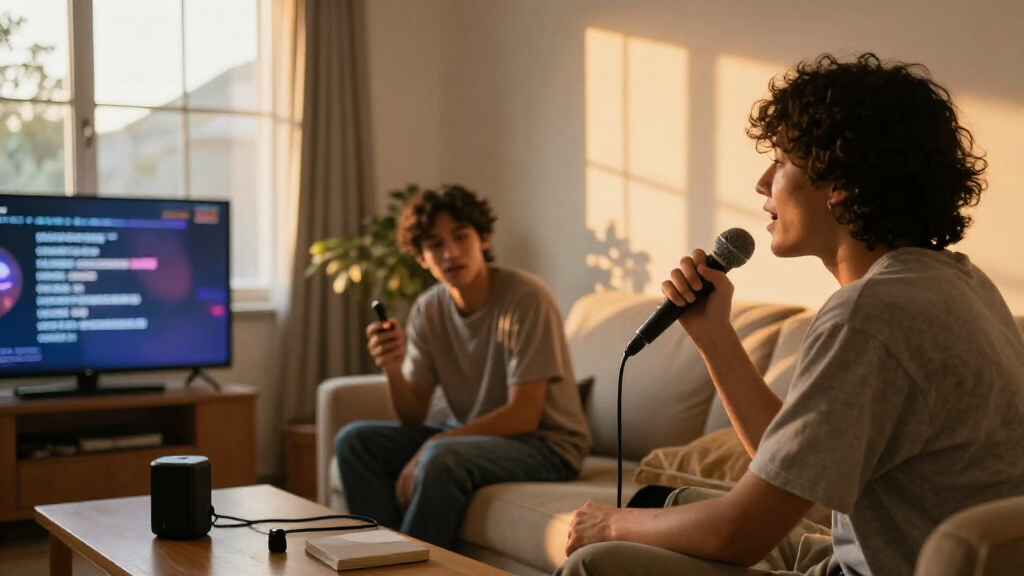
I ranked these systems around the needs of home karaoke: a sensible microphone count, a manageable receiver setup, and a wireless format that fits casual singing rather than a complex stage rig. I gave extra weight to options with clearly stated features that help buyers understand what they are getting, such as dual-channel UHF operation, rechargeable microphones, or four handheld mics. I also considered how easily a household can manage the equipment between singing sessions and whether a product’s role is clear next to the other picks.
The order reflects fit across common home setups, not a claim that one system sounds best in every room. The FIFINE K036 leads as a practical two-mic starting point, while the Aveek and MELONARE stand out when group capacity matters. Options with narrower strengths, including rechargeable convenience or a familiar brand name, rank for buyers who value those traits over a broader all-around fit. I also treat missing or unspecified details as a reason to check the product listing and connection requirements before purchase.
Factors to Consider When Choosing Wireless Microphone Systems For Home Karaoke
Before choosing a system, I’d match it to the way karaoke actually happens in your home. A useful buying decision starts with your audio connections and typical group size, then weighs battery habits, wireless setup, and how much equipment you want to store.
Match the Receiver to Your Karaoke Setup
Check what your karaoke machine, mixer, or powered speaker accepts before focusing on microphone features. A receiver may use a connection your equipment does not have, so confirm the input type and whether the system needs a separate mixer or adapter. A microphone system is not automatically a complete karaoke sound system; it does not necessarily provide music playback, vocal effects, or a speaker. Avoid assuming that a TV’s audio output can accept a microphone receiver directly. If you use a compact all-in-one karaoke unit, its manual can clarify which wireless systems it supports. A few minutes spent checking the signal path can prevent buying a set that cannot connect as intended.
Choose Microphone Count for Your Usual Group
Think about how many people sing at the same time, rather than how many people might attend a party. Two microphones are usually enough for duets and leave fewer mics to store, charge, or keep track of. Four-mic systems make sense for family groups or party games, but extra channels do not improve a solo singer’s experience by themselves. Check whether the receiver supports all included mics concurrently and whether your speaker setup can handle the combined vocal output. Buying more microphones than you use can add clutter without solving a real need. If your group size changes, also consider whether the system can be expanded instead of replacing the whole kit.
Understand Wireless Formats and Your Room
Wireless range and reliability depend on more than a number in a product description: room layout, walls, nearby electronics, and the receiver’s position can all affect performance. UHF models may appeal to buyers who want a dedicated wireless band, but the label alone does not guarantee interference-free operation. Systems using 2.4 GHz share a band with common household wireless devices, so placement and local congestion can matter. For a typical living room, prioritize a receiver you can position near the performance area and keep in line with the microphones. If you plan to sing across several rooms or outdoors, check the stated operating range and any restrictions before buying. Treat advertised range as a best-case guide, not a promise for every home.
Decide Between Rechargeable and Replaceable Batteries
Rechargeable microphones reduce the need to keep spare batteries on hand, which can make regular karaoke sessions easier to maintain. Their tradeoff is the need to charge them before use and remember where charging cables or docks are kept. Replaceable-battery models can be ready again quickly if you have spares, but ongoing battery use creates a small recurring chore. For households that sing spontaneously, consider whether the microphones will be stored charged or left unused for long stretches. Confirm what charging accessories and batteries are included rather than assuming they come in the box. Your routine matters more here than a general claim that one power type is better.
Prioritize Simple Setup or More Control
A system with more channels and controls can suit a host who likes to adjust levels, but it may take longer to set up and explain to guests. A basic two-mic receiver can be easier for occasional singers who want to plug in and start. Check whether the controls are clearly labeled and whether each microphone has its own level adjustment, since one loud singer can otherwise dominate a duet. Also look for a straightforward way to mute a mic between songs. If children or guests will use the system, simplicity can matter more than extra settings. Keep the receiver and microphone controls accessible without putting them where someone can easily knock them over.
Spend for a Real Need, Not a Longer Feature List
Paying more makes sense when it solves a specific problem, such as adding microphones for a larger group or getting a wireless setup that fits equipment you already own. It is less useful to pay for extra channels that will stay unused or features that duplicate controls on your karaoke machine. Compare what is included, including the receiver, microphones, batteries, charging accessories, and any required cables. Build quality and replaceable parts matter if the kit will be handled by a busy household. For occasional singing, a straightforward system may be a better fit than a more elaborate setup. Read the product details carefully where connection types, power accessories, or expansion options are not specified.
Frequently Asked Questions
Can I connect one of these wireless microphone systems directly to my TV?
Usually, you should not assume that a TV can accept a microphone receiver as an input. Many TVs send audio out to speakers but do not mix a microphone signal into the sound. The more common connection is from the receiver to a karaoke machine, mixer, or powered speaker that accepts microphone input. Check your TV and audio equipment manuals to map out where music playback and vocals will meet. If you only have a TV and no compatible audio input device, you may need additional equipment.
Is a four-microphone system a better choice than a two-microphone system?
It is better only if several people will sing at once or you have a specific group activity in mind. A two-mic set is easier to store and manage for most duets, while four mics can make family karaoke and party games more flexible. Before choosing four, confirm that the receiver handles all microphones at the same time and that your audio setup has suitable connections. More microphones also mean more batteries or charging to manage. If most sessions involve one or two singers, extra channels may go unused.
Should I choose UHF or 2.4 GHz for karaoke at home?
Neither format is automatically the right choice for every home. UHF and 2.4 GHz systems differ in how they use radio spectrum, and nearby devices, walls, and receiver placement can affect either one. Some 2.4 GHz systems share space with common household wireless devices, while UHF performance depends on the specific system and local conditions. Compare the stated operating details and place the receiver where it has a clear path to the singers. For a living-room setup, a reliable connection and compatible receiver matter more than the format label alone.
Do I need a mixer if my karaoke machine already has microphone inputs?
Not always. If the karaoke machine has compatible inputs and can handle the receiver’s output, it may be all you need. A mixer becomes useful when you need more microphone inputs, separate vocal level controls, or a way to combine sources that your current equipment cannot manage. Check whether the wireless receiver outputs a signal your machine accepts before buying extra gear. Avoid adding a mixer unless it solves a real connection or control problem, since it adds setup steps and cables.
What should I check before buying a rechargeable microphone system?
Confirm how the microphones charge, what accessories are included, and whether the charging arrangement suits where you store the kit. Consider how long the system may sit unused; a rechargeable set still needs attention before an unplanned karaoke night. Check whether each mic charges separately or whether the package provides a shared dock, and read the listed operating details rather than guessing from the word rechargeable. Also verify that the receiver’s power needs and connections fit your setup. If you prefer to keep spare batteries ready, a replaceable-battery model may fit your routine better.
Conclusion
For a balanced home duet setup, I’d choose the FIFINE K036 as the best overall pick. The Aveek 4-Microphone Wireless System is my best value-style choice for households that will use all four mics, while the JBL Wireless Two-Microphone System is the best premium-leaning option for buyers who favor a familiar audio brand. Beginners who want a straightforward two-mic arrangement can start by comparing the FIFINE and JBL systems against their equipment connections. For rechargeable convenience, look at ECHOMUSSY or the rechargeable GOLDEN MARS option; for larger groups, compare Aveek with MELONARE. Whichever role fits, check receiver compatibility first—that is the decision most likely to determine whether the system works smoothly with your home karaoke setup.