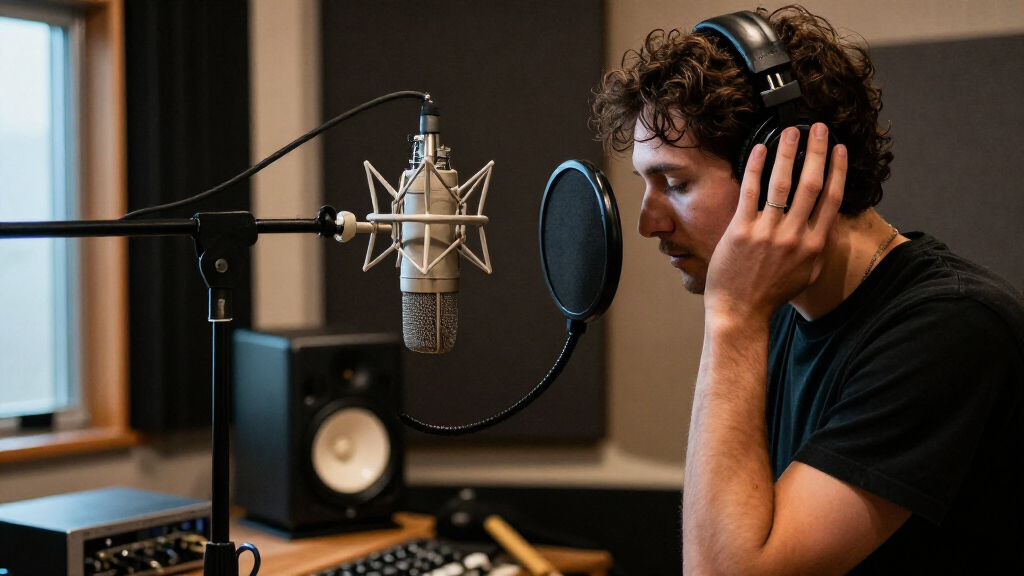

The best recording microphone for music creators depends on what you record, how quiet your room is, and whether you want USB simplicity or an XLR studio setup. I’d make the Audio-Technica AT2020 my best overall pick for creators ready to record vocals and instruments through an audio interface, while the Samson Q2U stands out for flexible USB/XLR recording and the RØDE NT1 Signature for a more premium studio setup. Condenser microphones can capture fine detail, but they also pick up room noise; dynamic models are often more forgiving in untreated spaces. USB mics keep setup simple, while XLR options leave more room to grow but require extra gear. Read on for the full breakdown of all 15 microphones and how their tradeoffs match different recording needs.

Get audio and creator gear delivered free with Prime
- Fast, free delivery on millions of items
- Prime Video, Amazon Music and more included
- Member-only deals all year
Complete the kit


Key Takeaways
- The AT2020 is the strongest all-around XLR starting point in this group for creators who want a studio condenser and already have, or plan to buy, an audio interface.
- The Samson Q2U offers the most useful connection flexibility: its USB and XLR outputs let a beginner start simply and later add interface-based recording.
- Dynamic microphones make more sense when room noise is a concern. The Q2U, FIFINE AM8 models, and MAONO PD200W suit less-treated spaces better than sensitive condenser options.
- USB kits vary in how much setup they remove. The Dejasound DJM5 and FIFINE T669 include recording accessories, while compact USB models such as the K669B keep the kit simpler.
- Paying for a premium condenser is most sensible when the room and recording chain can support it. The RØDE NT1 Signature and Shure SM4 are better matches for a more deliberate studio setup than casual desk recording.
| MAONO PM320S XLR Condenser Microphone Kit | 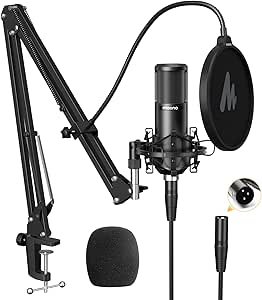 | Best Complete XLR Starter Kit | Connectivity: XLR | Capsule: 16 mm condenser | Polar pattern: Cardioid (unidirectional) | VIEW LATEST PRICE | See Our Full Breakdown |
| Audio-Technica AT2020 Cardioid Condenser Studio XLR Microphone |  | Best for Straightforward Home-Studio Recording | Connectivity: Wired, 3-pin XLRM | Polar pattern: Cardioid (unidirectional) | Frequency response: 20 Hz (listed specification) | VIEW LATEST PRICE | See Our Full Breakdown |
| Dejasound DJM5 USB Condenser Microphone Kit with Isolation Shield and Pop Filter |  | Best All-in-One USB Recording Kit | Connectivity: USB Type-B; 3.5 mm headphone jack | Polar pattern: Hyper cardioid | Diaphragm: 16 mm | VIEW LATEST PRICE | See Our Full Breakdown |
| Logitech Blue Yeti USB Microphone with Blue VO!CE, Four Pickup Patterns, and Desktop Stand – Blackout | 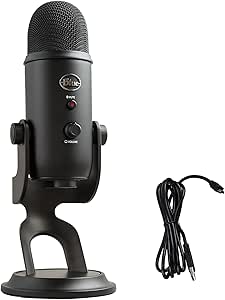 | Best for Flexible USB Recording Setups | Connectivity: USB | Microphone type: Condenser, tri-capsule array | Pickup patterns: Cardioid, omnidirectional, bidirectional, stereo | VIEW LATEST PRICE | See Our Full Breakdown |
| MAONO PD200W Hybrid Wireless Dynamic Podcast Microphone |  | Best for Flexible Wireless and Studio Connectivity | Connectivity: Wireless, USB, XLR | Microphone type: Dynamic | Capsule size: 30 mm | VIEW LATEST PRICE | See Our Full Breakdown |
| FIFINE AmpliGame AM8T USB/XLR Dynamic Microphone Kit with Boom Arm |  | Best Dynamic Kit for a Growing Home Studio | Microphone type: Dynamic | Connectivity: USB and XLR | Polar pattern: Cardioid (unidirectional) | VIEW LATEST PRICE | See Our Full Breakdown |
| AKG Pro Audio P120 2/3-Inch Diaphragm Condenser Microphone |  | Best for Loud Instruments | Microphone type: True condenser | Diaphragm size: 2/3 inch | Polar pattern: Cardioid (unidirectional) | VIEW LATEST PRICE | See Our Full Breakdown |
| MAONO A04 Gen2 USB/XLR Condenser Microphone Kit |  | Best Beginner Kit with Software Controls | Microphone type: Studio condenser, 16 mm electret capsule | Connectivity: USB, USB Type-C, and XLR | Polar pattern: Cardioid | VIEW LATEST PRICE | See Our Full Breakdown |
| Shure SM4 XLR Studio Condenser Microphone Kit |  | Best Premium XLR Studio Kit | Connectivity: XLR | Capsule: 1-inch brass dual-diaphragm | Polar pattern: Cardioid (unidirectional) | VIEW LATEST PRICE | See Our Full Breakdown |
| Samson Q2U USB-C/XLR Dynamic Microphone Recording and Podcasting Pack | 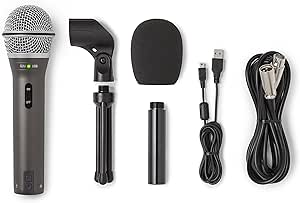 | Best Value for First-Time Recording | Microphone type: Dynamic handheld | Connectivity: USB-C and XLR | Polar pattern: Unidirectional | VIEW LATEST PRICE | See Our Full Breakdown |
| FIFINE T669 USB Condenser Microphone Kit with Adjustable Boom Arm |  | Best Complete USB Starter Kit | Connectivity: USB | Pickup pattern: Unidirectional cardioid | Frequency response: 20 Hz–20 kHz | VIEW LATEST PRICE | See Our Full Breakdown |
| RØDE NT1 Signature Series Studio Condenser Microphone, Black |  | Best for Low-Noise Studio Vocals | Microphone type: Large-diaphragm condenser | Connectivity: XLR | Capsule: 1-inch HF6 true condenser | VIEW LATEST PRICE | See Our Full Breakdown |
| FIFINE AmpliGame AM8 USB/XLR Dynamic Microphone |  | Best for a Flexible USB-to-XLR Setup | Microphone type: Dynamic | Connectivity: USB, XLR | Pickup pattern: Unidirectional cardioid | VIEW LATEST PRICE | See Our Full Breakdown |
| FIFINE K669B USB Condenser Microphone with Volume Control |  | Best Simple Desktop Mic for First Demos | Connectivity: USB Type-A, USB Type-C | Pickup pattern: Unidirectional cardioid | Frequency response: 20 Hz–20 kHz | VIEW LATEST PRICE | See Our Full Breakdown |
| ZealSound K66 USB Condenser Podcast Microphone |  | Best for Multi-Device Recording and Monitoring | Microphone type: USB condenser | Pickup pattern: Cardioid | Frequency response: 40 Hz–18 kHz | VIEW LATEST PRICE | See Our Full Breakdown |
| recording microphones for music creator | Connectivity | Frequency response | Signal-to-noise ratio | Polar pattern |
|---|---|---|---|---|
| MAONO PM320S XLR Condenser Mic | XLR | 20 Hz–20 kHz | 75 dB | Cardioid (unidirectional) |
| Audio-Technica AT2020 Cardioid | Wired, 3-pin XLRM | 20 Hz (listed specification) | 74 dB | Cardioid (unidirectional) |
| Dejasound DJM5 USB Condenser M | USB Type-B; 3.5 mm headphone jack | 30 Hz–16 kHz | — | Hyper cardioid |
| Logitech Blue Yeti USB Microph | USB | 20 Hz–20 kHz | — | — |
| MAONO PD200W Hybrid Wireless D | Wireless, USB, XLR | — | — | Unidirectional (cardioid) |
| FIFINE AmpliGame AM8T USB/XLR | USB and XLR | — | 80 dB | Cardioid (unidirectional) |
| AKG Pro Audio P120 2/3-Inch Di | — | 20 Hz–20 kHz | — | Cardioid (unidirectional) |
| MAONO A04 Gen2 USB/XLR Condens | USB, USB Type-C, and XLR | 30 Hz–16 kHz | 70 dB | Cardioid |
| Shure SM4 XLR Studio Condenser | XLR | — | 60 dB | Cardioid (unidirectional) |
| Samson Q2U USB-C/XLR Dynamic M | USB-C and XLR | — | 70 dB | Unidirectional |
| FIFINE T669 USB Condenser Micr | USB | 20 Hz–20 kHz | 78 dB | — |
| RØDE NT1 Signature Series Stud | XLR | — | 78 dB | — |
| FIFINE AmpliGame AM8 USB/XLR D | USB, XLR | 50 Hz–16 kHz | 80 dB | — |
| FIFINE K669B USB Condenser Mic | USB Type-A, USB Type-C | 20 Hz–20 kHz | 78 dB | — |
| ZealSound K66 USB Condenser Po | — | 40 Hz–18 kHz | — | — |
More Details on Our Top Picks
MAONO PM320S XLR Condenser Microphone Kit
The MAONO PM320S is a practical entry into XLR recording because the kit supplies much of the positioning and pop-control gear a new music creator would otherwise need to source separately. Its cardioid condenser capsule favors sound in front of the mic, making it a sensible fit for solo vocals or instruments in a reasonably controlled room. Compared with the Audio-Technica AT2020, the PM320S offers more bundled accessories, while the AT2020 has a simpler studio-focused package and a stated high-SPL capability. The tradeoff is that this kit still needs an audio interface, mixer, or preamp with 48V phantom power; it is not a direct-to-computer USB solution. The included boom arm and filters help get started, but creators seeking a minimal, established studio setup may prefer the AT2020.
Pros:- Bundled boom arm, shock mount, pop filter, foam windscreen, and XLR cable reduce accessory shopping.
- Cardioid pickup helps prioritize a singer or instrument positioned in front of the capsule.
- Metal housing and adjustable boom arm support flexible desk positioning.
- 20 Hz–20 kHz stated frequency response covers a broad range of musical sources.
Cons:- Needs 48V phantom power from an interface, mixer, or preamp.
- XLR connection adds equipment and setup requirements compared with USB options such as the Blue Yeti.
- A 75 dB signal-to-noise ratio gives less stated noise margin than the PD200W’s 82 dB figure.
Best for: Home vocalists and beginner music creators who already have, or plan to buy, an XLR interface and want basic mounting and pop-control accessories in one kit.
Not ideal for: Creators who need a USB microphone that connects directly to a computer or phone, or anyone without access to 48V phantom power.
- Connectivity:XLR
- Capsule:16 mm condenser
- Polar pattern:Cardioid (unidirectional)
- Phantom power:48V required
- Frequency response:20 Hz–20 kHz
- Sensitivity:-34 dB ±3 dB
- Signal-to-noise ratio:75 dB
- Included accessories:Boom arm, metal shock mount, pop filter, foam windscreen, XLR cable, user manual
Our verdict“Choose the PM320S if you want an accessory-rich first XLR condenser kit and already have a phantom-powered recording setup.”
Audio-Technica AT2020 Cardioid Condenser Studio XLR Microphone
The Audio-Technica AT2020 earns its place as a no-frills studio condenser for creators who want to build a recording chain around a standalone XLR mic. Its low-mass diaphragm is designed to capture transient detail, which can help vocals and acoustic instruments retain articulation rather than sounding blurred. The cardioid pattern also favors the source in front while reducing pickup from the sides and rear. Compared with the MAONO PM320S, the AT2020 supplies fewer setup accessories, so the buyer may need to add a boom arm and pop filter; in return, its stated wide dynamic range and high-SPL handling suit varied sources. Like the PM320S, it requires phantom power and a compatible interface. It is a focused studio choice, not a plug-and-play option for creators who want USB convenience or built-in controls.
Pros:- Low-mass diaphragm is designed for extended frequency and transient response.
- Cardioid pattern helps reduce sound picked up from the sides and rear.
- Wide dynamic range and high SPL handling support a range of recording sources.
- Metal enclosure and included stand mount provide a sturdy basic studio package.
Cons:- Requires phantom power and an XLR-compatible interface or mixer.
- Does not include the boom arm, shock mount, and pop filter supplied with the MAONO PM320S.
- The supplied frequency-response specification lists only a 20 Hz value, limiting direct comparison across the lineup.
Best for: Home-studio musicians with an XLR interface who want a standalone condenser for vocals, acoustic instruments, and other close-miked sources.
Not ideal for: First-time creators who need a bundled boom arm and pop filter, or musicians who want direct USB recording without an interface.
- Connectivity:Wired, 3-pin XLRM
- Polar pattern:Cardioid (unidirectional)
- Frequency response:20 Hz (listed specification)
- Signal-to-noise ratio:74 dB
- Audio sensitivity:37 dB
- Impedance:200 ohms
- Power:Phantom power
- Included accessories:Stand mount, 5/8″-27 to 3/8″-16 threaded adapter, soft protective pouch
Our verdict“Pick the AT2020 for a focused, standalone XLR condenser when you already have the interface and accessories to complete your studio setup.”
Dejasound DJM5 USB Condenser Microphone Kit with Isolation Shield and Pop Filter
The Dejasound DJM5 is the most self-contained choice here for creators who want to record without assembling an XLR chain. Its USB connection, headphone monitoring, mute and volume controls, and included foldable isolation shield make it easy to set up a compact vocal station; Lightning and USB-C adapters also broaden device compatibility. Compared with the Logitech Blue Yeti, the DJM5 brings more physical recording accessories, while the Yeti offers four pickup patterns and onboard pattern selection for changing between solo, stereo, and group arrangements. The DJM5’s listed 30 Hz–16 kHz response is narrower than the Yeti’s stated 20 Hz–20 kHz range, and its single-channel output is less flexible for multi-source recording. Its echo control may appeal to casual creators, but musicians seeking a more controlled, unprocessed signal should keep effects restrained.
Pros:- USB connection and included adapters support use with computers and compatible mobile devices.
- Foldable five-panel isolation shield, pop filter, tripod, and headphones create a ready-to-use kit.
- Headphone monitoring and mute, volume, and echo controls are available on the setup.
- Listed 192 kHz / 24-bit sampling supports high-resolution digital capture.
Cons:- Single-channel recording limits multi-mic and stereo recording setups.
- Listed 30 Hz–16 kHz frequency response is narrower than the Blue Yeti’s stated range.
- Requires a wired cable and 5 V power, so it is not a wireless recording option.
Best for: New singers and home creators who want a USB mic, monitoring, and a desk-ready shield-and-filter setup for solo recording.
Not ideal for: Musicians who need multiple channels, a broad pickup-pattern choice, or an XLR path for integrating with a studio interface.
- Connectivity:USB Type-B; 3.5 mm headphone jack
- Polar pattern:Hyper cardioid
- Diaphragm:16 mm
- Sampling rate:192 kHz / 24-bit
- Frequency response:30 Hz–16 kHz
- Power:5 V, corded electric
- Controls and monitoring:Echo, volume, mute, and 3.5 mm headphone monitoring
- Included accessories:Five-panel foldable isolation shield, pop filter, tripod, headphones, Lightning and USB-C adapters, foam cover
Our verdict“Choose the DJM5 if an accessible USB setup with included vocal-treatment accessories matters more than expandable studio routing.”
Logitech Blue Yeti USB Microphone with Blue VO!CE, Four Pickup Patterns, and Desktop Stand – Blackout
The Blue Yeti is the most adaptable USB pick in this group for music creators who change recording formats. Its four pickup patterns let one mic handle solo vocals, stereo capture, face-to-face sessions, or sound from around the room—uses a cardioid-only model such as the MAONO PM320S cannot cover as directly. Onboard gain, mute, pattern, and headphone-volume controls make those changes accessible without reaching for software, while zero-latency monitoring helps singers hear the live input. The tradeoff is that the Yeti remains a wired USB mic and does not provide the XLR upgrade path available on the PM320S or MAONO PD200W. Full Blue VO!CE features also depend on Logitech G HUB. For creators who mainly record one source through an XLR interface, this flexibility may be unnecessary complexity.
Pros:- Four pickup patterns cover solo, stereo, bidirectional, and omnidirectional recording situations.
- Onboard gain, mute, pattern, and headphone-volume controls speed up session adjustments.
- Zero-latency headphone monitoring supports live vocal recording.
- Metal enclosure and adjustable desktop stand provide a stable desktop setup.
Cons:- Blue VO!CE features require Logitech G HUB software.
- USB-only connectivity does not offer the XLR expansion path of the MAONO PM320S or PD200W.
- Wired connection limits placement compared with the PD200W’s wireless mode.
Best for: USB-based music creators who record solo vocals, stereo material, or occasional two-person sessions and want to switch pickup patterns at the mic.
Not ideal for: Musicians who need XLR integration, a wireless setup, or a compact mic with a single-purpose recording workflow.
- Connectivity:USB
- Microphone type:Condenser, tri-capsule array
- Pickup patterns:Cardioid, omnidirectional, bidirectional, stereo
- Frequency response:20 Hz–20 kHz
- Channels:2
- Monitoring:Zero-latency headphone monitoring
- Controls:Headphone volume, pattern selection, mute, microphone gain
- Compatibility:PC and Mac
Our verdict“Choose the Blue Yeti if you want one USB microphone to cover several recording arrangements without adding an interface.”
MAONO PD200W Hybrid Wireless Dynamic Podcast Microphone
The MAONO PD200W stands apart by combining wireless, USB, and XLR connections in a single dynamic mic. That range makes it a strong fit for creators who may record untethered now but want to connect the same microphone to a computer or audio interface later. Its cardioid pickup and three-stage noise cancellation are aimed at reducing room and background sound, a useful contrast with the more open condenser approach of the Audio-Technica AT2020. The PD200W also lists a 128 dB maximum SPL, giving it headroom for louder sources. Its stated wireless range reaches up to 60 m, and battery life reaches up to 60 hours with RGB lighting off. The cost of that flexibility is a heavier, more involved device; camera and Lightning accessories are not included, and wireless runtime depends on the lighting setting.
Pros:- Wireless, USB, and XLR connectivity support multiple recording workflows.
- Dynamic capsule and cardioid pickup suit close vocals in rooms with background noise.
- Three-stage noise cancellation offers adjustable help with room and ambient sound.
- Up to 60 hours of stated battery life with RGB lighting off and wireless range up to 60 m.
Cons:- At 1.32 kg, it is heavier than a basic desktop USB microphone.
- The 60-hour battery figure applies with RGB lighting off.
- Camera and Lightning accessories are sold separately.
Best for: Musicians and streamers who need a dynamic mic that can move between wireless recording, USB computer use, and an XLR studio chain.
Not ideal for: Creators seeking a lightweight, simple condenser setup for detailed acoustic capture, or those who need included camera and Lightning accessories.
- Connectivity:Wireless, USB, XLR
- Microphone type:Dynamic
- Capsule size:30 mm
- Polar pattern:Unidirectional (cardioid)
- Maximum SPL:128 dB
- Wireless range:Up to 60 m
- Battery life:Up to 60 hours with RGB lighting off
- Weight:1.32 kg
Our verdict“Pick the PD200W if you need one dynamic microphone to shift between wireless sessions, direct USB recording, and XLR studio use.”
FIFINE AmpliGame AM8T USB/XLR Dynamic Microphone Kit with Boom Arm
The AM8T is a flexible starting point for music creators who want a dynamic mic, desk mounting, and a path from computer recording to an interface. Its USB and XLR connections let you begin without extra recording hardware, then switch to an XLR setup later. Compared with the condenser-based MAONO A04 Gen2, its dynamic design is a better fit for untreated rooms where reducing pickup of surrounding noise matters more than capturing fine acoustic detail. The included boom arm, headphone monitoring, and on-mic gain and mute controls make recording and quick level adjustments straightforward. The tradeoff is that it is less suited to spacious, detailed acoustic recordings than a condenser, and moving to XLR requires a separately sourced cable. Check the desk clamp limit too: it only fits surfaces up to two inches thick.
Pros:- USB and XLR connectivity supports computer recording and later interface-based setups.
- Included boom arm and clamp provide a ready-to-position desk mount.
- Headphone monitoring and on-mic gain and mute controls help manage sessions without reaching for software.
- Dynamic cardioid design is a practical choice for rooms with some unwanted background sound.
Cons:- XLR cable is not included, adding a separate purchase for interface use.
- Clamp only fits desktops up to two inches thick.
- Dynamic capsule may capture less fine detail from quiet acoustic sources than a condenser microphone.
Best for: Home musicians recording vocals, demos, or amplified instruments at a desk who want USB now and an XLR upgrade path later.
Not ideal for: Creators focused on nuanced acoustic instrument recordings, or owners of desks thicker than two inches who cannot use the included clamp.
- Microphone type:Dynamic
- Connectivity:USB and XLR
- Polar pattern:Cardioid (unidirectional)
- Frequency range:50 Hz–16 kHz
- Signal-to-noise ratio:80 dB
- Controls:Mute button, gain knob, headphone volume control
- Included accessories:Boom arm stand, C-clamp, 8.2 ft USB-to-USB-C cable, windscreen
- Desk clamp fit:Desktops up to 2 inches thick
Our verdict“Choose the AM8T if you want a desk-mounted dynamic mic that can move from USB recording to an XLR studio setup.”
AKG Pro Audio P120 2/3-Inch Diaphragm Condenser Microphone
The P120 earns its place for creators who record sources that can get loud, from close-miked guitar cabinets to forceful vocals. Its 150 dB maximum SPL and -20 dB pad give more room to handle high levels without overloading the microphone, while the bass-cut filter can reduce low-frequency rumble before it reaches the recording chain. Compared with the Shure SM4, the P120 also offers a pad and bass-cut control, making those adjustments available directly at the mic. Its cardioid condenser capsule is aimed at a single source, not multi-directional room capture, and phantom power is required. The P120 is a straightforward XLR studio tool rather than a USB-ready option, so it needs an interface or mixer with phantom power. It also arrives without a shock mount, which can leave desk or stand vibrations more audible.
Pros:- Handles sound levels up to 150 dB, suiting close recording of loud sources.
- Switchable -20 dB pad helps accommodate strong input levels.
- Bass-cut filter can reduce low-frequency rumble during recording.
- Metal construction and a low-mass diaphragm support a durable, detailed studio setup.
Cons:- Requires phantom power through an XLR interface or mixer.
- Fixed cardioid pattern provides less recording flexibility than multi-pattern microphones.
- No shock mount is included to help isolate handling and stand vibration.
Best for: Home-studio musicians who already have phantom-powered XLR equipment and need a condenser for loud instruments or vocals.
Not ideal for: USB-only creators, musicians without phantom power, or anyone needing multiple pickup patterns or an included shock mount.
- Microphone type:True condenser
- Diaphragm size:2/3 inch
- Polar pattern:Cardioid (unidirectional)
- Frequency response:20 Hz–20 kHz
- Maximum SPL:150 dB
- Preattenuation pad:-20 dB
- Bass-cut filter:300 Hz, 6 dB/octave
- Power and connector:Phantom power; XLR
- Equivalent noise level:19 dB-A
Our verdict“Pick the P120 if your XLR studio already supplies phantom power and you want onboard controls for loud or bass-heavy sources.”
MAONO A04 Gen2 USB/XLR Condenser Microphone Kit
The A04 Gen2 is the most software-assisted option here for creators recording vocals or instruments over USB. Its MAONO Link controls offer gain, noise reduction, EQ, compression, and limiting, giving new recordists tools to shape a signal without starting with separate processing software. The included arm, shock mount, pop filter, and foam windscreen also cover common setup needs. Compared with the dynamic FIFINE AmpliGame AM8T, this condenser is better suited to capturing more detail in a controlled home-recording space, while the AM8T is the more sensible pick when room noise is a concern. The A04 can also connect by XLR, but that route requires phantom power and a separate cable. Its cardioid pattern keeps the focus on the front, and Xbox compatibility is explicitly excluded.
Pros:- USB mode includes software controls for gain, noise reduction, EQ, compression, and limiting.
- USB and XLR connections allow a move from computer recording to compatible studio gear.
- Kit includes an arm, shock mount, pop filter, and foam windscreen.
- Cardioid pickup focuses on sound in front of the microphone.
Cons:- XLR cable is not included, and XLR operation requires phantom power.
- Condenser design may pick up more room sound than a dynamic option such as the FIFINE AM8T.
- Not compatible with Xbox.
Best for: New home musicians recording vocals or instruments at a computer who want a bundled stand and USB software tools for shaping sound.
Not ideal for: Xbox users, creators recording in noisy rooms who prefer a dynamic mic, or buyers who need XLR cabling included.
- Microphone type:Studio condenser, 16 mm electret capsule
- Connectivity:USB, USB Type-C, and XLR
- Polar pattern:Cardioid
- USB audio:Up to 192 kHz/24-bit
- Frequency response:30 Hz–16 kHz
- Signal-to-noise ratio:70 dB
- Included accessories:Adjustable scissor arm, shock mount, pop filter, foam windscreen, boom arm base, USB cable
- XLR power requirement:Phantom power required
- Desk clamp compatibility:Desktops less than 2.1 inches thick
Our verdict“Choose the A04 Gen2 if you want a bundled condenser setup and USB software processing for home music recording.”
Shure SM4 XLR Studio Condenser Microphone Kit
The SM4 is the most studio-oriented choice in this group for musicians who have an XLR interface and want a condenser kit with isolation and plosive control already addressed. Its 1-inch brass dual-diaphragm capsule and cardioid pattern suit focused vocal and instrument recording, while RF shielding helps limit interference from nearby wireless devices. The included magnetic pop filter and shock mount reduce common recording hassles without requiring the separate mount purchase the AKG P120 may call for. The SM4 also handles up to 140 dB SPL, though the P120’s stated 150 dB ceiling gives it more headroom for the loudest sources. This is not a plug-and-play USB mic: it requires phantom power and compatible XLR equipment. Its kit and construction make more sense for a fixed studio setup than a simple computer recording station.
Pros:- One-inch brass dual-diaphragm capsule is suited to detailed vocal and instrument recording.
- RF shielding helps reduce interference from wireless devices.
- Detachable magnetic pop filter and shock mount are included.
- 140 dB maximum SPL supports recording strong sources.
Cons:- Requires phantom power and compatible XLR recording equipment.
- Its 140 dB maximum SPL is lower than the AKG P120’s stated 150 dB.
- XLR-only connectivity offers no direct USB connection to a computer.
Best for: Vocalists and instrumentalists building an XLR home studio who want a condenser kit with a shock mount and pop filter included.
Not ideal for: USB-only beginners, portable recording setups that lack phantom power, or buyers who prioritize the P120’s higher stated maximum SPL.
- Connectivity:XLR
- Capsule:1-inch brass dual-diaphragm
- Polar pattern:Cardioid (unidirectional)
- Maximum SPL:140 dB
- Signal-to-noise ratio:60 dB
- Power:Phantom power required
- Enclosure material:Stainless steel
- Included accessories:Detachable magnetic pop filter, shock mount, brass mic stand adapter, zippered carrying case
Our verdict“Choose the SM4 for a prepared XLR studio where the included shock mount, pop filter, and RF shielding matter more than USB convenience.”
Samson Q2U USB-C/XLR Dynamic Microphone Recording and Podcasting Pack
The Q2U is a practical entry into music recording for creators who want a handheld dynamic mic and a basic stand-up setup without sourcing every accessory separately. It connects over USB-C or XLR, and the pack includes both cables along with a desktop tripod, clip, and windscreen. That makes it more immediately complete for a new USB recorder than the FIFINE AmpliGame AM8T, whose XLR cable is not included and whose boom arm is aimed at desk mounting. The Q2U’s handheld format works well for vocal takes and portable sessions, but it lacks the AM8T’s on-mic gain and headphone-monitoring controls. Its unidirectional dynamic design is less suited to capturing the fine detail of quiet acoustic performances than a condenser such as the AKG P120, which also needs an interface with phantom power.
Pros:- USB-C and XLR connectivity support direct computer recording and compatible studio equipment.
- Includes both USB-C and XLR cables, unlike the AM8T’s supplied cable set.
- Pack provides a desktop tripod, extension, mic clip, and windscreen.
- Metal enclosure suits a handheld recording format.
Cons:- USB-C connection requires a computer with a compatible USB-C interface.
- Lacks the AM8T’s built-in gain and headphone-monitoring controls.
- Dynamic handheld design is less tailored to detailed capture of quiet acoustic instruments than a condenser.
Best for: First-time music creators who want a handheld dynamic mic, a simple desktop stand, and both USB-C and XLR connection options.
Not ideal for: Musicians seeking a desk boom arm with onboard monitoring controls, or those recording quiet acoustic sources that benefit from a condenser.
- Microphone type:Dynamic handheld
- Connectivity:USB-C and XLR
- Polar pattern:Unidirectional
- Frequency range:50 Hz–15 kHz
- Signal-to-noise ratio:70 dB
- Enclosure material:Metal
- Weight:11.2 ounces
- Included accessories:Desktop tripod stand, tripod extension, mic clip, windscreen, USB-C cable, XLR cable
Our verdict“Pick the Q2U if you want an affordable-to-set-up handheld dynamic mic with cables and a basic stand included.”
FIFINE T669 USB Condenser Microphone Kit with Adjustable Boom Arm
The FIFINE T669 makes sense for music creators who want a ready-to-position vocal mic without assembling a separate stand and accessory kit. Its cardioid condenser capsule favors sound in front of the mic, while the included shock mount and double-layer pop filter help manage desk vibration and plosive sounds during close vocal takes. The 30-inch adjustable boom arm also frees desk space compared with the compact tripod on the FIFINE K669B. Unlike the RØDE NT1 Signature Series, this one connects straight to a computer over USB, so no audio interface is needed. The tradeoff is a less flexible recording path: it is USB-only, its cord limits placement, and it is not compatible with Xbox. Choose it for a practical home setup, not for a studio chain built around XLR equipment.
Pros:- USB plug-and-play connection requires no additional drivers.
- Cardioid pickup favors the voice or instrument in front of the capsule.
- Includes an adjustable steel boom arm, shock mount, and double-layer pop filter.
- Boom arm reaches up to 30 inches and can be positioned off the desktop.
Cons:- USB-only connectivity does not support an XLR interface or mixer.
- The 8.2-foot cable limits placement relative to the computer.
- Incompatible with Xbox.
Best for: New home musicians recording vocals or demos on a PC or laptop who want a boom arm, shock mount, and pop filter in one kit.
Not ideal for: Creators building an XLR studio setup, recording away from a computer, or using an Xbox.
- Connectivity:USB
- Pickup pattern:Unidirectional cardioid
- Frequency response:20 Hz–20 kHz
- Signal-to-noise ratio:78 dB
- Cable length:8.2 ft
- Boom arm reach:30 in
- Included accessories:Steel boom arm, C-clamp, detachable desktop mount, shock mount, double pop filter, USB cable, user manual
- Compatibility:PC, laptop, PS4, PS5; not Xbox
Our verdict“Choose the T669 if you want a computer-ready vocal recording kit with a boom arm and basic accessories, rather than an XLR microphone for a growing studio.”
RØDE NT1 Signature Series Studio Condenser Microphone, Black
For a music creator prioritizing clean, detailed capture over plug-and-play convenience, the RØDE NT1 Signature Series is the strongest studio-focused choice in this group. Its 1-inch HF6 condenser capsule and listed 4 dB self-noise suit quiet vocal passages and nuanced acoustic instruments, while high SPL handling also gives it room for louder sources. The included SM6 shock mount and pop filter make vocal recording more practical out of the box than with the FIFINE AM8, which is a dynamic USB/XLR mic designed around closer working distances and USB controls. The NT1’s tradeoff is the setup: XLR requires an audio interface, and the microphone cannot connect directly to a computer by itself. It is a better fit for a dedicated recording chain than for creators seeking an all-in-one desktop USB solution.
Pros:- Listed 4 dB self-noise supports quiet, detailed recording.
- Large-diaphragm condenser design suits vocals and acoustic instruments.
- High SPL handling supports louder sound sources.
- Includes an SM6 shock mount with pop filter, 6 m XLR cable, and dust cover.
Cons:- Requires an audio interface with a compatible XLR input.
- XLR setup is less convenient for direct-to-computer recording than the FIFINE T669 or K669B.
- A sensitive condenser can capture room noise as well as fine performance detail.
Best for: Home-studio musicians with an audio interface who record vocals, acoustic instruments, or other sources where low self-noise and detailed condenser capture matter.
Not ideal for: Beginners who need a direct USB connection, or creators recording in a noisy room without a suitable interface and controlled setup.
- Microphone type:Large-diaphragm condenser
- Connectivity:XLR
- Capsule:1-inch HF6 true condenser
- Pickup pattern:Cardioid
- Self-noise:4 dB
- Signal-to-noise ratio:78 dB
- Weight:313 g
- Included accessories:SM6 shock mount with pop filter, 6 m XLR cable, dust cover
Our verdict“Pick the NT1 Signature Series if you already have an interface and want a low-noise condenser for considered studio recording.”
FIFINE AmpliGame AM8 USB/XLR Dynamic Microphone
The FIFINE AmpliGame AM8 is a useful bridge for creators who want a straightforward USB mic now and the option to use an XLR setup later. Its dynamic cardioid design and suggested 2–6-inch recording distance make it a different proposition from the condenser FIFINE T669: the AM8 is meant for close-miked vocals, while the T669’s kit is aimed at a more traditional computer-based condenser setup. In USB mode, the AM8 adds headphone monitoring, volume controls, tap-to-mute, and RGB lighting, giving it more hands-on desktop control than the RØDE NT1 Signature Series. Those extras disappear in XLR mode, and an XLR cable is not included. The close working distance can also feel restrictive for singers who prefer to move around, so this is best for stationary vocal takes, streaming, and home demos.
Pros:- USB and XLR connectivity support both direct computer use and interface-based setups.
- USB mode includes headphone monitoring, volume controls, and tap-to-mute.
- Cardioid dynamic design is suited to close vocal recording.
- Built-in 3/8-inch and 5/8-inch stand threads avoid the need for a thread adapter.
Cons:- XLR cable is not included.
- RGB lighting and USB function controls are inactive in XLR mode.
- Suggested 2–6-inch working distance may not suit singers who move during a take.
Best for: Music creators who want to start recording vocals over USB and may later connect a dynamic mic to an interface or mixer.
Not ideal for: Singers who need more room to move, buyers wanting condenser-style detail, or XLR users who expect USB controls and lighting to remain active.
- Microphone type:Dynamic
- Connectivity:USB, XLR
- Pickup pattern:Unidirectional cardioid
- Frequency response:50 Hz–16 kHz
- Signal-to-noise ratio:80 dB
- USB-mode features:Tap-to-mute, RGB lighting, headphone monitoring, volume controls
- Stand threads:3/8-inch and 5/8-inch
- Included accessory:Windscreen
Our verdict“Choose the AM8 if you want a close-miked dynamic vocal option with USB convenience now and XLR flexibility later.”
FIFINE K669B USB Condenser Microphone with Volume Control
The FIFINE K669B keeps a first recording setup compact: connect it by USB, place it on the included tripod, and adjust the built-in volume control without adding a boom arm or interface. Its cardioid condenser capsule and 20 Hz–20 kHz response make it a basic option for vocal ideas, practice takes, and voice-led content. Compared with the larger FIFINE T669 kit, the K669B takes less setup space but omits the boom arm, shock mount, and pop filter. The RØDE NT1 Signature Series is the more studio-oriented choice for low-noise detail, but it requires an interface and a larger recording setup. The K669B’s main compromise is control and compatibility: some apps may change its level automatically unless that setting is disabled, and it does not work with phones or Xbox.
Pros:- USB plug-and-play connection suits a simple computer recording setup.
- Metal construction and included tripod provide a compact desktop arrangement.
- Built-in volume control can be turned down to zero.
- Cardioid pickup favors sound from the main voice or instrument position.
Cons:- Not compatible with Xbox or phones.
- Some recording apps may need automatic volume adjustment disabled to prevent level changes.
- No boom arm, shock mount, or pop filter is included, unlike the FIFINE T669 kit.
Best for: New music makers recording rough vocal demos or songwriting ideas at a computer who want a small, direct USB setup.
Not ideal for: Phone-based creators, Xbox users, or musicians seeking a more adjustable mic position and included vocal accessories.
- Connectivity:USB Type-A, USB Type-C
- Pickup pattern:Unidirectional cardioid
- Frequency response:20 Hz–20 kHz
- Cable:USB-B to USB-A/C, 6.5 ft
- Signal-to-noise ratio:78 dB
- Audible noise:16 dB
- Form factor:Desktop microphone with tripod stand
- Compatibility:Laptop, desktop, PC, PS4, PS5; not Xbox or phones
Our verdict“Pick the K669B for basic computer-based demos when compact setup matters more than a boom arm, extra accessories, or phone compatibility.”
ZealSound K66 USB Condenser Podcast Microphone
The ZealSound K66 stands out for creators who want physical controls and headphone monitoring without committing to a separate audio interface. Its zero-latency 3.5 mm monitoring lets a singer hear a live input while recording, and independent mic and monitoring controls make quick adjustments easier than on the simpler FIFINE K669B. Noise reduction and echo controls add flexibility for spoken content, though echo is not a substitute for shaping a music vocal in recording software. Included USB-C and Lightning adapters broaden the range of compatible devices compared with the computer-focused FIFINE T669. The tradeoff is that compatibility depends on the connected device, and noise reduction is activated by holding the mute button, which may take practice. This is a convenient utility mic, but creators wanting a more traditional studio condenser should look to the RØDE NT1 Signature Series.
Pros:- Zero-latency monitoring through a 3.5 mm headphone jack supports real-time vocal checks.
- Separate microphone and monitoring volume controls allow direct level adjustments.
- USB-C and Lightning adapters support a range of compatible computers and mobile devices.
- Noise reduction mode can help lower background sounds such as keyboard clicks and fan noise.
Cons:- Noise reduction is activated by pressing and holding the mute button, which may be unfamiliar.
- Device compatibility depends on the connected hardware and included adapters.
- Echo and noise reduction controls are less tailored to studio vocal production than software-based processing.
Best for: Songwriters and content creators who record rough vocals or ideas across a computer, tablet, or compatible phone and want direct headphone monitoring.
Not ideal for: Musicians seeking a dedicated XLR studio microphone, predictable compatibility with every device, or a simple control layout with no special button behavior.
- Microphone type:USB condenser
- Pickup pattern:Cardioid
- Frequency response:40 Hz–18 kHz
- Sampling rate:46 kHz
- Sensitivity:−45 dB ±3 dB
- Monitoring:Zero-latency via 3.5 mm headphone jack
- Controls:Microphone volume, monitoring volume, echo, mute, noise reduction
- Connectivity and compatibility:USB with USB-C and Lightning adapters; Windows PC, Mac, PS4, PS5, iPhone, iPad, and compatible USB-C devices
Our verdict“Choose the K66 if you need a USB condenser with direct monitoring and broad device connections for flexible recording, rather than an XLR studio mic.”
How We Picked
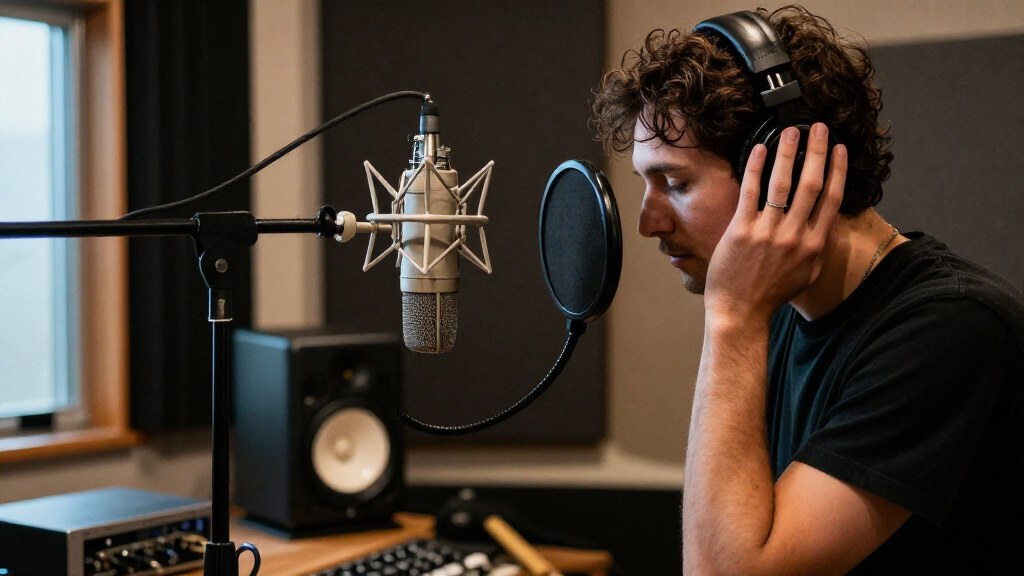
I ranked these microphones by how well they serve music creators, not by how many features appear on the box. My main criteria were recording fit for vocals and instruments, connection type, ease of setup, and how practical each microphone is in a typical home room. I also weighed included accessories, physical flexibility, and whether a model can adapt as a creator’s recording setup changes.
The order favors microphones with a clear use case and a workable balance of sound capture, usability, and upgrade potential. That puts the AT2020 near the top as a capable XLR condenser, while the Q2U ranks highly for its dual connection options. Premium condensers place higher for dedicated recording setups, but not automatically for beginners: a sensitive mic can expose room reflections, and an XLR model needs an interface or mixer. USB-first and bundled-kit models remain useful lower-cost or lower-friction choices, though they offer different limits in control, connection, and expansion.
| recording microphones for music creator | Polar pattern |
|---|---|
| MAONO PM320S XLR Condenser Mic | Cardioid (unidirectional) |
| Audio-Technica AT2020 Cardioid | Cardioid (unidirectional) |
| Dejasound DJM5 USB Condenser M | Hyper cardioid |
| Logitech Blue Yeti USB Microph | — |
| MAONO PD200W Hybrid Wireless D | Unidirectional (cardioid) |
| FIFINE AmpliGame AM8T USB/XLR | Cardioid (unidirectional) |
| AKG Pro Audio P120 2/3-Inch Di | Cardioid (unidirectional) |
| MAONO A04 Gen2 USB/XLR Condens | Cardioid |
| Shure SM4 XLR Studio Condenser | Cardioid (unidirectional) |
| Samson Q2U USB-C/XLR Dynamic M | Unidirectional |
| FIFINE T669 USB Condenser Micr | — |
| RØDE NT1 Signature Series Stud | — |
| FIFINE AmpliGame AM8 USB/XLR D | — |
| FIFINE K669B USB Condenser Mic | — |
| ZealSound K66 USB Condenser Po | — |
Factors to Consider When Choosing Recording Microphones For Music Creators
Before choosing from this lineup, decide what problem the microphone needs to solve: capturing detail, reducing room noise, simplifying setup, or supporting future studio upgrades. A good match can matter more than a longer feature list. These factors can help narrow the options before you compare individual models.
Match the microphone type to your room
A condenser can capture vocal nuance and quieter acoustic details, but it may also record reflections, computer fans, and street noise. A dynamic microphone is often a safer choice when you record close to a desk or in a room without acoustic treatment. The common mistake is buying a highly sensitive mic for its studio reputation and then blaming the mic when the room sounds boxy. Before spending on a more revealing condenser, try recording in the quietest part of your space and reducing hard-surface reflections. If you mainly record loud sources or close-miked vocals, sensitivity may matter less than consistent placement and room control.
Choose USB or XLR based on your recording path
USB microphones connect directly to a computer, which can make a first recording session much easier. XLR microphones need an audio interface or mixer, adding cost and setup but giving you a more adaptable signal chain. A USB/XLR hybrid can bridge those approaches, though switching connections does not by itself improve sound quality. Avoid buying an XLR mic before checking whether your interface supplies phantom power for a condenser. If you expect to record several microphones at once, an interface with enough inputs may be a better early purchase than a more elaborate single mic.
Think about what you record most often
Lead vocals, acoustic guitar, electric guitar cabinets, and spoken introductions place different demands on a microphone. A condenser may suit detailed vocals or acoustic instruments, while a dynamic model can be practical for close recording and louder sources. If you switch between instruments, a microphone that is easy to reposition and a stand that holds its angle may have more daily value than extra software controls. One common mistake is choosing based only on a vocal demo, then expecting the same mic to suit every instrument and distance. List your two most frequent recording tasks and choose for those before treating versatility as a bonus.
Budget for the full recording chain
The microphone is only one part of a usable recording setup. XLR choices may call for an interface, a stand, a cable, and possibly a pop filter; USB kits can bundle some accessories but may still need a stable mount and headphones. A low-cost bundle is not automatically the best value if its stand or included parts do not fit your workspace. On the other hand, paying more for a microphone while recording in a noisy room may produce less improvement than addressing the room or mic placement. Compare the cost and usefulness of the whole setup, not just the microphone itself.
Check placement, mounting, and desk noise
A microphone that sounds promising on paper can be frustrating if its stand crowds your desk or transmits keyboard taps. Boom arms and isolation accessories can improve positioning, but they also need space and a secure attachment point. A desktop stand is compact, yet it may place the capsule too far away or close to reflective surfaces. Before choosing a kit, check whether the included mount suits your desk thickness and whether the microphone can sit at the distance you need. Good placement often improves a recording more than adding another accessory after the fact.
Pay for growth only when you will use it
More pickup patterns, software controls, or hybrid connections can be useful, but unused features add complexity rather than value. Multiple patterns help when the recording arrangement changes, while a single-direction mic may be better for isolating one singer or instrument. If you expect to expand into an interface-based setup, a hybrid or XLR microphone can reduce the chance of replacing your first mic soon. If you mainly record one source at a desk, simple USB operation may be the better fit. Choose upgrades that solve a likely next step, not an imagined studio setup.
Frequently Asked Questions
Should I choose a USB microphone or an XLR microphone for my first music recordings?
Choose USB if you want to connect directly to a computer and record one source with minimal setup. Choose XLR if you already have an interface, want to build a flexible recording chain, or expect to add more microphones later. A USB/XLR model can offer a gradual path, but its value depends on whether you will actually use both connections. Check your computer, recording software, and any interface you own before deciding. For music creation, the best connection is the one that fits the sessions you plan to make now.
Will a condenser microphone work well in an untreated bedroom?
It can, but a condenser may capture more of the room along with your voice or instrument. A soft, quiet room and close, consistent mic placement can help; a reflective room or noisy computer can be harder to manage. A dynamic microphone may be a more forgiving starting point if you cannot change the room. You do not need a professional booth, but recording away from bare walls and noisy appliances can improve results. Test the room with a short recording before choosing a highly sensitive mic.
Do I need an audio interface to record with an XLR microphone?
In most computer-based setups, yes: an XLR microphone needs a suitable interface or mixer to connect to your recording software. Condenser microphones also usually need phantom power, so check that the interface supplies it before buying. Dynamic microphones generally do not need phantom power, though they still need a preamp with enough gain for a clean recording. A USB/XLR hybrid lets you begin without an interface, then use XLR if your setup grows. Count the interface and cable as part of the total purchase, not as optional afterthoughts.
Is a microphone kit with a boom arm better than buying a microphone alone?
A kit can save setup time when it includes accessories you actually need, such as a stable arm or pop filter. It is not automatically better: bundled stands may take up space, transmit desk vibration, or offer limited positioning. For music recording, a solid mount that keeps the microphone at a repeatable distance can be more helpful than a long accessory list. If you already own a stand, compare the microphone itself and avoid paying for duplicate parts. Check mounting compatibility and desk space before choosing a kit.
When does it make sense to spend more on a studio condenser?
A more advanced condenser is easier to justify when you record regularly, have a reasonably quiet room, and want a microphone that can capture subtle vocal or instrument detail. It will not fix poor placement, room reflections, or a weak recording chain on its own. Beginners may get more from improving their interface, stand, or recording space before upgrading the microphone. If your room is noisy or your main goal is simple spoken recording, a dynamic or USB option may be the more practical choice. Spend more when the extra capability addresses a real limitation in your current setup.
Conclusion
For a single recommendation that balances music-focused recording and a straightforward studio path, I’d choose the Audio-Technica AT2020 as best overall, provided you have an interface and a reasonably controlled room. The Samson Q2U is my best value and beginner pick for creators who want to start over USB and retain the option of XLR later. For a more considered studio chain, the RØDE NT1 Signature is my best premium choice; it makes more sense when the room and supporting gear can take advantage of a condenser. Choose the MAONO PD200W or FIFINE AM8 models if a dynamic microphone better suits a noisy space or close desk recording, and pick a bundled USB kit if easy setup matters most. My recommendation is to match the microphone to your room and recording path first, then choose the model whose extras solve a need you actually have.