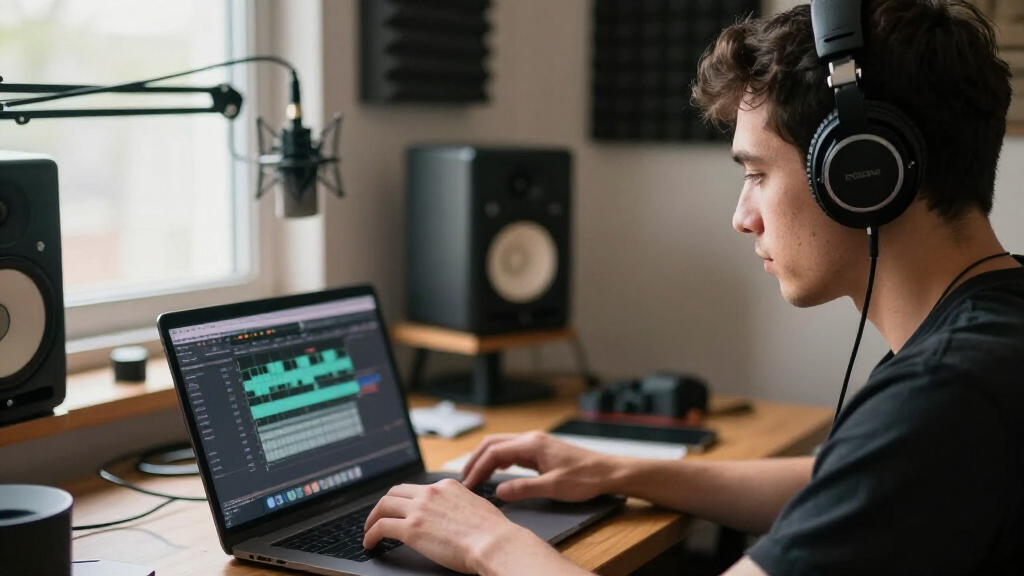

Choosing the right studio headphones for creators comes down to one core tradeoff: neutral accuracy versus comfort during long editing sessions. The Sony MDR-M1 earns my best overall pick for its modern reference tuning and all-day wearability, while the Audio-Technica ATH-M50x remains the most versatile all-rounder for creators juggling tracking, mixing, and casual listening. If budget is the deciding factor, the TASCAM TH-02 and ATH-M20x prove you can get usable monitoring for under $60. This lineup spans closed-back workhorses like the Beyerdynamic DT 770 PRO for tracking, and semi-open options like the AKG K240 Studio for mixing in quiet rooms. Read on for the full breakdown of which pair fits your specific creative workflow.

Get audio and creator gear delivered free with Prime
- Fast, free delivery on millions of items
- Prime Video, Amazon Music and more included
- Member-only deals all year
Complete the kit


Key Takeaways
- The Sony MDR-M1’s wide, balanced soundstage made it the only sub-$150 closed-back here that competes with the DT 770 PRO for mixing decisions, which is why it takes best overall.
- The Audio-Technica M-series (M20x, M30x, M40x, M50x) forms a clear upgrade ladder: each step buys noticeably better detail retrieval, with the M40x hitting the value sweet spot before diminishing returns set in.
- Semi-open models like the AKG K240 Studio offer the most natural mixing perspective in this lineup, but their sound leakage and low isolation make them unusable for recording vocals or working in shared spaces.
- The Beyerdynamic DT 270 Pro’s single-sided cable and rugged build suit mobile and broadcast creators, but its fixed coiled-cable sibling, the DT 770 PRO, sounds better for the same money if you stay at a desk.
- Replaceable parts became a real differentiator: the ATH-M50x, SRH440A, and DT 770 PRO can be repaired for years, while glued-together budget models like the TH-02 are effectively disposable.
| Audio-Technica ATH-M20x Professional Studio Monitor Headphones, White |  | Best Budget Pick | Driver Size: 40 mm | Design: Circumaural, closed-back | Cable Exit: Single-side | VIEW LATEST PRICE | See Our Full Breakdown |
| Audio-Technica ATH-M30x Professional Studio Monitor Headphones, Black |  | Best for Beginners | Driver Size: 40 mm | Design: Circumaural, closed-back | Cable Exit: Single-side | VIEW LATEST PRICE | See Our Full Breakdown |
| Sony MDR7506 Professional Large Diaphragm Headphones |  | Best Industry Classic | Driver Size: 40 mm | Magnet Type: Neodymium | Frequency Response: 10 Hz – 20 kHz | VIEW LATEST PRICE | See Our Full Breakdown |
| Audio-Technica ATH-M50X Professional Studio Monitor Headphones, Black |  | Best Overall | Driver Size: 45 mm | Design: Circumaural, closed-back | Swiveling Earcups: 90 degrees | VIEW LATEST PRICE | See Our Full Breakdown |
| Sennheiser HD 280 Pro Headphones, Black |  | Best Noise Isolation | Design: Closed-back, over-ear, collapsible | Sound Attenuation: Up to 32 dB | Cord Length: 3.3 to 9.8 ft coiled | VIEW LATEST PRICE | See Our Full Breakdown |
| Beyerdynamic DT 270 Pro Closed-Back Wired Studio Headphones | 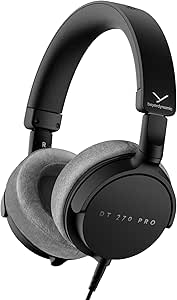 | Best for Vocal Recording Sessions | Brand: beyerdynamic | Model: DT 270 PRO (1002202) | Type: Closed-back wired studio headphones | VIEW LATEST PRICE | See Our Full Breakdown |
| AKG K240STUDIO Semi-Open Studio Headphones |  | Best for Mixing and Critical Listening | Brand: AKG | Model: K240 Studio | Type: Semi-open over-ear studio headphones | VIEW LATEST PRICE | See Our Full Breakdown |
| TASCAM TH-02 Professional Studio Monitor Headphones, Wired, Over Ear |  | Best Budget Starter Pair | Brand: TASCAM | Model: TH-02 | Type: Closed-back over-ear studio monitors | VIEW LATEST PRICE | See Our Full Breakdown |
| Sony MDR-M1 Professional Reference Closed Monitor Headphones |  | Best Premium Closed-Back | Brand: Sony | Model: MDR-M1 | Type: Closed-back reference monitor headphones | VIEW LATEST PRICE | See Our Full Breakdown |
| Audio-Technica ATH-M40x Professional Studio Monitor Headphones |  | Best All-Rounder Value | Brand: Audio-Technica | Model: ATH-M40x | Driver Size: 40mm with rare earth magnets | VIEW LATEST PRICE | See Our Full Breakdown |
| Beyerdynamic DT 770 PRO 80 Ohm Over-Ear Studio Headphones in Gray |  | Best for Tracking and Long Sessions | Brand: Beyerdynamic | Model Number: 1000640 | Type: Closed-back studio monitor headphones | VIEW LATEST PRICE | See Our Full Breakdown |
| Shure SRH440A Over-Ear Wired Studio Headphones for Recording |  | Best Plug-and-Play Value | Design: Over-ear, closed-back, noise-isolating | Connectivity: Wired | Impedance: Optimized for various devices | VIEW LATEST PRICE | See Our Full Breakdown |
| studio headphones for creator | Design | Connectivity | Brand |
|---|---|---|---|
| Audio-Technica ATH-M20x Profes | Circumaural, closed-back | — | — |
| Audio-Technica ATH-M30x Profes | Circumaural, closed-back | Wired | — |
| Sony MDR7506 Professional Larg | Closed-back, over-ear | — | — |
| Audio-Technica ATH-M50X Profes | Circumaural, closed-back | — | — |
| Sennheiser HD 280 Pro Headphon | Closed-back, over-ear, collapsible | Wired | — |
| Beyerdynamic DT 270 Pro Closed | — | — | beyerdynamic |
| AKG K240STUDIO Semi-Open Studi | — | Wired, 1/8-inch plug with screw-on 1/4-inch adapter | AKG |
| TASCAM TH-02 Professional Stud | Foldable | Wired with included 1/4-inch adapter | TASCAM |
| Sony MDR-M1 Professional Refer | — | Screw-in plug adapter for 3.5mm and 6.3mm jacks | Sony |
| Audio-Technica ATH-M40x Profes | Circumaural closed-back | Wired | Audio-Technica |
| Beyerdynamic DT 770 PRO 80 Ohm | — | — | Beyerdynamic |
| Shure SRH440A Over-Ear Wired S | Over-ear, closed-back, noise-isolating | Wired | — |
More Details on Our Top Picks
Audio-Technica ATH-M20x Professional Studio Monitor Headphones, White
For creators who need honest monitoring on a tight budget, the ATH-M20x is the cheapest legitimate entry point in this lineup. Its 40 mm drivers lean slightly warm, which flatters casual listening but means you should double-check low-end mix decisions against other references. Compared with the Sony MDR7506, the M20x gives up some detail retrieval, yet it still delivers the circumaural isolation that matters when tracking vocals next to a live room. Unlike the step-up ATH-M30x, it doesn’t fold for transport, so this is a stay-at-the-desk headphone. The tradeoff is simple: you save real money and accept a fixed, non-collapsible frame and a coarser sound signature. For podcasters, voiceover artists, and hobby producers just building a first kit, that’s a fair deal.
Pros:- Circumaural design blocks enough bleed for vocal tracking
- Enhanced low-frequency response adds fun to casual listening
- Solid, durable build for the price bracket
Cons:- Not collapsible, so it’s awkward to travel with
- Bass-forward tuning can mislead low-end mix decisions
Best for: Beginner podcasters and home recorders who need closed-back isolation under a strict budget
Not ideal for: Mixing engineers who need neutral, detailed mids — the bass emphasis masks low-end problems
- Driver Size:40 mm
- Design:Circumaural, closed-back
- Cable Exit:Single-side
- Tuning:Enhanced low-frequency response
- Color:White
- Folding:No
Our verdict“Buy it if you need dependable isolation for pennies; skip it if your mixes depend on hearing every detail.”
Audio-Technica ATH-M30x Professional Studio Monitor Headphones, Black
The ATH-M30x sits in the sweet spot between the budget ATH-M20x and the pricier ATH-M50x, and that middle position is exactly why it works as a first serious headphone. Its mid-range clarity is the standout: vocals and acoustic instruments sit forward in a way that teaches new producers what a balanced midrange sounds like. The collapsible design is a genuine step up from the M20x, fitting into a bag for mobile sessions or location recording. Bass response is more restrained than the M50x, which some will read as a weakness — but for learning to mix, less flattery is a feature, not a flaw. The wired-only connection and fixed cable are the main compromises you accept at this price.
Pros:- Clear, forward midrange that suits vocal and instrument monitoring
- Folds flat and collapses for travel, unlike the M20x
- Strong passive isolation for tracking in untreated rooms
Cons:- Bass response is less extended than the ATH-M50x
- Fixed, non-detachable cable means damage ends the product’s life
Best for: New producers and streamers upgrading from consumer headphones for the first time
Not ideal for: Producers who want deep, punchy low end for hip-hop or EDM — the bass here is polite
- Driver Size:40 mm
- Design:Circumaural, closed-back
- Cable Exit:Single-side
- Folding:Collapsible
- Color:Black
- Connectivity:Wired
Our verdict“The most sensible first studio headphone here — neutral enough to learn on, cheap enough to outgrow without guilt.”
Sony MDR7506 Professional Large Diaphragm Headphones
Few pieces of studio gear have the track record of the MDR7506 — it’s the headphone you’ll see hanging in nearly every professional booth. Its strength is unfiltered honesty: the bright, detailed top end exposes sibilance and harshness that warmer options smooth over, which is why it’s a broadcast standard. Compared with the Sennheiser HD 280 Pro, the Sony is lighter on its feet but isolates less, so it’s better for editing and mixing checks than for drummers tracking live. The 9.8-foot coiled cord and included 1/4-inch adapter make it desk-ready out of the box, though the non-detachable cable is a long-term liability. If you want the sound the industry has trusted for decades at a mid-range price, this model earns its spot.
Pros:- Detailed, revealing treble that exposes mix problems early
- Comfortable for long editing sessions
- Folds for travel and includes a 1/4-inch adapter plus soft case
Cons:- Cord is permanently attached — a broken cable means repair or replacement
- Bright tuning can fatigue sensitive ears over marathon sessions
Best for: Video editors, journalists, and mix engineers who want a broadcast-proven reference sound
Not ideal for: Loud tracking environments — its isolation falls short of the Sennheiser HD 280 Pro
- Driver Size:40 mm
- Magnet Type:Neodymium
- Frequency Response:10 Hz – 20 kHz
- Design:Closed-back, over-ear
- Cord Length:9.8 ft coiled
- Connector:Gold-plated, includes 1/4-inch adapter
- Folding:Yes
Our verdict“The safest default in professional audio — buy it if you edit or mix, skip it if isolation is your priority.”
Audio-Technica ATH-M50X Professional Studio Monitor Headphones, Black
The ATH-M50x earns the top slot because it does everything a creator needs without a glaring compromise. Its 45 mm drivers deliver tight, deep bass alongside articulate highs — a more exciting, fuller presentation than the flatter Sony MDR7506, which makes it equally credible for production and pleasure listening. Two practical details separate it from everything cheaper here: the detachable cable means a snagged cord costs $20 instead of a whole headphone, and the 90-degree swiveling earcups make one-ear DJ-style cueing effortless. The honest tradeoff is size and clamping pressure — it’s bulkier than the M30x and can feel tight until the pads break in, and isolation depends on getting a proper seal. For producers who want one headphone for tracking, mixing, and the commute, this is the pick.
Pros:- Deep, controlled bass with clear mids and highs across genres
- Detachable cable protects your investment long-term
- 90-degree swiveling earcups for one-ear monitoring
- Durable professional-grade build that survives daily use
Cons:- Bulky compared with collapsible rivals like the M30x
- Requires a proper seal; glasses wearers may lose isolation
Best for: Producers and content creators who want a single do-everything headphone for tracking, mixing, and travel
Not ideal for: Buyers who want maximum neutrality — the boosted bass flatters more than it reveals
- Driver Size:45 mm
- Design:Circumaural, closed-back
- Swiveling Earcups:90 degrees
- Cable:Detachable
- Material:Professional-grade earpads and headband
- Color:Black
Our verdict“If you can only buy one pair on this list, buy this one — the most complete package for working creators.”
Sennheiser HD 280 Pro Headphones, Black
When passive isolation is the deciding factor, nothing in this batch matches the HD 280 Pro’s up to 32 dB of noise attenuation — enough to track loud sources or work in noisy rooms without bleed into the mic. Its replaceable ear pads and headband padding quietly make it the longest-lived option here; the Sony MDR7506 can’t make that claim, and worn pads on sealed headphones kill isolation fast. The sound skews warm and natural rather than hyped, which suits vocal tracking and long sessions better than the brighter Sony. That said, the clamp force that creates the seal can feel tight, especially for larger heads, and the wired-only design limits movement around a desk. Creators recording in untreated or shared spaces should weigh isolation above all — and here it wins.
Pros:- Up to 32 dB passive attenuation leads this entire lineup
- Replaceable ear pads and padding extend usable lifespan
- Warm, natural tuning that stays comfortable over long sessions
- Collapses for transport between home and studio
Cons:- Tight clamping force can cause fatigue for some users
- Wired design with a long cord restricts mobility
Best for: Vocalists and creators tracking in untreated or shared spaces where bleed is the enemy
Not ideal for: Listeners with larger heads or those wanting a relaxed fit — the clamp is firm by design
- Design:Closed-back, over-ear, collapsible
- Sound Attenuation:Up to 32 dB
- Cord Length:3.3 to 9.8 ft coiled
- Connectivity:Wired
- Replaceable Parts:Ear pads and headband padding
- Color:Black
Our verdict“The isolation champion here — choose it when keeping sound in and out matters more than anything else.”
Beyerdynamic DT 270 Pro Closed-Back Wired Studio Headphones
The DT 270 Pro stands out for creators whose top priority is blocking bleed into the microphone. While the Sony MDR7506 is a studio staple, its isolation is merely adequate; Beyerdynamic’s closed-back sealing here is noticeably more serious, which matters when you’re recording vocals or podcasts next to a live mic. At 6.8 ounces with soft ear pads, it stays comfortable through marathon tracking sessions where heavier models like the DT 770 PRO start to feel fatiguing. The wired connection gives you zero-latency monitoring — no Bluetooth delay when punching in on a take.
The tradeoff is simplicity. There’s no detachable cable, no folding hinge, and the 3-meter cord can tether you to the interface more than you’d like. Compared with the Sony MDR-M1, you give up replaceable parts and ultra-wideband response, but you also pay considerably less.
Pros:- Excellent passive noise isolation that prevents mic bleed during recording
- Lightweight and comfortable enough for multi-hour tracking sessions
- Zero-latency wired monitoring for accurate punch-ins
- Approachable entry price for a genuine studio monitor design
Cons:- Fixed 3-meter cable limits movement and can’t be replaced if damaged
- No folding design or carry features for portable use
- Feature set is bare-bones next to similarly priced rivals
Best for: Podcasters and home recording artists who need maximum noise isolation while tracking vocals or instruments
Not ideal for: Mobile creators or anyone who wants a detachable cable and replaceable earpads for long-term maintenance
- Brand:beyerdynamic
- Model:DT 270 PRO (1002202)
- Type:Closed-back wired studio headphones
- Ear Placement:Over-ear
- Cable Length:3 meters
- Weight:6.8 ounces
- Foldable:No
- Warranty:2 years
Our verdict“Buy the DT 270 Pro if isolation during recording matters more to you than portability or premium detail.”
AKG K240STUDIO Semi-Open Studio Headphones
Every roundup needs a semi-open pick, and the AKG K240 Studio earns that slot because its Varimotion 30mm drivers present a more open, natural soundstage than any closed-back here. That openness is exactly what mixing demands — reverb tails and stereo placement sound more honest than they do through the Audio-Technica ATH-M40x, whose closed cups naturally emphasize certain frequencies. The self-adjusting headband is a small design touch that pays off across long mixing sessions.
The obvious catch: semi-open means sound leaks in both directions. These are unusable for tracking vocals (your click track will end up in the recording) and poor for noisy rooms. Compared with the TASCAM TH-02, the K240 costs more but rewards you with far more accurate midrange — the range where mix decisions actually live.
Pros:- Open, natural soundstage that reveals stereo imaging and reverb accurately
- Self-adjusting headband stays comfortable through long mixing sessions
- Includes both 1/8-inch plug and screw-on 1/4-inch adapter with a long 9.9-foot cable
- Decades-long reputation as a professional mixing standard
Cons:- Semi-open design provides almost no noise isolation
- Sound leakage makes them unsuitable for recording alongside open mics
- Build quality feels plasticky compared with modern closed-back rivals
Best for: Home studio mixers and producers working in a quiet room who prioritize accurate, open sound over isolation
Not ideal for: Podcasters or vocalists recording with live mics — the semi-open design leaks sound badly in both directions
- Brand:AKG
- Model:K240 Studio
- Type:Semi-open over-ear studio headphones
- Driver:30mm XXL transducers with Varimotion diaphragms
- Connectivity:Wired, 1/8-inch plug with screw-on 1/4-inch adapter
- Cable Length:3 meters (9.9 feet)
- Headband:Self-adjusting
- Primary Use:Mixing, mastering, Hi-Fi listening
Our verdict“The K240 Studio is the right second pair for a serious home studio — but never your only pair.”
TASCAM TH-02 Professional Studio Monitor Headphones, Wired, Over Ear
The TASCAM TH-02 is the cheapest credible entry point in this lineup, and it earns its place by doing the fundamentals without pretending to be more. The foldable design is something even pricier picks like the Beyerdynamic DT 270 Pro lack — toss these in a bag for sessions away from home. The closed back delivers decent isolation and a bass-forward signature that makes rough tracks fun to check, and the included 1/4-inch adapter plugs straight into an interface or controller.
Honesty is required here: next to the Audio-Technica ATH-M40x, the TH-02’s detail retrieval and midrange clarity fall short, and audiophiles chasing accuracy will notice the coloration. But for a first pair — or a spare for collaborators — the value per dollar is hard to argue with.
Pros:- Very low price with a genuinely usable studio sound
- Foldable design makes them the most portable option in this batch
- Padded headband and ear pads comfortable for reasonable session lengths
- Includes a 1/4-inch adapter for interfaces and DJ gear
Cons:- Bass-heavy tuning colors mixes and can mislead EQ decisions
- Build quality feels light and less durable than pro-tier rivals
- Wired only, with no detachable cable option
Best for: Beginner producers, DJ students, and creators who need a functional first (or backup) pair without a big spend
Not ideal for: Anyone doing detailed mixing work — the colored sound lacks the accuracy of higher-end monitors
- Brand:TASCAM
- Model:TH-02
- Type:Closed-back over-ear studio monitors
- Design:Foldable
- Connectivity:Wired with included 1/4-inch adapter
- Weight:0.3 kg
- Warranty:1 year
Our verdict“If you’re just starting out or need a backup pair, the TH-02 covers the basics cheaply — upgrade later when your ears demand it.”
Sony MDR-M1 Professional Reference Closed Monitor Headphones
The Sony MDR-M1 is the modern flagship of this batch — think of it as what the classic MDR7506 becomes when Sony updates the formula for 2024-era production work. The 5 Hz–80 kHz frequency response extends far beyond human hearing, but that headroom translates into cleaner transient detail when you’re editing podcasts or checking high-frequency artifacts in masters. Isolation is strong enough for tracking, unlike the AKG K240 Studio, so it can serve as a genuine do-everything closed pair.
What justifies the premium price most is longevity engineering: detachable cables and replaceable earpads mean you’re buying a five-year tool, not a consumable. The tradeoff is cost — at roughly triple the TASCAM TH-02 — and a non-folding frame that resists travel. Casual creators simply won’t extract the value here.
Pros:- Ultra-wide 5 Hz–80 kHz response reveals fine detail in edits and masters
- High sound isolation supports both tracking and loud-environment monitoring
- Detachable cables and user-replaceable earpads extend lifespan dramatically
- Lightweight 216g build with thick, soft padding for long sessions
Cons:- Premium price well above most closed-back alternatives here
- No folding mechanism, making transport less convenient than the TH-02
- Neutral tuning may sound flat to listeners wanting a fun signature
Best for: Working producers and audio professionals who want one durable closed-back pair for tracking, editing, and mastering
Not ideal for: Hobbyists on a budget — the price pays for detail and durability that casual listening won’t exploit
- Brand:Sony
- Model:MDR-M1
- Type:Closed-back reference monitor headphones
- Frequency Response:5 Hz–80 kHz
- Weight:216g
- Connectivity:Screw-in plug adapter for 3.5mm and 6.3mm jacks
- Detachable Cable:Yes
- Earpads:Soft, thick padding (replaceable)
Our verdict“If you earn money from audio and want a closed-back that lasts, the MDR-M1’s detail and serviceability justify the spend.”
Audio-Technica ATH-M40x Professional Studio Monitor Headphones
The ATH-M40x occupies the sweet spot between the budget TASCAM TH-02 and the pricier ATH-M50x — and many working engineers argue its flatter tuning makes it the better mixing tool of the two. The 40mm rare-earth drivers deliver clear, honest mids without the bass lift that colors cheaper monitors, while 90-degree swiveling earcups support one-ear DJ-style cueing that fixed designs like the Beyerdynamic DT 270 Pro can’t manage. Detachable cables mean a damaged cord is a $15 fix, not a dead headphone.
Tradeoffs are modest but real: the clamping circumaural fit is snug enough that some heads ache after a few hours, and the frame is bulkier than folding travel models. Still, for a single pair that handles tracking, mixing, and loud-environment monitoring without complaint, this is the most balanced price-to-performance pick here.
Pros:- Flat, accurate tuning that flatters mixing decisions over flashy listening
- 90-degree swiveling earcups for one-ear monitoring and DJ cueing
- Detachable cable system protects the long-term investment
- Solid isolation performs well in loud environments
Cons:- Snug clamping fit can fatigue larger heads during long sessions
- Bulky, non-collapsible design is awkward for portable use
- No wireless option and stock cable length varies by included cable
Best for: Creators who want one accurate, durable pair for tracking and mixing without paying flagship prices
Not ideal for: Travel-heavy creators or listeners wanting a relaxed, bass-friendly signature for casual music enjoyment
- Brand:Audio-Technica
- Model:ATH-M40x
- Driver Size:40mm with rare earth magnets
- Design:Circumaural closed-back
- Swiveling Earcups:90 degrees
- Cables:Detachable
- Connectivity:Wired
- Color:Black
Our verdict“The M40x is the rational buy for most home studios — accurate, repairable, and priced where performance meets value.”
Beyerdynamic DT 770 PRO 80 Ohm Over-Ear Studio Headphones in Gray
This option stands out for outstanding passive isolation, which is exactly what a creator needs when recording vocals or instruments alongside live monitors. Compared with the Sony MDR7506, the DT 770 PRO blocks more room noise and stays comfortable far longer thanks to its velour ear pads and spring-steel headband — the MDR7506’s pleather pads get sweaty during marathon sessions. The 80-ohm impedance is the real tradeoff: plugged straight into a phone or laptop, these will sound thin and quiet. Run them through an audio interface or headphone amp, though, and they open up with the deep, controlled low end that made them a studio staple. This pick makes the most sense for creators who already own (or plan to buy) proper front-end gear and want a headphone that survives years of daily studio abuse.
Pros:- Excellent passive isolation for tracking alongside live monitors
- Velour ear pads and spring-steel headband stay comfortable through long sessions
- German-built construction with replaceable pads for years of service
- Deep, controlled low-end response when properly amplified
Cons:- Requires an audio interface or headphone amp to reach full potential
- Fixed 3-meter cable limits portability and can’t be swapped if damaged
Best for: Home and project studio owners tracking vocals or instruments who already use an audio interface and want all-day comfort with serious isolation
Not ideal for: Creators who want to plug headphones directly into a phone, tablet, or laptop — the 80-ohm impedance demands amplified output to sound its best
- Brand:Beyerdynamic
- Model Number:1000640
- Type:Closed-back studio monitor headphones
- Impedance:80 Ohm
- Cable:Fixed straight cable, 3 meters with 1/4-inch adapter
- Ear Pads:Replaceable velour
- Warranty:2 years
- Made in:Germany
Our verdict“If you track through an interface and want isolation plus all-day comfort, this is the tracking headphone to beat — but pass if you mostly work unamplified.”
Shure SRH440A Over-Ear Wired Studio Headphones for Recording
Where the Beyerdynamic DT 770 PRO needs an amp to shine, the SRH440A is built to sound right straight out of a laptop or interface headphone jack — that alone makes it the easier first purchase for most creators. The sound is transparent and neutral, closer to the Audio-Technica ATH-M40x in character but with a detachable locking cable that neither the M40x nor the MDR7506 offers, so a damaged cord costs you a replacement, not a repair. The collapsible design also makes it a better grab-and-go option than the bulky DT 770 PRO. The compromise is tonal excitement: these are analytical tools, so bass-forward casual listening feels flat. This model is better suited to podcasters, editors, and beginner mixers who need honest sound and practical durability without buying extra gear.
Pros:- Accurate, studio-grade tuning that works unamplified with phones and laptops
- Detachable locking cable survives tugs and is cheap to replace
- Collapsible design makes them genuinely portable
- Rugged build with comfortable cushioned earcups for long sessions
Cons:- Wired only, with no wireless variant
- Neutral tuning can feel clinical for everyday music listening
Best for: Podcasters, video editors, and beginner producers who want accurate monitoring straight from a laptop or interface without buying an amp
Not ideal for: Listeners who want a fun, bass-rich headphone for casual music — the neutral tuning prioritizes accuracy over enjoyment
- Design:Over-ear, closed-back, noise-isolating
- Connectivity:Wired
- Impedance:Optimized for various devices
- Frequency Response:Extended
- Cable:Detachable locking cable
- Portability:Collapsible design
- Comfort:Adjustable headband, cushioned earcups
Our verdict“The most practical entry point in this lineup — honest sound, replaceable cable, and no amp required make it the smart default for creators on a budget.”

How We Picked
I judged every pair against the demands of creator workflows rather than audiophile preferences. The criteria: tonal neutrality (do mixes translate to speakers without surprises?), isolation (can you track vocals without bleed?), long-session comfort (clamping force, pad material, weight), build and repairability, and value relative to the closest competitor. A headphone that excels at tracking but fatigues after two hours ranked lower for full-time editors, and a beautifully detailed open soundstage couldn’t rescue a pair that leaks audio into the mic.
The ranking order also reflects distinct roles within a creator’s setup. Someone who records podcasts needs different headphones than someone mastering a music release or editing YouTube audio at 2 a.m. Where two models overlap heavily — like the four Audio-Technica M-series entries — I separated them by price tier and feature set so the lineup doesn’t recommend four versions of the same product to one buyer. Each pick below earns its slot by being the clear best choice for a specific situation, not by averaging well across all of them.
| studio headphones for creator | Design | Connectivity | Brand |
|---|---|---|---|
| Audio-Technica ATH-M20x Profes | Circumaural, closed-back | — | — |
| Audio-Technica ATH-M30x Profes | Circumaural, closed-back | Wired | — |
| Sony MDR7506 Professional Larg | Closed-back, over-ear | — | — |
| Audio-Technica ATH-M50X Profes | Circumaural, closed-back | — | — |
| Sennheiser HD 280 Pro Headphon | Closed-back, over-ear, collapsible | Wired | — |
| Beyerdynamic DT 270 Pro Closed | — | — | beyerdynamic |
| AKG K240STUDIO Semi-Open Studi | — | Wired, 1/8-inch plug with screw-on 1/4-inch adapter | AKG |
| TASCAM TH-02 Professional Stud | Foldable | Wired with included 1/4-inch adapter | TASCAM |
| Sony MDR-M1 Professional Refer | — | Screw-in plug adapter for 3.5mm and 6.3mm jacks | Sony |
| Audio-Technica ATH-M40x Profes | Circumaural closed-back | Wired | Audio-Technica |
| Beyerdynamic DT 770 PRO 80 Ohm | — | — | Beyerdynamic |
| Shure SRH440A Over-Ear Wired S | Over-ear, closed-back, noise-isolating | Wired | — |
Factors to Consider When Choosing Studio Headphones For Creators
Before picking a pair from this list, it helps to understand what actually separates a $50 monitoring headphone from a $200 one — and where those differences stop mattering for your workflow. These are the factors that shaped my ranking, and the mistakes I see buyers make most often.Closed-Back vs. Semi-Open: Match the Design to Your Space
This is the single biggest fork in the road, and it depends entirely on where you work. Closed-back headphones isolate you from the room and keep your playback out of the mic, which makes them non-negotiable for recording vocals, voiceovers, or podcasts. Semi-open designs like the AKG K240 Studio present a more natural, speaker-like image that helps mixing decisions, but they leak sound badly and let room noise in. The common mistake is buying semi-open for an untreated bedroom studio because reviewers praised the soundstage — then discovering you can’t record a single clean take. Unless you own monitors and a treated room, start closed-back and add an open pair later for mixing reference.
Impedance and What Your Interface Can Actually Drive
Impedance numbers confuse buyers more than any other spec, so here is the practical version: 32–60 ohm headphones run fine from a laptop or phone, while 80–250 ohm models like the DT 770 PRO variants need the stronger output of an audio interface or headphone amp to sound correct. An underpowered high-impedance headphone sounds thin and lacks bass — not because it’s bad, but because it’s starving. Before buying, check the output impedance and power of your interface; most budget interfaces drive 80 ohms comfortably but struggle above 150. If you edit on a laptop without an interface, stick to the low-impedance models in this lineup.
Neutral Tuning vs. Flattering Sound: Why ‘Fun’ Headphones Lie
Consumer headphones boost bass and sparkle the treble because it sells. Studio headphones are tuned flat on purpose, so a mix that sounds good on them will translate to earbuds, car speakers, and club systems. The trap: some ‘studio’ models — a few in this category included — carry a mildly hyped low end that flatters hip-hop and electronic production but leads to thin-sounding mixes elsewhere. If your work is mostly voice, a mid-forward tuning matters more than bass extension, since that’s where intelligibility lives. Match the tuning to your content type, not to which pair sounds most impressive in a demo.
Comfort Is a Work Tool, Not a Luxury
Creators routinely wear headphones for four to eight hours straight, and at that duration comfort becomes a productivity factor. Clamping force that feels snug in minute one becomes a headache by hour three. Velour pads breathe better but isolate less; pleather pads isolate well but get sweaty in warm rooms. Weight distribution matters too — a 300g headphone with a good headband beats a 250g one with a thin, pressure-point strap. Also check whether replacement pads and cables exist, because pads flatten and crack within a couple of years of daily use, and on sealed budget models that can mean replacing the whole headphone.
When to Pay More — and When It’s Wasted Money
The performance curve in this category is steep at the bottom and flat near the top. The jump from a $40 pair to a $100 pair buys dramatic improvements in clarity and build; the jump from $150 to $250 buys refinements you’ll only notice with trained ears on a decent interface. Pay more when mixing decisions are your livelihood, when you need repairable parts for years of daily use, or when you need consistent sound across multiple pairs for a team. Save money if you mainly need reliable monitoring for tracking, editing, or checking sync — the mid-tier closed-backs here handle that identically to the flagships. The worst outcome is paying premium money for a pair whose advantages your gear chain can’t reveal.
The Cable and Repairability Details Nobody Checks Until It’s Too Late
Most headphone deaths are cable deaths, which makes this the highest-leverage durability question. Detachable cables (ATH-M50x, SRH440A, DT 770 PRO with mod) turn a $15 accident into a non-event; fixed cables (Sony MDR7506, ATH-M20x/M30x) eventually mean soldering or replacement. Cable length matters for layout — three meters suits a desk-based studio, while anything longer than two meters tangles on a mobile or podcast rig. Coiled cables stretch when needed but drag on the desk the rest of the time. If you travel or record in multiple locations, add a case to your budget, because folded headphones in a backpack are the second most common way pairs die.
Frequently Asked Questions
Can I mix music properly on headphones, or do I need studio monitors?
You can produce release-quality mixes on headphones — plenty of professional engineers do, especially in untreated rooms where monitors actually mislead more than headphones. The catch is that headphones exaggerate stereo width and under-represent low bass, so mixes made solely on them can come out too narrow or too bass-heavy on speakers. The practical workaround is checking your mix on two or three reference systems: your headphones, cheap earbuds, and a car or Bluetooth speaker. Models like the Sony MDR-M1 and DT 770 PRO have earned trust precisely because engineers know how mixes translate from them. Monitors become worth the investment once your room is treated; in an untreated bedroom, good headphones are usually the more honest tool.
Is the ATH-M50x worth nearly double the price of the ATH-M40x?
For most creators, no — and that’s the honest answer despite the M50x’s fame. The M40x measures closer to flat, which is technically better for mixing, while the M50x adds a bass lift and brighter top end that many find more engaging for production and casual listening. Where the M50x justifies its price is physical: it folds, swivels for one-ear monitoring, and has a more premium feel for daily professional use. If you mix for clients or value accuracy first, the M40x is the smarter buy. If one pair has to double as your daily-listening headphone and your workhorse, the M50x’s versatility earns the premium.
Are 80 ohm Beyerdynamic DT 770 PROs okay with my audio interface?
Almost certainly yes if your interface is anything from Focusrite, MOTU, Universal Audio, or similar — the 80 ohm version was designed for exactly that use case and reaches healthy volumes from typical interface headphone outputs. The 250 ohm version is the one that demands caution; it needs a dedicated headphone amp or a high-output interface to deliver its full bass and dynamics. Running the 250 ohm model from a phone or laptop yields a thin, quiet sound that undersells the headphone completely. If you sometimes edit on mobile devices, the 80 ohm is the safer choice. Note the DT 770 PRO’s fixed cable, though — it’s the one durability tradeoff you accept with this model.
Do I need different headphones for recording versus mixing?
Strictly speaking, no — one good closed-back pair covers both jobs, and most creators start that way. The split becomes worthwhile when you notice two conflicting needs: recording demands maximum isolation and a tight seal so the mic doesn’t pick up your backing track, while mixing benefits from a wider, more open presentation. That’s why some engineers track on a closed-back like the HD 280 Pro or DT 770 PRO and check mixes on a semi-open like the K240 Studio. If you record vocals or acoustic instruments regularly, prioritize isolation first. If you’re purely a mixer or beatmaker who never records live sources, you can skip heavy isolation and lean toward the more open-sounding options.
Why are the Sony MDR7506 still recommended when they’re decades old?
Because the job hasn’t changed, and neither has the design’s fit for it. The MDR7506 delivers a detailed, mid-forward presentation that exposes flaws in recordings — exactly what you want when editing dialogue, podcast, or broadcast audio — and it does so for around $100 with replaceable pads and a foldable frame. Its age shows in the coiled fixed cable, the slightly brittle treble that bothers some listeners during music mixing, and pleather pads that flake after a couple of years. The newer Sony MDR-M1 addresses most of that with a detachable cable and smoother tuning, which is partly why it ranks higher here. But if your work is voice-centric and you want a proven tool that every studio in the world recognizes, the 7506 remains an easy recommendation.
Conclusion
Mapping these twelve pairs back to real buyers: for the best overall choice, the Sony MDR-M1 combines modern reference tuning, comfort, and a detachable cable at a fair price — it’s the safest single purchase for a working creator. The best value slots go to the ATH-M40x for serious work under $120 and the TASCAM TH-02 for anyone just starting or outfitting a podcast on a tight budget. Best premium honors belong to the Beyerdynamic DT 770 PRO (80 ohm), whose comfort, bass control, and repairability justify spending more if you mix daily. For beginners, the ATH-M30x or Shure SRH440A offer forgiving, neutral sound with room to grow into. Specific needs: choose the HD 280 Pro or DT 270 Pro for maximum isolation and durability in recording or broadcast settings, the MDR7506 for dialogue and podcast editing, and the AKG K240 Studio only if you mix in a quiet room and never track live sources. Whatever you pick, buy the pair that matches your actual workflow — not the one with the loudest reputation.
Halloween Picks
halloween
As an affiliate, we earn on qualifying purchases.