
Wireless microphone systems for costumes need to keep a voice clear without making a performer’s outfit awkward or uncomfortable. I’d put the Phenyx Pro PDP-1-1B first overall for its choice of headset or lavalier mic, while the TONOR UHF bodypack system stands out for flexible mic placement and the MICVISTA four-person set for group performances. The main tradeoffs are discreet placement versus a secure headset fit, and a simple single-performer setup versus the extra coordination needed for multiple transmitters. A bodypack must also fit safely beneath or inside the costume, with its antenna and controls accessible enough for setup. Read on for the full breakdown of which systems suit solo performers, ensembles, and different costume designs.

Get audio and creator gear delivered free with Prime
- Fast, free delivery on millions of items
- Prime Video, Amazon Music and more included
- Member-only deals all year
Complete the kit


Key Takeaways
The Phenyx Pro PDP-1-1B is the most adaptable solo pick because it pairs headset and lavalier options, letting performers choose between a more secure mic position and less visible placement.
Multi-performer systems solve a different problem than single-channel kits. MICVISTA’s four-person setup targets group use, while two-person systems are a better fit for duos that do not need extra transmitters.
UHF models are worth comparing when venue conditions matter. The TONOR UHF and Phenyx Pro PTU-52-2B offer a different wireless approach from the 2.4 GHz options, but buyers still need to check local interference and operating requirements.
Mic choice can matter more than transmitter count for costumes. A headset can stay near the mouth during movement, while a lavalier may be less conspicuous but needs careful placement to avoid fabric rub.
Costume fit is a practical buying filter. A system can offer useful mic options and still be a poor match if its bodypack, cable route, or receiver setup does not suit the outfit and performance space.
| Phenyx Pro PDP-1-1B Single Digital Wireless Headset and Lavalier Microphone System |  | Best Overall for Costume Flexibility | Frequency range: 902–928 MHz | Channels: 15 tunable frequencies | Audio resolution: 48 kHz/24-bit | VIEW LATEST PRICE | See Our Full Breakdown |
| TONOR TW100 Wireless Headset Microphone System |  | Best for Beginners | Wireless range: Up to 65.6 ft (20 m) | Frequency channels: 20 adjustable channels | Battery life: Up to 6.5 hours | VIEW LATEST PRICE | See Our Full Breakdown |
| TONOR TW100 Wireless Headset Microphone System |  | Best for Clear, Quick Headset Setup | Wireless range: 65.6 ft (20 m) | Frequency channels: 20 | Battery life: Up to 6.5 hours | VIEW LATEST PRICE | See Our Full Breakdown |
| TONOR Wireless Microphone System with Handheld, Headset, and Lavalier Microphones |  | Best for Costume Crews and Groups | Operating range: Up to 200 ft (60 m) | Microphone types: Handheld, headset, and lavalier | Channel information: 10 per microphone and bodypack; 20 listed in specifications | VIEW LATEST PRICE | See Our Full Breakdown |
| MICVISTA 4-Person Wireless Microphone System (2.4G Headset & Handheld) |  | Best for Four Headset Wearers | Wireless technology: 2.4G | Simultaneous users: Up to 4 | Transmission range: Up to 160 ft (50 m) | VIEW LATEST PRICE | See Our Full Breakdown |
| TONOR UHF Wireless Microphone System with Bodypack, Lavalier, and Headset Microphones |  | Best for Costume Mic Placement Options | Wireless type: UHF | Microphones: Lavalier and headset | Frequency options: 15 per bodypack | VIEW LATEST PRICE | See Our Full Breakdown |
| 2.4G Dual Wireless Headset Microphone System for Two People |  | Best for Two-Person Costume Duos | Wireless type: 2.4G | Microphones: Two wireless headsets | Stated range: Up to 160 ft (50 m) in open areas | VIEW LATEST PRICE | See Our Full Breakdown |
| Bietrun UHF Wireless Headset Microphone System | 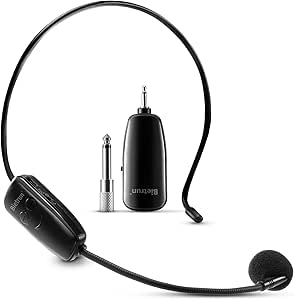 | Best Rechargeable Headset-and-Handheld Combo | Wireless type: Wireless system | Microphones: Detachable headset and handheld | Stated range: Up to 160 ft (50 m) | VIEW LATEST PRICE | See Our Full Breakdown |
| Phenyx Pro UHF Wireless Microphone System with 2 Bodypacks, Headset & Lapel Mics (PTU-52-2B) |  | Best for Larger Costumed Groups | Model: PTU-52-2B | Frequency range: 500–590 MHz | Bodypacks: 2 | VIEW LATEST PRICE | See Our Full Breakdown |
| 2.4GHz Dual Wireless Headset Microphone System for Two Users |  | Best for Rechargeable Two-Person Use | Wireless type: 2.4 GHz | Microphone setup: Two wireless headsets | Connectors: 3.5 mm and 6.35 mm | VIEW LATEST PRICE | See Our Full Breakdown |
| MICNAUX Wireless Lapel Microphone System with Headset & Lavalier Mics, UHF Bodypack Transmitters, Mini Rechargeable Receiver, 48 Channels, 260ft Range |  | Best for Flexible Costume Placement | Connectivity: UHF | Frequency range: 540–570 MHz | Selectable channels: 48 | VIEW LATEST PRICE | See Our Full Breakdown |
More Details on Our Top Picks
Phenyx Pro PDP-1-1B Single Digital Wireless Headset and Lavalier Microphone System
For a costume that needs to accommodate different headwear or performance styles, I’d start with the Phenyx Pro PDP-1-1B. It includes both a headset and a lavalier mic, so a performer can switch from a head-worn mic to a discreet clip-on without changing wireless systems. Its 15 tunable frequencies also give it more channel choices than the TONOR TW100, while its stated 160–200-foot line-of-sight range suits larger stages better than that model’s 65.6-foot range.
The tradeoff is its receiver connection: the 6.35 mm TS jack may need an adapter for some equipment, and real-world range can fall when obstacles or poor antenna placement interfere. I’d choose this over the multi-performer TONOR TW362 when one wearer needs costume-friendly mic options rather than a full group setup.
Pros:- Includes both headset and lavalier microphones for different costume and placement needs.
- 15 tunable frequencies provide channel choices when coordinating wireless equipment.
- USB-C charging for both receiver and transmitter.
- Stated 160–200-foot line-of-sight range suits larger performance spaces.
Cons:- The receiver’s 6.35 mm TS connector may require an adapter for some audio equipment.
- Obstacles and antenna positioning can reduce the stated wireless range.
Best for: Solo performers who need to switch between a headset and a costume-friendly lavalier while using a PA or compatible audio system.
Not ideal for: Performers who need microphones for several people at once, or who need a receiver that connects directly to equipment without a 6.35 mm input or adapter.
- Frequency range:902–928 MHz
- Channels:15 tunable frequencies
- Audio resolution:48 kHz/24-bit
- Line-of-sight range:160–200 ft
- Charging:USB-C
- Receiver battery capacity:1500 mAh
- Transmitter battery capacity:550 mAh
- Included microphones:Headset and lavalier
Our verdict“Choose the Phenyx Pro if one performer needs flexible headset and lavalier options with more range than the TONOR TW100.”
TONOR TW100 Wireless Headset Microphone System
The TONOR TW100 is a straightforward pick for a costumed speaker or performer who wants a headset and doesn’t need a long operating range. Automatic pairing reduces setup steps, and its 20 adjustable channels offer more listed frequency choices than the Phenyx Pro PDP-1-1B. The included 3.5 mm-to-6.35 mm adapter also helps connect it to compatible PA systems without sourcing a separate adapter.
Its 65.6-foot range is shorter than the Phenyx Pro’s stated range and the TONOR TW362’s 200-foot claim, so I’d reserve it for smaller venues where the performer stays close to the receiver. This system also requires a device with a MIC IN port; it won’t connect directly to phones, laptops, or Bluetooth speakers. The charging guidance rules out Type-C-to-Type-C chargers, a constraint worth noting before a show.
Pros:- Automatic pairing simplifies setup for new users.
- 20 adjustable channels provide frequency options.
- Up to 6.5 hours of stated battery life.
- Included adapter supports compatible 3.5 mm and 6.35 mm inputs.
Cons:- Requires a compatible device with a MIC IN port and does not connect to phones, laptops, or Bluetooth speakers.
- The stated 65.6-foot range is shorter than the Phenyx Pro PDP-1-1B and TONOR TW362 claims.
- Instructions warn against charging with a Type-C-to-Type-C charger.
Best for: First-time wireless-mic buyers using a compatible PA or voice system in a small performance space.
Not ideal for: Performers who need phone or laptop connectivity, a long roaming range, or a microphone choice beyond the included headset.
- Wireless range:Up to 65.6 ft (20 m)
- Frequency channels:20 adjustable channels
- Battery life:Up to 6.5 hours
- Charging time:1.5 hours
- Battery capacity:450 mAh
- Polar pattern:Unidirectional
- Connector types:3.5 mm and 6.35 mm
- Signal-to-noise ratio:60 dB
Our verdict“Pick this TW100 for simple headset operation in a compact venue, but choose the Phenyx Pro or TW362 if you need more range or mic options.”
TONOR TW100 Wireless Headset Microphone System
This version of the TONOR TW100 is a practical costume mic for performers who value a quick setup and a fixed headset fit. Its auto-pairing and stated zero-latency transmission help keep spoken or sung delivery in sync, while the cardioid mic description points to focused pickup for a wearer speaking toward the mic. Like the other TW100 listing, it offers 20 adjustable channels and a 65.6-foot range; compared with the Phenyx Pro PDP-1-1B, it gives up both a lavalier option and the longer stated range.
The main limitation is compatibility: it needs a dedicated MIC IN connection and is not intended for phones, computers, or Bluetooth speakers. Its charging instructions also caution against Type-C-to-Type-C charging. I’d favor this version over the TONOR TW362 for a single wearer who wants a simpler headset rig, but not for a cast that needs multiple mic styles or performers.
Pros:- Auto-pairing helps reduce setup steps.
- 20 adjustable frequency channels offer channel flexibility.
- Stated 6.5-hour battery life with a 1.5-hour charging time.
- Includes 3.5 mm-to-6.35 mm adapter for compatible audio inputs.
Cons:- Requires a dedicated MIC IN port and is not compatible with phones, laptops, or Bluetooth speakers.
- The 65.6-foot stated range is shorter than the Phenyx Pro PDP-1-1B and TONOR TW362 claims.
- Charging instructions warn that a Type-C-to-Type-C charger may damage the product.
Best for: Costumed presenters or performers who want a single headset mic, quick pairing, and connection to a compatible PA, amplifier, or speaker.
Not ideal for: Multi-person casts, users who need a lavalier option, or performers relying on phones, computers, or Bluetooth speakers.
- Wireless range:65.6 ft (20 m)
- Frequency channels:20
- Battery life:Up to 6.5 hours
- Charging time:1.5 hours
- Battery capacity:450 mAh
- Polar pattern:Unidirectional
- Connectors:3.5 mm and 6.35 mm
- Included microphones:Headset microphone
Our verdict“Choose this TW100 when one costumed performer needs a quick-pairing headset for compatible PA equipment, not a multi-mic setup.”
TONOR Wireless Microphone System with Handheld, Headset, and Lavalier Microphones
When several performers need different mic placements, the TONOR TW362 is the most flexible group option here: it includes two handheld microphones and two bodypacks with headset and lavalier mics. That gives a costume crew choices for a headpiece, a discreet clip-on, or a mic held by hand—more variety than the four-headset MICVISTA system. Its stated 200-foot range also exceeds the MICVISTA’s 160-foot claim, although actual performance depends on the space and setup.
This breadth comes with more preparation. Each mic or bodypack needs two AA batteries, which are not included, while the Phenyx Pro PDP-1-1B uses rechargeable units for one performer. The channel information is also inconsistent: the listing says 10 per microphone and bodypack but lists 20 in the specifications. I’d choose it for group versatility, not when battery simplicity or precise channel documentation is a priority.
Pros:- Includes two handheld microphones and two bodypacks with headset and lavalier microphones.
- Stated operating range reaches up to 200 ft (60 m).
- Automatic pairing supports simpler setup.
- Compatible with mixers, karaoke machines, amplifiers, and powered speakers.
Cons:- Two AA batteries are required for each microphone or bodypack, and batteries are not included.
- Channel-count details conflict between the per-mic listing and the specifications.
Best for: Small casts, event crews, or costume departments that need several performers covered by handheld, headset, and lavalier options.
Not ideal for: Solo users seeking a compact rechargeable kit, or buyers who need clear channel-count documentation and batteries included.
- Operating range:Up to 200 ft (60 m)
- Microphone types:Handheld, headset, and lavalier
- Channel information:10 per microphone and bodypack; 20 listed in specifications
- Polar pattern:Unidirectional
- Signal-to-noise ratio:60 dB
- Connectivity:XLR and Aux
- Battery requirement:2 AA batteries per microphone or bodypack; not included
- Included components:2 handheld microphones, 2 bodypacks, 2 headsets, 2 lavaliers, receiver
Our verdict“Choose the TW362 when a group needs several mic styles for costumes and can manage the AA battery requirements.”
MICVISTA 4-Person Wireless Microphone System (2.4G Headset & Handheld)
The MICVISTA 4-Person system is the group pick when every wearer needs a headset rather than a mix of handheld and bodypack options. It supports up to four simultaneous users through two receivers and four transmitters, making it better suited to a coordinated cast than either single-user TONOR TW100. The rechargeable units offer over seven hours of stated use, while the TONOR TW362 covers more mic styles but relies on AA batteries.
The 2.4G setup claims a 160-foot range and plug-and-play operation, but this kit still depends on equipment with a 3.5 mm or 6.35 mm microphone input. It is not for direct phone, computer, or tablet use. Compared with the TW362, MICVISTA trades handheld and lavalier choices for four headset mics and rechargeable operation; costume teams needing hidden lavaliers should pick the TONOR instead.
Pros:- Supports up to four simultaneous users with four headset microphones.
- Rechargeable units provide over seven hours of stated continuous use.
- Stated transmission range reaches up to 160 ft.
- Plug-and-play setup includes 3.5 mm and 6.35 mm connection options.
Cons:- Requires audio equipment with a microphone jack and does not connect directly to phones, computers, or tablets.
- Offers headset microphones only, unlike the TONOR TW362’s handheld and lavalier options.
- Charging takes 3–4 hours.
Best for: Small ensembles with up to four costumed headset wearers and a compatible PA, amplifier, or party speaker.
Not ideal for: Performers who need handheld or lavalier microphones, or buyers expecting direct connection to phones, computers, or tablets.
- Wireless technology:2.4G
- Simultaneous users:Up to 4
- Transmission range:Up to 160 ft (50 m)
- Battery life:Over 7 hours
- Charging time:3–4 hours
- Battery capacity:1200 mAh lithium-ion
- Connector types:3.5 mm and 6.35 mm
- Included items:4 headset mics, 2 receivers, 2 adapters, 2 charging cables
Our verdict“Pick MICVISTA for a group of up to four headset-wearing performers; choose the TONOR TW362 if your costumes call for handheld or lavalier mics.”
TONOR UHF Wireless Microphone System with Bodypack, Lavalier, and Headset Microphones
For a costume that needs discreet placement options, I’d shortlist this TONOR because it includes both a lavalier and a headset mic. A lavalier can clip near a collar or costume seam, while the headset is a better choice when movement might shift a clip-on mic. Its 15 adjustable frequencies and stated 200-foot line-of-sight range give it more flexibility than the Bietrun system, which lists up to 15 channels but a shorter 160-foot range. The tradeoff is the bodypack: it needs two AA batteries, while the receiver is rechargeable for a stated 6–8 hours. This is not a self-contained costume audio setup; I’d choose it only if the venue already has a speaker, mixer, PA, or amplifier with a 1/4-inch input.
Pros:- Includes both lavalier and headset microphones for different costume and movement needs
- 15 adjustable frequencies provide options for managing interference
- Rechargeable receiver is specified for 6–8 hours of operation
- Connects to compatible PA systems, mixers, speakers, and amplifiers through a 1/4-inch jack
Cons:- Bodypack requires two AA batteries, which are not included
- Does not connect directly to TVs, soundbars, phones, or Bluetooth speakers
- The system has no built-in speaker and depends on external audio equipment
Best for: Performers who want to switch between a clipped lavalier and a secure headset and have access to PA equipment with a 1/4-inch input.
Not ideal for: Costume users seeking a plug-in solution for a phone, TV, Bluetooth speaker, or soundbar, since it requires external audio equipment and does not support Bluetooth.
- Wireless type:UHF
- Microphones:Lavalier and headset
- Frequency options:15 per bodypack
- Stated range:Up to 200 ft (60 m), line of sight
- Receiver battery life:6–8 hours
- Bodypack power:2 AA batteries, not included
- Output connector:6.35 mm (1/4-inch) jack
- Weight:0.39 kg
Our verdict“Choose this TONOR if costume-friendly lavalier and headset choices matter more than avoiding AA batteries or supplying your own PA gear.”
2.4G Dual Wireless Headset Microphone System for Two People
When two costumed performers need to speak or sing at once, this system’s defining advantage is its two headsets and one receiver. That makes it a more direct fit for a duo than the single-bodypack TONOR system, which offers lavalier and headset choices but is built around one bodypack. The included 3.5 mm and 6.35 mm connectors also give it more connection flexibility than systems limited to one plug size. Its stated 160-foot range applies to open areas, so crowded indoor venues and obstructed paths may reduce the useful distance. The headsets keep microphones positioned without costume clips, but there are no lavalier alternatives for buyers who want a less visible mic. I’d pick it for paired presenters using compatible amplification, not for recording directly to a computer or phone.
Pros:- Two headset microphones allow simultaneous use by two people
- Includes 3.5 mm and 6.35 mm audio connectors
- Plug-and-play pairing is described as simple
- Lightweight portable design suits mobile performances
Cons:- Not compatible with computers, phones, or tablets according to the description
- Requires a compatible speaker, voice amplifier, PA system, or mixer with a microphone input
- The stated 160-foot range is for open areas
Best for: Two-person costume acts, tour guides, or presenters who need simultaneous headset microphones and have compatible amplification.
Not ideal for: Performers who need lavalier placement, direct computer or mobile-device compatibility, or dependable range through crowded, obstructed spaces.
- Wireless type:2.4G
- Microphones:Two wireless headsets
- Stated range:Up to 160 ft (50 m) in open areas
- Connectors:3.5 mm and 6.35 mm
- Polar pattern:Unidirectional
- Signal-to-noise ratio:76 dB
- Power:Battery powered; 1 AA battery included
- Enclosure material:Plastic
Our verdict“Choose this for a costumed duo that needs two hands-free mics, but skip it if either performer needs a clip-on lavalier or direct device recording.”
Bietrun UHF Wireless Headset Microphone System
I’d favor the Bietrun when a costume performance needs a headset for movement but a handheld mic as a backup or for audience handoffs. The detachable headset and handheld microphone create a different kind of flexibility from the TONOR bodypack system, which supplies a lavalier instead of a handheld. Its built-in rechargeable transmitter and receiver batteries are specified for about six hours of use, avoiding the AA battery purchases required by the TONOR and Phenyx Pro PTU-52-2B systems. The tradeoff is compatibility: Bietrun works only with microphone jacks, and the description rules out AUX inputs, iOS devices, Bluetooth speakers, and computers. Its 160-foot stated range is shorter than the two UHF systems’ 200-foot figures, so I’d prioritize the interchangeable mic formats and rechargeable setup over maximum reach.
Pros:- Detachable headset and handheld microphone offer two performance formats
- Built-in rechargeable batteries provide about six hours of stated use
- Supports up to 15 channels
- Stated range reaches up to 160 feet
Cons:- Compatible only with microphone jacks; AUX inputs are not supported
- Not compatible with iOS devices, Bluetooth speakers, or computers
- Its stated 160-foot range is shorter than the 200-foot figures listed for the TONOR and Phenyx Pro PTU-52-2B
Best for: Costume performers who want a headset for hands-free movement plus a handheld option, and whose amplifier has a compatible microphone jack.
Not ideal for: Users connecting to phones, computers, Bluetooth speakers, or AUX-only gear, or performers who need a stated range beyond 160 feet.
- Wireless type:Wireless system
- Microphones:Detachable headset and handheld
- Stated range:Up to 160 ft (50 m)
- Channels:Up to 15
- Battery:Two built-in 400 mAh rechargeable lithium-ion batteries
- Working time:About 6 hours
- Charging time:About 2.5 hours
- Microphone pattern:Unidirectional cardioid
Our verdict“Pick Bietrun if rechargeable power and a choice between headset and handheld use matter more than broad device compatibility or the longer range of some alternatives.”
Phenyx Pro UHF Wireless Microphone System with 2 Bodypacks, Headset & Lapel Mics (PTU-52-2B)
For a costume production with two performers and a busy radio environment, I’d place the Phenyx Pro ahead of the simpler single-bodypack TONOR: it includes two bodypacks, headset and lapel microphones for both, and 30 tunable frequency groups. That gives wardrobe and sound crews more mic-placement choices while helping them find workable frequencies when other equipment is in use. Its listed 200-foot operating distance matches the TONOR’s stated reach, while the XLR and 1/4-inch outputs suit more venue setups than the Bietrun’s microphone-jack-only connection. The cost is a heavier, more involved package at 1.93 kg, plus four AA batteries rather than a rechargeable system. The description also does not mention a digital display or advanced monitoring, so I’d choose it for flexible two-person coverage, not for a crew seeking detailed on-receiver control.
Pros:- Two bodypacks and two headset plus two lapel mics cover two performers with placement options
- 30 tunable frequency groups support frequency selection in busier setups
- XLR and 6.35 mm outputs connect to a range of mixers and amplifiers
- AA batteries and audio accessories are included for setup
Cons:- Requires four AA batteries rather than offering a stated rechargeable power option
- At 1.93 kg, the system is heavier to transport than the listed 0.39 kg TONOR unit
- The description does not mention a digital display or advanced monitoring features
Best for: Theater groups, event crews, or paired costumed performers who need two bodypacks, alternate mic placements, and XLR or 1/4-inch connections.
Not ideal for: Solo performers seeking a compact rechargeable kit, or sound operators who require a digital display and advanced monitoring features.
- Model:PTU-52-2B
- Frequency range:500–590 MHz
- Bodypacks:2
- Microphones:2 headset mics and 2 lapel mics
- Frequency groups:30 tunable
- Operating distance:200 ft
- Outputs:XLR and 6.35 mm jack
- Power:4 AA batteries, included
- Weight:1.93 kg
Our verdict“Choose the PTU-52-2B for two-person costume work that benefits from multiple mic placements and flexible outputs, provided disposable batteries and a larger kit suit your setup.”
2.4GHz Dual Wireless Headset Microphone System for Two Users
This dual-headset system is the easier fit for costumed pairs who want fewer battery swaps: it lists a rechargeable battery with up to eight hours of use and a 2–3 hour charge. Like the B09PFQ99X4 dual-headset system, it supports two speakers through one receiver, but this model specifies 3.5 mm and 6.35 mm connectors and a longer stated battery run time than the former’s included-AA power detail. Against the Phenyx Pro PTU-52-2B, it is a simpler 2.4 GHz headset setup rather than a two-bodypack UHF kit with lapel options and 30 frequency groups. That simplicity limits flexibility: the system is mono, lists one channel, and offers no Bluetooth. I’d choose it for paired speaking or instruction with compatible PA gear, not complex multi-mic stage routing.
Pros:- Dual headset setup lets two users speak through one receiver
- Rechargeable battery is specified for up to eight hours of use
- Interchangeable 3.5 mm and 6.35 mm connectors suit compatible audio equipment
- Stated 160-foot range supports movement around a performance space
Cons:- Mono audio only, with one channel listed
- No Bluetooth connectivity
- Lacks the lapel-mic options and 30 tunable frequency groups listed for the Phenyx Pro PTU-52-2B
Best for: Two-person costume presenters, instructors, or performers who need headset microphones, rechargeable operation, and a compatible PA or speaker input.
Not ideal for: Sound crews needing lapel mics, multiple channels for advanced mixing, stereo audio, or Bluetooth connection.
- Wireless type:2.4 GHz
- Microphone setup:Two wireless headsets
- Connectors:3.5 mm and 6.35 mm
- Stated range:Up to 160 ft (50 m)
- Battery life:Up to 8 hours
- Charging time:2–3 hours
- Microphone type:High-sensitivity condenser, mono
- Channels:1
Our verdict“Choose this for a rechargeable, straightforward headset setup for two costumed users, but look to the Phenyx Pro if you need lapel options or more frequency control.”
MICNAUX Wireless Lapel Microphone System with Headset & Lavalier Mics, UHF Bodypack Transmitters, Mini Rechargeable Receiver, 48 Channels, 260ft Range
For costumes that need a choice between a visible headset mic and a more discreet lavalier, the MICNAUX X-108 is the most adaptable fit in this lineup. Its UHF bodypack setup keeps the receiver separate from the mic, so a performer can place the pack beneath a jacket or costume layer while routing the mic where it is needed. Compared with the TONOR TW100, it adds 48 selectable channels and a stated 260-foot range, useful when performers move across a large stage or venue. The receiver also recharges for a stated five to six hours of use, avoiding a separate receiver battery change during a performance. The tradeoff is that each transmitter needs two AA batteries, which are not included, and its plastic enclosure may be less reassuring for frequent costume changes than a sturdier build.
Pros:- Headset and lavalier microphones allow different placement for varied costumes and performance styles.
- 48 selectable UHF channels provide options for finding a clearer channel in busy venues.
- Stated 260-foot transmission range supports performers moving across larger spaces.
- Rechargeable receiver is specified for five to six hours of use per charge.
Cons:- Bodypack transmitters require two AA batteries each, and the batteries are not included.
- Plastic enclosure may be less durable than a metal-bodied alternative.
- The 1/4-inch receiver connection and included adapters may require checking compatibility with the intended costume-performance audio setup.
Best for: Stage performers and presenters who need both headset and lavalier placement options, plus a bodypack that can be concealed under costume layers.
Not ideal for: Performers who need an all-rechargeable setup or a particularly rugged bodypack; the transmitters use separately purchased AA batteries and the enclosure is plastic.
- Connectivity:UHF
- Frequency range:540–570 MHz
- Selectable channels:48
- Stated transmission range:260 ft (80 m)
- Microphone options:Lavalier and headset
- Receiver power:Rechargeable; 5–6 hours of use, 2–3 hours to charge
- Transmitter power:Two AA batteries (not included)
- Connector types:1/4-inch plug, 3.5 mm jack, and 6.35 mm jack
- Receiver dimensions:3.54 × 2.55 × 0.78 inches
Our verdict“Choose the MICNAUX X-108 if costume flexibility and selectable UHF channels matter more than rechargeable transmitters or a tougher bodypack enclosure.”

How We Picked
I ranked these systems around the demands of costume use rather than treating them as general-purpose wireless microphones. The main factors were mic placement choices, how easily a bodypack and cable could be incorporated into an outfit, whether a kit suits one performer or several, and how much setup coordination its format implies. I also weighed the practical difference between UHF and 2.4 GHz systems, without assuming either band will perform well in every venue.
The ranking favors kits with a clear use case and useful choices for performers, then separates them by audience size and setup complexity. Single-performer systems appear ahead when they offer a simpler costume fit; multi-user options rank for groups that genuinely need multiple mics. Product names alone do not establish battery life, compatibility, or costume comfort, so buyers should verify those details against the current product specifications before choosing.
Factors to Consider When Choosing Wireless Microphone Systems For Costumes
Costume-friendly wireless audio depends on more than range or the number of microphones in the box. I’d start with the performer’s movement, outfit construction, and sound setup, then choose a system that fits those constraints without adding unnecessary transmitters or cables.
Choose Mic Placement Around Movement and Fabric
A headset keeps the capsule close to the performer’s mouth, which can help maintain a steady vocal level while dancing or turning. Its visible band may clash with a character’s look, so check whether the design can be concealed without shifting during movement. A lavalier is often easier to hide, but costume fabric can brush against it and create noise. Test placement with the actual outfit, including hats, wigs, collars, and masks that may block or rub the mic. Avoid pinning a mic beneath thick fabric just to hide it; that can dull the voice. If the character needs to move freely, reliable placement usually matters more than a perfectly invisible mic.
Plan Bodypack Placement Before Buying
Most headset and lavalier kits rely on a bodypack connected by cable, so the costume needs a secure place for the transmitter. A pocket, belt pouch, or sewn-in fabric loop can work, but it should not press against the performer or swing during movement. Check that the pack’s controls and battery compartment remain reachable between scenes. Keep the antenna from being tightly folded, covered by dense material, or trapped against the body if the manufacturer advises otherwise. A quick costume rehearsal can reveal cable snags that are easy to miss during a stationary sound check. If the outfit has no safe pack location, a handheld system or a purpose-made concealment pouch may be the better route.
Match the Wireless Band to the Venue
UHF and 2.4 GHz systems differ in how they share radio space, but neither is a guarantee against dropouts. Venues with crowded wireless equipment call for a careful frequency check and a sound test from the stage area, not just beside the receiver. Some systems offer multiple channels or frequency choices, which can help when several performers need separate links. Those options only help if the channels can be coordinated and the receiver is placed sensibly. Do not choose on advertised range alone: walls, audience bodies, stage scenery, and transmitter placement can all affect reception. Ask the venue what wireless equipment is already in use before a large show.
Buy for the Number of Active Performers
A multi-person kit makes sense when several performers need separate microphones at the same time, not simply because it includes more gear. Count simultaneous speakers, then check whether each transmitter has an independent channel and whether the receiver can manage them together. A two-person system may be easier to coordinate for a duet than a larger set, while a group kit can reduce the need to combine several separate receivers. More transmitters also mean more batteries, mic checks, and costume placement decisions. If performers speak in sequence rather than together, one shared system may be enough, provided handoffs fit the show. Leave capacity for a backup only if the production can manage the added setup.
Check Compatibility With the Sound System
A wireless microphone is only useful if its receiver connects to the venue’s mixer, powered speaker, or amplifier. Before buying, check the receiver’s output type and whether the sound system has a suitable input; adapters can add clutter and introduce another point of failure. Confirm that the receiver can sit within a practical distance of the stage while remaining connected to power or audio gear. For touring or school productions, compatibility across different venues may matter more than a compact receiver at home. Make a connection checklist for the person running sound, especially if several receivers will be used together. Do not assume that two wireless products can pair merely because they use the same frequency band.
Decide Where Simplicity Is Worth More Than Flexibility
Extra mic styles and channels can be useful, but each option adds decisions before a performance. A beginner or occasional performer may do better with a straightforward single-person kit and a consistent mic position than with a larger system that needs channel coordination. Productions with costume changes may benefit from more placement options, provided someone has time to label packs and check each setup. Think about who will handle charging, batteries, packing, and troubleshooting after the show. A lower-complexity setup can reduce missed cues even if it offers fewer ways to customize the sound. Pay for flexibility when the production will use it regularly, not just because the feature list is longer.
Frequently Asked Questions
Is a headset or lavalier better for a costume with lots of movement?
A headset is often the safer starting point for active performances because it holds the mic near the mouth as the performer moves. A lavalier can look less conspicuous, but it may shift or pick up fabric noise if attached to a loose collar or costume panel. Try the mic with the complete outfit and rehearse the most vigorous movements. If the headset is visible, skin-tone placement or a costume-compatible headpiece may help, depending on the production. Choose the mic that stays in position and sounds consistent, rather than hiding it at any cost.
Can I hide the bodypack under a costume?
Often, but the pack needs a secure position that does not restrict movement or crush the cable. A sewn pocket or fitted pouch can keep it from bouncing, while leaving access for power, channel, and battery checks. Avoid placing it where the performer’s movement will press controls or where heat and tight fabric make it uncomfortable. Follow the manufacturer’s guidance for antenna position and avoid wrapping the pack tightly in conductive or dense material. Test the setup with the complete costume before relying on it during a performance.
Should I choose UHF or 2.4 GHz for a school or community stage?
Neither band is universally better for every stage; the venue’s existing wireless equipment and local radio conditions matter. UHF options may provide frequency choices suited to coordination, while 2.4 GHz systems share space with common wireless devices. Ask the venue what microphones and wireless networks are already operating, then check the system’s channel or frequency options. Test from the performance area with the receiver in its intended location. If the venue has a sound technician, involve them before selecting a system for a multi-mic production.
Do I need a two-person or four-person system if performers speak one at a time?
Not always. If performers can pass one microphone between scenes and the handoff does not disrupt the show, a single-person system may keep setup and channel management simpler. Separate transmitters make more sense when performers need to speak at the same time, changes happen quickly, or a shared mic cannot be passed cleanly. For sequential speaking, consider how much time each performer has to put on and remove a headset or pack. Compare the full receiver setup as well as the transmitter count, since managing several links takes planning. Choose capacity based on simultaneous use, not cast size alone.
What should I check before using a wireless costume mic at a venue?
Confirm the receiver connects to the venue’s audio system and ask which wireless frequencies are already in use. Check batteries or charging status, mic placement, cable routing, and transmitter security while the performer wears the full costume. Run a sound check from the stage and move through the areas the performer will use. Listen for dropouts, clothing rub, and changes in vocal level when the performer turns away. Keep spare batteries and a wired or handheld backup plan available for events where a failed mic would interrupt the show.
Conclusion
For most solo performers, I’d choose the Phenyx Pro PDP-1-1B because its headset and lavalier options give more flexibility for different costume designs. For value-minded buyers, the TONOR TW100 is the simpler headset-focused direction, while beginners should favor a straightforward single-performer setup over extra channels they will not use. For a more demanding multi-mic production, the Phenyx Pro PTU-52-2B is the premium-style pick among the listed UHF options, and MICVISTA makes more sense when four performers need microphones. For a duo, compare the two dual-headset systems by their receiver connections, fit, and current specifications. The best choice is the one that stays secure under the costume, suits the venue’s wireless conditions, and gives the sound operator a setup they can manage.
Fall Picks

DJI Osmo Action 4 Essential Combo Waterproof 4K Action Camera
As an affiliate, we earn on qualifying purchases.