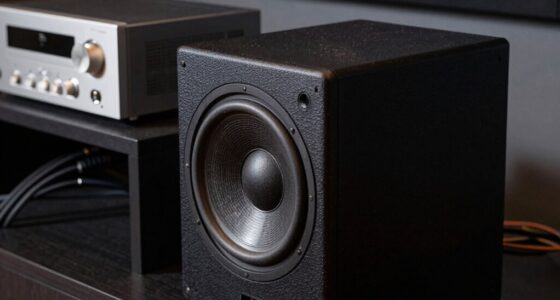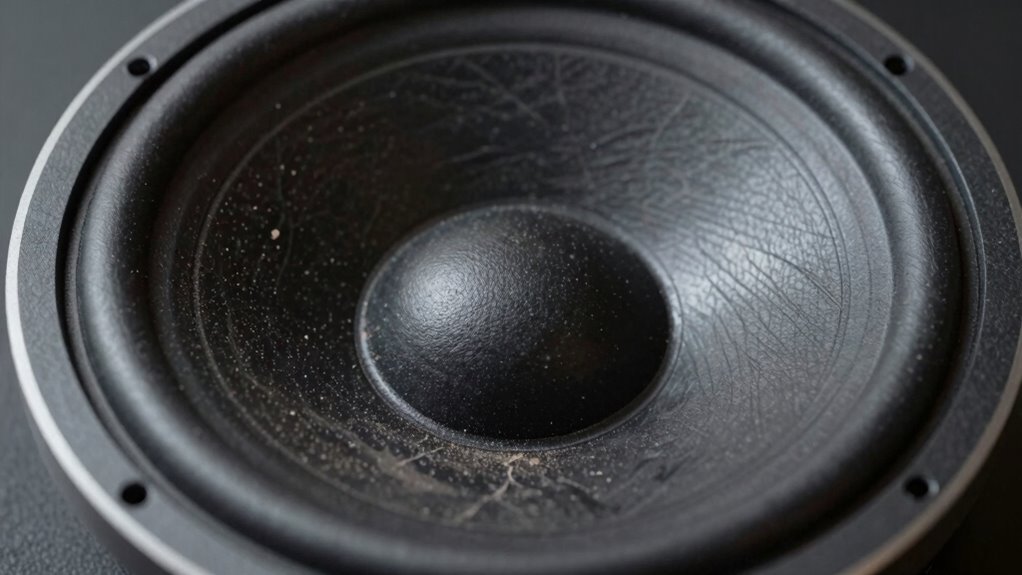

To find what’s causing your subwoofer’s rattle, start by moving it away from nearby surfaces, furniture, or objects that could vibrate. Check for loose screws, panels, or internal parts and tighten them carefully. Listen closely to identify if external items like picture frames or decorations are vibrating against the subwoofer. Securing loose components and experimenting with placement can eliminate rattles. Keep exploring; you’ll discover more tips to restore tight, clear bass.
Key Takeaways
- Check for loose screws or panels inside the subwoofer and tighten them carefully.
- Inspect nearby objects like picture frames or books for vibrations and secure or move them.
- Experiment with different subwoofer positions away from walls and reflective surfaces to reduce rattling.
- Add acoustic treatments or isolation pads to absorb vibrations and dampen external resonances.
- Ensure the subwoofer enclosure is sturdy and well-built; upgrade or reinforce if necessary.

If your subwoofer suddenly starts rattling during playback, it can ruin your listening experience and signal an underlying problem. Rattling often feels like an annoying buzz or vibration that distracts from the music or movie soundtrack. To fix it, you need to identify whether the issue stems from the subwoofer itself or external factors, and that starts with paying close attention to speaker placement and acoustic treatment. Proper speaker placement is essential—placing your subwoofer too close to walls, furniture, or other objects can cause unwanted vibrations and resonances that lead to rattling. Moving it a few inches away from reflective surfaces often reduces these vibrations, allowing the bass to sound clearer and more controlled. Experimenting with different positions helps you find a spot where the subwoofer’s output is tight and free from rattles.
Proper placement and acoustic treatment prevent subwoofer rattling and improve sound clarity.
In addition to positioning, acoustic treatment plays an important role in eliminating rattling. Rooms naturally produce standing waves and reflections that can amplify vibrations, making rattles more noticeable. Adding bass traps, foam panels, or diffusers helps absorb excess sound energy and reduces resonance within the space. These treatments create a more controlled environment, minimizing the chances of external objects vibrating in response to the subwoofer’s bass output. Keep in mind that even small changes—like placing furniture or decorative items strategically—can influence how sound waves behave and how vibrations propagate through your room. Proper acoustic treatment can make a significant difference in how sound behaves and reduce rattling issues.
Another common cause of rattling is loose or poorly secured components inside the subwoofer or speaker cabinet. Inspect your subwoofer for any loose screws, bolts, or panels. Tighten them carefully without overtightening, which can cause damage. Sometimes, the rattling isn’t caused by the equipment but by external objects vibrating against the subwoofer. Check nearby items—like loose picture frames, books, or accessories—and secure or reposition them if they’re amplifying the noise.
Lastly, consider the quality of your subwoofer’s build and the materials used. Cheaper models or those with flimsy enclosures are more prone to vibrations. Upgrading to a sturdier, well-built sub can considerably reduce rattling. When all else fails, using isolation pads or stands under the subwoofer can further dampen vibrations transmitted to the floor or furniture, ensuring your bass remains deep and undisturbed. Taking these steps—optimizing speaker placement, enhancing acoustic treatment, and securing all components—will help you track down and eliminate the object ruining your bass, giving you the clean, powerful sound you’re after.
Top picks for "subwoofer rattle hunt"
Open Amazon search results for this keyword.
As an affiliate, we earn on qualifying purchases.
Frequently Asked Questions
Can External Vibrations Cause Subwoofer Rattles?
External vibrations can definitely cause subwoofer rattles by disrupting its stability. When nearby objects vibrate, they transfer energy to your subwoofer, making it shake or rattle. This not only affects sound quality but can also damage your setup over time. To keep your bass clean and powerful, guarantee your subwoofer is securely mounted and shielded from external vibrations that could compromise its stability and cause unwanted rattling sounds.
How Do Temperature Changes Affect Subwoofer Rattling?
Imagine your subwoofer as a delicate dance, where temperature changes act like unpredictable weather. As temperature fluctuates, materials undergo expansion and contraction, causing potential acoustic distortion and rattling. These shifts can loosen components or create gaps, making your bass less punchy. To keep the rhythm smooth, maintain a stable environment, and guarantee your subwoofer’s parts stay in harmony, preventing rattle caused by temperature-induced expansion and contraction.
Is It Safe to Use Household Items to Fix Rattles?
Yes, you can use DIY fixes and household remedies to fix subwoofer rattles, but proceed with caution. Make sure the materials are non-corrosive and won’t damage your equipment. Use soft padding like felt or foam to dampen vibrations, and avoid objects that could cause more harm. Always test carefully after applying these fixes, and if unsure, consult a professional to prevent potential damage.
Can Rattles Damage My Subwoofer Over Time?
Did you know that over 30% of subwoofer failures are due to long-term damage from rattles? Rattles can cause stress on your subwoofer material and worsen manufacturing defects, leading to potential damage over time. If left unchecked, persistent rattles can weaken the cone or surround, reducing sound quality and risking costly repairs. Address rattles promptly to safeguard your subwoofer and make sure it performs at its best for years to come.
Are Certain Music Genres More Likely to Cause Rattles?
Certain music genres, like heavy metal or electronic dance music, are more likely to cause rattles because of their intense bass, high volumes, and dynamic sounds. Your speaker design also plays a role; some designs handle powerful bass better than others. If you listen to these genres loud or with deep bass, you might notice more rattles. To prevent damage, keep your volume moderate and make sure your subwoofer is properly secured.
Conclusion
So, after all that fuss hunting for that pesky rattle, turns out the culprit was probably your own impatience. Sometimes, we chase after complex solutions only to find the answer was hidden in plain sight—like a loose screw or a forgotten item. Ironically, the thing ruining your bass was probably right under your nose all along. Next time, maybe check the simple stuff first—you might just save yourself some trouble.