
A fixed-frame screen often outperforms a motorized one in installation, durability, and stability. You’ll find it easier to set up since it mounts directly to your wall or ceiling without complex wiring or mechanical parts. It also stays flat and stable over time, reducing distortions and wobbling. Plus, with fewer components to break or repair, it’s more reliable and low-maintenance. Want to uncover more about why fixed frames might be the better choice? Keep exploring.

Get audio and creator gear delivered free — and shop member deals
- Fast, free delivery on millions of items
- Access to Prime Big Deal Days deals on October 6–7
- Prime Video, Amazon Music and more included
Key Takeaways
- Fixed-frame screens are easier to install, requiring no complex wiring or mechanical components.
- They offer superior durability with fewer moving parts and less risk of mechanical failure.
- The rigid frame ensures a perfectly flat surface for stable, high-quality image projection.
- Maintenance is minimal, involving simple cleaning without electronic repairs or adjustments.
- They provide a reliable, long-term solution ideal for users prioritizing simplicity and consistent performance.

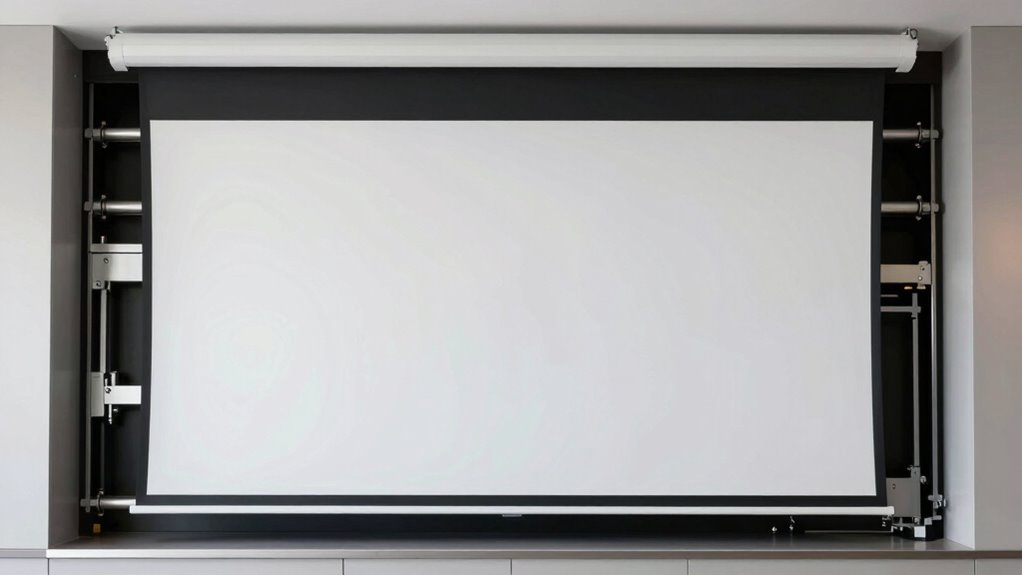
Are you unsure whether a fixed-frame or motorized screen suits your viewing space? If so, it’s vital to evaluate how each option aligns with your needs, especially when it comes to installation challenges and maintenance considerations. Fixed-frame screens are typically simpler to install because they lack the complicated mechanical components of motorized models. You generally mount them directly onto a wall or ceiling, and their rigid frame ensures a straightforward setup. This simplicity reduces the risk of installation errors and makes it easier for you to troubleshoot if something goes wrong later. On the other hand, motorized screens often require more planning during installation. Their electrical components, wiring, and remote control systems can complicate setup, especially if your space has limited access or challenging wiring conditions. If you’re not comfortable with electrical work or don’t have professional help, installing a motorized screen might pose a significant challenge. Plus, because of their moving parts and electronic components, motorized screens demand ongoing maintenance. You’ll need to periodically check the remote controls, motor functions, and wiring to ensure smooth operation. Over time, dust or mechanical wear can cause issues, increasing your maintenance responsibilities. Fixed-frame screens, however, are low-maintenance. Their solid construction means fewer parts that can break or malfunction, making them a reliable choice if you want a set-it-and-forget-it solution. They don’t have motors or electronic components that could fail, and cleaning is usually just a matter of wiping the surface and frame. If you prefer a hassle-free setup and minimal upkeep, a fixed-frame screen offers peace of mind. Additionally, fixed-frame screens tend to provide a more stable and flat surface, which can enhance image quality and reduce distortions. This rigidity ensures that your picture remains perfectly aligned, without the risk of sagging or warping over time that can sometimes occur with motorized screens if the motor or brackets weaken. Properly designed frames can also contribute to better image stability and overall viewing experience. While motorized screens offer the convenience of automatic retraction and concealment, their complexity can introduce complications that aren’t always worth it, especially if your priority is durability and ease of maintenance. In situations where you want a reliable, straightforward setup with minimal ongoing effort, a fixed-frame screen clearly outshines a motorized option. It combines simplicity with durability, making it an excellent choice for those who value long-term reliability and ease of use over added features. Furthermore, the ease of installation of fixed-frame screens makes them an ideal solution for many spaces. Recognizing the long-term durability and low-maintenance nature of fixed-frame screens can help you make a more informed decision. Selecting a durable and reliable screen ensures your investment remains functional and hassle-free over the years. A properly designed frame can also contribute to better image stability and overall viewing experience. Additionally, choosing a quality material for the frame can further enhance the longevity of your fixed-frame screen.
As an affiliate, we earn on qualifying purchases.
Frequently Asked Questions
How Long Do Fixed-Frame Screens Typically Last?
You can expect a fixed-frame screen to last around 10 to 20 years, depending on durability considerations and how well you maintain it. Frame material options like aluminum or wood influence longevity, with aluminum offering more durability. Regular cleaning and proper handling help extend its lifespan. If you choose high-quality materials and take good care, your fixed-frame screen can remain in excellent condition for many years, providing reliable performance.
Are Fixed-Frame Screens Easier to Install Than Motorized Screens?
Fixed-frame screens are generally easier to install because their installation complexity is lower, requiring fewer moving parts and adjustments. You won’t need to worry about motor connections or remote setups. Plus, their sleek, clean look enhances aesthetic appeal, giving your space a polished appearance. While motorized screens offer convenience, fixed-frame screens simplify installation and deliver a consistent, attractive look that’s perfect if you prefer a straightforward setup.
Can Fixed-Frame Screens Be Used Outdoors?
Yes, fixed-frame screens can be used outdoors, but weather resistance is key. You need a screen made with durable, weatherproof materials to withstand rain, sun, and wind. Keep portability concerns in mind, as fixed-frame screens are often bulky and less easy to move around. For outdoor use, consider models designed specifically for outdoor environments, ensuring they’re sturdy and weather-resistant for long-lasting performance.
What Maintenance Is Required for Fixed-Frame Screens?
Your fixed-frame screen needs minimal maintenance, but keep an eye on frame tension and material durability to guarantee it stays perfect. Regularly check that the tension remains even to prevent sagging, and clean the screen gently with a soft cloth to remove dust and smudges. Protect it from harsh weather if outdoors, and inspect for any signs of wear or damage, ensuring your screen remains a stunning centerpiece for years to come.
Do Fixed-Frame Screens Affect Picture Quality More Than Motorized?
Fixed-frame screens generally offer better image clarity because their taut, stable surface minimizes wrinkles and distortions. This rigidity enhances picture sharpness and uniformity. Additionally, fixed-frame screens tend to have superior screen durability, as they’re built to stay in place and resist damage over time. Unlike motorized options, they don’t have moving parts that can wear out, making them a reliable choice for consistent, high-quality viewing experiences.
wall mount fixed projector screen
As an affiliate, we earn on qualifying purchases.
As an affiliate, we earn on qualifying purchases.
Conclusion
When it comes to choosing between a fixed-frame and a motorized screen, the fixed-frame often outshines with unmatched stability and picture clarity. You’ll feel like you’re watching your favorite movies through a crystal-clear window, not just a screen. While motorized screens are convenient, they can sometimes falter in quality. So, if you crave a viewing experience that feels as immersive as being right in the action, a fixed-frame is your ultimate champion—trust me, it’s a game-changer.
high durability fixed projector screen
As an affiliate, we earn on qualifying purchases.
As an affiliate, we earn on qualifying purchases.
As an affiliate, we earn on qualifying purchases.
Fall Picks
fall essentials
As an affiliate, we earn on qualifying purchases.