
In small rooms, subwoofer bass can feel overwhelming because of room gain, where sound reflections bounce off walls, ceilings, and floors. These reflections amplify certain low frequencies, causing the bass to sound loud and boomy. Placing your subwoofer near walls or corners often worsens this effect. To improve, you need to adjust placement and use acoustic treatments. Understanding how room resonance impacts bass helps you achieve a balanced sound—keep exploring to learn more about managing this issue.
Key Takeaways
- Small rooms cause sound waves to reflect and reinforce certain bass frequencies, leading to increased room gain and bass explosion.
- Placing the subwoofer near walls or corners amplifies resonances, intensifying bass response and potential boominess.
- Room resonance peaks are affected by room size, shape, and materials, causing specific bass frequencies to become overly prominent.
- Improper subwoofer placement can cause constructive interference, resulting in exaggerated bass and “boom” effects.
- Acoustic treatments and strategic positioning help reduce resonance buildup, controlling bass explosion in small rooms.
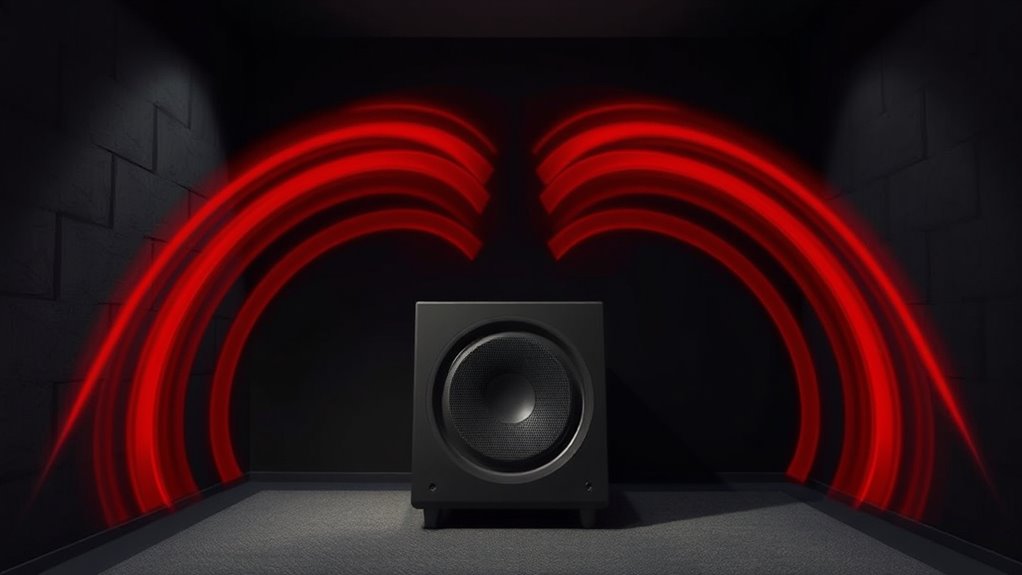
Understanding subwoofer room gain is essential for achieving balanced and accurate bass in your listening space. When you place a subwoofer in a small room, the sound waves don’t just stay confined to a specific spot; they bounce off walls, ceilings, and floors, creating what’s known as room resonance. This resonance amplifies certain bass frequencies, causing the bass to sound much louder and boomy than intended. Recognizing how room resonance interacts with your subwoofer’s placement is key to controlling and optimizing the bass response.
Your subwoofer’s placement directly influences how these resonances develop. If you position it too close to walls or corners, you’ll likely notice exaggerated bass that can drown out clarity and detail. Conversely, placing it too far from walls might diminish the overall bass presence. The goal is to find a sweet spot where the subwoofer’s sound integrates smoothly with your room’s acoustics, reducing unwanted resonances and ensuring more accurate bass. Experimenting with different locations helps you identify where the room naturally amplifies certain frequencies, allowing you to position the subwoofer in a spot that minimizes these effects.
Proper subwoofer placement reduces resonance, balancing bass and preventing boomy, overwhelming sound.
To understand this better, consider that each room has its unique resonance profile, which depends on its size, shape, and surface materials. These factors influence how sound waves reflect and reinforce each other. When your subwoofer’s output aligns with these resonances, certain bass notes become disproportionately loud, creating that explosion of bass often heard in small rooms. This is why you might experience intense bass peaks that seem to overwhelm the rest of your audio. By carefully adjusting subwoofer placement, you can reduce these peaks and valleys, resulting in a more balanced sound that accurately reproduces your music or movies.
Using tools like a room calibration microphone or sound analyzer can help you identify which frequencies are being overly accentuated due to room resonance. Once you know these problem areas, you can move your subwoofer slightly or add acoustic treatments to dampen specific resonances. Remember, small shifts in placement can make a big difference in how your room handles bass. Additionally, understanding room materials and their impact on sound reflection can further help you control bass response. When you understand the relationship between subwoofer placement and room resonance, you gain control over your sound environment, achieving clearer, more natural bass without the overwhelming boom that small rooms are prone to produce.
Frequently Asked Questions
How Can I Measure Room Gain Accurately at Home?
To measure room gain accurately at home, use a sound level meter or a calibration microphone connected to measurement software like REW (Room EQ Wizard). Play pink noise or test tones and record the bass response at your listening position. Focus on how bass frequencies boost in small spaces, which helps you understand room acoustics. This method guarantees precise speaker calibration, optimizing your bass for a balanced sound experience.
Does Room Gain Affect Only Bass or Other Frequencies Too?
Room gain primarily affects bass frequencies, causing them to sound louder and boomier, but it can also influence the overall frequency response of your room. When you add acoustic treatment, you can control how room gain impacts both bass and higher frequencies, creating a balanced sound. Without treatment, room gain can distort your audio experience across the spectrum, making it essential to address for accurate sound reproduction.
Can Room Treatment Reduce Subwoofer Room Gain Effectively?
Imagine your room as a concert hall where sound bounces wildly, causing bass to boom unexpectedly. Room treatment can effectively tame this by absorbing unwanted reflections. Proper subwoofer placement and acoustic panels help reduce subwoofer room gain, smoothing out bass response. With targeted treatments, you’ll notice tighter, more controlled bass, transforming your space into a balanced listening environment without the overwhelming boom.
How Does Subwoofer Placement Influence Room Gain?
Your subwoofer placement substantially influences room gain by affecting how bass waves interact with your space. Position it away from walls and corners to minimize excessive reinforcement, which causes bass boom. Proper placement helps with room gain mitigation, reducing resonances and uneven bass response. Experimenting with different locations and listening carefully allows you to find the ideal spot that balances bass clarity and minimizes room-induced amplification.
Are There Specific Subwoofers Designed to Minimize Room Gain?
Think of subwoofers as the sculptors of sound; some are crafted specifically to tame room gain. You’ll find subwoofer design that minimizes bass explosion in small rooms, often featuring built-in acoustic treatments or adjustable settings. These models help you control the bass, reducing boominess and making your listening experience smoother. Look for subwoofers with advanced design features that integrate well with your room’s acoustics for ideal sound quality.
Conclusion
Now that you understand subwoofer room gain, you can tame those booming bass explosions. Remember, small rooms act like vintage speakers from a bygone era—amplifying low frequencies as if caught in a time capsule. By adjusting placement and settings, you’ll keep your bass tight and punchy, avoiding the chaos of a dancehall in your living room. Think of it like tuning a vintage radio—patience and care reveal the true sound magic hidden within your space.