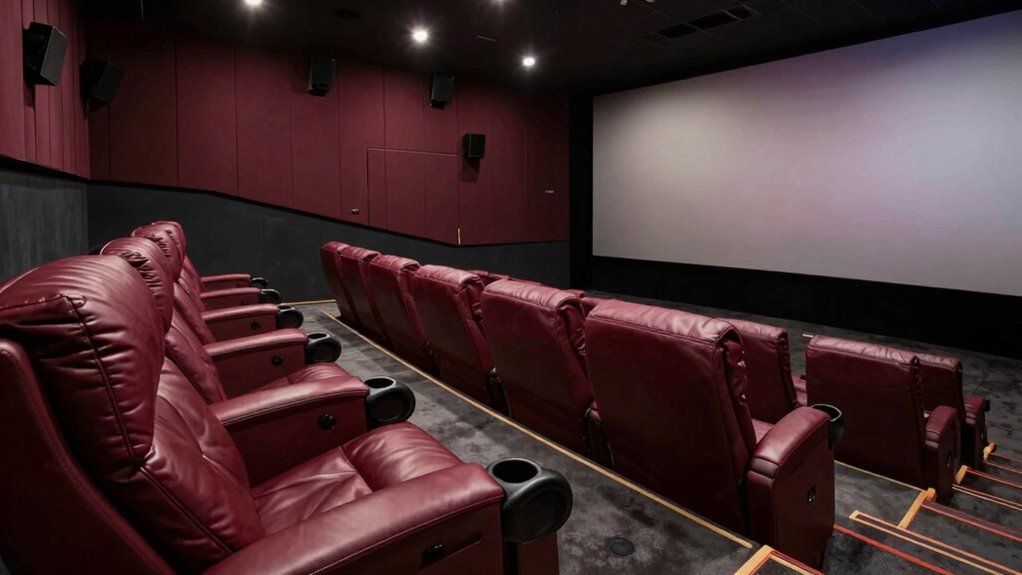

To avoid neck twists in your home theater for groups, arrange seats on gentle tiers or staggered formations so everyone has a clear view without turning their heads awkwardly. Elevate the rows slightly and position seats at slight angles toward the screen for better sightlines. Leave enough space between seats for comfort and movement. If you want to create an ideal setup that keeps everyone focused and relaxed, there’s more to discover.
Key Takeaways
- Arrange seats in slight angles toward the screen to prevent neck twisting and improve viewing comfort.
- Use staggered or tiered seating to ensure clear sightlines for all viewers.
- Elevate rear rows slightly to minimize the need for viewers to turn their heads.
- Maintain consistent viewing distances based on screen size for optimal focus.
- Leave sufficient space between seats to allow natural head movement and easy access.
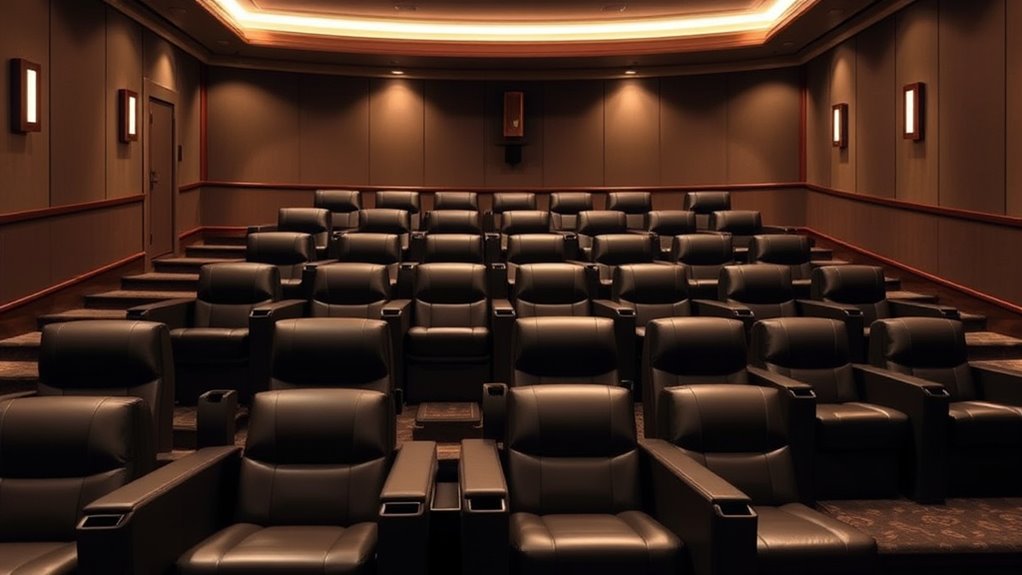
Are you looking to create a home theater that comfortably seats everyone in your group? If so, paying attention to your seating arrangement is essential. The key is maximizing audience comfort while optimizing the layout to prevent those awkward neck twists that can ruin the viewing experience. When designing your theater, think beyond just placing chairs randomly; instead, focus on a layout that offers clear sightlines and easy access for everyone. This means considering the size of your space, the number of viewers, and the viewing angles. A well-planned layout ensures each seat has an unobstructed view of the screen, reducing the need for viewers to turn their heads or strain their necks.
To avoid the ‘neck twist’ rows, start by arranging seats in gentle tiers or staggered formations. This setup allows each row to be slightly elevated compared to the one in front, giving everyone a direct line of sight without craning their necks. Avoid placing seats directly behind each other, as it can cause viewers to twist or lean uncomfortably. Instead, position seats at slight angles toward the screen, which helps maintain a natural head position. When optimizing your layout, also consider the distance from each seat to the screen. The ideal viewing distance is typically about 1.5 to 2.5 times the diagonal size of your display, depending on your screen resolution. Ensuring seats are within this range keeps the image sharp and comfortable to watch, preventing viewers from leaning forward or backward excessively.
Another vital aspect of audience comfort is spacing. Leave enough room between seats for easy movement, especially if you have a larger group. Overcrowded seating can lead to discomfort and make it hard for everyone to find a good spot. Additionally, incorporate armrests, footrests, or small tables to enhance comfort during long viewing sessions. When selecting seats, opt for those with adjustable features, so each person can customize their sitting position for maximum comfort, especially in longer movies or sports events.
Finally, think about accessibility and flow. Make sure there’s enough space to move around without disturbing others. A well-thought-out layout not only enhances comfort but also makes your home theater more functional and inviting. By carefully planning your seating arrangement with layout optimization in mind, you’ll create a space where everyone can enjoy the show without unnecessary neck twists or discomfort, making your home theater the perfect spot for movie nights, sports, or binge-watching sessions.
Frequently Asked Questions
What Are the Best Materials for Comfortable Group Home Theater Seating?
For comfortable group home theater seating, you should choose fabric that offers softness and breathability, ensuring long movie nights stay cozy. Leather is also a great option because of its durability and easy maintenance, making it ideal for frequent use. Both materials provide excellent fabric comfort, but leather adds a touch of luxury and longevity. Consider your style preferences and practical needs to pick the best seating material for your group.
How Do I Choose the Right Size for My Home Theater Group?
To choose the right size for your home theater group, you should consider your seating capacity and room dimensions. Measure the available space carefully, ensuring enough room for comfortable seating without crowding. Opt for modular or flexible seating options to accommodate your group’s size and future needs. Think about sightlines and access, ensuring everyone has a clear view without neck twists, making your theater both functional and enjoyable.
Can Modular Seating Arrangements Improve Viewing Angles?
Yes, modular seating arrangements can enhance viewing angles by allowing you to tailor layouts with ergonomic design in mind. You can easily reconfigure seats to guarantee everyone has a direct line of sight, reducing neck strain. With custom layouts, you’ll find it easier to optimize space and create a comfortable viewing experience for your group, making your home theater more enjoyable and adaptable for different gatherings.
Are There Options for Adjustable Features in Group Theater Seats?
A stitch in time saves nine, and adjustable group theater seats do too. You’ll find options like reclining features and customizable armrests that let you tailor each seat for maximum comfort. These adjustable features help prevent neck strain by allowing everyone to set their seat at the perfect angle. With such flexibility, you create a cozy, ergonomic setup that keeps your group comfortable and engaged during every movie night.
How Can I Reduce Sound Distortion With Large Seating Groups?
To reduce sound distortion with large seating groups, focus on proper speaker placement and acoustic treatments. Position speakers strategically to guarantee even sound distribution throughout the room, avoiding dead spots or overly loud areas. Add acoustic panels or diffusers to manage reflections and minimize echo. These steps help create a balanced sound environment, so everyone enjoys clear audio without distortion, even in larger groups.
Conclusion
To create a comfortable home theater for groups, choose seating arrangements that prevent neck twists, like a well-thought-out tiered setup. Think of it as a dance where everyone moves in harmony, never straining to see the screen. When everyone has a clear view without craning their necks, your movie nights become more enjoyable and relaxed. With a little planning, your home theater can be as smooth and effortless as a perfectly choreographed performance.