The projector rainbow effect happens when light splits into colorful streaks, often caused by spinning color wheels or internal prisms, especially in DLP projectors. This can be distracting and lead to eye strain during long viewing sessions. To reduce it, try adjusting your projector’s position, reducing contrast, or upgrading to a model with better optics. Continuing to explore will give you more tips to improve your viewing comfort and experience.
Key Takeaways
- The rainbow effect is caused by light dispersion within the projector, creating colorful streaks especially during high-contrast scenes.
- Using projectors with higher optical quality and advanced color wheel technology can significantly reduce rainbow streaks.
- Adjusting projector placement, ambient lighting, and screen settings can help minimize the visibility of rainbow effects.
- Taking regular breaks and limiting exposure can reduce eye strain caused by the shifting, vivid rainbow patterns.
- Upgrading to newer projector models designed to mitigate color separation improves viewing comfort and decreases the rainbow effect.
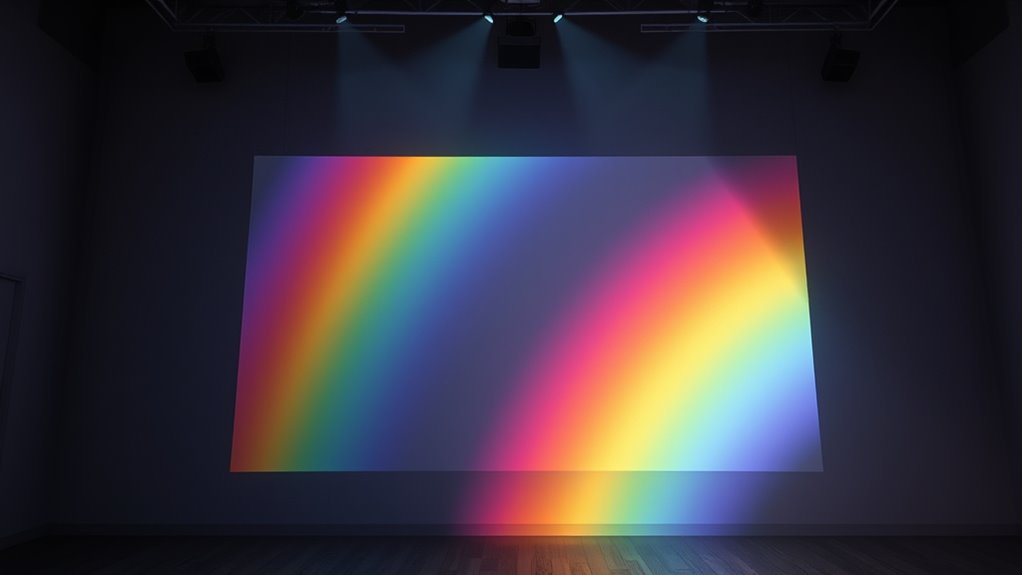
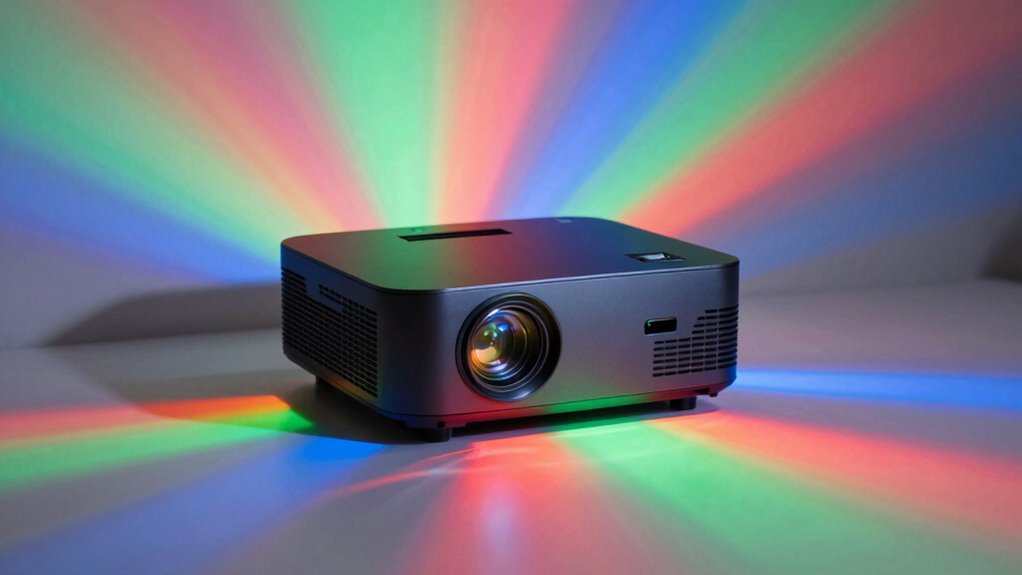
The projector rainbow effect occurs when a projector’s light disperses through prisms or internal components, creating colorful rainbow streaks across surfaces. This phenomenon results from color separation within the device, where different wavelengths of light are bent or split as they pass through various optical elements. As a result, you see vivid, shifting bands of color that can be distracting or even overwhelming during presentations or movie nights. These visual artifacts are more pronounced in certain projectors, especially those with lower quality optics or specific color wheel technologies. Understanding what causes these streaks can help you identify whether they’re due to inherent design or potential issues.
The core of the rainbow effect lies in how light is split into its component colors. When the projector’s light source hits a spinning color wheel or passes through internal prisms, different colors are refracted at varying angles, leading to a misalignment in the projected image. This separation of colors manifests as the rainbow streaks you see. Typically, these artifacts are most noticeable during rapid motion or high-contrast scenes, where the eye is more sensitive to sudden shifts in color. The effect isn’t necessarily a defect but a byproduct of the projector’s optical process, although it can be heightened by certain design choices or aging components.
If you’re experiencing noticeable rainbow streaks, it’s worth considering the type of projector you own. DLP projectors, for example, are more prone to the rainbow effect because they use a spinning color wheel to generate colors. In contrast, LCD projectors tend to produce fewer visual artifacts, though they can still exhibit some degree of color separation under certain conditions. To reduce the effect, you might look into models with improved color wheel designs or those that employ different light modulation methods. Adjusting the projector’s position or the ambient lighting can also lessen the visibility of the rainbow streaks, allowing for a more comfortable viewing experience.
To minimize the rainbow effect and its impact on your eyes, it’s essential to manage both the projector’s settings and your environment. Limiting the exposure duration and taking breaks can help reduce eye strain caused by these colorful artifacts. Additionally, choosing a projector with better optical quality or newer technology can considerably diminish color separation and visual artifacts. Keep in mind that while some degree of rainbow effect may be unavoidable with certain projectors, understanding its cause helps you make informed decisions about upgrades or adjustments, ultimately enhancing your viewing comfort and experience. Improving color accuracy and using high-quality optics can significantly reduce the visibility of rainbow streaks, leading to a more seamless viewing experience.
Frequently Asked Questions
Can the Rainbow Effect Damage Your Eyesight?
The rainbow effect won’t damage your eyesight, but it can cause temporary visual fatigue and disrupt your color perception. When you experience this effect, your eyes work harder to focus, leading to discomfort over time. To protect your eyes, take breaks and reduce exposure. While short-term discomfort is common, prolonged or intense exposure might increase eye strain, so it’s best to minimize your interaction with projectors causing this effect.
Does the Rainbow Effect Occur With All Projector Models?
You might think all projectors display the rainbow effect, but that’s not true. It mostly occurs with DLP projectors due to their color wheel design. To minimize it, proper projector calibration and ensuring excellent color accuracy are essential. Some models are engineered to reduce this effect, so if you’re sensitive, look for projectors with advanced color management. Your choice directly impacts your viewing experience and eye comfort.
Is There a Way to Eliminate the Rainbow Effect Completely?
You can’t completely eliminate the rainbow effect, but you can reduce it for better visual comfort. Opt for projectors with minimal color separation or use models with advanced color wheel technology. Adjust your viewing distance and angle to lessen the effect’s impact. Regularly calibrate your projector and consider using glasses designed to filter out specific colors. These steps help improve your experience, even if the rainbow effect isn’t entirely eradicated.
How Does Ambient Lighting Influence the Rainbow Effect?
Ambient illumination can markedly influence the rainbow effect on your projector. When you optimize lighting contrast by reducing bright ambient lighting, you decrease the chances of noticing rainbow artifacts. Keeping the room dim or evenly lit helps your eyes focus better and minimizes the visibility of color separation. So, controlling ambient illumination creates a more consistent viewing experience and lessens the rainbow effect, making your projector images clearer and easier on your eyes.
Are There Specific Projector Settings to Minimize Eye Strain?
You can tame the rainbow effect by tweaking your projector’s settings like a skilled conductor. Adjust the contrast and brightness to smooth out harsh edges, and explore filter options to soften the colors. Use adjustment techniques such as enabling flicker reduction or switching to a lower refresh rate. These small changes act like a gentle breeze, easing your eyes and making your viewing experience more comfortable and less strained.
Conclusion
So, next time you notice that rainbow shimmer on your projector screen, remember it’s like chasing rainbows—beautiful but fleeting. Just as a rainbow’s colors can distract from its beauty, the rainbow effect can strain your eyes if left unchecked. By taking simple steps to reduce it, you protect your vision and enjoy the show. Think of it as tending a garden: a little care keeps the colors vibrant and your eyes happy for years to come.