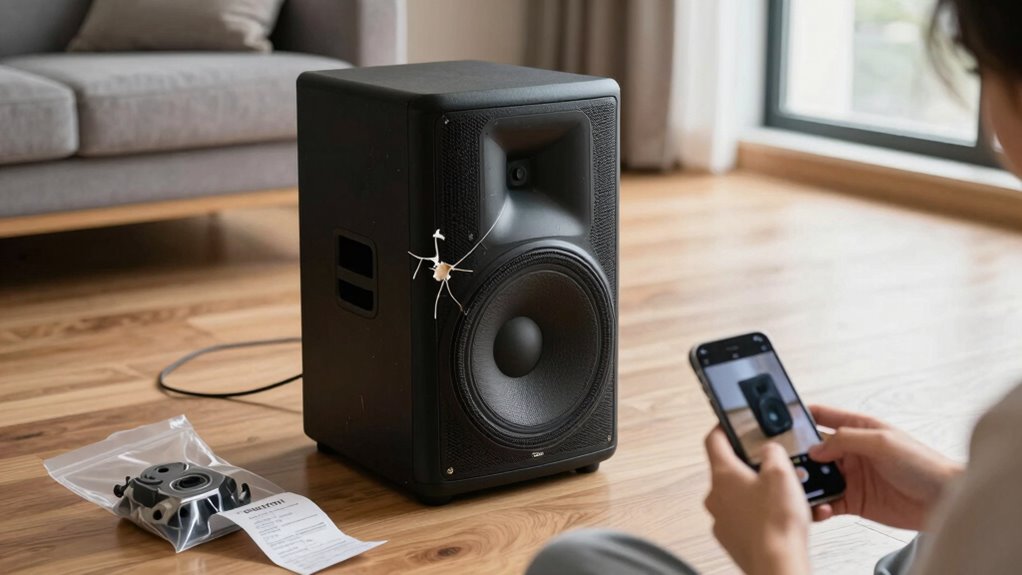

When your heavy speaker arrives damaged, first inspect the packaging and the speaker carefully for cracks, dents, or loose parts. Take clear, detailed photos from multiple angles, including close-ups and a scale for reference. Contact the seller or carrier immediately, sharing your photos and all relevant order details. Follow their return and refund procedures closely and gather any proof like receipts or videos. Continue exploring to learn more tips on handling this situation effectively.
Key Takeaways
- Immediately inspect the packaging and speaker for visible damage, documenting any issues with detailed photos from multiple angles.
- Take clear, high-resolution photos of the damaged speaker and packaging, including scale references.
- Contact the seller or carrier promptly, providing order details and supporting photos to report the damage.
- Follow the seller’s return and refund procedures carefully, keeping all receipts, communication records, and tracking information.
- Preserve the original packaging and gather all proof of damage to support your claim for resolution or reimbursement.
Inspect the Packaging and the Speaker Immediately
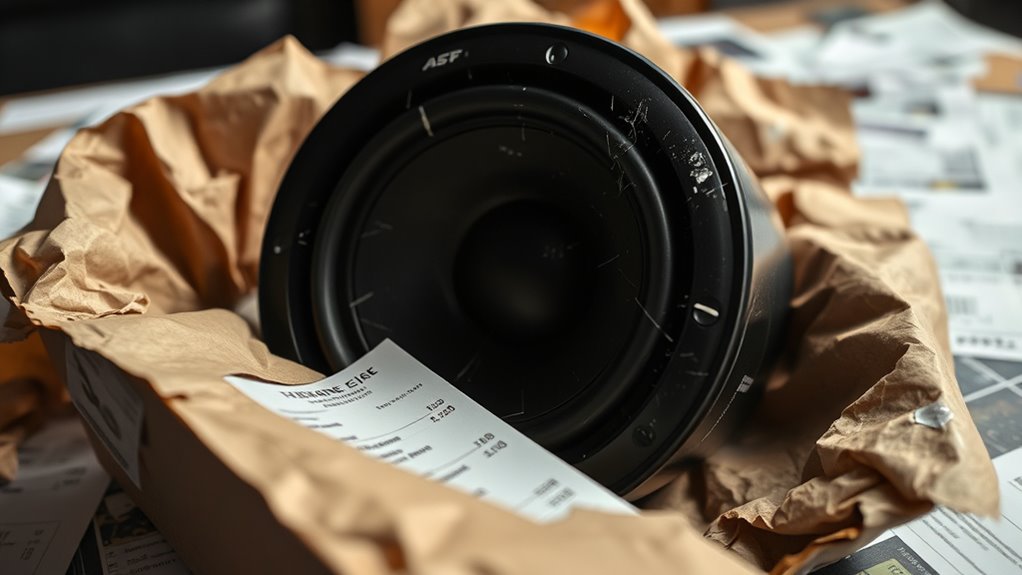
The moment you receive your heavy speakers, you should thoroughly inspect both the packaging and the speakers themselves. Check for any signs of damage on the exterior packaging, like tears, dents, or crushed areas. If you notice any irregularities, don’t ignore them—these could indicate internal damage. Carefully remove the speakers from their boxes, handling them with care to avoid further harm. Examine each speaker for cracks, dents, or loose parts. Ensure all protective coverings and packaging materials are intact and properly in place. Take note of any discrepancies or visible issues, as this documentation can be crucial later. Remember, early inspection helps you identify damage promptly, facilitating a smoother damage claim process and ensuring you’re not held responsible for damages that occurred during transit. Additionally, understanding proper handling and storage techniques can help prevent further damage before installation. Always keep records of your inspection photos, as visual documentation can be essential if you need to file a damage claim later on. Being familiar with transportation safety tips can also help you move and store heavy equipment more securely and prevent accidents. Proper packaging inspection can significantly reduce the risk of disputes with shipping providers. Moreover, consulting manufacturer guidelines can ensure you’re following the best practices for handling delicate or heavy electronics.
Take Clear and Detailed Photos of the Damage
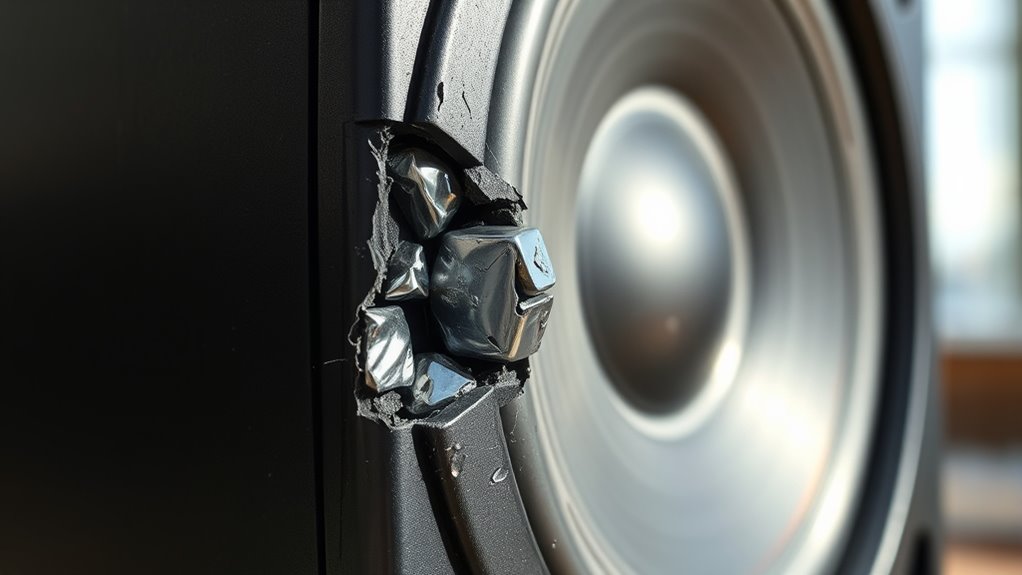
After inspecting the speakers and packaging, capturing clear and detailed photos of any damage is the next essential step. Use a well-lit area to avoid shadows that can obscure details. Take multiple photos from different angles—front, back, sides, and close-ups of specific dents, cracks, or broken parts. Include a ruler or a common object for scale to show the extent of the damage. Focus on capturing the full scope as well as any fine cracks or tears. Make sure the images are sharp, in focus, and high resolution, so the damage is unmistakable. These photos serve as crucial evidence when filing claims or returning the item, ensuring you have clear documentation to support your case. Additionally, understanding navigation and mapping features of smart devices can help you better document the location and context of the damage if related to smart home integrations. Proper documentation can also facilitate insurance claims by providing comprehensive visual proof of the damage. Remember to check for any signs of corrosion or material degradation, which can be important evidence for certain claims or returns.
Contact the Seller or Shipping Carrier Promptly
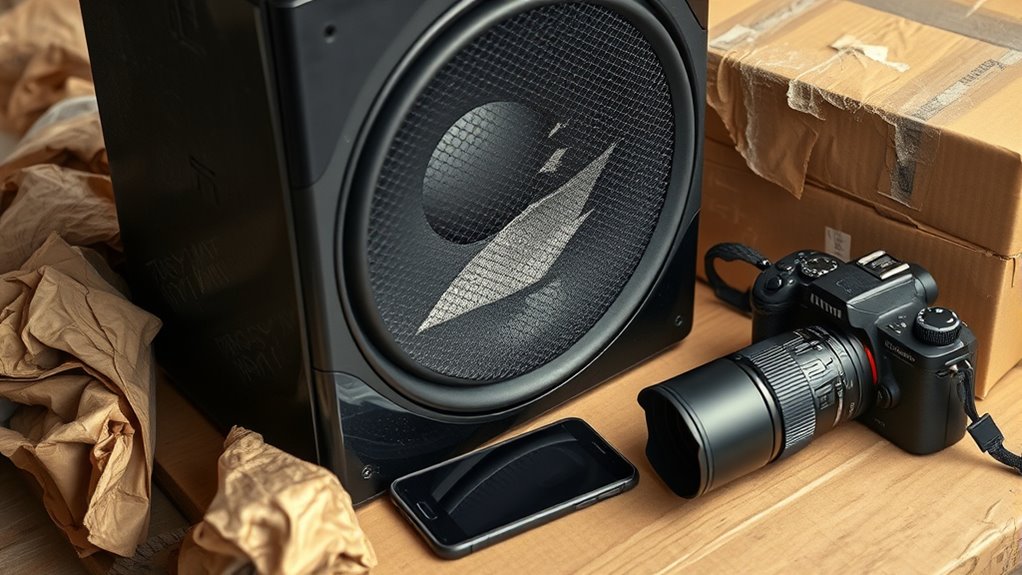
Prompted by the importance of timely action in resolving issues with damaged heavy speakers, it is also helpful to understand product warranties and the policies that may cover damages during shipping or manufacturing defects. Promptly contacting the seller or shipping carrier is vital to resolving issues with damaged heavy speakers. As soon as you notice the damage, reach out immediately to report the problem. Provide all necessary details, including order numbers, tracking information, and a clear description of the damage. If possible, share the photos you took earlier to support your claim. Acting quickly helps guarantee your complaint is documented within any time limits set by the seller or carrier. Keeping detailed damage documentation and records of your communications, including emails and phone calls, can be essential if disputes arise or further proof is needed. Understanding security zone info and applicable policies can also assist in understanding your rights and options. Additionally, being aware of dispute resolution procedures can facilitate a smoother process if disagreements occur. Addressing the issue promptly increases your chances of a swift resolution, whether that’s a replacement, repair, or refund.
Understand and Follow the Return and Refund Procedures
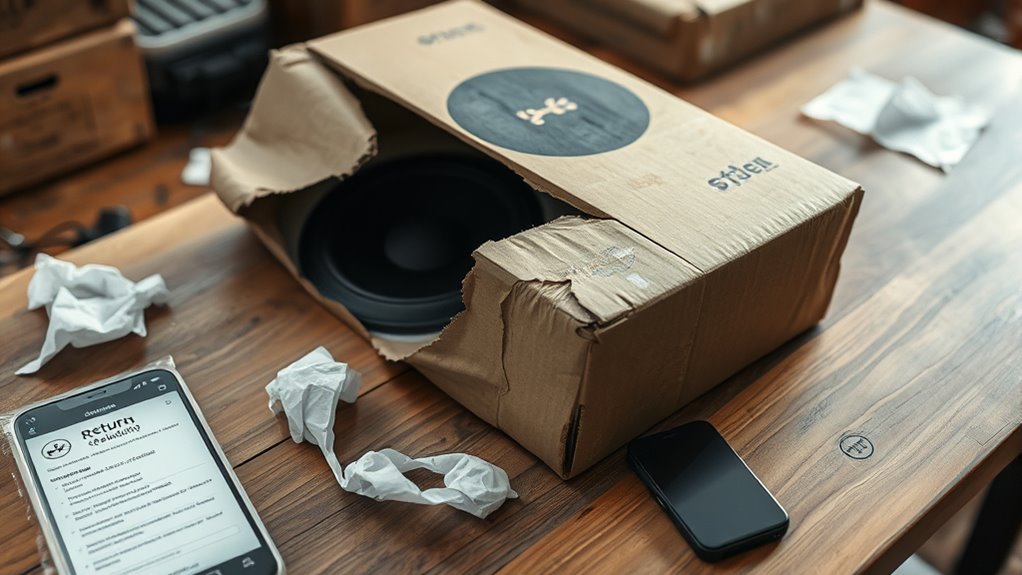
Once you’ve contacted the seller or shipping carrier about the damaged heavy speakers, it’s important to understand their return and refund procedures. Knowing what to expect helps you stay in control during a frustrating situation. Here’s what you should do:
- Read their policy carefully to understand time limits and conditions. Familiarizing yourself with return window policies can help prevent delays. Additionally, reviewing vetted standards ensures the seller’s policies are reputable and trustworthy.
- Follow specific instructions for returning the item, such as packaging and labels.
- Keep track of all communications—emails, receipts, and tracking numbers—for proof.
- Be patient but persistent—sometimes refunds take time, but staying proactive speeds things up.
- Familiarize yourself with vetted Textile Line standards to ensure the seller’s policies are reputable and trustworthy. Additionally, understanding proof of damage requirements can streamline your claim process and prevent unnecessary delays.
Gather Necessary Proof and Documentation for Claims
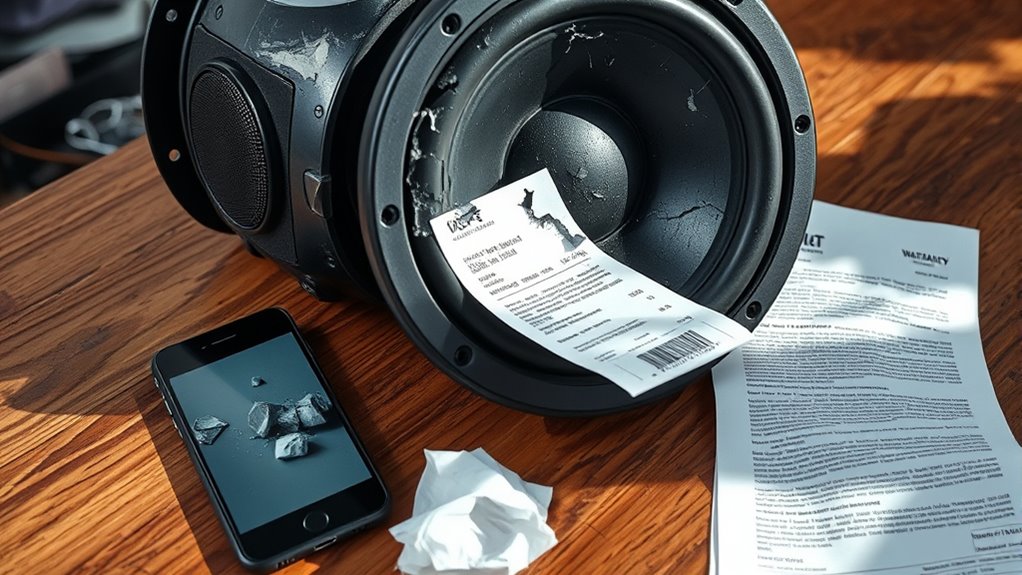
Gathering the right proof and documentation is essential to support your claim and guarantee a smooth resolution. Take clear photos of the damaged speaker from multiple angles, capturing both the exterior and any internal issues. Include close-ups of cracks, dents, or broken parts. Keep all packaging materials, especially the damaged box and cushioning, as proof of how the item was received. Save the purchase receipt, invoice, or order confirmation to verify your transaction details. If possible, record a short video showing the damage or operational issues. Document any conversations with customer service, including email exchanges and chat logs. This thorough evidence supports safe installation practices and fortifies your claim, speeds up the process, and helps ensure you get the appropriate replacement or refund. Additionally, organizing your proof in a dedicated folder can make the process even more efficient. Proper documentation helps establish ownership and provides clarity during the claims process, especially with fragile items like speakers. Remember, proper documentation not only strengthens your case but also aligns with best practices for handling damages in the supply chain, especially with fragile items like speakers.
Frequently Asked Questions
How Long Do I Have to Report Damage After Delivery?
You should report damage within the timeframe specified by the seller or carrier, typically within 48 to 72 hours of delivery. Act quickly to document the damage with photos and contact customer service promptly. Delaying might risk losing your claim or warranty coverage. Always check the specific policy provided with your shipment or order confirmation to guarantee you meet the deadline and protect your rights.
Can I Refuse Delivery if the Speaker Is Damaged?
It’s possible to refuse delivery if the speaker arrives damaged, especially if it’s visibly broken or in poor condition. When you notice damage upon arrival, politely refuse to accept the package and inform the delivery person immediately. This way, you prevent the damaged item from being signed for or processed. Always document the damage with photos and contact the seller promptly to arrange for a replacement or return, ensuring you’re protected.
Are There Specific Packaging Guidelines for Returns?
Yes, there are specific packaging guidelines for returns. You should use the original packaging if possible, including all protective materials and accessories. If the original packaging isn’t available, choose a sturdy box with ample padding to prevent further damage during transit. Seal the package securely, label it clearly, and include any required return forms. Following these guidelines helps guarantee your return is processed smoothly and efficiently.
What Should I Do if the Seller Is Unresponsive?
If the seller’s unresponsive, think of yourself as a ship steering through a stormy sea. You should document everything—take photos of the damage, save all correspondence, and reach out via multiple channels like email, phone, or social media. If there’s still no reply, escalate the issue through your payment provider or file a claim with your credit card company. Staying persistent ensures your concerns stay afloat until resolved.
How Do I Track the Status of My Return or Refund?
You can track your return or refund by logging into your account on the seller’s website or app. Look for the order history and select the specific item. There, you should find a status update, tracking number, or refund progress. If you don’t see this information, contact customer service directly with your order details. Keep monitoring your email for notifications about any updates or confirmations.
Conclusion
When your heavy speaker arrives damaged, act quickly, act confidently, and act clearly. Inspect the packaging, photograph the damage, and contact the seller without delay. Follow the return process carefully, gather all proof, and keep records organized. By staying proactive, prepared, and persistent, you’ll navigate the claim smoothly. Remember, your prompt actions protect your rights, your investment, and your peace of mind. Don’t wait—take control and get the resolution you deserve.