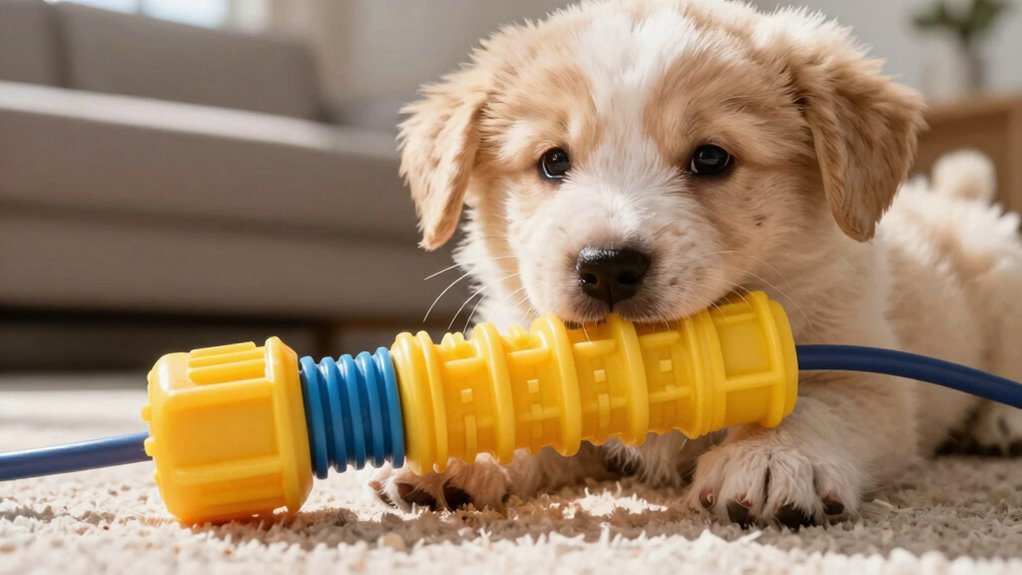

If your pet chews on cables, affordable solutions like cord covers, spiral wraps, or DIY options such as plastic tubing can effectively prevent accidents and injuries. These inexpensive barriers create a physical obstacle, reducing the risk of electrocution or fires. Pairing these with training techniques like redirecting with toys and reinforcing commands helps change their behavior. Want to discover simple tips to keep your furry friend safe and protect your home? Keep exploring for more helpful ideas.
Key Takeaways
- Use affordable cord covers or spiral wraps as physical barriers to prevent pets from chewing cables.
- Offer suitable, durable chew toys to redirect your pet’s attention away from cords.
- Implement consistent training with positive reinforcement to teach pets to avoid cables.
- Create DIY protective solutions using household items like plastic tubing or split loom for cost-effective safety.
- Combine training and barriers to effectively reduce cable-chewing and ensure household safety.
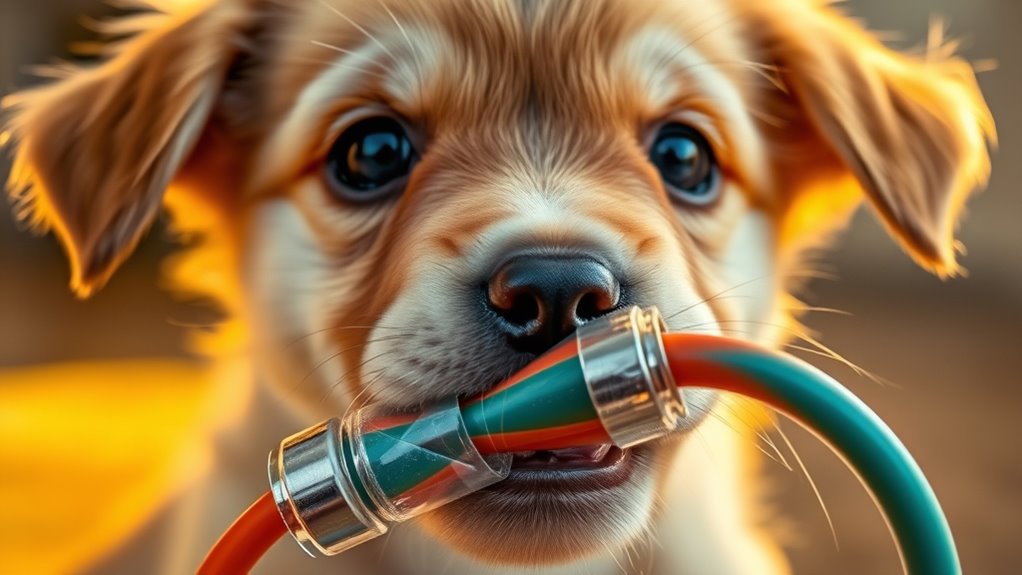
Pets chewing on cables is a common problem that can pose serious safety risks. When your furry friend gnaws on cords, they could accidentally get electrocuted, cause a fire, or damage expensive devices. To prevent this, focusing on pet training and cable safety is essential. Training your pet early helps teach them which behaviors are acceptable, reducing their interest in chewing cables. Consistency is key—use positive reinforcement to reward good behavior and redirect their attention when they start to chew on cords. Providing suitable chew toys also channels their natural chewing instincts away from dangerous objects, making pet training more effective and less stressful for you.
Pet training and chew toys help prevent dangerous cable chewing by your furry friend.
Cable safety is another crucial aspect. Cheap protection options, like cord covers or spiral wraps, are surprisingly effective and affordable. These simple devices act as a barrier, making cables less accessible and less tempting for your pet. You can easily purchase inexpensive cable protectors or even DIY with everyday household items like plastic tubing or split loom. Applying these covers along the length of your cords creates a physical obstacle that discourages chewing, and it’s a quick fix that doesn’t require complicated installation or costly equipment. The beauty of these solutions is that they are portable, versatile, and suitable for all types of cables—whether for your phone, computer, or appliances.
Incorporating pet training into your routine can dramatically decrease the likelihood of your pet chewing on cables. Consistently teach commands like “leave it” or “no,” and reinforce these commands with treats or praise when your pet obeys. Redirect their attention to their designated toys whenever they approach a cable. Over time, this helps them understand what’s off-limits and reduces their curiosity about cords. Combine this with physical barriers to enhance overall cable safety and prevent accidents. Remember, patience and persistence are crucial—training takes time, but the results are worth it.
The inexpensive protection methods are not just budget-friendly; they’re highly effective in safeguarding your pet and your home. You’ll find that these simple steps, coupled with consistent pet training, considerably lower the chances of your pet damaging cables or getting hurt. By creating a safe environment and teaching your pet healthy habits, you’re protecting both your loved one and your household. It’s a proactive approach that doesn’t require expensive gadgets but yields long-term safety and peace of mind. Ultimately, combining pet training with practical cable safety measures is your best strategy for keeping your pet safe and your cables intact. Incorporating home safety measures can further reduce hazards and ensure a safer environment for everyone.
Top picks for "pets chew cabl"
Open Amazon search results for this keyword.
As an affiliate, we earn on qualifying purchases.
Frequently Asked Questions
Are There Non-Toxic Options for Pet Cable Protection?
Yes, there are non-toxic options for pet cable protection. You can use natural deterrents like citrus peels or vinegar to discourage chewing. Pet-safe covers made from soft, non-toxic materials also work well, providing a safe barrier. These options are effective, affordable, and safe for your pets, ensuring they stay away from cables without risking their health or exposing them to harmful chemicals.
How Long Does DIY Cable Protection Typically Last?
Imagine your DIY cable protection as a trusty shield, lasting about 6 to 12 months with regular use. Its durability lifespan depends on your pet’s chewing habits and the quality of materials you use. You might find you need to replace it every few months if your pet’s a persistent chewer. To extend its life, choose durable, non-toxic materials and check for wear regularly.
Can These Protections Be Used Outdoors?
Yes, these protections can be used outdoors, but check for outdoor durability and weather resistance. Make certain they are made from materials designed to withstand rain, sun, and temperature changes. Properly installed, they’ll keep your cables safe from pets and the elements, lasting longer outside. Always verify product specifications to confirm outdoor suitability, and consider additional weatherproofing if needed to maximize their lifespan and protection against harsh conditions.
Do Protective Covers Interfere With Cable Functionality?
You can breathe a sigh of relief—protective covers generally won’t interfere with cable functionality if installed properly. They’re designed to prevent cable signal interference and minimize installation challenges, so your devices work smoothly. Just make sure the covers aren’t too tight or blocking vents, since that can cause issues. With the right fit, these covers keep your cables safe without compromising performance, so you don’t have to worry about a thing.
Are There Age-Specific Recommendations for Pet-Proofing Cables?
Yes, there are age considerations and breed-specific tips for pet-proofing cables. Young puppies and kittens are more curious and prone to chewing, so you should start training early and use protective covers. For specific breeds known for their chewing habits, like terriers or retrievers, consider extra reinforcement and distraction techniques. Always supervise your pet and provide alternatives to keep them from damaging cables, ensuring safety for both your pet and your electronics.
Conclusion
Remember, prevention is better than cure. By using simple, affordable cable protectors, you’re not only safeguarding your pet from harm but also saving yourself from costly repairs. When it comes to pets and cables, an ounce of prevention is worth a pound of cure. Keep your home safe and your furry friend happy—sometimes, the simplest solutions are the most effective. After all, a stitch in time truly saves nine.