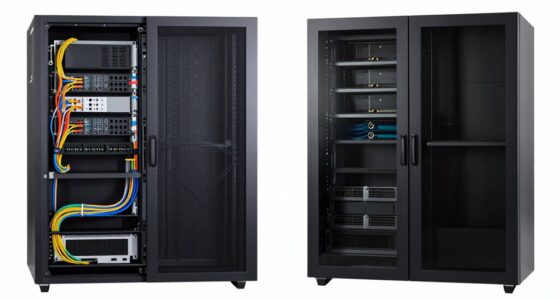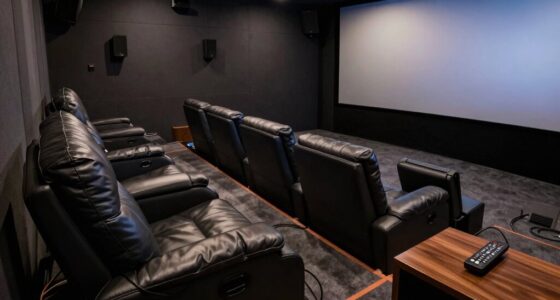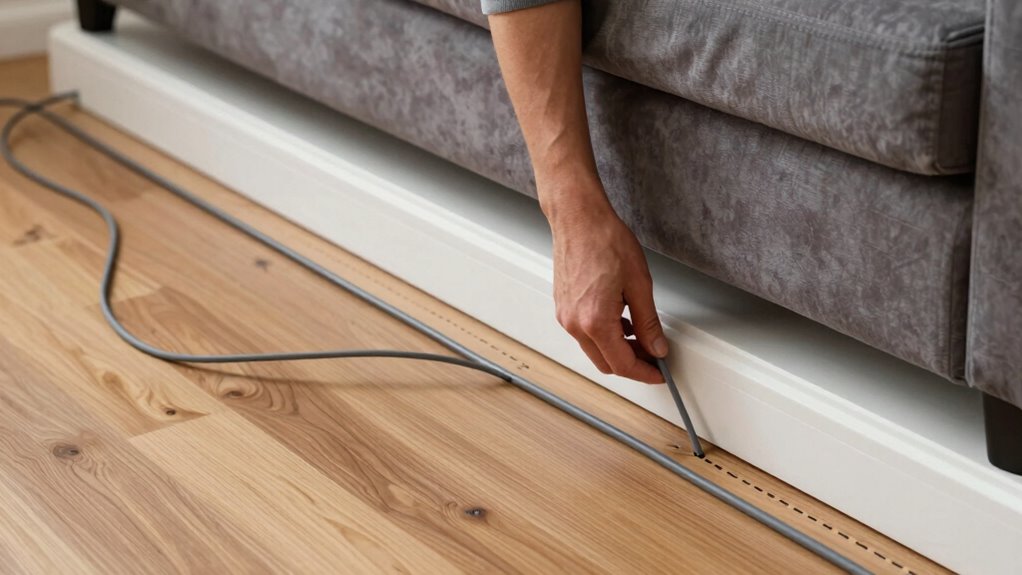

Start by planning your wire routes before placing furniture, focusing on short, direct paths to reduce clutter and interference. Choose the right wire gauge based on the length of each run to prevent signal loss and guarantee quality sound. Think ahead about future upgrades or adjustments, keeping wires accessible and easy to replace later. Proper cable management and routing now can save you headaches later. Keep exploring to discover more tips for a flawless setup.

Get audio and creator gear delivered free with Prime
- Fast, free delivery on millions of items
- Prime Video, Amazon Music and more included
- Member-only deals all year
Key Takeaways
- Map out the ideal speaker locations and determine the shortest, most direct routes for wire runs.
- Choose flexible, appropriately gauged cables to accommodate future furniture placement and upgrades.
- Plan wire paths to avoid obstacles, preventing damage and maintaining a clean appearance.
- Use cable channels or conduits to conceal wires, allowing easy access if furniture shifts.
- Leave extra length at connection points for adjustments after furniture placement.
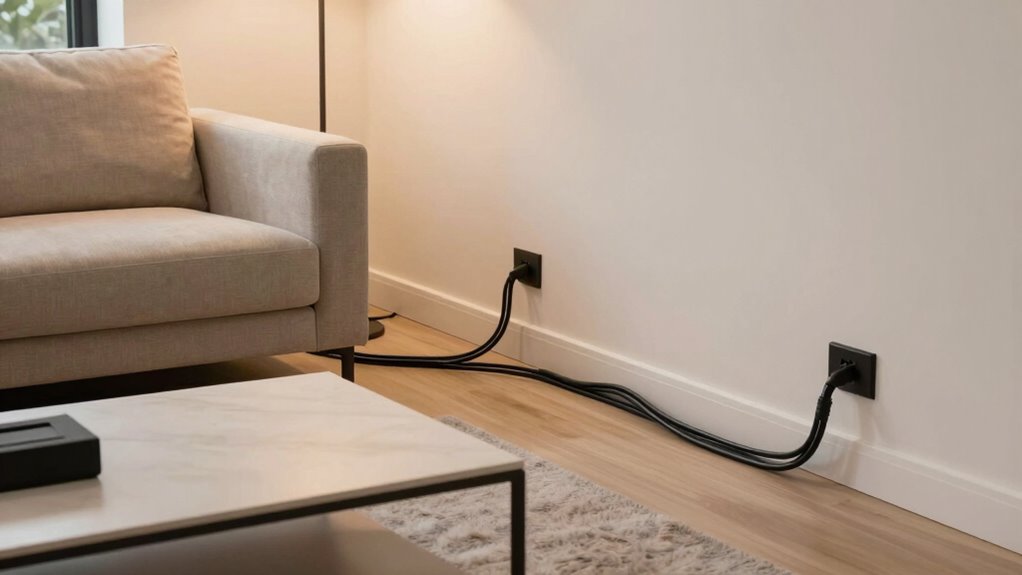
Planning your speaker wire paths carefully can make a significant difference in both the appearance and performance of your audio setup. When you’re mapping out where your speakers will go, it’s essential to think about how the wires will run from your amplifier or receiver to each speaker. Choosing the right wire gauge is vital—thinner wires might seem easier to hide, but they can cause signal loss over longer distances. Generally, for runs under 50 feet, a 16-gauge wire works well, while longer distances might require a thicker 14-gauge or even 12-gauge wire to maintain sound quality. Taking the time to select the appropriate wire gauge guarantees you avoid weak spots in your system, giving you clear, consistent audio without interference or distortion. Proper wire gauge selection is crucial for achieving optimal sound quality and avoiding potential issues. Additionally, considering signal loss when planning wire paths ensures your system performs at its best over time. It’s also helpful to plan your cable management in advance, which can prevent clutter and make future upgrades much easier. Planning your wire routes in advance can also help you avoid future upgrades, making adjustments easier down the line.
Products Worth Considering

Bose TV Speaker (2nd Gen) Compact Soundbar with Bluetooth and HDMI Connectivity, Black

Bose TV Speaker Compact Soundbar with Bluetooth and HDMI-ARC, Black

Bose QuietComfort Ultra Wireless Over-Ear Headphones with Spatial Audio and Noise Cancellation, Black
As an affiliate, we earn on qualifying purchases.
Frequently Asked Questions
Can I Run Speaker Wires Through Walls Without Professional Help?
Yes, you can run speaker wires through walls without professional help for DIY installation, but it requires caution. You’ll need to locate studs and avoid electrical wiring, then drill holes for wall concealment. Use a fish tape or wire puller to guide the wires through. If you’re unsure, consulting a guide or professional guarantees safety and proper installation, especially to prevent damage or code violations.
What Tools Are Best for Hiding Speaker Wires?
Hiding speaker wires is like hiding a treasure map—careful tools make all the difference. You’ll want cable clips to secure wires neatly along baseboards or walls, preventing tripping hazards, and wall conduits to run wires through walls safely and discreetly. These tools keep wires hidden and organized, ensuring a clean look. Using cable clips and wall conduits not only improves safety but also maintains the aesthetics of your space.
How Do I Prevent Signal Loss Over Long Wire Runs?
To prevent signal loss over long wire runs, you should use a thicker wire gauge, like 14 or 12 gauge, to maintain signal strength. Additionally, consider installing signal boosters or amplifiers, especially for very long distances, to enhance clarity. Keep the wires as short as possible and avoid sharp bends, which can degrade the signal. Properly securing and shielding the wires also helps preserve audio quality.
Are Wireless Speakers a Better Alternative?
Wireless speakers can be a better alternative if you want to avoid the hassle of wiring and furniture constraints. They use wireless connectivity, making setup easier and more flexible. However, be aware of potential signal interference from other devices, which can affect sound quality. If your environment is prone to interference, wired options might offer more consistent performance. Ultimately, choose based on your space and how much flexibility you need.
How Do I Access Wires if I Need to Make Repairs Later?
To access wires later, make sure your cable concealment strategy includes accessible junction points or removable panels. You should plan for repair accessibility by leaving some slack in the wires or installing quick-disconnect connectors. This way, you can easily reach and repair or replace wires without dismantling furniture or damaging your setup. Proper planning now saves you time and hassle if future repairs or adjustments become necessary.
Conclusion
Think of your speaker wires as a clever river weaving through your home’s landscape. When you plan their path wisely, you’re guiding a gentle stream that flows effortlessly, avoiding obstacles like furniture and walls. But if you ignore the course, you risk a wild, tangled flood that’s hard to control. So, chart your path with care now, and enjoy the smooth, scenic journey your audio setup will have—no sudden rapids or dead ends ahead.