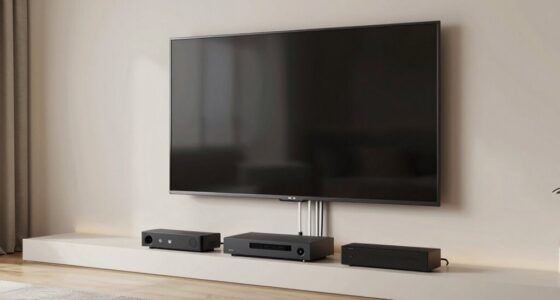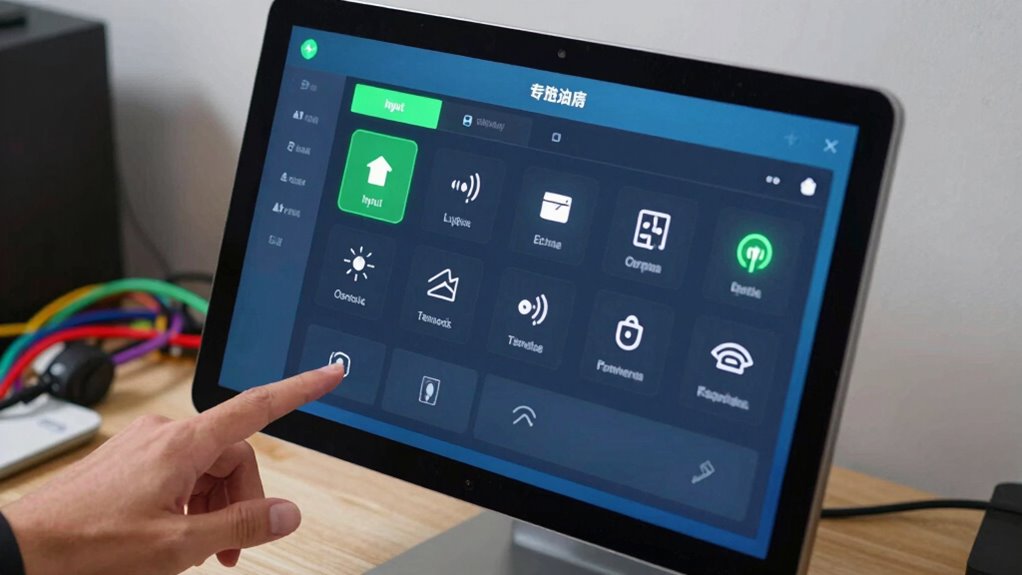

To judge receiver setup menus, focus on how clear and logical the layout is. Check if options are easy to access and well-organized, reducing confusion. Test the responsiveness of menu navigation, ensuring smooth shifts and quick command execution. Look for customization features like remote button assignments and shortcuts for frequent tasks. Pay attention to visual cues and menu depth—shallower menus make setup easier. Keep exploring these aspects to find a receiver that truly fits your needs.

Get audio and creator gear delivered free — and shop member deals
- Fast, free delivery on millions of items
- Access to Prime Big Deal Days deals on October 6–7
- Prime Video, Amazon Music and more included
Key Takeaways
- Evaluate menu clarity with clear labels and logical grouping for easy navigation.
- Check quick access to essential settings like input sources, picture, and audio controls.
- Test remote customization options and shortcuts for personalized, efficient operation.
- Assess menu responsiveness, smooth transitions, and support for quick scrolling or jumps.
- Ensure the overall organization is intuitive, with a short learning curve and shortcut creation for frequent tasks.
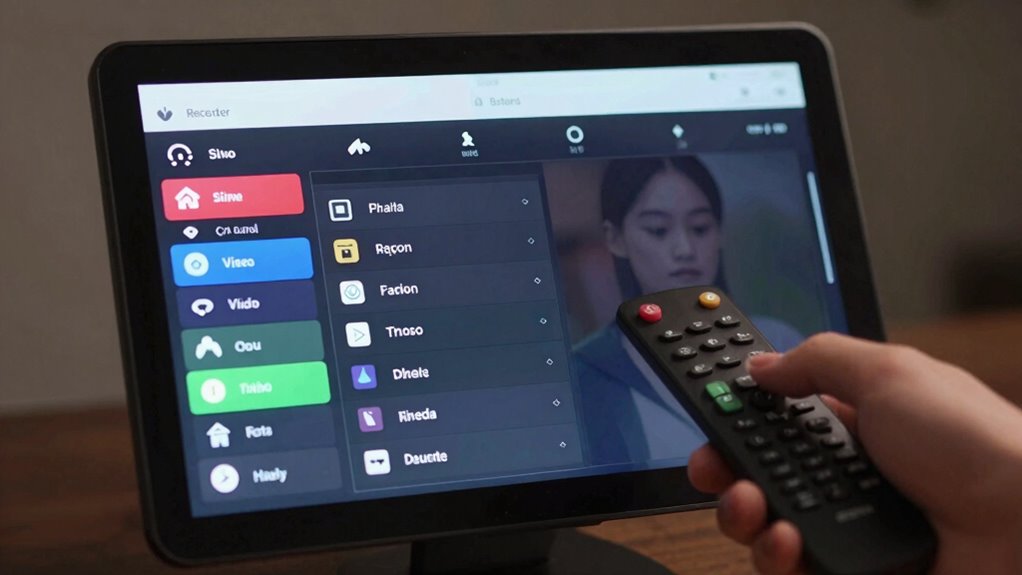
When you’re guiding receiver setup menus, knowing how to evaluate their features and layout can make the entire process much easier. The way a menu is designed can significantly impact your experience, especially when it comes to remote customization and menu navigation. A well-structured menu simplifies the setup process and ensures you can access all features without frustration. Begin by observing how intuitive the menu layout appears. Are the options clearly labeled? Is it easy to find essential settings like input sources, picture adjustments, or audio controls? A logical flow, with related options grouped together, helps you navigate smoothly without getting lost in a maze of submenus.
A well-structured menu with clear labels and logical grouping simplifies setup and enhances user experience.
Remote customization is another key factor. Check if the remote control offers dedicated buttons for common functions or shortcuts to frequently accessed settings. A receiver with customizable remote controls allows you to tailor your experience, making adjustments quicker and more straightforward. For example, you should be able to assign specific buttons for input switching or picture modes. The ability to personalize remote functions saves you time and enhances usability, especially when adjustments are needed on the fly during a viewing session. Additionally, considering the menu responsiveness is crucial to ensure that your commands are executed promptly, avoiding delays that can disrupt your setup process.
Menu navigation should feel seamless and responsive. Test how quickly the menus respond to your remote commands. Are the transitions smooth, or do they lag? A sluggish interface can quickly become frustrating, especially when you’re trying to fine-tune settings. Look for menus that support easy scrolling, quick jumps between sections, and clear visual cues. The presence of a search function within the menu can also be a huge plus, allowing you to locate specific settings without scrolling through endless options. Moreover, the menu depth impacts how easy it is to find what you need; shallow menus are generally more user-friendly. An intuitive layout can significantly reduce the learning curve for new users. Additionally, customize settings or create shortcuts can save time and reduce frustration during setup and regular use, making your experience more efficient and enjoyable. Being aware of the menu structure can help you better understand how organized the options are and whether it aligns with your preferred setup process.
universal remote control with customizable buttons
As an affiliate, we earn on qualifying purchases.
As an affiliate, we earn on qualifying purchases.
Frequently Asked Questions
Can I Customize Receiver Setup Menus to Suit My Preferences?
Yes, you can customize receiver setup menus to suit your preferences. Many receivers offer a user interface that allows you to adjust settings, rearrange options, or hide features you don’t use. Check your receiver’s menu for customization options, often found under settings or preferences. This flexibility helps you create a more intuitive and streamlined experience, making your setup more personalized and easier to navigate daily.
Are There Differences in Menu Complexity Among Brands?
Yes, there are differences in menu complexity among brands due to variations in brand consistency and user interface design. Some brands prioritize simplicity, making menus easy to navigate, while others offer more detailed options for advanced users. When choosing a receiver, consider how the user interface aligns with your preferences, as more complex menus might be overwhelming, but they also provide greater customization and control, depending on your experience level.
How Often Do Receiver Firmware Updates Affect Menu Features?
Firmware updates can notably impact your receiver’s menu features, especially with respect to firmware stability. Typically, updates occur regularly, often monthly or quarterly, aiming to fix bugs and improve functionality. These updates may introduce new menu options or refine existing ones, enhancing your user experience. Staying current with update frequency ensures you benefit from the latest features and stability improvements, helping you better judge whether the receiver meets your needs.
Is Remote Control Compatibility Important When Evaluating Menus?
Remote control compatibility is essential when evaluating menus because it directly impacts menu usability. If the remote isn’t compatible or intuitive, steering and adjusting settings becomes frustrating. You want a remote that easily interacts with the menu system, making it simple to find options and customize your viewing experience. Prioritize receivers with user-friendly remote controls to guarantee seamless operation and avoid wasting time struggling with poor menu navigation.
Do Setup Menus Impact Overall Receiver Performance?
Setup menus are the gateway to your receiver’s soul, shaping your experience like a finely tuned instrument. A user interface that’s intuitive and smooth menu navigation can transform setup from a chore to a breeze, directly impacting overall performance. When menus are cluttered or confusing, they slow down access to features, limiting your control. A clean, responsive menu guarantees your receiver performs at its peak, making every viewing moment effortless and enjoyable.
As an affiliate, we earn on qualifying purchases.
Conclusion
Before settling on a receiver, take the time to navigate its setup menus thoroughly. A well-organized menu can save you frustration and enhance your viewing experience. Did you know that a survey found 65% of users abandon their receiver settings within the first month due to confusing menus? Don’t be part of that statistic—spend a few extra minutes exploring and customizing your receiver. It’ll pay off with a smoother, more enjoyable entertainment setup.
smart TV receiver remote shortcuts
As an affiliate, we earn on qualifying purchases.
As an affiliate, we earn on qualifying purchases.
audio/video receiver with intuitive menu
As an affiliate, we earn on qualifying purchases.
As an affiliate, we earn on qualifying purchases.
Fall Picks
fall essentials
As an affiliate, we earn on qualifying purchases.