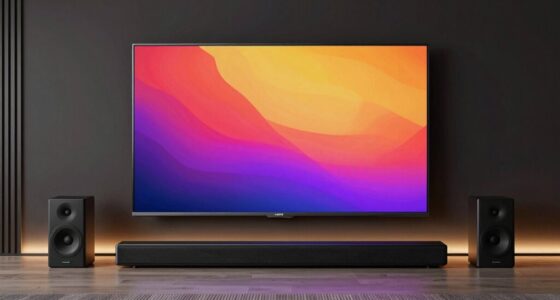

A three-way center channel considerably enhances your home theater by delivering a more precise and immersive soundstage. It separates high, mid, and low frequencies, making dialogue clearer and allowing better sound dispersion throughout your space. This setup improves stereo imaging, balances loudness, and reduces distortion, especially during complex scenes. Properly designed, it creates a natural, cohesive audio experience. Keep exploring, and you’ll discover how this setup elevates your listening environment even further.

Get audio and creator gear delivered free — and shop member deals
- Fast, free delivery on millions of items
- Access to Prime Big Deal Days deals on October 6–7
- Prime Video, Amazon Music and more included
Key Takeaways
- Enhances soundstage and immersiveness for a more realistic home theater experience.
- Improves stereo imaging and precise sound source localization.
- Provides better vocal clarity and balanced loudness across scenes.
- Reduces audio distortion by managing high, mid, and low frequencies separately.
- Supports natural, cohesive sound by optimizing speaker design and dispersion.
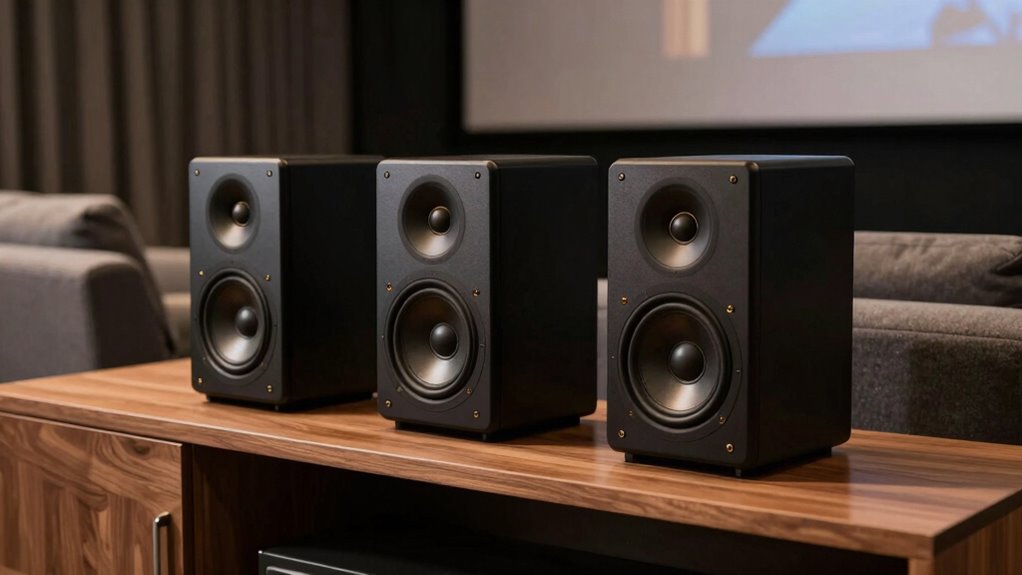
Have you ever wondered why a three-way center channel can considerably enhance your home theater experience? It’s because it plays a vital role in delivering a more immersive soundstage. When you’re watching a movie or listening to a show, the goal is to create a realistic and seamless audio environment. The three-way design, which includes separate drivers for high, mid, and low frequencies, helps achieve this by better managing how sound is dispersed across your listening space. This setup improves stereo imaging, meaning you can more accurately pinpoint where sounds are coming from. For example, a well-designed three-way center channel can manage sound dispersion more effectively, ensuring a balanced audio experience throughout your room. Instead of hearing a jumbled mix of audio cues, you get a clear, well-defined soundscape where dialogue, music, and effects are precisely placed. This clarity keeps you engaged and makes the experience more lifelike.
Another benefit of a three-way center channel is the improved loudness balance. When all the sounds in a scene are evenly distributed and balanced, it prevents any one element from overpowering the others. For example, dialogue remains clear and intelligible even during loud action sequences. This is especially important because the center channel is typically responsible for most of the dialogue and vocal clarity. Without a proper loudness balance, you might find yourself straining to catch what’s being said or distracted by sudden volume jumps. A well-designed three-way center ensures that each sound frequency, from the whisper of a character to the roar of an explosion, maintains its intended volume level. This keeps the audio consistent, allowing you to focus on the story instead of adjusting your volume constantly. Proper speaker design is crucial to achieving this balance and ensuring a natural listening experience.
In addition, a three-way center channel tends to handle complex sound layers more effectively. Since it separates high, mid, and low frequencies, it reduces distortion and muddiness that can occur with less sophisticated speakers. You’ll notice a richer, more detailed sound, especially in scenes with a lot of background noise or multiple audio tracks. Plus, because it provides a more balanced loudness across all frequencies, it complements your front left and right speakers, creating a cohesive and natural soundstage. This synergy enhances stereo imaging further, making it easier to distinguish sources and follow on-screen movements.
three-way center channel speaker
As an affiliate, we earn on qualifying purchases.
As an affiliate, we earn on qualifying purchases.
Frequently Asked Questions
How Do Three-Way Center Channels Differ From Two-Way Models?
Three-way center channels differ from two-way models by offering broader frequency response and better sound clarity. They incorporate separate drivers for high, mid, and low frequencies, allowing each to handle specific ranges more efficiently. This design improves power handling and reduces distortion, especially at higher volumes. As a result, your home theater experience becomes richer and more immersive, with clearer dialogue and more detailed sound across all channels.
Can a Three-Way Center Channel Improve Dialogue Clarity?
A three-way center channel can subtly enhance dialogue clarity, especially in a surround sound setup. Its design allows for more precise acoustic tuning, which helps direct vocals clearly through the center speaker. This setup reduces muddiness and blends dialogue seamlessly with other sounds, making conversations more intelligible. Overall, it creates a more natural, immersive listening experience where every word is heard with clarity and ease.
What Is the Ideal Placement for a Three-Way Center Channel?
You should place the three-way center channel directly above or below your TV, centered with your main listening position. Focus on proper speaker placement, ensuring it’s at ear level when seated. Use acoustic treatment around the speaker to minimize reflections and improve clarity. Keep the speaker aimed toward your listening area, and avoid placing it too close to walls to prevent sound distortion.
Are Three-Way Center Channels Compatible With All Home Theater Systems?
Yes, three-way center channels can work with most home theater systems, but you need to take into account speaker wattage and cable compatibility. Imagine your system humming smoothly, with wattage matching your amplifier’s power to prevent distortion. Make sure your speaker cables fit your system’s connectors, avoiding loose or incompatible connections. When these elements align, your soundscape becomes a seamless, immersive experience, regardless of your system’s brand or setup.
How Does a Three-Way Center Channel Impact Overall Sound Balance?
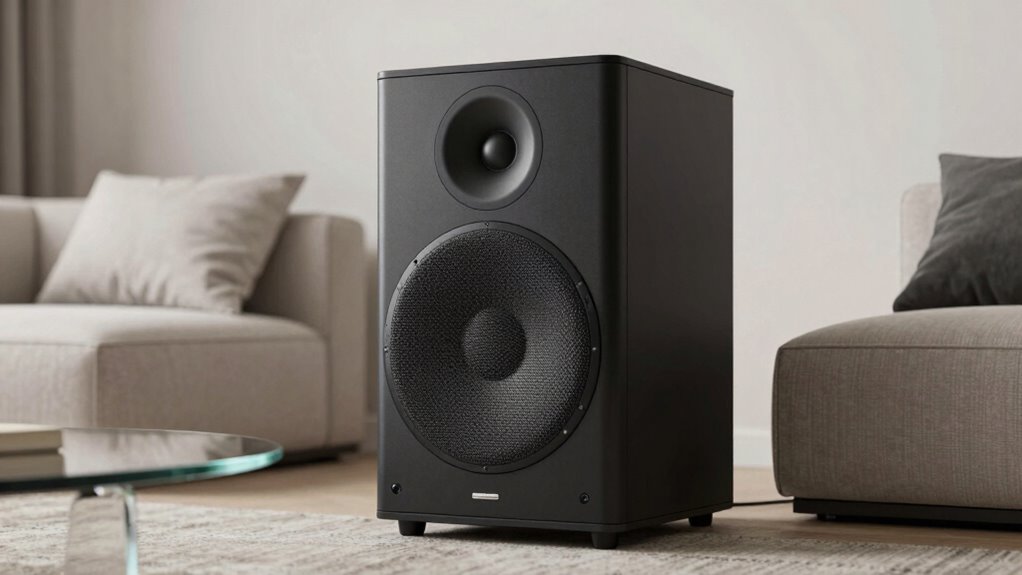
A three-way center channel improves overall sound balance by distributing audio across different speaker sizes and frequencies. Its larger woofer handles low frequencies, while mid and high drivers deliver clarity and detail. With better power handling, it maintains consistent performance without distortion. This setup guarantees dialogue and sound effects are balanced, creating a more immersive experience. You’ll notice richer, more precise sound that fills your room evenly.
home theater center channel speaker
As an affiliate, we earn on qualifying purchases.
As an affiliate, we earn on qualifying purchases.
Conclusion
By embracing the hidden value of a three-way center channel, you unleash clarity, depth, and a richer listening experience. You enhance dialogue, you improve immersion, and you elevate your soundstage. You don’t just hear the difference—you feel it. You turn ordinary moments into cinematic experiences, and you transform your space into a true home theater. So, invest in your sound, embrace the complexity, and enjoy the powerful, immersive audio that a three-way center channel can deliver.
high fidelity center channel speaker
As an affiliate, we earn on qualifying purchases.
As an affiliate, we earn on qualifying purchases.
As an affiliate, we earn on qualifying purchases.
Fall Picks
fall essentials
As an affiliate, we earn on qualifying purchases.