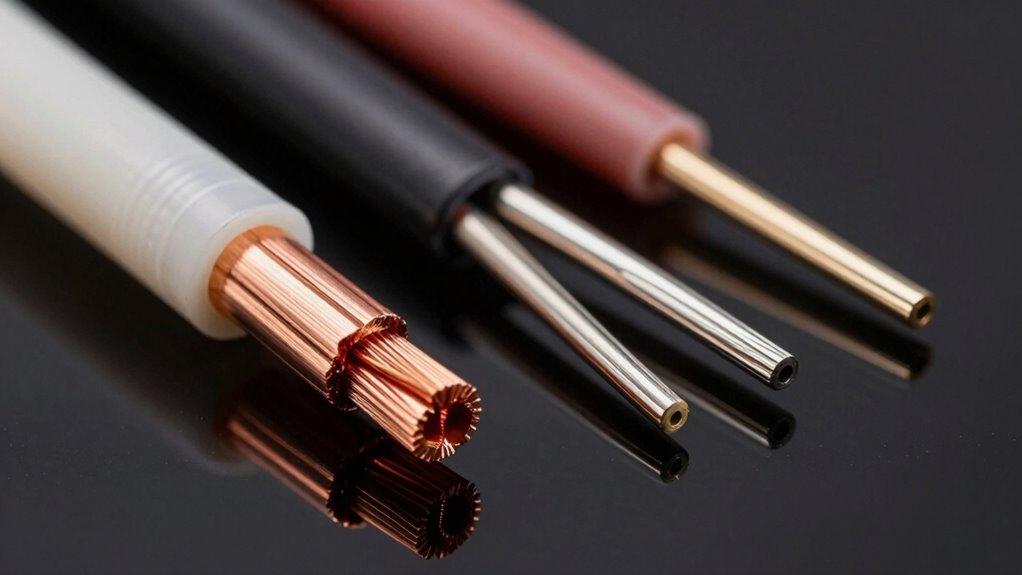

Choosing the right speaker wire gauge depends on your setup’s distance, power, and speaker impedance. For short runs under 25 feet with moderate power, 16 or 14 gauge wire usually suffices. Longer distances or high-power systems benefit from thicker wires like 12 or 10 gauge to prevent signal loss and guarantee clear sound. Understanding these factors helps you pick the right gauge for ideal audio performance—keep exploring to find what works best for you.
Key Takeaways
- Longer distances and higher power setups require thicker wire, such as 12 or 10-gauge, to prevent signal loss.
- Shorter runs (under 25 feet) with moderate power can typically use 16 or 14-gauge wire.
- Thicker wire reduces resistance, ensuring clearer sound and better system performance over extended distances.
- Match wire gauge to your speaker impedance and amplifier power for optimal audio quality.
- Avoid overspending on unnecessarily thick wire for short, low-power runs, as it offers minimal sound improvement.
Understanding Speaker Wire Gauge and Its Significance
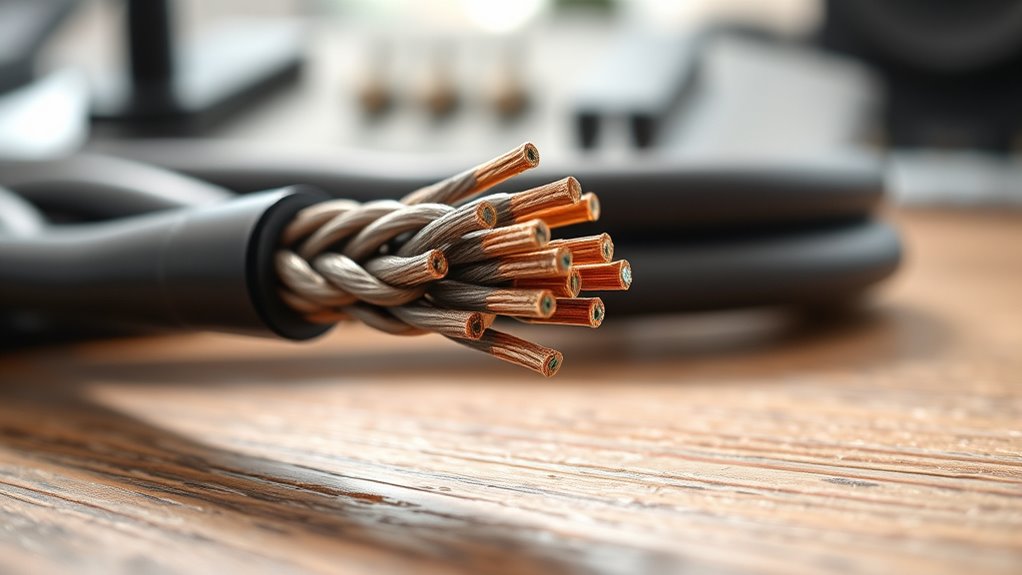
Understanding speaker wire gauge is essential because it directly affects the quality of your audio system. The gauge indicates the thickness of the wire, which influences how efficiently audio signals travel from your amplifier to your speakers. Thicker wires (lower gauge numbers) carry signals with less resistance and less signal loss over distance, resulting in clearer sound. Conversely, thinner wires (higher gauge numbers) may cause more resistance, leading to potential distortion and decreased audio quality, especially over long runs. Choosing the right gauge guarantees your speakers receive enough power without unnecessary loss or strain on your equipment. Additionally, selecting the appropriate wire gauge can help prevent signal degradation, ensuring your audio remains crisp and accurate. Proper wire sizing also contributes to maintaining safety standards and reducing potential electrical issues in your setup. Understanding the importance of current capacity helps you select the correct gauge for your specific application, preventing overheating and potential hazards. Being aware of resistance levels in wires helps optimize your system’s performance and longevity. By understanding the significance of wire gauge, you can make informed decisions that improve overall sound clarity and system performance.
How to Read and Interpret Gauge Ratings
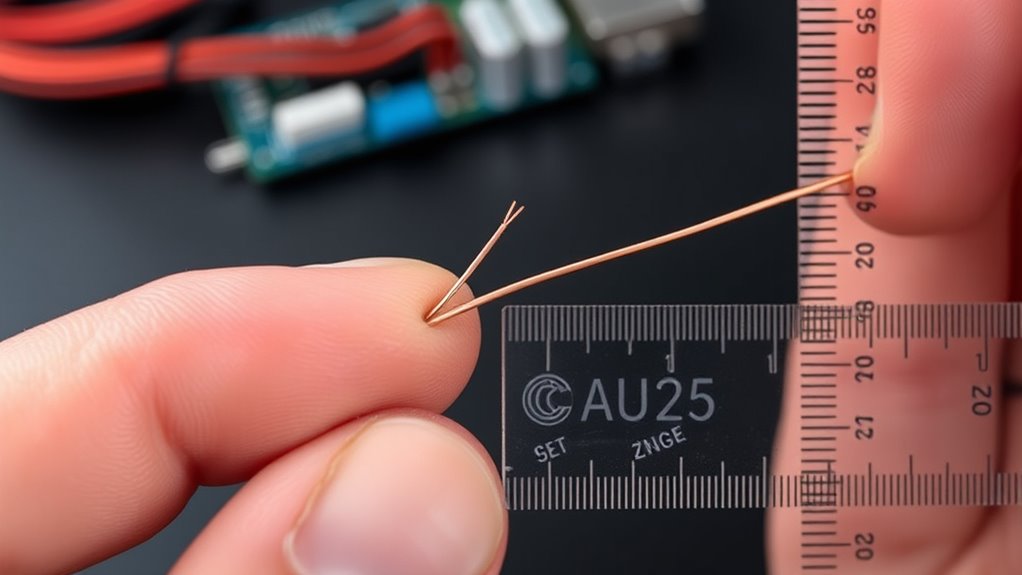
Reading gauge ratings on speaker wire is straightforward once you know what to look for. The gauge number indicates the wire’s thickness—the lower the number, the thicker the wire. For example, 12-gauge wire is thicker than 16-gauge. To interpret ratings quickly, focus on these key points:
| Gauge Number | Thickness (American Wire Gauge) |
|---|---|
| 12 | Very thick, suited for long runs and high power |
| 14 | Thick, good for most home setups |
| 16 | Moderate, suitable for shorter distances |
| 18 | Thin, ideal for small speakers and close distances |
| 20 | Very thin, used for low power or short runs |
Knowing this helps you choose the right wire for your setup efficiently. Additionally, understanding wire gauge standards can improve your overall audio setup and safety. Recognizing the importance of appropriate gauge selection ensures optimal sound quality and minimizes potential issues such as signal loss or overheating. Being aware of power handling capacity can also guide you toward more durable and reliable wiring choices.
Factors Influencing the Ideal Wire Thickness

Several factors influence the ideal wire thickness for your speaker setup, and ignoring these can lead to performance issues. One key factor is the distance between your amplifier and speakers; longer runs require thicker wire to reduce resistance and signal loss. The power output of your amplifier matters too—higher wattage demands thicker wire to handle increased current safely. Additionally, the impedance of your speakers affects wire choice; lower impedance speakers draw more current, so thicker wire helps prevent voltage drops. The type of wire insulation and environment can also play a role, as certain conditions might cause higher resistance or degradation over time. Being aware of wire gauge standards can assist you in making the best choice for your setup. Proper wire gauge selection is essential to ensure optimal audio quality and system reliability. Recognizing the influence of signal transmission efficiency allows you to optimize your wiring for consistent, high-quality sound. Considering environmental conditions can help you select the most durable and effective wiring for your specific setup.
Impact of Wire Thickness on Sound Quality and Performance
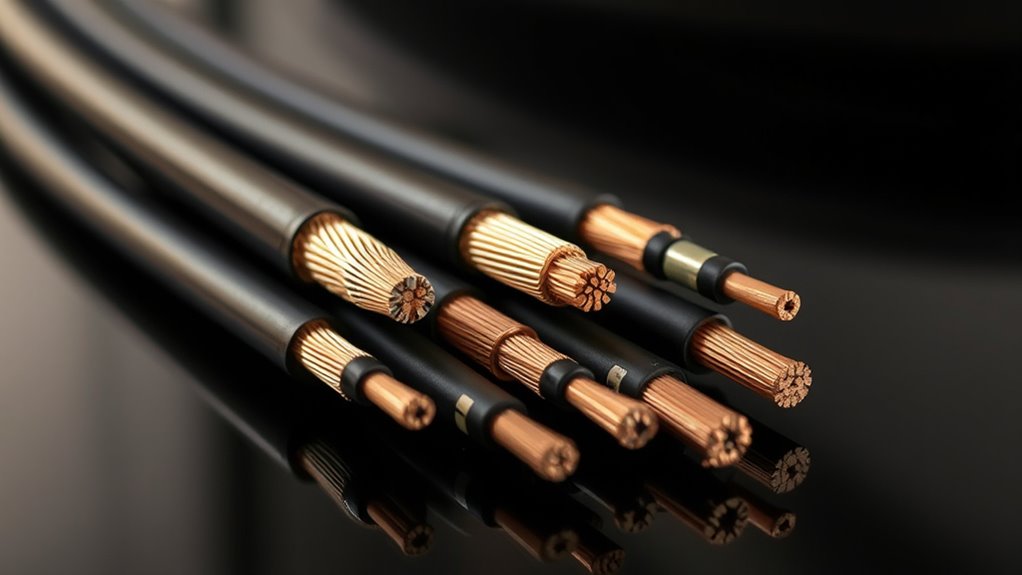
The thickness of your speaker wire directly impacts sound quality and overall performance. Thicker wires reduce resistance, allowing more current to flow with less signal loss. This results in clearer, more accurate sound, especially over longer distances. If your wire is too thin, resistance increases, which can cause a faint loss of detail, muffled highs, or weak bass response. You might notice a lack of clarity or diminished volume. Using appropriately gauged wire ensures your speakers receive enough power to reproduce audio faithfully. Keep in mind that for most home setups, a wire gauge of 14 or 16 is sufficient, but for larger systems or longer runs, thicker wire like 12 or 14 gauge can make a noticeable difference. Proper wire thickness enhances overall sound fidelity and system performance. Understanding electrical resistance is key to selecting the right gauge for your specific setup. Additionally, wire gauge selection can be influenced by the type of equipment and the environment in which the system is used. Considering signal attenuation helps ensure optimal audio quality over extended cable runs. When choosing wire, it’s also important to consider impedance matching to prevent signal degradation and preserve audio clarity. Being aware of electrical resistance helps you make better decisions when upgrading or troubleshooting your audio system.
Common Misconceptions About Thicker Wires
Many people assume that simply using thicker speaker wires will automatically improve sound quality, but this isn’t always the case. While thicker wires can reduce resistance over long distances, they don’t guarantee better audio. In fact, for short runs, a thicker wire often makes little difference. Overspending on ultra-thick cables won’t necessarily enhance your listening experience. Another misconception is that thicker wires can fix poor connections or faulty equipment; they can’t. Quality of the connections, the equipment itself, and proper setup matter more than just wire thickness. Additionally, some believe thicker wires are always more durable, but they can be harder to handle or connect properly. Understanding these misconceptions helps you avoid unnecessary expenses and focus on what truly impacts your sound system. Moreover, considering the solar system’s energy sources and efficiency can help optimize your overall setup and maintenance. Recognizing the importance of proper wiring practices ensures you achieve the best possible performance without overspending. For optimal results, it’s also essential to understand wire gauge and impedance and how they relate to your specific audio equipment. A solid understanding of Gold IRA markets and related investments can also help you make smarter choices in your financial planning.
Recommendations for Different Audio Setups

Choosing the right speaker wire gauge depends on your audio setup and listening environment. If you have a small room or a basic stereo system, 16 or 18-gauge wire usually suffices, providing clear sound without overkill. For larger spaces or longer cable runs, opt for thicker wire like 14 or 12-gauge to prevent signal loss and maintain audio quality. High-power home theater systems with multiple speakers or outdoor setups also benefit from thicker gauge wire to handle increased power and distance. Keep in mind that using an excessively thick wire in simple setups may add unnecessary cost and rigidity. Assess your space, equipment power, and cable length to choose the most appropriate gauge for ideal sound performance. Additionally, considering wire gauge and audio quality can help ensure your setup delivers the best listening experience possible. Properly matching your wire gauge to your setup helps optimize signal transmission and overall sound clarity, especially when considering factors like filtration and insulation quality. Selecting the appropriate gauge also contributes to the durability of your wiring, ensuring long-term reliability and consistent performance.
Tips for Choosing the Right Speaker Wire Gauge
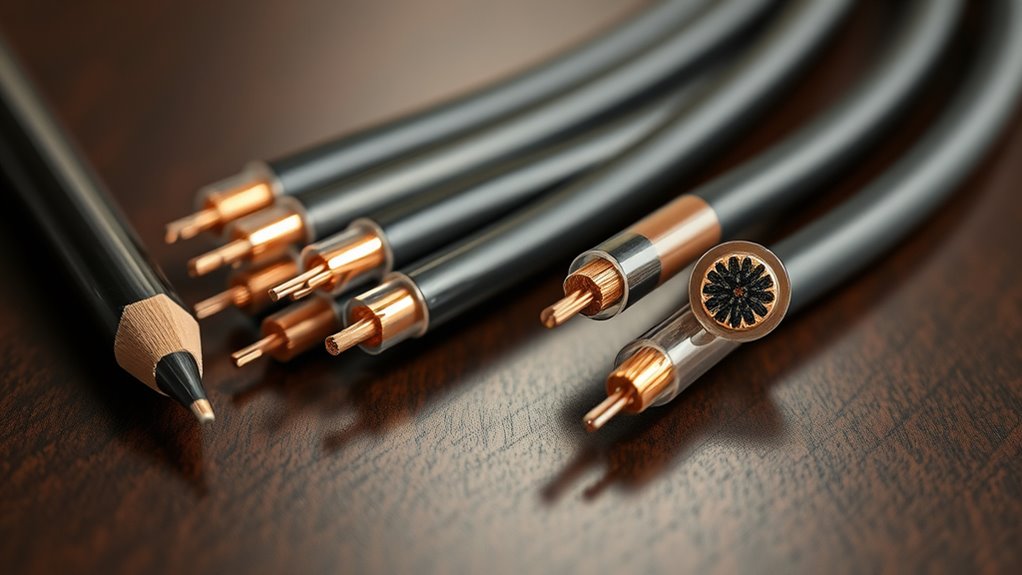
To select the right speaker wire gauge, start by evaluating your specific audio setup and environment. Consider these key factors:
Assess your audio setup and environment to choose the appropriate speaker wire gauge for optimal sound quality.
- Distance between speakers and amplifier – Longer distances require thicker wire to minimize signal loss.
- Power output of your amplifier – Higher wattage demands a thicker gauge to handle the increased current.
- Type of speakers – Low-impedance speakers may need thicker wire for ideal performance.
Once you assess these, choose a gauge that balances performance and practicality. For short runs under 25 feet with moderate power, 16 or 14 gauge wire often suffices. For longer distances or high-power setups, 12 or 10 gauge wire ensures minimal signal degradation. Remember, selecting the proper gauge improves sound quality and system longevity. Additionally, understanding wire gauge standards can help you make more informed choices for your specific setup.
Frequently Asked Questions
Can Using Thicker Wire Damage My Audio Equipment?
Using thicker wire won’t damage your audio equipment. In fact, it can improve sound quality by reducing resistance and signal loss over longer distances. Just make sure the wire gauge matches your amplifier and speaker requirements to avoid poor connections. Oversized wire generally isn’t harmful, but using a gauge that’s too thin can cause issues like voltage drops. Stick to recommended gauges for best performance without risking damage.
Is There a Noticeable Difference in Sound With Different Gauges?
Yes, you can notice a difference in sound with different gauges, especially over longer distances. Thicker wires reduce resistance, delivering clearer, more robust sound, while thinner wires might cause slight signal loss or distortion. If you have high-power equipment or long cable runs, upgrading to a thicker gauge can improve your audio experience. However, for short distances and low-power setups, the difference may be subtle or negligible.
How Does Wire Length Affect the Ideal Gauge Choice?
Longer wire runs require thicker gauge wire to guarantee sound quality. When your speaker wire exceeds about 50 feet, opt for a 14 or 12 gauge wire to reduce resistance and avoid signal loss. Shorter runs, under 20 feet, can usually use 16 or 18 gauge wire without issues. Always choose a wire gauge that balances length and impedance to ensure clear, powerful audio.
Are There Specific Gauges Recommended for Outdoor Setups?
Imagine the sun casting a warm glow over your outdoor setup—your speakers need a sturdy connection. For outdoor installations, you should use thicker gauge wire, like 14 or 12 AWG, to withstand weather elements and reduce signal loss over longer distances. These gauges are durable and reliable, ensuring your sound remains clear and powerful despite wind, rain, or sun, giving you peace of mind during every outdoor gathering.
What Safety Precautions Should I Take When Installing Speaker Wires?
When installing speaker wires, you should turn off the power to avoid shocks and guarantee the speakers are unplugged. Use weatherproof cables for outdoor setups and secure the wires properly to prevent tripping hazards. Avoid pinching or crushing the wires, and keep connections dry and protected from the elements. Always follow manufacturer instructions and local electrical codes to guarantee a safe and durable installation.
Conclusion
Choosing the right speaker wire gauge isn’t just a small detail—it’s the secret to revealing sound so pure, it’ll feel like your speakers are whispering directly into your brain! Get it right, and your music will hit with the force of a thunderstorm, clarity sharper than a diamond, and performance so mind-blowingly perfect, you’ll wonder how you ever settled for less. Don’t underestimate this tiny wire—it’s the true key to audio perfection!