Subtle speaker position tweaks can markedly improve your sound by working with your room’s natural acoustics rather than fighting them. Small adjustments influence how sound waves interact with surfaces, reducing echoes, dead spots, and resonances for clearer, more natural audio. Unlike random EQ changes, positioning tweaks address the root cause of acoustic issues at the source. Keep exploring, and you’ll find simple ways to enhance your listening experience even more.

Get audio and creator gear delivered free with Prime
- Fast, free delivery on millions of items
- Prime Video, Amazon Music and more included
- Member-only deals all year
Key Takeaways
- Small placement adjustments directly influence sound wave interactions, reducing reflections and resonances more effectively than EQ tweaks.
- Proper positioning minimizes room acoustics issues at the source, unlike EQ, which only modifies sound after it’s produced.
- Strategic speaker placement enhances stereo imaging and clarity without relying on the unpredictable effects of EQ adjustments.
- Positioning addresses fundamental acoustic problems, whereas EQ attempts to mask or compensate for them later.
- Subtle physical tweaks leverage room acoustics naturally, often improving sound quality more than random EQ modifications.
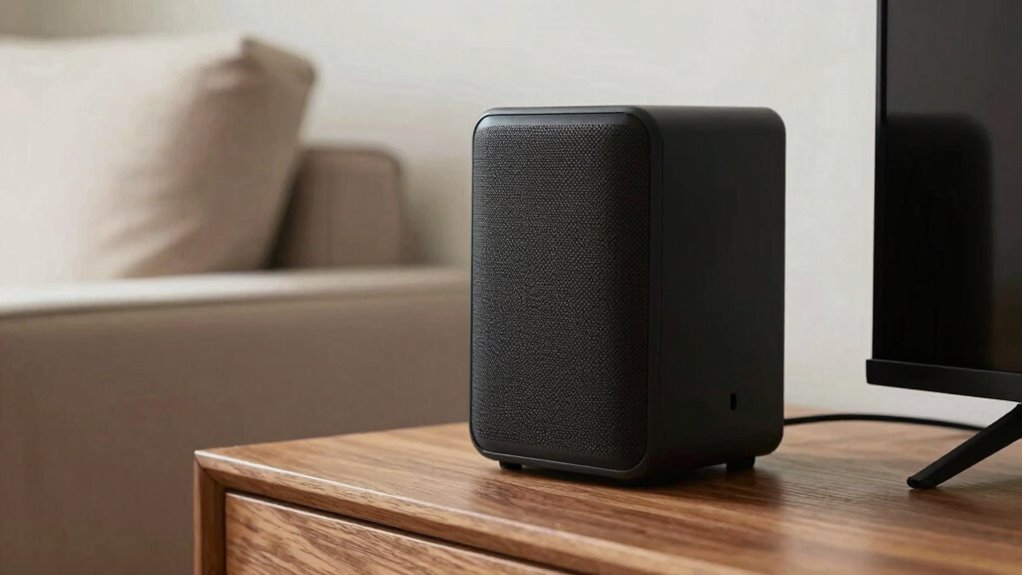
Have you ever wondered how small adjustments to your speaker placement can dramatically improve your sound quality? It’s a common question among audio enthusiasts, and the answer lies in understanding how room acoustics and speaker placement work together. When you focus on positioning your speakers correctly, you’re fundamentally shaping the way sound interacts with your space, leading to a more balanced and accurate listening experience. Unlike random EQ tweaks, which only modify the sound after it’s produced, subtle speaker position changes influence the sound waves at their source. This approach often yields more natural and immersive results because you’re addressing the root of the problem—the way sound behaves in your room.
Room acoustics play an essential role in how sound reaches your ears. Every room has unique reflective surfaces, dimensions, and furnishings that affect sound propagation. When speakers aren’t placed thoughtfully, sound waves can bounce off walls, furniture, or ceilings, creating echoes, dead spots, or overly emphasized frequencies. These acoustic issues distort what you hear, regardless of how much you tweak the EQ. By adjusting your speaker placement, you can minimize these reflections and standing waves, ensuring cleaner, more direct sound. For example, pulling speakers away from walls reduces bass muddiness caused by boundary effects, while angling them slightly can improve stereo imaging. Small shifts might seem insignificant, but they can significantly reduce unwanted resonances and dead zones. Speaker positioning plays a crucial role in optimizing your listening environment.
Adjusting speaker placement reduces reflections, dead spots, and enhances sound clarity and stereo imaging.
Proper speaker placement also helps you utilize room acoustics to your advantage. Positioning your speakers at ear level and equidistant from your listening position creates a more accurate stereo image. This means you hear a well-defined soundstage, with instruments and vocals positioned precisely where they should be. When you tweak your speakers’ position, you’re fundamentally tuning the room’s response to your advantage, rather than fighting against it with EQ. It’s a more intuitive way to improve sound quality because it directly impacts how sound waves propagate and interact with your environment. Additionally, understanding how room acoustics influence sound can help you make more informed adjustments that maximize your listening experience. Being aware of sound reflections allows you to strategically position furniture or acoustic treatments to further enhance your setup.
In reality, subtle adjustments to your speaker placement allow you to work with your room’s natural acoustics instead of against them. While EQ changes can help fine-tune certain frequencies, they often don’t address the core issues caused by poor positioning or room reflections. When you prioritize speaker placement, you’re making a more impactful change—one that enhances clarity, imaging, and overall sound quality. It’s a simple, effective step that often gets overlooked but can transform your listening experience far more than random EQ tweaks ever could.
As an affiliate, we earn on qualifying purchases.
Frequently Asked Questions
How Small Should the Speaker Adjustments Be for Noticeable Sound Improvements?
You should make small adjustments, about a few millimeters to a centimeter, to notice meaningful improvements. Focus on maintaining speaker symmetry and adjusting the listening angle slightly, as even tiny shifts can enhance sound clarity and imaging. Test each tweak by listening carefully, and avoid large movements, which can disrupt your setup. Subtle changes often lead to more balanced, natural sound, optimizing your listening experience.
Do Room Acoustics Influence the Effectiveness of Speaker Position Tweaks?
Think of your room as a mirror, reflecting sound reflections that shape your listening experience. Room acoustics greatly influence how effective speaker tweaks are, because they alter the listener perspective. If your space has lots of reflective surfaces, small position adjustments can dramatically improve sound clarity. Without considering room acoustics, you might overlook how sound reflections affect your listening, making subtle speaker tweaks less effective.
Are There Specific Speaker Types That Benefit More From Position Adjustments?
Yes, certain speaker types, like studio monitors, benefit more from position adjustments because they’re designed for accurate sound reproduction. Proper speaker isolation helps prevent vibrations and external noise, enhancing the impact of position tweaks. Acoustic treatment in your room also plays a vital role, making subtle adjustments more effective by reducing reflections and improving clarity. Overall, optimizing speaker placement maximizes sound quality, especially with high-precision speakers.
How Do I Know if My Speaker Placement Is Optimal?
You’ll know your speaker placement is ideal when sound perception feels balanced and immersive. For example, if you notice clearer vocals and a more even soundstage after small adjustments, your calibration is on point. To verify, sit at your listening position and move slightly—if sound quality improves and imaging becomes more precise, your placement is spot-on. Regular tweaks help maintain perfect sound, proving subtle positioning is key.
Can Position Tweaks Fix Fundamental Sound Quality Issues?
Yes, position tweaks can fix fundamental sound quality issues. By adjusting your speakers for better speaker isolation and reducing unwanted reflections through acoustic treatment, you improve sound clarity and accuracy. Small changes in placement can minimize resonances and enhance stereo imaging, addressing core problems before relying on EQ adjustments. This approach guarantees a more natural and balanced sound, leading to a significant audio upgrade without costly equipment overhauls.
speaker stands for optimal positioning
As an affiliate, we earn on qualifying purchases.
As an affiliate, we earn on qualifying purchases.
Conclusion
Remember, small adjustments can make a big difference—sometimes, less is more. By fine-tuning your speaker positions subtly, you harness the natural acoustics of your space, leading to richer, more accurate sound. Instead of relying on random EQ changes, trust your ears and make gentle tweaks. As the saying goes, “A little knowledge is a dangerous thing,” so approach your setup with patience and precision. Ultimately, thoughtful positioning elevates your listening experience beyond quick fixes.
As an affiliate, we earn on qualifying purchases.
stereo speaker positioning guide
As an affiliate, we earn on qualifying purchases.
As an affiliate, we earn on qualifying purchases.
Halloween Picks
halloween
As an affiliate, we earn on qualifying purchases.