
TL;DR

Get audio and creator gear delivered free with Prime
- Fast, free delivery on millions of items
- Prime Video, Amazon Music and more included
- Member-only deals all year
Ben Gibbard said The O.C.’s use of Death Cab for Cutie’s music helped bring the band to a much wider audience, while frustrating some longtime fans. He compared the shift in the group’s profile to Nirvana’s move from its independent-label beginnings to mainstream success, while stressing that the comparison was on a much smaller scale.
Ben Gibbard said The O.C. helped bring Death Cab for Cutie to a much wider audience, but also frustrated some longtime fans who disliked seeing the band’s music featured in the teen drama. Speaking on the podcast 2004: The Year Indie Rock Broke, the frontman described a visible divide between established indie listeners and viewers who had discovered the group through television.
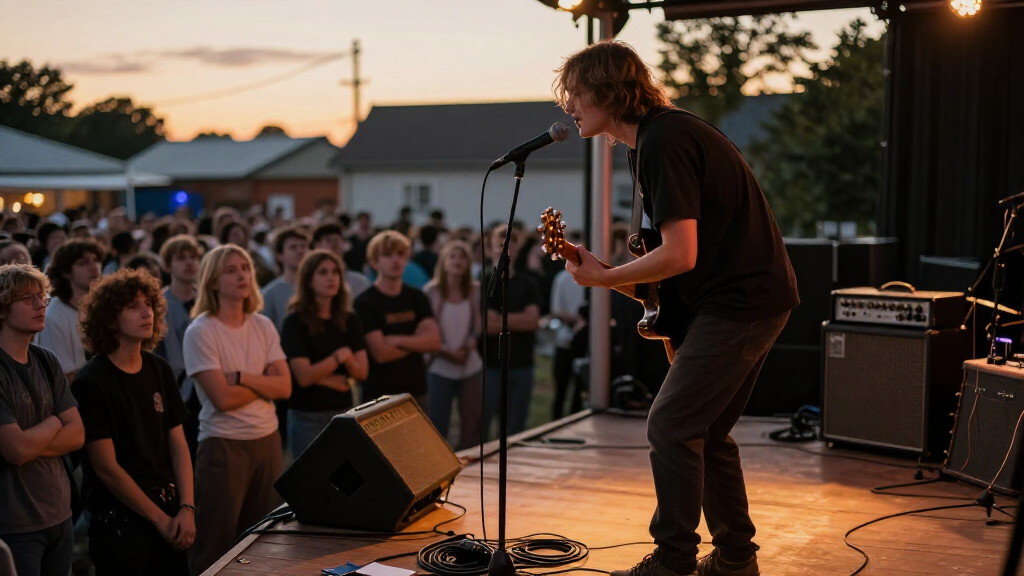
Gibbard said the band noticed differences among concertgoers after its music became associated with the series. He recalled that some fans were upset about the placements, while others were less immersed in indie rock culture. “It was very obvious early on who had seen us on the show and who also had Blonde Redhead records,” he said. The comment describes Gibbard’s recollection of the audience, rather than a measured account of how many listeners the show brought to the band.
Death Cab for Cutie was referenced repeatedly through lead character Seth Cohen, whose favorite band was the group. The first season featured “A Movie Script Ending” and “A Lack of Color”; the band later made an on-screen appearance performing “Title and Registration” and “The Sound of Settling.” The placements connected the group with viewers who might not otherwise have encountered its music, according to the report.
Gibbard summed up the band’s changing profile with a comparison to Nirvana: “In our small little world, before 2003, we were Bleach, and then in 2004, we were Nevermind — on a much smaller scale, of course.” Nirvana’s albums Bleach and Nevermind mark its shift from independent-label beginnings to mainstream success. Gibbard’s comparison was an analogy about audience growth and its effects, not a claim that the two bands reached comparable levels of popularity.
Television Changed the Band’s Audience
The account highlights how a popular television series could act as a gateway between indie music and a broader audience. For Death Cab for Cutie, being written into a well-known character’s tastes and having songs placed in episodes gave the band exposure beyond its established listeners. Gibbard’s description also points to a tension that can accompany that reach: some early fans may see wider recognition as a change to the culture or community they valued.
The discussion is relevant beyond one band because the same series featured other artists who later became widely known, including The Killers, Modest Mouse and Imogen Heap, according to the source report. Gibbard’s recollection offers a firsthand account of the audience response, while Josh Schwartz’s comments provide the perspective of the show’s creator on criticism surrounding the placements.
As an affiliate, we earn on qualifying purchases.
How Death Cab Appeared on The O.C.
The O.C. was a teen drama whose use of contemporary music helped introduce television audiences to artists outside the mainstream. Death Cab for Cutie was not limited to a brief soundtrack appearance: the band was part of Seth Cohen’s characterization, its songs appeared in the first season, and the group later performed in a cameo. Those details help explain why fans could associate the band with the show and why the exposure became a subject of debate.
Schwartz, who also appeared on the podcast episode, recalled criticism at an early panel for the series. One attendee identifying as a Death Cab fan asked the show to stop playing the band’s music, Schwartz said. “I took it to heart. I was a fan as well.” His recollection indicates that objections were expressed directly to the show’s creator, but it does not establish how broadly fans shared that view.
““It was very obvious early on who had seen us on the show and who also had Blonde Redhead records.””
— Ben Gibbard, speaking on 2004: The Year Indie Rock Broke
As an affiliate, we earn on qualifying purchases.
The Scale of the Audience Shift
The source report provides no audience figures, sales data or streaming measurements showing how much The O.C. increased Death Cab for Cutie’s following. Gibbard described the effect as substantial, but the available account does not quantify it or separate the show’s influence from other factors in the band’s growth.
It is also unclear how many longtime fans objected to the placements. The report recounts Gibbard’s observations and one complaint recalled by Schwartz; neither establishes that the reaction was shared across the band’s fan base. The podcast episode’s publication date was not given in the supplied report.
As an affiliate, we earn on qualifying purchases.
Further Details Depend on the Episode
The immediate next step for readers seeking more detail is to consult the full podcast episode, which may provide additional context about Gibbard’s recollections and the show’s music choices. The source report does not identify a related announcement, new release or upcoming event from Death Cab for Cutie, and it gives no indication that the band or The O.C. plans a new project tied to this discussion.
Any broader assessment of the series’ effect on the band would require evidence beyond the recollections quoted here, such as contemporaneous audience or sales data. Until such information is provided, the account remains a retrospective description of a change Gibbard said was apparent at the band’s shows.
As an affiliate, we earn on qualifying purchases.
Key Questions
What did Ben Gibbard say The O.C. did for Death Cab for Cutie?
Gibbard said the series brought the band to a much wider audience. He also recalled that some longtime fans were unhappy about the music being featured on the show.
Which Death Cab for Cutie songs appeared in The O.C.?
The first season featured “A Movie Script Ending” and “A Lack of Color.” The band later appeared in a cameo performing “Title and Registration” and “The Sound of Settling.”
What did Gibbard mean by comparing the band to Bleach and Nevermind?
He used Nirvana’s independent-label beginnings and later mainstream success as an analogy for Death Cab for Cutie’s changing profile. Gibbard explicitly said the comparison applied on a much smaller scale.
Did the source report quantify how many new fans the show brought?
No. The report includes Gibbard’s recollection that the audience grew substantially, but gives no figures or measurement for the show’s effect.
Source: rss
Halloween Picks
halloween
As an affiliate, we earn on qualifying purchases.