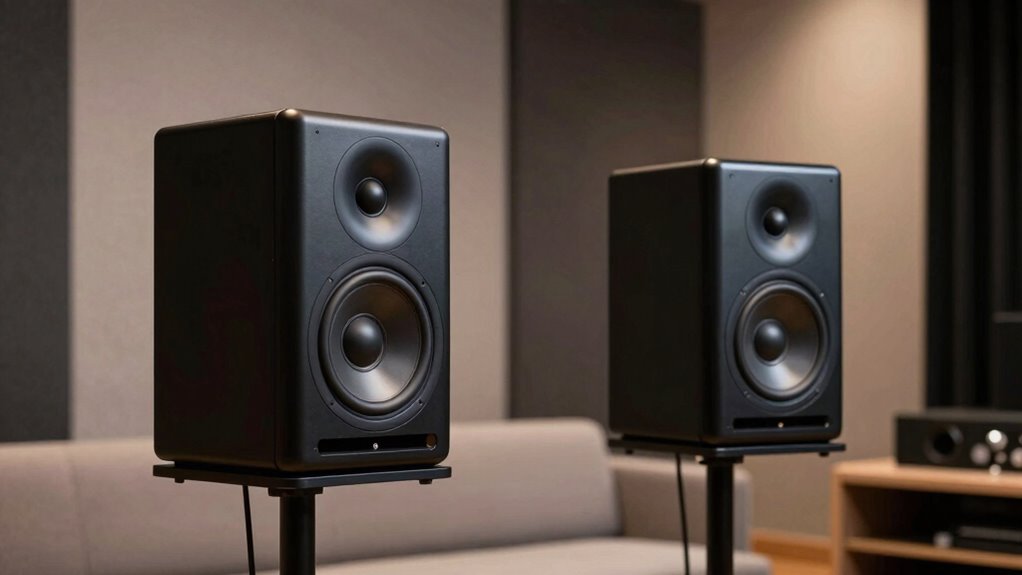
You can often get bigger audio improvements just by adjusting your speaker angles because even small changes can substantially enhance sound clarity, depth, and stereo imaging. Properly positioning speakers directs sound towards your listening spot, reduces reflections, and creates a richer, more immersive experience. These tweaks optimize your existing gear without extra cost. If you want to discover more about fine-tuning your setup for the best sound, keep exploring these simple but effective techniques.

Get audio and creator gear delivered free — and shop member deals
- Fast, free delivery on millions of items
- Access to Prime Big Deal Days deals on October 6–7
- Prime Video, Amazon Music and more included
Key Takeaways
- Small adjustments in speaker angles can significantly enhance sound clarity and immersion without additional costs.
- Proper positioning optimizes room acoustics and reduces reflections, improving overall audio quality.
- Correct angles improve stereo imaging and sound cohesion, revealing more detail from existing equipment.
- Fine-tuning speaker placement addresses acoustic issues that costly gear upgrades often overlook.
- Optimizing angles maximizes the performance of current speakers, making upgrades less necessary for noticeable improvements.
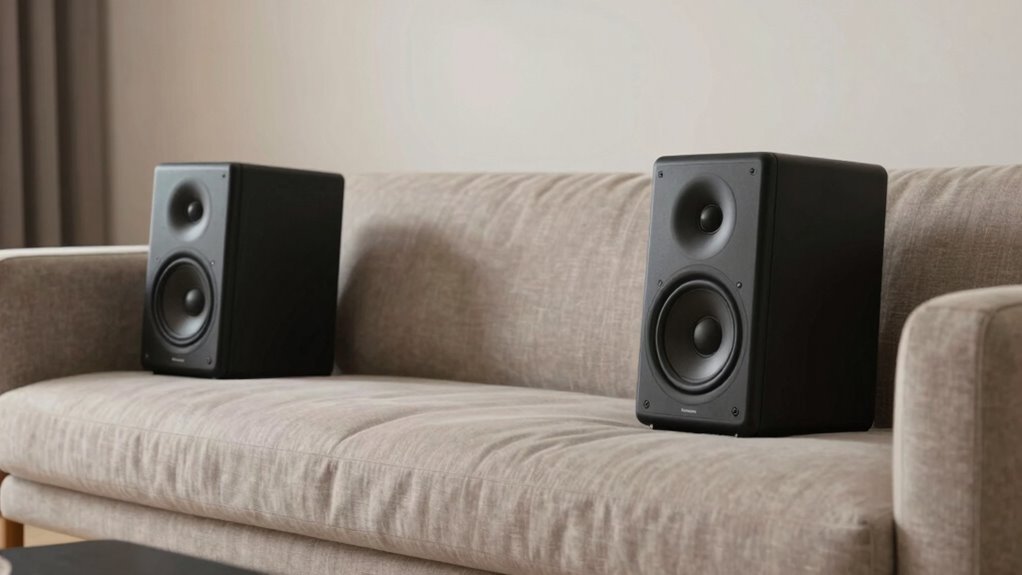
Have you ever wondered how the placement of your speakers can dramatically enhance your audio experience? It’s often overlooked, but your room acoustics and speaker positioning play an essential role in how music or movies sound in your space. Before rushing out to buy new gear, consider that small adjustments in speaker angles can make a significant difference. Properly aligning your speakers isn’t just about aesthetics; it’s about optimizing sound delivery for the best clarity, depth, and balance.
Small adjustments in speaker angles can significantly improve your audio clarity and immersion.
When you focus on speaker angles, you’re addressing how sound waves travel through your room. Sound reflections bounce off walls, furniture, and other surfaces, which can muddy or distort audio if not managed. By tweaking your speaker angles, you help direct sound directly toward your listening position, reducing unwanted reflections. This simple step can improve clarity and make your audio feel more immersive. It’s like tuning an instrument—small changes in angle can bring out richer details and a more cohesive soundstage.
Room acoustics heavily influence how your speakers perform. Every space has its unique characteristics—size, shape, and furnishings all impact how sound behaves. If your speakers are pointed straight ahead or placed too far apart, you might notice uneven sound coverage or muddiness. Adjusting their angles allows you to better match the room’s acoustics, creating a more balanced listening environment. Think of it this way: your goal isn’t just to have good speakers but to create a soundscape that complements your room’s specific traits. Additionally, understanding how room acoustics influence sound can help you identify other subtle factors that affect audio quality. It’s also helpful to consider how speaker placement impacts stereo imaging and overall sound quality, as this can lead to further improvements.
Speaker positioning also involves considering the distance between your speakers and your listening spot. Proper angles ensure that sound waves reach your ears simultaneously, providing a cohesive stereo image. When speakers are improperly angled, you might experience a sense of disconnection or sound imbalance. By angling them inward, toward your ears, you enhance stereo imaging and improve overall sound cohesion. This is especially vital for critical listening, where details matter.
Ultimately, the biggest audio improvements often come from these small but deliberate adjustments. Instead of investing in new gear, you can achieve a richer, more accurate sound simply by paying attention to your speaker angles and understanding your room acoustics. Additionally, understanding the importance of speaker angles can help you identify other subtle factors that influence sound quality. It’s about making the most of what you already have, fine-tuning your setup to deliver the best possible listening experience. When you get these details right, the difference in sound quality becomes striking—and well worth the effort.
As an affiliate, we earn on qualifying purchases.
Frequently Asked Questions
How Do Speaker Angles Affect Stereo Imaging?
Speaker angles directly impact stereo imaging by shaping how sound waves reach your ears, creating a sense of space. Adjusting angles considers room acoustics and your listener position, ensuring the soundstage is balanced and precise. When speakers are properly angled, it enhances spatial cues, making music feel more natural. Poor angles can cause sound to smear or become diffuse, weakening stereo imaging and reducing the overall clarity of your listening experience.
Can Small Angle Adjustments Make a Noticeable Sound Difference?
Yes, small angle adjustments can make a noticeable sound difference. Research shows that even a 2-degree change in speaker angle can greatly improve stereo imaging. Your room acoustics and listener position play essential roles, amplifying these effects. By fine-tuning speaker angles, you optimize sound dispersion and clarity, creating a more immersive experience. So, don’t overlook tiny tweaks—they can transform your listening environment without needing new gear.
What Tools Help Measure Optimal Speaker Angles?
You can use tools like a laser pointer or a digital protractor to measure ideal speaker angles accurately. These tools help you fine-tune speaker placement by accounting for room acoustics, ensuring sound waves reach your ears directly. Properly measuring and adjusting speaker angles enhances clarity and stereo imaging, making your listening experience more immersive. Consistent measurements improve overall sound quality, highlighting the importance of precise speaker placement in maximizing your audio setup.
Do Speaker Angles Impact Bass Response?
Yes, speaker angles do impact bass response through room acoustics and speaker placement. When you adjust angles, you influence how sound waves interact with your room, affecting bass clarity and depth. Properly angling your speakers guarantees better sound dispersion, reducing muddiness and improving bass accuracy. By optimizing speaker placement and angles, you create a more balanced listening environment, enhancing overall audio quality without needing new gear.
How Often Should I Re-Evaluate My Speaker Angles?
Think of your setup like tuning a fine instrument; regular adjustments keep it harmonious. You should re-evaluate your speaker angles every 6 to 12 months, especially if room acoustics or listener positioning change. Small shifts in furniture or seating can impact sound quality. Periodic checks guarantee your speakers align perfectly with your ears, creating the best possible listening experience without needing to upgrade gear.
As an affiliate, we earn on qualifying purchases.
Conclusion
So, savvy listener, start with simple speaker shuffles before shelling out for shiny new gear. Small shifts in speaker angles can considerably uplift sound quality, sharpening clarity and deepening depth. Don’t overlook the power of positioning; it’s the perfect, practical place to begin your pursuit of pristine sound. With patience and precision, you’ll find your favorite frequencies flourish and your listening experience becomes profoundly more pleasurable. Perfect positioning paves the path to perfect sound.
stereo speaker positioning stands
As an affiliate, we earn on qualifying purchases.
As an affiliate, we earn on qualifying purchases.
sound reflection diffuser panels
As an affiliate, we earn on qualifying purchases.
As an affiliate, we earn on qualifying purchases.
Fall Picks
fall essentials
As an affiliate, we earn on qualifying purchases.