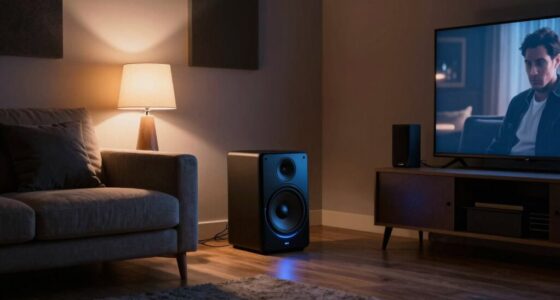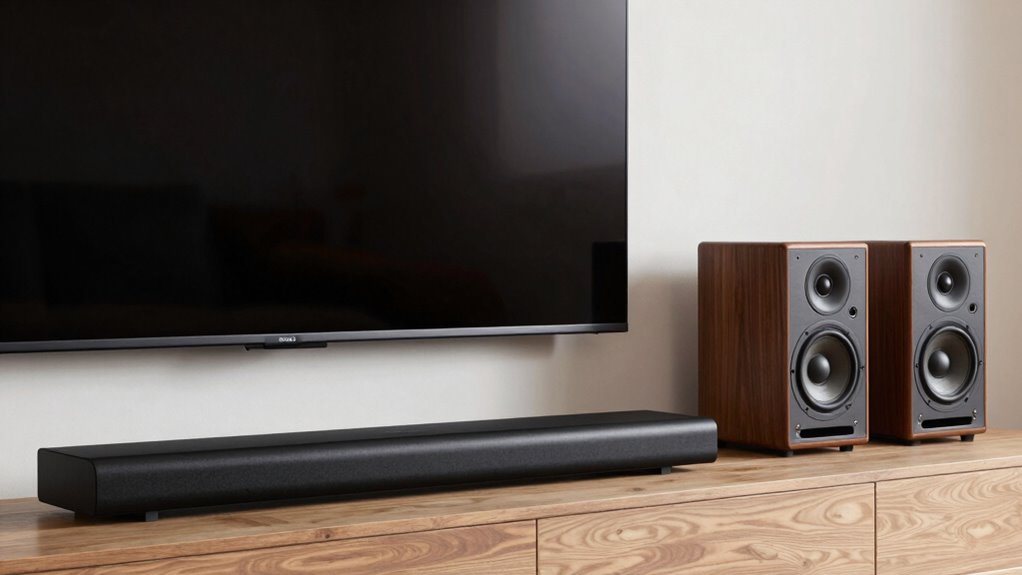

Choosing between a soundbar and standalone speakers depends on your space, budget, and sound quality needs. Soundbars are easy to set up, compact, and fit well into tight spaces but offer limited customization and may not deliver the richest sound. Standalone speakers provide better sound flexibility, multi-room options, and long-term expandability but need more effort to install. To get a clear picture of these tradeoffs, explore how each options fits your home setup and preferences.
Key Takeaways
- Soundbars are compact, easy to set up, and ideal for space-constrained rooms, while traditional speakers offer customizable, immersive sound.
- Soundbars provide clear dialogue and virtual surround effects; speakers deliver richer, more dynamic audio with wider soundstages.
- Upfront costs for soundbars are lower, but traditional speakers tend to be more durable and better for long-term, high-quality sound.
- Soundbars are less flexible for upgrades or expansion; standalone speakers allow for tailored configurations and future system growth.
- Aesthetically, soundbars blend seamlessly with modern decor, whereas traditional speakers offer more design options and placement flexibility.
Ease of Setup and Space Efficiency
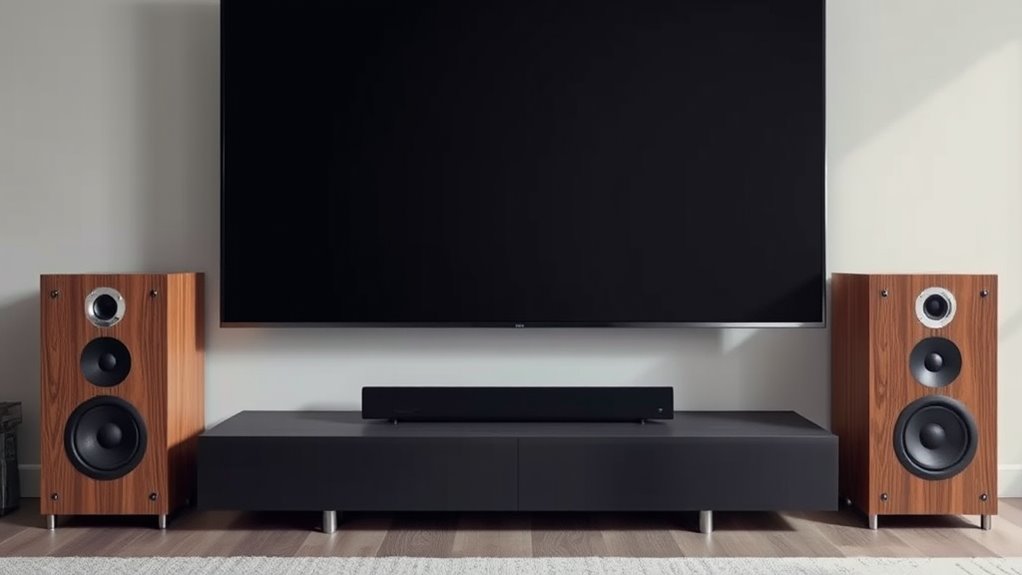
When comparing soundbars and traditional speakers, ease of setup and space efficiency are key factors to contemplate. Soundbars are incredibly user-friendly; you simply place them beneath your TV or mount them on the wall, and they usually connect with a single cable or remote control. They require minimal effort to set up, making them ideal if you want quick, hassle-free installation. Traditional speakers, on the other hand, often need multiple wires, speaker placement planning, and sometimes even professional installation. Space-wise, soundbars are compact and streamlined, fitting neatly into tight spaces without cluttering your room. Traditional speakers can take up more room, especially if you opt for a surround sound setup, which demands multiple units placed around your space. Additionally, projector placement can significantly influence your overall home theater experience, with considerations for size, distance, and viewing angles. Proper audio calibration can also enhance sound quality, particularly with more complex speaker arrangements. Being aware of room acoustics can further help optimize your listening environment for the best sound performance.
Sound Quality and Audio Performance
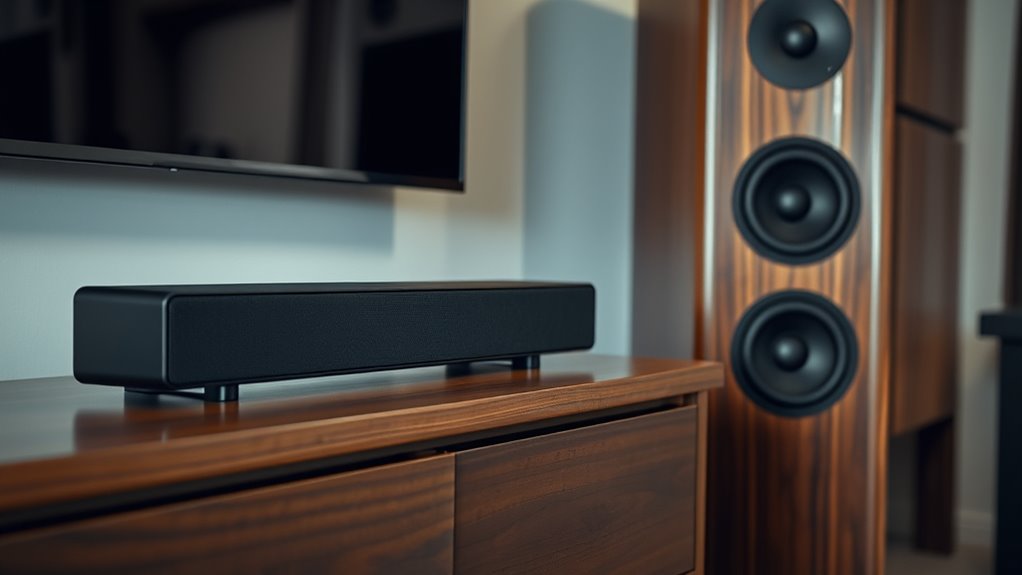
Sound quality and audio performance are the main reasons many people choose between soundbars and traditional speakers. Soundbars deliver clear dialogue and balanced sound, making them ideal for TV watching. They often have built-in virtual surround sound, creating a spacious audio experience without extra speakers. Traditional speakers, on the other hand, usually provide richer, more immersive audio with deeper bass and broader soundstage. Consider these points:
Soundbars offer clear dialogue and virtual surround, while traditional speakers provide richer, immersive sound with deeper bass.
- Soundbars excel in clarity for vocals and dialogue
- Speakers offer fuller, more dynamic soundscapes
- Soundbars are compact and minimize clutter
- Speakers can fill larger rooms with sound
- Audio quality depends on setup and quality of components
- Room acoustics play a significant role in how different audio setups perform and are perceived, affecting overall sound quality and immersion.
- The performance of electric bikes and other audio components can be influenced by environmental factors like room acoustics and external noise.
- Additionally, technological advancements continue to improve the fidelity and versatility of both soundbars and traditional speakers, making choices more nuanced.
Customization and Expandability
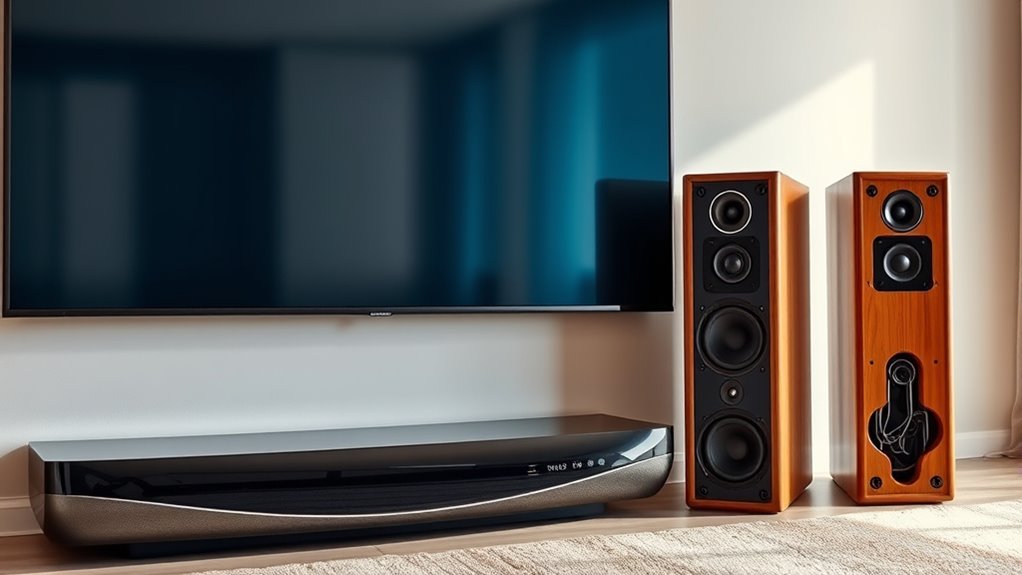
While soundbars are designed for simplicity, they often offer limited options for customization and expandability compared to traditional speakers. Most soundbars come as a single unit, meaning you can’t easily add or upgrade individual components. If you want to improve your audio experience later, you might need to replace the entire soundbar rather than upgrading parts. Conversely, traditional speakers and home theater setups allow you to mix and match different speakers, subwoofers, and amplifiers to tailor your sound system. This flexibility lets you expand your setup over time, adding more speakers or upgrading existing ones as your needs and budget evolve. If customization and expandability matter to you, traditional speakers give you more control and long-term options. Additionally, easy document management can help you keep track of your system components and upgrade plans efficiently. Furthermore, understanding AI ethics and security can be crucial when managing connected or smart home audio systems to ensure privacy and safety. Recognizing the limitations of soundbars can help you make an informed decision based on your long-term audio goals. Moreover, considering system compatibility ensures that your chosen components work seamlessly together as your setup grows.
Cost and Long-term Investment
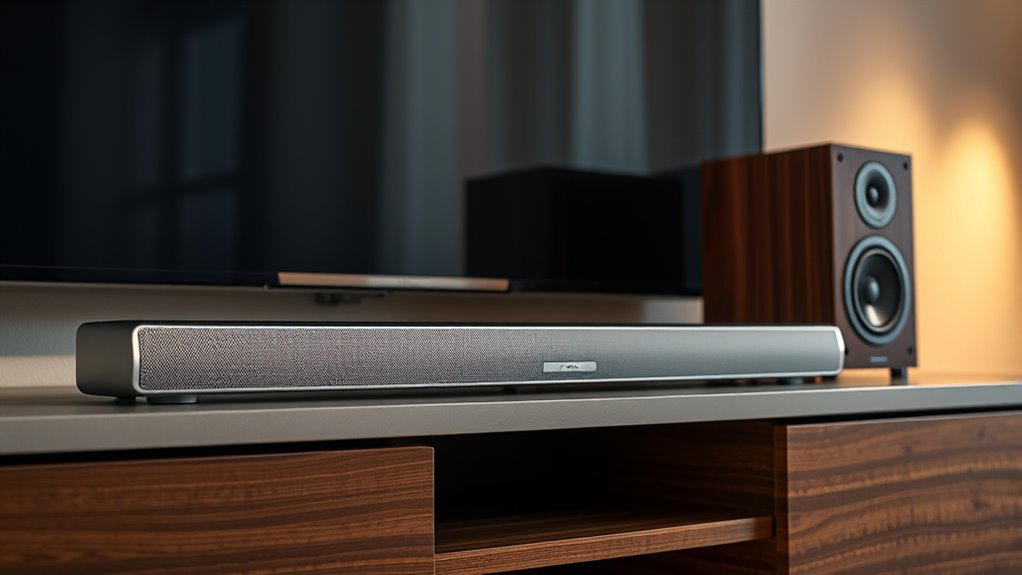
Cost is a significant factor to contemplate when choosing between a soundbar and traditional speakers. Soundbars typically have a lower upfront cost and are easier to install, making them appealing for quick upgrades. However, investing in quality speakers may lead to better sound performance and durability over time. Consider these points:
- Soundbars usually cost less initially, often between $100-$500.
- High-end speakers can range from $300 to several thousand dollars.
- Expanding a soundbar system might require additional purchases, increasing overall expense.
- Traditional speakers often offer longer lifespan with proper maintenance.
- Upgrading or replacing speakers can be more cost-effective over years, compared to frequently replacing soundbars.
Your long-term investment depends on your sound quality expectations and willingness to maintain or upgrade over time.
Aesthetics and Design Flexibility
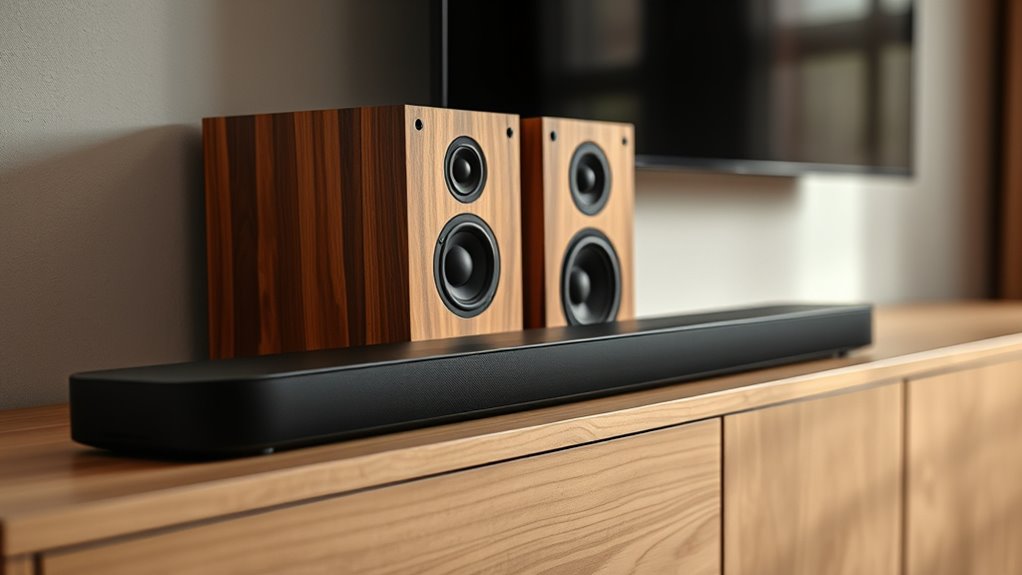
When choosing between a soundbar and traditional speakers, aesthetics and design flexibility play a crucial role in your decision. Soundbars offer sleek, minimalist profiles that blend seamlessly with modern TVs, often doubling as stylish decor. They’re easy to mount or place beneath your screen, maintaining a clean look. Traditional speakers, however, provide more options for customization. You can select different shapes, colors, and placements to match your room’s decor or create a more immersive setup. While speakers may require more space and careful positioning, they can be hidden or displayed prominently, giving you creative control. Additionally, traditional speakers often allow for room acoustics optimization, which can significantly enhance sound quality and overall home theater experience. This flexibility can contribute to a personalized home theater setup tailored to your specific space. Moreover, choosing traditional speakers can facilitate expandability, allowing you to upgrade or add components over time for even better sound. In fact, the ability to customize and integrate with existing components can greatly improve your overall audio experience. Ultimately, if you prioritize a streamlined, unobtrusive appearance, a soundbar is the better choice. If you value home theater design flexibility and room aesthetics, traditional speakers offer more personalized options.
Portability and Multi-room Use
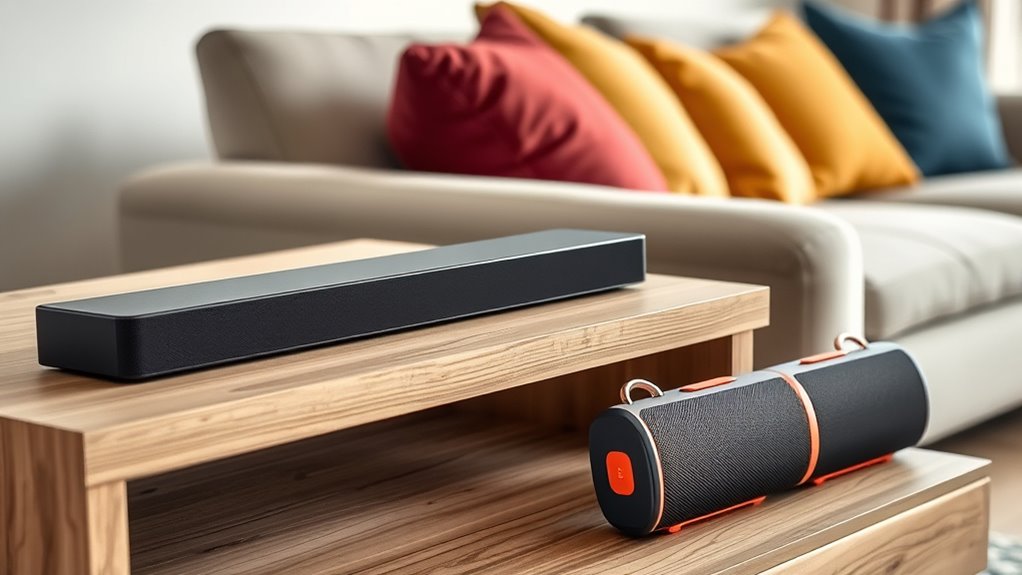
When considering portability, you’ll find that speakers are generally easier to move around than soundbars. Multi-room connectivity options allow you to synchronize multiple devices effortlessly, whether you choose a soundbar or separate speakers. Setup and placement flexibility can impact how seamlessly you integrate your audio system into different spaces, so think about what fits your needs best. Additionally, understanding technological integration can help optimize your audio setup for both convenience and performance. For instance, wireless connectivity can significantly enhance ease of use and flexibility across your home, and understanding compatibility options ensures your devices work well together. Moreover, performance metrics like sound quality and user experience can guide your choice between these options for optimal satisfaction.
Ease of Transportation
Portability plays a significant role in choosing between a soundbar and standalone speakers, especially if you want to enjoy music or TV audio in different rooms. Standalone speakers are generally easier to move around due to their compact size and lightweight design. They often come with handles or built-in batteries, making transportation simple. Soundbars, on the other hand, are usually bulkier and meant to stay in one place. When considering ease of transportation, think about:
- Weight and size of the device
- Presence of built-in batteries or power cords
- Handles or grip features
- Quick setup and takedown
- Suitability for frequent movement or temporary setups
If portability is a priority, standalone speakers tend to be more convenient, but some soundbars now include features that improve their mobility. Additionally, reusable options in portable devices can make a difference in sustainability and long-term use. Choosing devices with compact design can further enhance ease of transport and storage, especially as advances in battery technology continue to improve portable audio options.
Multi-room Connectivity Options
While portability influences your choice between a soundbar and standalone speakers, multi-room connectivity options can substantially expand your listening experience. With multi-room features, you can stream audio to multiple devices simultaneously, creating a cohesive sound environment throughout your home. Many standalone speakers support Wi-Fi or Bluetooth multi-room setups, allowing you to sync music across various rooms effortlessly. This setup lets you enjoy music in the living room, kitchen, or bedroom without needing to move devices around. Multi-room audio capabilities typically require compatible devices and network configurations to function smoothly. Soundbars typically offer limited multi-room capabilities, often requiring external systems or additional hardware. If multi-room listening matters to you, standalone speakers give you more flexibility and control, enabling seamless integration and customization across different spaces. Simple setup methods make it easier to manage your multi-room audio system, enhancing your overall sound experience and home organization.
Setup and Placement Flexibility
Setup and placement flexibility are key factors to contemplate when choosing between a soundbar and standalone speakers. Soundbars are compact and designed to fit seamlessly beneath your TV, making them ideal for tight spaces or wall mounting. They generally offer straightforward installation, often with minimal wiring. Standalone speakers, however, provide more options for placement, such as spreading across a room for immersive sound or positioning for ideal acoustics. Additionally, standalone speakers often support customizable configurations, allowing you to tailor your sound system to your specific room layout and listening preferences. Using multi-room systems with compatible speakers and mounting or placing speakers at ear level or strategic spots enables reconfiguration without major hassle. Choosing based on your space and flexibility needs ensures a more tailored audio experience.
Compatibility With Devices and Future Proofing
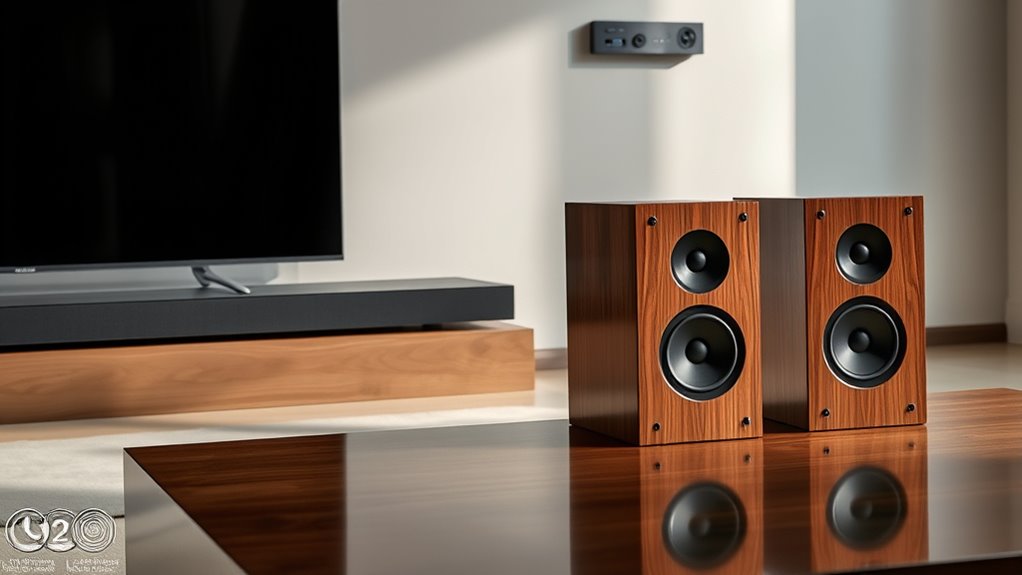
You need to ensure how well your chosen audio system connects with your devices, whether through multiple wired options or seamless wireless compatibility. Keep in mind the range of wireless signals to ensure reliable streaming without interruptions. Additionally, think about how easily the system can adapt to future technologies and updates to stay compatible over time.
Device Connectivity Options
Device connectivity options are crucial when choosing between a soundbar and speakers, as they determine how easily you can connect your existing devices and whether your setup will stay compatible in the future. A soundbar typically offers multiple input options like HDMI ARC, optical, and Bluetooth, making it easy to connect to TVs, smartphones, and gaming consoles. Speakers, on the other hand, often rely on wired connections like RCA, speaker wire, or wireless options like Wi-Fi or Bluetooth. Consider these factors:
- HDMI ARC for seamless TV connection
- Bluetooth for portable, wireless pairing
- Optical input for high-quality audio
- Wi-Fi connectivity for smart integrations
- Compatibility with future devices and updates
Choosing the right connectivity ensures your system remains versatile and future-proof.
Wireless Compatibility Range
Wireless compatibility determines how well your sound system integrates with current and future devices, ensuring a seamless listening experience. When choosing between a soundbar and speakers, consider the wireless standards they support, like Bluetooth, Wi-Fi, or proprietary protocols. A device with broad compatibility lets you connect effortlessly with smartphones, tablets, smart TVs, and streaming devices. Future-proofing is vital—look for systems that support upcoming standards or upgrades, so your setup remains relevant. Some soundbars offer multi-room audio and streaming services built-in, enhancing versatility. Conversely, traditional speakers may require additional adapters or be limited to specific wireless options. Ensuring your system’s wireless compatibility guarantees flexibility, reduces frustration, and extends the lifespan of your investment as technology evolves.
Future Technology Integration
Future technology integration guarantees your sound system stays compatible with upcoming devices and standards, safeguarding your investment over time. As technology evolves, you want your setup to adapt seamlessly without frequent upgrades. To ensure this, consider features like HDMI eARC support, Bluetooth and Wi-Fi compatibility, and updated audio codecs. Look for models designed with future standards in mind, such as Dolby Atmos or DTS:X. Additionally, check for software updates that improve performance and add features over time. Staying compatible with smart home systems and voice assistants also enhances versatility.
- Support for the latest HDMI standards
- Built-in Wi-Fi and Bluetooth for easy pairing
- Compatibility with voice control platforms
- Firmware updates for ongoing improvements
- Advanced audio format support
Frequently Asked Questions
Which Option Offers Better Voice Clarity for Dialogue-Heavy Content?
Speakers generally offer better voice clarity for dialogue-heavy content because they produce a more natural and detailed sound. You’ll notice clearer vocals with dedicated speakers, especially if they’re positioned correctly, providing more precise sound staging. Soundbars can improve dialogue clarity too, but they often rely on virtual surround processing, which may slightly distort or blur voices. For the sharpest dialogue, good-quality speakers are your best choice.
How Do Soundbars Impact Room Acoustics Compared to Traditional Speakers?
Soundbars generally have less impact on room acoustics than traditional speakers because they’re designed to be compact and integrated into a single unit, which minimizes sound reflections and reverberations. Traditional speakers, especially larger ones, can influence room acoustics more markedly by bouncing sound waves off walls and furniture. This can enhance or muddy the sound, depending on your room’s layout. So, your room’s size and shape play a big role in how each option performs.
Are Wireless Soundbars More Reliable Than Wired Speaker Setups?
Wireless soundbars tend to be more reliable than wired setups because they eliminate tangled cables and connection hassles. You’ll enjoy a seamless, simple setup, and fewer physical connections mean less chance of loose links or signal disruptions. However, wireless signals can occasionally suffer from interference or range issues, so if your space has many devices or obstacles, wired setups might offer steadier, more consistent sound performance.
Can Soundbars Replace Multi-Speaker Surround Sound Systems Effectively?
Soundbars can replace multi-speaker surround sound systems for many, especially if you want a simpler setup. They deliver decent immersive audio and are easy to install, but they often lack the depth and spatial accuracy of a full surround system. If you’re okay with slightly less precise sound positioning and prefer convenience, a soundbar might suit you well. However, for true cinematic experience, multi-speaker setups still hold the edge.
What Maintenance Is Required for Long-Term Speaker and Soundbar Performance?
You don’t need to be a tech wizard to keep your speakers and soundbar running smoothly. Regularly dust them to prevent dust buildup, keep them away from moisture, and check connections occasionally. Avoid turning them on and off abruptly, and store cables neatly to prevent damage. Honestly, the most effort is just a little routine cleaning and careful handling—pretty simple for such impressive sound quality!
Conclusion
Choosing between a soundbar and speakers is like picking the right tool for a job—you’ll want what best fits your space, needs, and budget. Soundbars are quick and sleek, but speakers offer richer sound if you’re willing to invest. Think of it as a dance; each has its rhythm, and the right choice depends on your style. Whichever you pick, make sure it enhances your listening experience without adding clutter or complexity.