
Your soundbar’s surround effect can feel fake because the shape of your room and its reflective surfaces distort sound cues. Hard walls, glass, or bare surfaces bounce sound waves unpredictably, disrupting the spatial cues that create a realistic surround experience. Placement also matters—if your soundbar isn’t positioned correctly, reflections won’t work in your favor. To improve your surround feel, understanding how room shape and reflections impact sound can make a big difference. Keep exploring to learn how to optimize your setup.
Key Takeaways
- Room shape and size influence how sound reflections occur, impacting the authenticity of surround sound.
- Hard, reflective surfaces like glass or bare walls cause unpredictable echoes that distort spatial cues.
- Improper speaker placement, especially near walls or corners, can reduce surround effect realism.
- Internal soundbar technology alone cannot compensate for poor room acoustics and reflection issues.
- Managing reflections with acoustic treatments and appropriate room setup enhances the naturalness of surround sound.
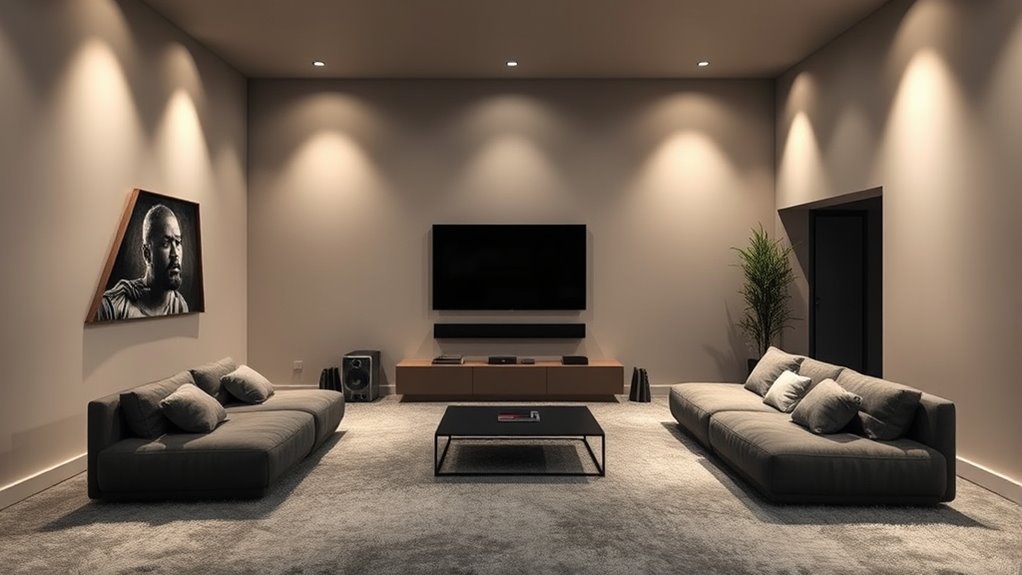
Have you ever wondered if a soundbar can truly deliver a surround sound experience? Many people believe that just plugging in a high-quality soundbar will instantly transform their TV watching into a cinematic adventure. However, the reality is that achieving genuine surround sound with a single device isn’t just about the technology inside the soundbar; it heavily depends on your room acoustics and how you position your speakers. Your room’s shape, size, and reflective surfaces all play essential roles in how sound waves travel and reflect. If your room has a lot of hard surfaces like glass or bare walls, sound waves bounce unpredictably, causing reflections that can make the surround feel artificial or disconnected from the on-screen action.
Room acoustics and placement are key to achieving surround sound from a single soundbar.
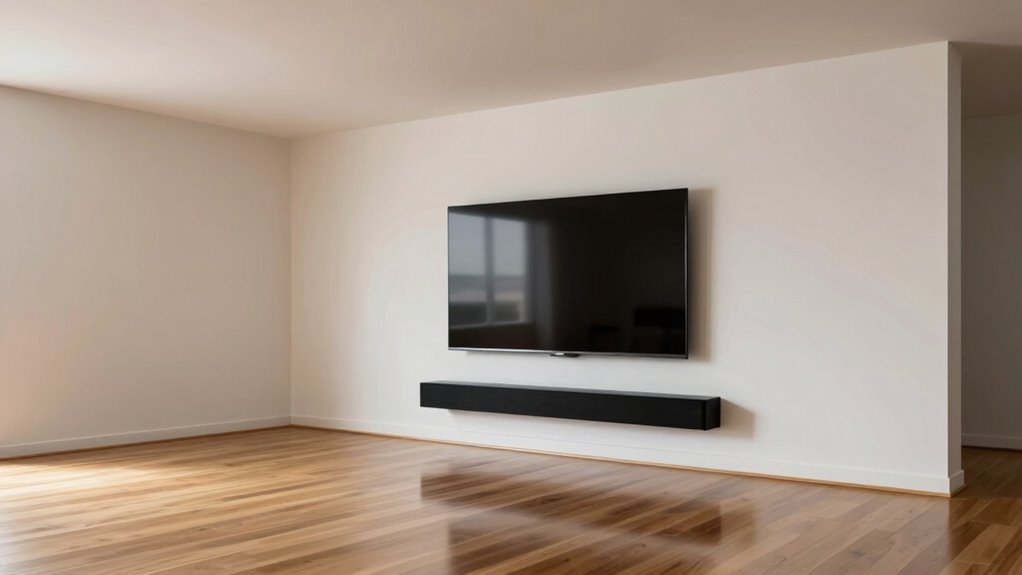
Speaker placement is equally important. Even the most advanced soundbar can fall short if it’s not positioned correctly. Typically, a soundbar is designed to be placed directly in front of or beneath your TV, but how you place it in your room can considerably influence the surround effect. If you slide the soundbar too close to a wall or corner, it might boost bass but reduce clarity and the sense of spaciousness. Conversely, placing it too far from the wall can cause sound reflections to diminish, making the surround effect less convincing. To optimize your experience, try to position the soundbar at ear level when seated and avoid blocking its speakers with furniture or objects.
Another key aspect is understanding how reflections work in your room. Reflections from walls and ceilings are what create the sense of space and directionality. If your room has uneven surfaces or clutter, these reflections can scatter sound waves, causing the surround sound to feel disjointed or fake. Using rugs, curtains, or wall treatments can help control reflections, creating a more controlled acoustic environment. This way, the soundbar’s audio cues are less distorted and more aligned with what’s happening on screen. Additionally, understanding room acoustics can help you optimize your setup and improve sound quality.
Ultimately, the surround feeling isn’t just about the soundbar’s internal technology. It’s about how your room’s acoustics and speaker placement work together to create a believable soundscape. By paying attention to room shape, minimizing unwanted reflections, and carefully positioning your soundbar, you’ll make the surround effect feel more authentic. Instead of feeling like the sound is coming from a single device, you’ll enjoy a more immersive experience that truly enhances your viewing.
Frequently Asked Questions
Can Placement Improve Soundbar Surround Realism?
Yes, placement can improve your soundbar surround realism. Proper speaker positioning guarantees sound hits your ears at the right angles, creating a more immersive experience. Incorporate acoustic treatments like panels or diffusers to reduce unwanted reflections that distort sound. Experiment with speaker angles and distance from walls to find the best setup, enhancing surround effects and making your soundbar feel more natural and convincing.
Do Specific Room Furnishings Affect Sound Reflection?
Yes, room furnishings like soundproof curtains and acoustic panels considerably affect sound reflection. For example, in a hypothetical living room with large windows, adding soundproof curtains can reduce unwanted echoes, making the soundbar’s surround effects feel more natural. Acoustic panels absorb excess reflections, preventing sound from bouncing unpredictably. These furnishings improve audio clarity and immersion, creating a more authentic surround experience.
Is Calibration Necessary for Optimal Surround Effects?
Yes, calibration is essential for ideal surround effects. You should perform room calibration to adjust your soundbar’s settings, ensuring accurate sound reflection and distribution. Proper calibration helps tailor the audio to your room’s shape and furnishings, enhancing sound enhancement. Without calibration, your surround sound may feel unnatural or fake. Taking a few minutes to calibrate improves overall audio quality, making your listening experience more immersive and true to the intended sound design.
How Does Room Size Impact Sound Reflection Quality?
Room size directly impacts sound reflection quality, making your soundbar’s surround effects feel more authentic. Larger rooms can cause more soundproofing challenges, leading to echoes and muddled audio. To improve clarity, consider acoustic treatment options like bass traps or diffusers, and guarantee proper soundproofing. These adjustments help control reflections, creating a more immersive experience and reducing the fake surround feeling.
Can Advanced Technology Enhance Surround Sound Authenticity?
Yes, advanced technology can enhance surround sound authenticity. Wireless connectivity reduces clutter and lets you place your soundbar ideally, improving sound reflection and immersion. Voice control features allow you to fine-tune audio settings instantly, ensuring a more natural and immersive experience. These innovations work together to make your surround sound feel more realistic, bringing theater-quality audio into your space with ease and precision.
Conclusion
If your soundbar surround feels off, it’s likely due to room shape and reflection issues. Think of your room as the stage for your sound; the wrong shape can make audio feel flat or fake. Did you know that over 70% of home theater problems stem from room acoustics? By understanding and adjusting your space, you can transform your sound experience from artificial to immersive, making every movie night feel truly cinematic.