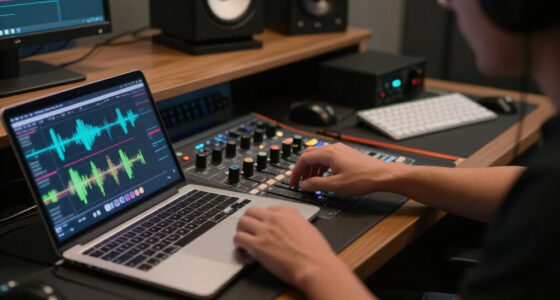
To avoid echo and lost dialogue outdoors, keep your microphone close to the source and angle it away from reflective surfaces like walls or metal objects. Use directional microphones to focus on sound and minimize reflections. Position yourself away from large, hard surfaces like concrete or buildings, and use natural barriers such as bushes or tents to reduce echoes. Experiment with placement to find the best spot for clear sound. If you keep exploring, you’ll discover more ways to improve outdoor audio quality.
Key Takeaways
- Use close, directional microphones to focus on the speaker and minimize environmental reflections.
- Position microphones away from hard, reflective surfaces like walls or metal structures.
- Incorporate natural or portable sound barriers such as tents, screens, or foliage to absorb reflections.
- Elevate or angle microphones to reduce the capture of reflected sound waves.
- Conduct test recordings by moving around to identify the best microphone placement for clear dialogue.
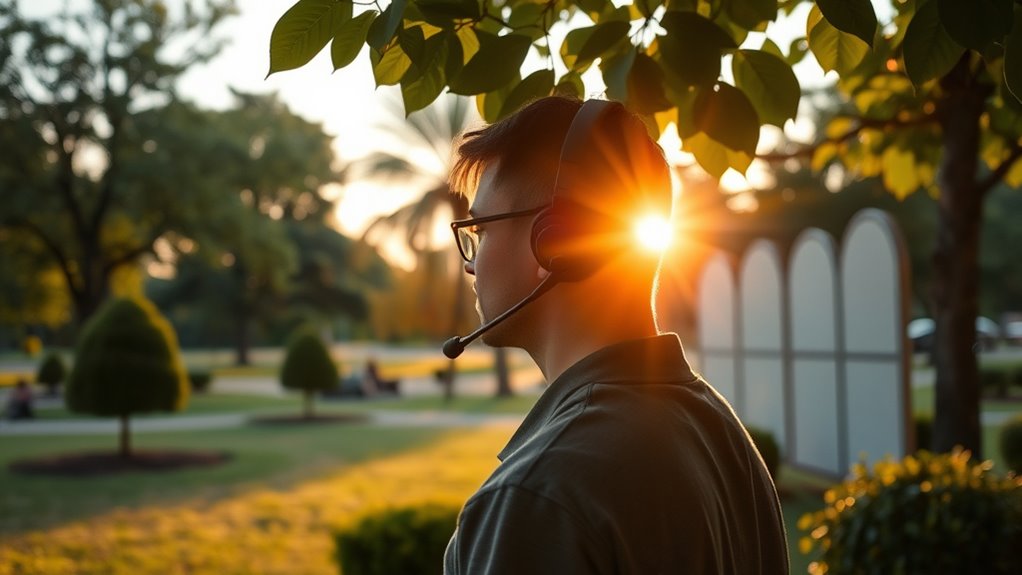
Have you ever wondered how outdoor sounds travel and how to manage them effectively? When you’re trying to communicate or record sound outside, understanding how sound reflection impacts audio is vital. Sound reflection occurs when sound waves bounce off surfaces like walls, trees, or buildings, creating echoes that muddle your recordings or speech. To minimize this, you need to be strategic about microphone placement. Position your microphone carefully, keeping it as close to the source as possible. This reduces the chance of capturing unwanted reflections and background noise, guaranteeing your voice remains clear and intelligible. Placing the microphone near the mouth or sound source helps focus on the direct sound, which is less affected by reflections bouncing around the environment.
In outdoor settings, the environment’s layout plays a big role in sound reflection. Hard surfaces like concrete or metal reflect sound more intensely, causing echoes and reverberation. Soft surfaces like grass, foliage, or fabric tend to absorb sound, reducing reflections. When setting up for a public speech or recording, try to position yourself away from large reflective surfaces. If you can’t avoid them, use natural or portable sound barriers—like tents, screens, or even thick bushes—to absorb or block these reflective surfaces. This way, your sound stays focused and your dialogue doesn’t get lost or distorted.
Microphone placement becomes even more vital because it directly influences how much unwanted reflection gets captured. For outdoor events, a directional microphone or shotgun mic is often ideal because it focuses on sound coming from a specific direction and rejects sound from other angles. Point the microphone directly at the source, and avoid angling it toward reflective surfaces. Elevating or angling the microphone can help minimize the capture of reflected sound waves, which cause echo. Sometimes, adjusting the height or position of the microphone relative to the sound source makes a noticeable difference in clarity. Understanding sound reflection and its effects can help you design better setups for outdoor sound recording.
In addition, consider using windshields and foam covers to prevent wind noise, which can interfere with capturing clean audio. The key is to experiment with different placements before the actual event or recording session. Walk around, listen carefully, and adjust your microphone’s position to find the spot where your voice sounds best—clear, direct, and free from distracting echoes. By understanding how sound reflection works and paying close attention to microphone placement, you can greatly improve outdoor sound quality. This will guarantee that your dialogue remains crisp and intelligible, no matter the environment.

VidPro XM-55 13-Piece Professional Video & Broadcast Unidirectional Condenser Shotgun Microphone Kit – Complete Set Includes 2 Mounts Adapters Cables and More Perfect for Indoor and Outdoor Recording
- Durable Construction: Made of sturdy aluminum alloy for durability
- High-Quality Audio: Clear sound with excellent off-axis attenuation
- Wide Frequency Response: Captures 100 Hz to 16 kHz for clear voice
As an affiliate, we earn on qualifying purchases.
As an affiliate, we earn on qualifying purchases.
Frequently Asked Questions
How Do Different Outdoor Environments Affect Sound Propagation?
You’ll notice that urban canyons, with tall buildings, reflect sound, causing echoes and making dialogue harder to hear. In open fields, sound travels farther with less obstruction, so your voice may carry too far or fade quickly. Different environments shape how sound behaves—narrow spaces amplify echoes, while open areas let sound disperse, affecting clarity. Understanding these differences helps you adjust your speaking or sound setup for better outdoor communication.
What Materials Are Best for Outdoor Sound Absorption?
Imagine muffling a bustling street with cozy, soundproof curtains and acoustic panels—these materials work wonders outdoors. Soundproof curtains block high-frequency noise and reduce echo, while acoustic panels absorb mid and low frequencies, preventing dialogue from disappearing. Using these materials strategically, like hanging curtains around seating areas or placing panels on walls, helps you create a clearer, more intimate outdoor space, free from echo and lost conversations.
Can Natural Features Help Reduce Echo Outdoors?
Yes, natural features can help reduce outdoor echo. You should use natural barriers like fences or walls, and add vegetation buffers such as trees and shrubs. These elements absorb and diffuse sound waves, preventing echoes and muffling unwanted noise. By strategically placing these features around your outdoor space, you create a more controlled acoustic environment, making dialogue clearer and reducing background noise effectively.
How Do Weather Conditions Influence Outdoor Audio Clarity?
Weather conditions substantially impact outdoor audio clarity. Wind interference can distort sound, making dialogue hard to hear, so use windshields or barriers to block gusts. Humidity impacts sound transmission by absorbing high frequencies, which can dull clarity. On humid days, opt for directional microphones and position speakers carefully to minimize these effects. Monitoring weather helps you plan better, ensuring your outdoor audio remains clear despite changing conditions.
What Are the Latest Technologies for Outdoor Sound Management?
You’re in luck with the latest outdoor sound management tech. Wireless speakers offer seamless sound distribution, reducing echoes and improving clarity. Sound masking systems subtly enhance dialogue privacy and intelligibility without overwhelming the environment. These innovations help create a balanced acoustic experience, whether you’re hosting gatherings or ensuring clear communication. Embrace these modern solutions to enjoy outdoor audio without the usual acoustic challenges, making your space both functional and pleasant.

BOYA XLR Microphone BY-BM6060 Super-Cardioid Shotgun Condenser Microphone with 24 48V Phantom Power for Camera Film Interview ENG/EFP Outdoor Recording
- Designed for Video Production: Ideal for interviews and broadcasts
- Phantom Power Compatible: Supports 24-48V phantom power
- Battery Powered Option: Operates with one AA battery
As an affiliate, we earn on qualifying purchases.
As an affiliate, we earn on qualifying purchases.
Conclusion
Understanding outdoor sound basics helps you reduce echo and lost dialogue, ensuring clearer conversations outside. Remember, even a slight change in your environment can make a big difference. Did you know that sound can travel up to 1,100 feet in open spaces? That’s why managing reflections and obstacles is essential. By applying these tips, you’ll enjoy better audio quality outdoors, making your gatherings and recordings more enjoyable and effective. Clear sound isn’t just possible—it’s within your reach.

Mudder 5 Pack Foam Mic Cover Handheld Microphone Windscreen (5 Pack)
- Pack Size: 5 foam mic covers
- Dimensions: 2.9 x 2.5 inches
- Caliber Size: 1.4 inches
As an affiliate, we earn on qualifying purchases.
As an affiliate, we earn on qualifying purchases.

72" X 66" Acoustic Room Divider, 3 Panel Folding Privacy Partition with Wheels, FreestandingTackable Offices Screen, Portable Sound Proof Partition Wall for School, Clinic, Or Home Working Space
- 【3 Panel Portable Room Divider】Three 24” x 66”…
- 【Acoustic Room Partition】Made from flame-retardant PET material, this…
- 【Folding Room Partition with Wheels】Includes 12 self-locking caster…
As an affiliate, we earn on qualifying purchases.
As an affiliate, we earn on qualifying purchases.