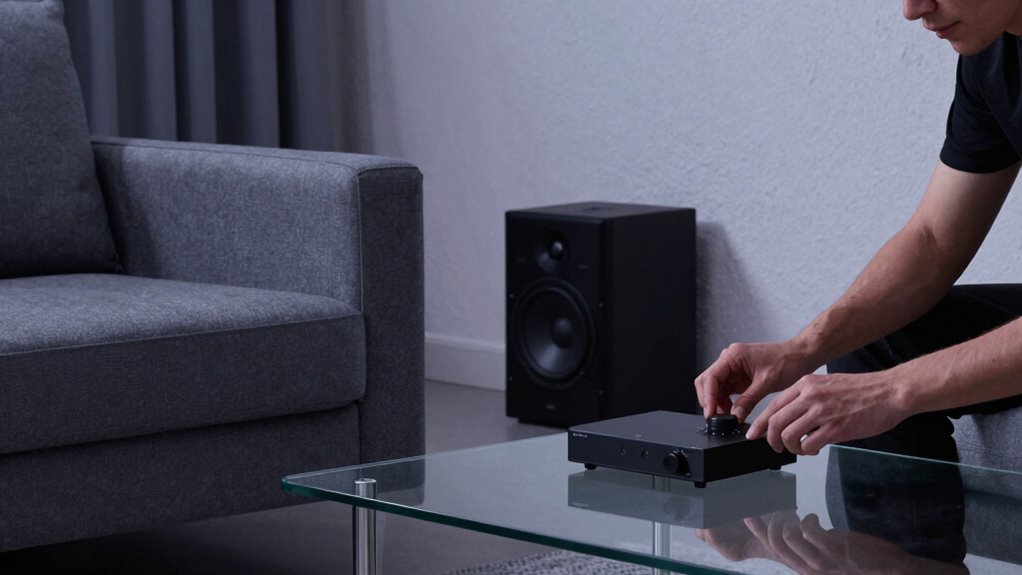

To calibrate your subwoofer quietly, use your receiver’s automatic calibration feature with a calibrated microphone set at a low volume setting. Alternatively, try smartphone apps designed for sound calibration, which allow you to generate test tones at very low volumes. Keep the volume from your main speakers moderate so you can make precise adjustments without disturbance. If you want to learn more about fine-tuning your subwoofer discreetly, there’s plenty of helpful tips to explore.
Key Takeaways
- Use a calibration microphone or smartphone app at low volume to prevent noise disturbance.
- Run automatic calibration with the receiver’s quiet or night mode setting.
- Calibrate during late hours or when others are asleep to minimize disruptions.
- Keep the subwoofer volume low during calibration and adjust afterward for optimal sound.
- Perform calibration in a room with minimal external noise and avoid loud test tones.
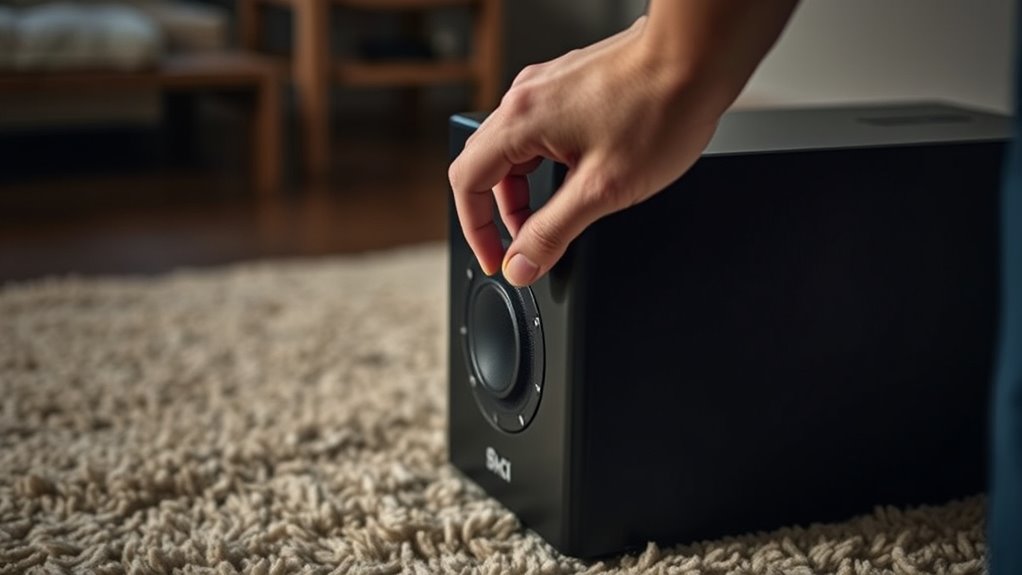
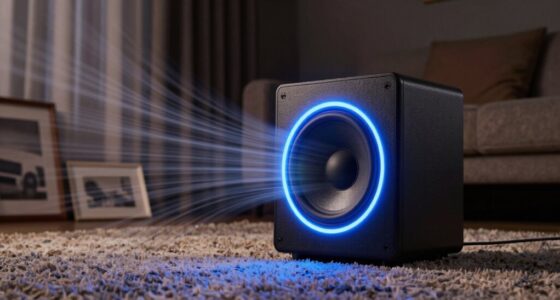
Calibrating your subwoofer level is essential to achieve balanced and immersive sound in your home theater or audio system. One of the most important factors in this process is understanding how speaker placement and room acoustics influence your subwoofer’s performance. When your subwoofer is correctly positioned, it can produce deep bass without overwhelming the rest of your audio. Conversely, poor placement can lead to boomy, uneven sound that diminishes your listening experience. To start, consider placing the subwoofer near a wall or corner; this can amplify bass naturally, but be cautious, as too close can cause muddy sound. Experimenting with different spots within your room helps identify the sweet spot that delivers clear, powerful bass without overpowering your speakers.
Room acoustics play a significant role in how your subwoofer sounds. Hard surfaces like tile or hardwood reflect sound waves, causing bass to sound boomy or uneven, while softer furnishings such as carpets, curtains, and cushions absorb sound, creating a smoother, more balanced bass response. To optimize performance, you should assess your room’s acoustics and consider adding acoustic treatments if necessary. These adjustments help tame excessive reflections, resulting in clearer, more precise bass. When calibrating, keep in mind that the goal is to achieve a seamless blend between your subwoofer and main speakers, creating a rich, immersive soundstage that feels natural and well-balanced.
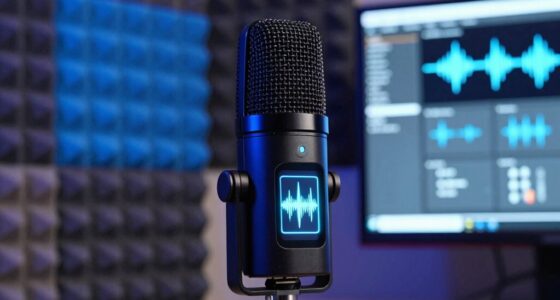
Using calibration tools and techniques can significantly improve the process, allowing you to fine-tune your subwoofer quietly and accurately. Instead of turning up the volume to maximum, utilize a calibration microphone or a smartphone app designed for this purpose. Many home theater receivers come with automatic calibration features that measure sound levels from multiple speakers, including your subwoofer, and then adjust levels accordingly. Run the calibration process at a moderate volume—just loud enough for the microphone to pick up the sound clearly—so you won’t wake anyone or disturb neighbors. During calibration, listen carefully for any bass that sounds disconnected or uneven; if necessary, manually fine-tune the subwoofer level afterward. This way, you can ensure balanced, full-bodied sound without raising your voice or causing a disturbance.
Frequently Asked Questions
Can I Calibrate My Subwoofer Without Specialized Equipment?
Yes, you can do DIY calibration without specialized equipment by using smartphone apps designed for sound measurement. Download a free or affordable SPL meter app, place your phone near the subwoofer, and play test tones at low volume. Adjust the subwoofer level until the app shows the desired decibel level. This method is quiet, simple, and effective for achieving balanced sound without waking the house.
How Often Should I Recalibrate My Subwoofer Level?
You should recalibrate your subwoofer level about once every few months to maintain ideal sound. Regular subwoofer maintenance keeps audio calibration accurate and prevents sound distortion. If you notice inconsistent bass or changes in your room’s acoustics, it’s time to recalibrate sooner. Keep your setup steady, and your sound will stay sharp. Consistent calibration ensures your audio experience remains balanced, beautiful, and bombastic, without waking the house.
Will Calibrating Quietly Affect Sound Quality?
Calibrating quietly won’t affect sound quality if you follow proper techniques. You maintain volume consistency, preventing sound distortion that can occur with uneven levels. Using a low-volume approach ensures you accurately set your subwoofer without waking the house or causing abrupt changes. This careful method helps preserve clear, balanced sound, making sure your audio remains crisp and immersive without sacrificing quality during quiet calibration sessions.
Is It Possible to Calibrate Multiple Subwoofers Simultaneously?
Absolutely, you can calibrate multiple subwoofers simultaneously, creating a powerhouse of deep bass with a synchronized calibration. Imagine orchestrating a symphony where each subwoofer perfectly harmonizes in real-time, delivering seamless, immersive sound without waking the neighborhood. With the right tools and setup, you can fine-tune your multi subwoofer setup efficiently, ensuring all subs work in unison for an ideal listening experience—without the need for tedious, separate calibrations.
What’s the Best Time of Day to Calibrate Without Disturbing Others?
You should calibrate your subwoofer early in the morning or late at night when household noise is minimal. Doing this helps prevent sleep disruption and avoids disturbing others. Choose a time when everyone is least likely to be affected by sound, and keep volume levels low during calibration. This way, you can fine-tune your system quietly without causing inconvenience or waking anyone in your household.
Conclusion
By following this quiet calibration method, you can enjoy perfectly balanced bass without disturbing anyone. Some might worry it’s too complicated or time-consuming, but with a little patience, you’ll get professional results easily. Remember, calibrating your subwoofer quietly guarantees your home stays peaceful while delivering rich, immersive sound. So go ahead—trust this simple technique and experience deep, clear bass without waking the house. Your ears—and your neighbors—will thank you.