
To get a fuller sound without raising volume, start by positioning your speakers at ear level and forming an equilateral triangle with your listening spot. Keep them away from walls to prevent bass booms, and use soft furnishings to absorb excess reflections. Adjust your device’s equalizer, boosting bass and midrange slightly for warmth and clarity. Regularly maintain your equipment for consistent sound quality. For more tips on maximizing your sound, explore the full guide below.
Open a free Amazon Business account
Business pricing, bulk buying and tax-exempt orders.
As an affiliate, we earn on qualifying purchases.
Key Takeaways
- Properly position speakers at ear level and form an equilateral triangle with the listening area.
- Use equalizer settings to subtly boost bass and midrange frequencies for added warmth.
- Incorporate soft furnishings and acoustic treatments to absorb reflections and improve sound clarity.
- Regularly clean and maintain your equipment to ensure optimal performance.
- Adjust room elements to balance reflections, enhancing natural fullness without increasing volume.
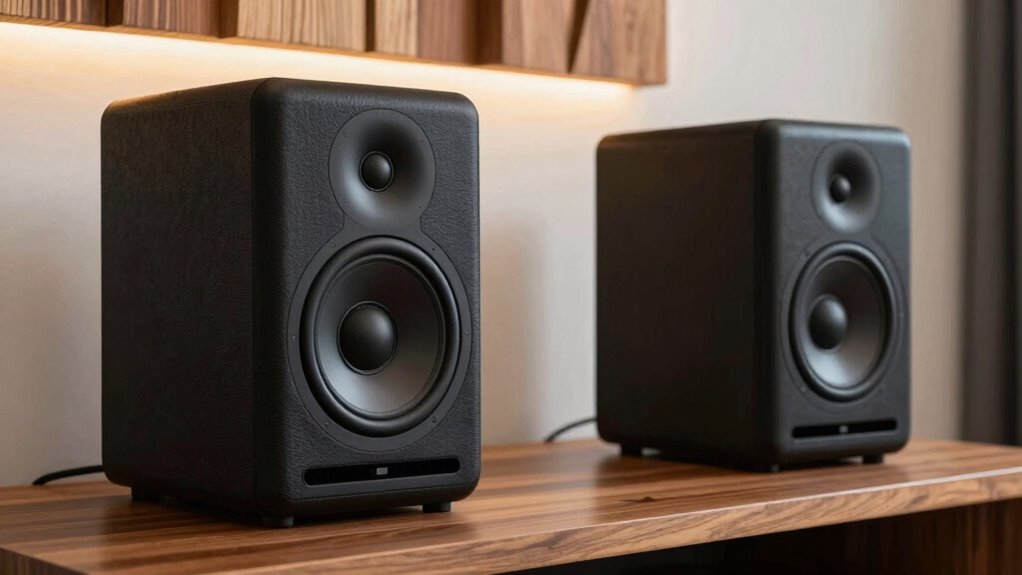
Achieving a fuller sound in your music setup can dramatically enhance your listening experience, and it’s easier than you might think. The first step is to pay attention to your speaker placement. Proper positioning of your speakers can make a significant difference in how full and balanced your sound feels. Place your speakers at ear level, forming an equilateral triangle with your listening position. Avoid placing them too close to walls or corners, as this can cause bass booms or muddy sound. Instead, give them some space to breathe—about a foot or two away from surfaces. This setup helps distribute sound more evenly throughout the room, making your music feel richer and more immersive without needing to turn up the volume.
Proper speaker placement at ear level and away from walls creates a richer, more immersive sound experience.
Next, consider your equalizer settings. Most digital audio devices or receivers have an equalizer that allows you to fine-tune the sound profile. Instead of boosting the volume, subtly adjust the bass and midrange frequencies to add warmth and fullness. Boost the bass slightly, but avoid overdoing it, as too much can distort the sound or make it muddy. Focus on increasing frequencies around 100-200 Hz to enhance the lower end, and tweak the midrange around 500-800 Hz to bring out vocals and instrument clarity. These adjustments add depth and richness without overwhelming the overall sound. Experiment with small changes, listening carefully to how each tweak affects the overall balance.
Additionally, consider the acoustics of your room. Soft furnishings like rugs, curtains, and cushions absorb excess sound reflections, which can make your setup sound hollow or echoey. Adding these elements can tighten the sound, giving it more body. Conversely, hard surfaces reflect sound and can amplify certain frequencies, creating a fuller sensation. Be mindful of your room’s characteristics and adjust your setup accordingly. Understanding room acoustics and how they influence sound can help you optimize your setup even further. Incorporating sound absorption techniques can reduce unwanted echoes and improve clarity, making your music sound more natural. Exploring acoustic treatment options can also be a worthwhile step for achieving a richer sound. Additionally, integrating speaker calibration tools can help fine-tune your system for the best possible sound quality.
Finally, don’t forget to keep your equipment in good shape. Regularly clean your speakers and check connections to ensure peak performance. When all these elements come together—placement, EQ adjustments, room acoustics—you’ll notice an immediate improvement in the fullness and depth of your music. You won’t need to fight the volume or distort your sound to enjoy a more satisfying listening experience. Instead, you’ll find yourself immersed in music that feels alive, balanced, and full, all at moderate levels.
bookshelf speakers for fuller sound
As an affiliate, we earn on qualifying purchases.
As an affiliate, we earn on qualifying purchases.
Frequently Asked Questions
Can Room Acoustics Affect the Perceived Fullness of Sound?
Yes, room acoustics considerably affect the perceived fullness of sound. Room resonances can cause certain frequencies to boost or diminish, impacting overall sound clarity. By adding acoustic treatment, you can reduce unwanted echoes and resonances, creating a more balanced and fuller sound. Proper placement of panels, bass traps, and diffusers helps control these resonances, making your audio feel richer without increasing volume.
Do Different Music Genres Require Different Sound Enhancement Techniques?
Think of your music as a colorful palette—each genre demands a different touch. For bass-heavy genres like hip-hop, you’ll want to focus on bass enhancement and tweak equalizer settings to emphasize low frequencies. For softer genres like jazz, subtle adjustments help preserve clarity. Adjust your sound to match each style, using tailored equalizer settings, to create a fuller, richer experience without increasing volume.
How Does Speaker Placement Influence Sound Fullness?
Speaker placement greatly influences sound fullness through speaker orientation and sound reflection. Position your speakers at ear level, angling them slightly towards you to optimize sound reflection and direct sound waves. Avoid placing speakers too close to walls, which can cause unwanted reflections and muddy the sound. Proper orientation and strategic placement guarantee sound waves blend well, creating a fuller, richer audio experience without increasing volume.
Are There Specific Audio Settings for Achieving Fuller Sound?
Think of your audio settings as a painter’s palette—carefully blending for a richer sound. To achieve fuller sound, tweak your equalizer settings by boosting bass enhancement and slightly increasing midrange frequencies. Avoid overdoing it to prevent distortion. These small adjustments act like a secret recipe, adding depth and warmth to your music without raising the volume. Experiment with settings until your sound feels like a full orchestra in your room.
Can Headphone Adjustments Improve Perceived Sound Fullness?
Yes, headphone adjustments can improve perceived sound fullness. By tweaking your headphone equalization, you can boost bass and midrange frequencies, making the sound feel richer. Additionally, using soundstage enhancement techniques like adjusting earcup positioning or selecting headphones with wider soundstage can create a more immersive experience. These adjustments help fill out the audio, giving you a fuller sound without needing to increase volume, enhancing your listening enjoyment.
As an affiliate, we earn on qualifying purchases.
Conclusion
So, don’t think you need to crank up the volume to fill your space with rich, full sound. With a few simple tweaks—like adjusting your EQ, adding a subwoofer, or choosing the right speakers—you can enjoy a fuller sound without risking distortion or bothering your neighbors. Remember, it’s all about optimizing what you’ve got. So go ahead, experiment a little, and enjoy immersive audio without turning your volume to loud.
acoustic treatment panels for room
As an affiliate, we earn on qualifying purchases.
As an affiliate, we earn on qualifying purchases.
As an affiliate, we earn on qualifying purchases.
Fall Picks
fall essentials
As an affiliate, we earn on qualifying purchases.