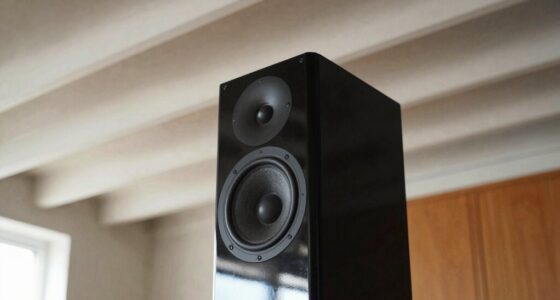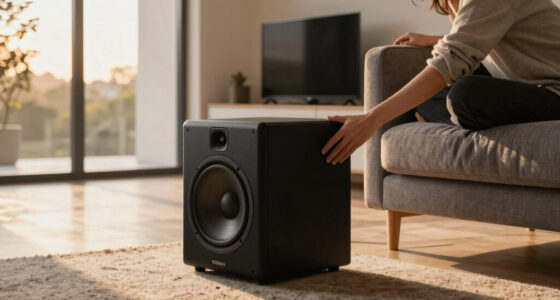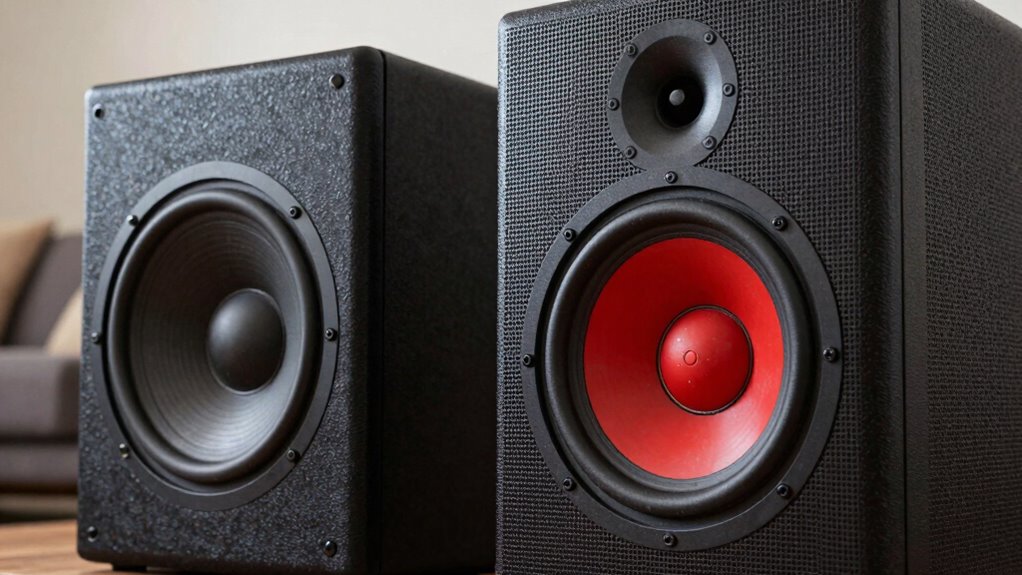

If you want tight, accurate bass with versatile placement, a sealed subwoofer may suit your room better. It works well in smaller spaces and is forgiving of placement, delivering clear sound without much distortion. On the other hand, if you’re in a larger room and crave louder, impactful bass for movies or parties, a ported subwoofer could be the right choice. To find out which option aligns best with your space and preferences, explore the details further.

Get audio and creator gear delivered free with Prime
- Fast, free delivery on millions of items
- Prime Video, Amazon Music and more included
- Member-only deals all year
Key Takeaways
- Sealed subwoofers offer tight, accurate bass, ideal for smaller or acoustically balanced rooms.
- Ported subwoofers produce louder, boomy bass, better suited for larger spaces or home theaters.
- Placement flexibility favors sealed models, while ported subwoofers require careful positioning to avoid exaggerated bass.
- Room acoustics influence ported subwoofers more, often needing tuning and placement adjustments.
- Choose sealed for precise sound in versatile environments; opt for ported if you desire impactful bass in bigger rooms.
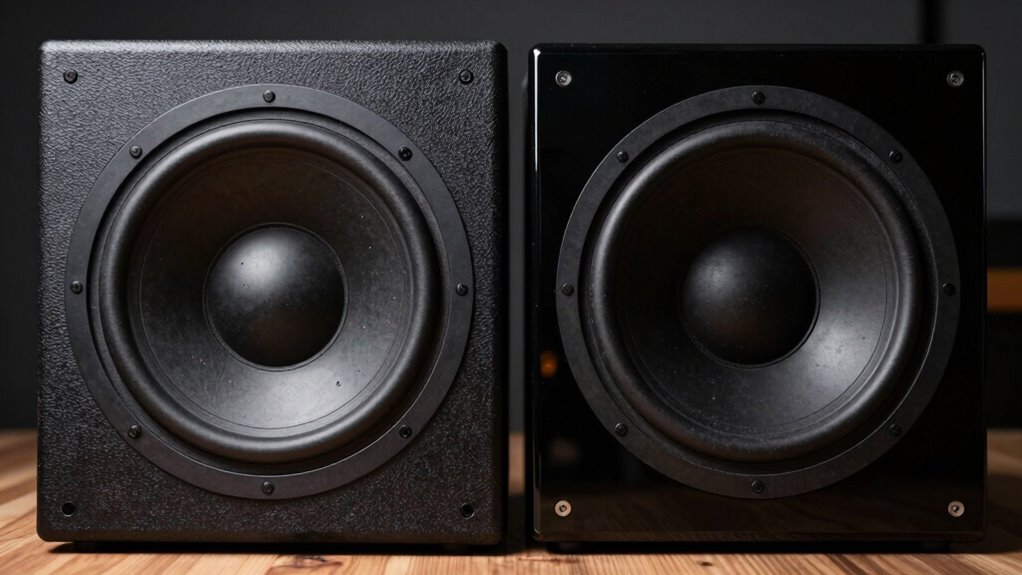
Are you trying to decide between sealed and ported subwoofers for your audio setup? The choice largely depends on the type of sound you want and the space you’re working with. Sealed subwoofers are known for their tight, accurate bass, making them a favorite for audiophiles who prioritize clarity. Ported subwoofers, on the other hand, produce louder, more boomy bass, which can be great for home theaters or parties. To make the best decision, you need to contemplate how enclosure materials and speaker placement influence each type’s performance within your room. Enclosure materials play a significant role in how your subwoofer sounds. Sealed enclosures are typically constructed from sturdy materials like MDF or plywood, which help contain the air inside, producing a tight and controlled bass response. The airtight nature of sealed enclosures ensures that the sound is precise, with minimal distortion. Ported subwoofers often have vented enclosures that allow air to escape through a port or tube, amplifying the bass at certain frequencies. The materials used for ported enclosures also need to be durable to withstand the air pressure and vibrations. When choosing between these options, keep in mind that sealed enclosures tend to be more versatile and easier to set up, while ported designs require careful tuning to avoid boomy or muddy sound. Proper enclosure tuning is essential for ported subwoofers to perform optimally and avoid unwanted resonance. Additionally, the room acoustics** can significantly influence how each type performs, making it important to consider the specific environment. Speaker placement is equally critical and can dramatically impact how each type performs in your space. Sealed subwoofers are less sensitive to placement, so you can usually position them near walls or corners without sacrificing sound quality. Because their bass response is more precise, they often sound great even if not perfectly placed. Ported subwoofers, however, rely heavily on placement because the port’s tuning can cause certain frequencies to be exaggerated or diminished depending on the room’s acoustics. To optimize performance, you might need to experiment with moving the ported subwoofer away from walls or corners to reduce boomy bass and achieve a more balanced sound. Additionally, understanding the enclosure design and how it affects sound projection can help you make better placement decisions. Ultimately, your room size, furniture, and listening preferences** influence which feel suits your space better. If you want tight, accurate bass for music and smaller rooms, sealed models are usually the best choice. If you’re aiming for louder, more impactful sound for entertainment or larger spaces, ported subwoofers can deliver that extra punch—especially when paired with proper speaker placement. By considering enclosure materials and experimenting with speaker placement, you can fine-tune your setup to deliver the bass response that best matches your room and listening style.
sealed subwoofer for small rooms
As an affiliate, we earn on qualifying purchases.
As an affiliate, we earn on qualifying purchases.
Frequently Asked Questions
Which Subwoofer Type Is More Energy Efficient?
A sealed subwoofer is generally more energy efficient because it consumes less power during operation, reducing overall power consumption. This means it’s better for your energy bills and has a lower environmental impact. Ported subwoofers tend to draw more power to produce louder, deeper bass, which uses more energy. If efficiency and minimizing environmental impact matter to you, a sealed subwoofer is the smarter choice for your setup.
How Do Sealed and Ported Subwoofers Differ in Size?
Sealed subwoofers are typically more compact due to their simple enclosure design, making them easier to install in tight spaces. Ported subwoofers tend to be larger because of their vented enclosures that enhance bass output, but this can increase installation complexity. If space-saving is a priority, sealed models are smaller and straightforward to set up. Conversely, ported subs offer bigger sound but require more careful placement and setup.
Can Both Subwoofer Types Be Used for Music and Home Theater?
Yes, both sealed and ported subwoofers work well for music and home theater. To optimize their performance, you should consider proper subwoofer placement and acoustic treatment in your room. Placement affects bass response, while acoustic treatment reduces unwanted echoes, ensuring clear sound. Whether you choose sealed or ported, adjusting these factors helps you enjoy rich, immersive audio tailored to your space and preferences.
Which Subwoofer Type Requires Less Maintenance?
You’ll find that sealed subwoofers generally require less maintenance due to their simpler design, leading to increased woofer durability and fewer components that could wear out. They tend to have a more straightforward construction, so you won’t need to clean or service them as often. Ported subwoofers, with their vented cabinets, might need more frequent maintenance to keep the vents clear and functioning properly.
Are There Specific Room Acoustics Better Suited for Each Type?
Yes, room acoustics influence which subwoofer suits you better. For small rooms, sealed subwoofers work well because they handle acoustic treatment needs better and reduce sound reflections. Larger rooms benefit from ported subwoofers, as they produce deeper bass that fills the space without overwhelming it. Consider your room size and acoustic treatment needs when choosing, ensuring your subwoofer complements your environment for maximum sound quality.
ported subwoofer for home theater
As an affiliate, we earn on qualifying purchases.
As an affiliate, we earn on qualifying purchases.
Conclusion
Ultimately, choosing between sealed and ported subwoofers depends on your room and preference. Think of it like choosing a car: a sealed box offers tight, precise control, while a ported box delivers loud, booming bass. Remember, “you get what you pay for.” Pick the one that matches your space and sound goals, and you’ll enjoy your music or movies even more. Trust your ears and room to guide your perfect match.
best subwoofer enclosure materials
As an affiliate, we earn on qualifying purchases.
As an affiliate, we earn on qualifying purchases.
subwoofer speaker placement tips
As an affiliate, we earn on qualifying purchases.
As an affiliate, we earn on qualifying purchases.
Halloween Picks
halloween
As an affiliate, we earn on qualifying purchases.