
In stadiums, surround sound creates a loud, immersive experience by using acoustic illusions and strategically placed speakers to amplify crowd noise and energy, making it seem bigger than it actually is. In movies, surround technology focuses on spatial placement, directing sounds to match visuals and immerse you in the scene. Both use sound tricks, but stadiums aim to boost excitement, while films emphasize realism. Keep exploring to discover how these techniques shape your perception of sound.
Key Takeaways
- Stadium surround systems manipulate acoustics with strategically placed speakers to amplify crowd noise and create an immersive, energetic atmosphere.
- In movies, surround sound aims for spatial accuracy and environment realism, directing sounds to match on-screen actions.
- Stadium sound illusions leverage echo, reverberation, and spatial dynamics to make crowd noise feel larger and more intense.
- Film surround technology enhances storytelling by placing sounds in specific locations, focusing on environmental immersion rather than volume.
- Both applications use surround technology but serve different goals: amplifying crowd energy versus creating realistic, immersive environments.

Have you ever noticed how the roar of a crowd can seem louder and more intense than it actually is? That’s because of a fascinating phenomenon rooted in crowd acoustics. When you’re at a stadium, the sounds you hear are shaped not just by the noise itself but by how that noise interacts with the environment around you. Stadium designers and sound engineers use advanced surround technology to manipulate these sounds, creating a powerful auditory illusion that amplifies the excitement. This technology captures the natural echoes and reverberations of the crowd and directs them in a way that makes the noise feel all-encompassing. It’s as if the stadium itself becomes a living, breathing entity, intensifying every cheer, chant, and boo.
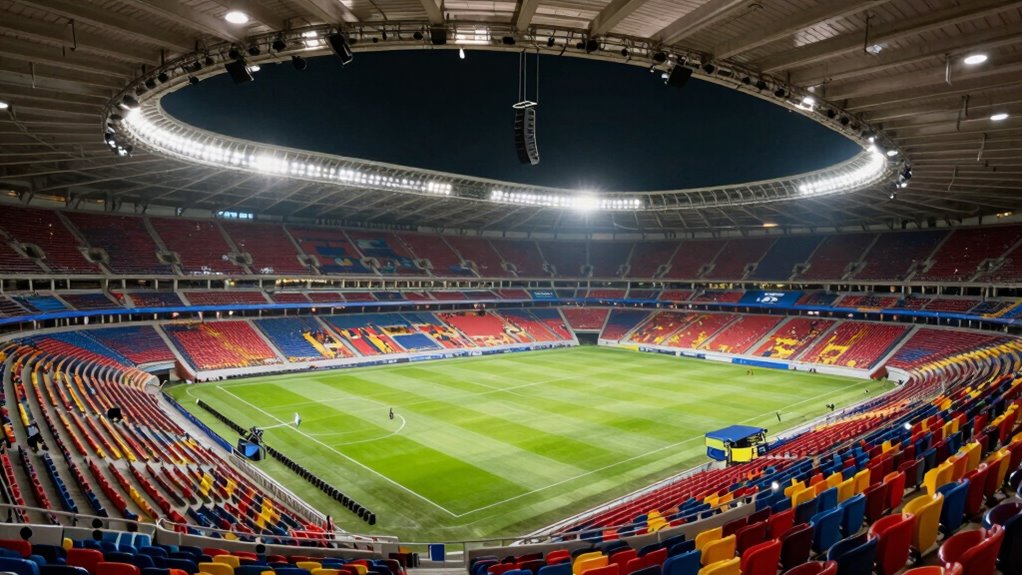
Surround technology plays a vital role in how sound is experienced during live sports versus movies. In a stadium, this system is tailored to amplify crowd acoustics, making you feel immersed in the action. Speakers are strategically placed around the venue, bouncing sound waves through the space so that every corner receives a balanced and dynamic mix. This design tricks your brain into perceiving the noise as louder and more pervasive, even when the actual decibel levels are controlled for safety and comfort. It’s a carefully calibrated illusion that heightens your emotional response, making you feel like you’re right there on the field or in the stands.
Surround sound in stadiums amplifies crowd energy through strategic speaker placement and acoustic design.
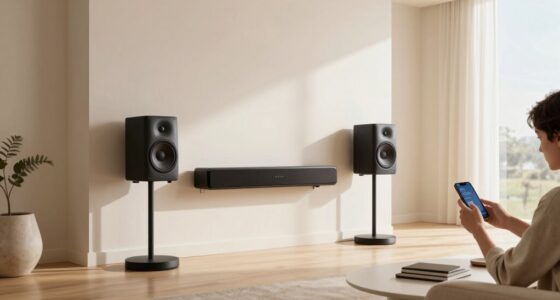
Contrast this with movies, where surround technology is used differently. In cinemas or home theaters, the goal is to create a convincing environment that draws you into a story. The sound mix is crafted to be precise, with specific sounds coming from designated directions to match what’s happening on screen. Here, the illusion is more controlled and less about amplifying crowd noise and more about spatial accuracy. When you watch a movie, surround sound isn’t trying to make the scene seem louder, but more immersive—placing you within the environment and helping you focus on details rather than just volume.
In essence, the way surround technology is employed in stadiums versus movies highlights its versatility. In stadiums, it amplifies crowd acoustics to evoke excitement and energy, leveraging the natural echoes and spatial dynamics to create a visceral experience. In contrast, in movies, it’s about crafting a believable space, ensuring every sound has a place and purpose. Both applications harness the power of surround technology, but they do so with different intentions—one to elevate the crowd’s roar into an atmospheric force, the other to immerse you in a fictional world. That’s the magic behind the stadium sound illusion: a clever manipulation of acoustics that makes you feel part of something larger than life. Additionally, understanding how sound environment design influences perception can enhance your appreciation of how these immersive experiences are created.
Top picks for "stadium sound illusion"
Open Amazon search results for this keyword.
As an affiliate, we earn on qualifying purchases.
Frequently Asked Questions
How Do Surround Sound Systems Differ Between Sports Venues and Cinemas?
You notice that surround sound systems in sports venues focus on enhancing audience engagement and sound localization, making you feel immersed in the game. In cinemas, the mix emphasizes clarity and directional cues for dialogue and effects, creating a cinematic experience. Sports venues prioritize amplifying crowd noise and action sounds, while cinemas balance sound layers for storytelling. Both adapt their surround mixes to optimize your immersion and spatial awareness.
What Technology Enhances the Stadium Sound Illusion in Sports Events?
You’re really hitting the jackpot with technology that enhances the stadium sound illusion. Acoustic engineering plays a key role, optimizing how sound travels and fills the space. Sound calibration guarantees audio levels are perfectly balanced, creating an immersive experience. Directional speakers and advanced audio processing further amplify the atmosphere, making you feel like you’re right there in the crowd. This combination tricks your ears into experiencing the thrill as if you’re part of the action.
Can Home Theater Systems Replicate the Stadium Sound Experience?
Yes, your home theater system can replicate the stadium sound experience. By increasing crowd density in your sound setup and utilizing advanced sound localization techniques, you create an immersive atmosphere. Proper speaker placement and surround sound technology help mimic the dynamic, multi-directional sounds of a stadium, making you feel like you’re right there amidst the crowd. This setup enhances realism and elevates your viewing experience considerably.
How Does Audience Noise Influence the Surround Sound Mix?
Like a conductor shaping an orchestra, your experience is influenced by crowd dynamics and sound localization. Audience noise in the surround sound mix makes you feel immersed, guiding your perception of the game’s intensity. It amplifies the realism, as if you’re truly part of the stadium. This unpredictable soundscape heightens excitement, drawing your attention to the collective energy, and making you feel closer to the action than ever before.
What Are the Challenges in Creating Realistic Stadium Sound Illusions?
You face challenges in creating realistic stadium sound illusions by accurately capturing crowd dynamics and integrating them seamlessly with the acoustic design. Balancing the loud, unpredictable noise with clarity requires precise mixing and spatial placement. You must also replicate the energy shifts during game moments, ensuring the surround sound feels authentic. Overcoming these hurdles involves sophisticated technology and expert audio engineering to immerse listeners fully in the stadium atmosphere.
Conclusion
Next time you’re at a game or watching a movie, remember how surround sound shapes your experience. Did you know that stadium sound illusions can boost the perceived volume by up to 20%? This clever trick keeps you immersed, whether you’re cheering in a packed stadium or captivated by a film. So, next time you notice the incredible audio effects, you’ll know it’s all about how sound is cleverly manipulated to make everything feel even more real.