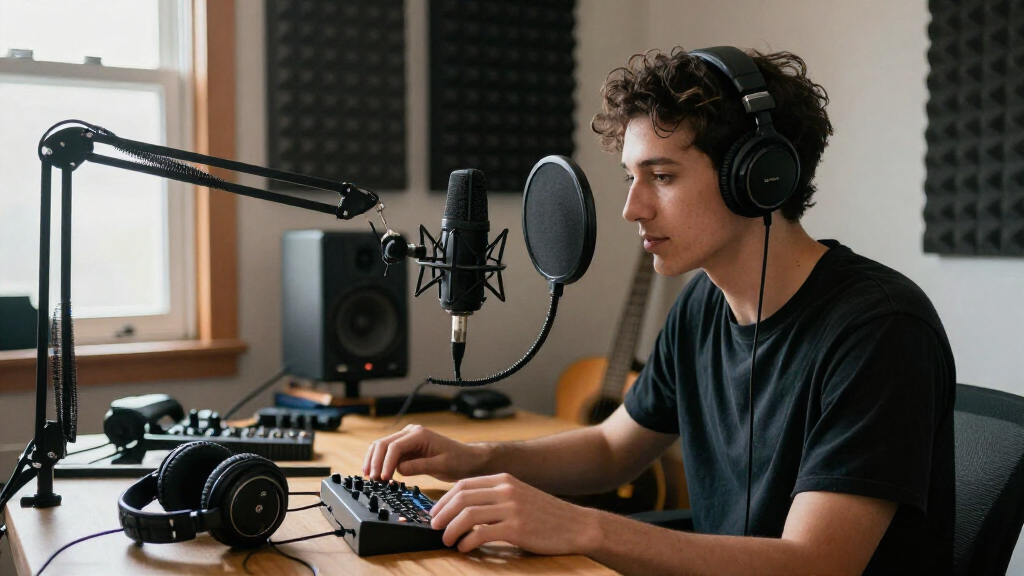

This checklist is for singers, voice-over artists, and creators putting together a home vocal recording setup. The picks cover the core pieces for capturing a voice and arranging a workable recording space, from a microphone to ways of managing nearby sound.

Get audio and creator gear delivered free with Prime
- Fast, free delivery on millions of items
- Prime Video, Amazon Music and more included
- Member-only deals all year
Each section focuses on one gear slot and its selected product. The notes explain why the slot matters, what to check before buying, and who the pick may suit. Product names are included as supplied, so check the listing for specifications and compatibility details before ordering.
Use the checklist in order, starting with the microphone and then considering how you will position it, monitor your voice, and treat the recording area. Match each item to your room, available desk or floor space, and the connections your existing equipment supports.
USB Condenser Microphone
A microphone is the center of a vocal recording setup, so this slot deserves attention before accessories. The RØDE NT-USB+ is named as a professional USB condenser microphone, making it the checklist’s direct USB microphone pick. Before choosing it, confirm that the product listing supports the computer or device you plan to record with and that its connection works with your intended recording setup.
A common buying mistake is treating “USB” as the only compatibility check. Consider where the microphone will sit, whether the cable can reach your device, and whether your desk arrangement leaves enough room to sing comfortably. Condenser microphones are often sensitive to their surroundings, so think about room noise and reflections as well as the microphone itself. Plan the placement you can sustain for each session, with the mic positioned consistently and without forcing you to lean or strain. Check the listing for included accessories and dimensions rather than assuming a stand, cable, or other item is included. The right fit is the one that works with your device and the space where you will record.
What to look for:
- Confirm USB connection and device compatibility in the listing.
- Check cable reach against your computer and recording position.
- Review the microphone’s dimensions and included accessories.
- Plan a comfortable, repeatable singing position.
- Consider how room noise and reflections may affect recordings.
RØDE NT-USB+ Professional USB Condenser Microphone

The RØDE NT-USB+ is a USB-C condenser microphone for recording, podcasting, streaming, and calls on computers and mobile devices. It features a studio-grade capsule, a low-noise preamp, zero-latency headphone monitoring, and APHEX audio processing, and includes a detachable pop filter and desktop stand.
Pros:
- USB-C connectivity works with computers and mobile devices.
- Zero-latency headphone monitoring helps users hear themselves while recording.
- Includes a detachable pop filter and desktop stand.
- APHEX audio processing is available through RØDE Central software.
Cons:
- The listed frequency response is incomplete, with only a lower value provided.
- Requires a wired connection.
Best for: Singers seeking a USB condenser microphone for a home setup
Not ideal for: Buyers whose device or workflow is not supported by its listed connection
Bottom line: Confirm device support and plan a comfortable mic position before building around the RØDE NT-USB+.
Desktop Microphone Stand
A desktop stand helps keep a microphone positioned while leaving your hands available for recording tasks. This pick is described as a heavy duty desktop mic stand with a flexible arm and weighted base. Its form makes desk space and reach the key checks: the arm needs to place the microphone where you sing, and the base needs a stable spot on the surface you intend to use.
Do not assume every microphone will attach directly or that every desk can accommodate the stand. Check the product listing for mounting details, dimensions, and compatibility with the microphone you have selected. Measure the usable desk area, including room for a keyboard, screen, or other equipment, and consider how far the arm must extend from the base. A common mistake is choosing a stand based on arm flexibility alone without confirming that the base can sit securely or that the arm clears nearby objects. Also think about whether repositioning the arm between takes will be convenient. Stable placement and adequate reach matter more than an attractive-looking setup; verify both against your actual desk before ordering.
What to look for:
- Check mounting compatibility with your microphone.
- Measure the desk area available for the weighted base.
- Compare arm reach with your seated or standing vocal position.
- Look for listing dimensions and setup details.
- Make sure the arm can clear nearby screens and equipment.
Heavy Duty Desktop Mic Stand with Flexible Arm and Weighted Base

This heavy-duty desktop microphone stand offers unshakable stability with a weighted base and anti-slip rubber pad, securely supporting microphones up to 2.68 lbs. It features universal compatibility with various microphone and camera models, adjustable joints for precise positioning, and a space-saving, sleek design with cable management.
Pros:
- Provides excellent stability and vibration-free support
- Universal compatibility with popular microphones and webcams
- Adjustable joints for precise positioning and easy setup
- Space-saving design with cable management for a clean workspace
Cons:
- Limited to a maximum load of 2.68 lbs, not suitable for heavier microphones
- Requires assembly with included tools, which may be challenging for some users
- Design may be too compact for larger or heavier equipment
Best for: Recordists who want a microphone arm on a desk
Not ideal for: People without a suitable surface or enough room for the base
Bottom line: Measure your desk and confirm the mount fits your microphone before choosing this stand.
Pop Filter
A pop filter is intended to sit between the singer and microphone, so the right placement and attachment are central to this slot. The supplied pick is named “M100 2-Person Podcast Equipment Bundle, Dual XLR-3.5 Condenser Microph”, which reads like a bundle listing rather than a clearly identified standalone pop filter. Check the full listing carefully to establish what is included and whether a pop filter is actually part of the product.
A common mistake is buying a bundle because its title contains a microphone or podcasting terms without checking the individual contents. Confirm how the filter attaches, whether it can be positioned in front of your chosen microphone, and whether the stand or mounting arrangement suits your desk. Also verify the listed connections for any included audio equipment against your own recording setup; the title mentions dual XLR-3.5, but the title alone does not establish the exact configuration or compatibility. Check dimensions and included parts rather than inferring them from the abbreviated name. If the listing does not clearly describe the pop filter, its attachment, and the bundle contents, it may not fulfill this checklist slot. Clear contents and a workable mounting method should guide the decision.
What to look for:
- Verify that a pop filter is included in the bundle.
- Check how the filter attaches and adjusts.
- Confirm the full product name and complete contents list.
- Match any listed audio connections to your recording setup.
- Check whether the mounting arrangement works with your microphone.
M100 2-Person Podcast Equipment Bundle, Dual XLR-3.5 Condenser Microphones

This all-in-one podcast bundle is designed for dual-host interviews, live streaming, voice-overs, and online meetings. It includes a mixer, two condenser microphones with pop filters, adjustable stands, and all necessary cables, offering a plug-and-play setup for both amateurs and professionals.
Pros:
- Complete all-in-one setup ideal for dual recording and streaming
- High-quality cardioid condenser microphones for clear, detailed sound
- Plug-and-play design with broad device compatibility
- Built-in effects and Bluetooth support enhance live broadcasts
Cons:
- Limited to 8 hours of battery life for outdoor use
- May be complex for beginners unfamiliar with audio equipment
- No detailed information on price or advanced customization options
Best for: Shoppers who confirm the listing includes a usable pop filter
Not ideal for: Anyone expecting a clearly specified standalone filter
Bottom line: Read the complete listing to verify the filter, mounting method, and bundle contents.
Closed-Back Headphones
Headphones let you listen to a vocal recording while working at the microphone. The Focal Lensys Professional Closed-Back Headphones are the selected pick for this slot. Before buying, check that their connection suits the device or audio equipment you plan to use, and review the listing for fit, dimensions, and any included cable or accessories.
Comfort matters when you spend time recording or reviewing takes, so look for information about fit and adjustability rather than assuming the headphones will feel right for every listener. A common mistake is choosing monitoring headphones without considering how they will connect to the setup or whether their cable can reach your recording position. Confirm the connector type and any requirements stated in the product details. Consider also whether the headband and ear cups will suit your preferred recording posture and session length. Closed-back describes the product category in the supplied name, but the name alone does not establish how they will perform in your specific room or workflow. Connection and comfort are practical checks that can prevent an otherwise suitable pick from becoming awkward to use.
What to look for:
- Confirm the connector works with your recording device or audio equipment.
- Check cable length against your recording position.
- Review fit and adjustability details in the listing.
- Check dimensions and included accessories.
- Consider comfort for the way you record and review takes.
Focal Lensys Professional Closed-Back Headphones

Focal’s Lensys Professional headphones feature dual aluminum/magnesium drivers and sound isolation design, providing detailed monitoring and authentic playback. They are designed for studio use, monitoring, and casual listening, with soft memory foam earpads and a sturdy headband for comfort.
Pros:
- High-quality aluminum/magnesium drivers deliver detailed sound
- Effective sound isolation for studio and casual use
- Comfortable soft memory foam earpads and sturdy headband
- Suitable for monitoring, recording, and playback
Cons:
- Wired connection may limit mobility
- Lack of foldable design for portability
- No water resistance for outdoor use
Best for: Recordists looking for closed-back headphones for vocal work
Not ideal for: Buyers whose equipment lacks a compatible connection
Bottom line: Check connection details and fit before adding the Focal Lensys to your setup.
Portable Vocal Booth
A vocal booth can help define a dedicated place for recording, while this pick is described as a mobile office sound booth with a desk, LED light, fans, and AC. The product name suggests a larger setup than a small microphone accessory, so first confirm its dimensions and intended use in the full listing. The fit depends on available floor space, access to power, and whether the booth can be positioned where you plan to record.
A common mistake is treating “sound booth” as a guarantee of a particular recording result. The supplied name does not provide details about sound isolation or acoustic performance, so look for clear specifications and product information before relying on it for a specific room problem. Measure doorways and the intended placement area, and check how the desk and listed features fit your workflow. Verify the power requirements and how the fans and AC are described in the listing. Consider where the microphone, headphones, and other gear will go once the booth is in place. Space and specifications should drive this decision; a mobile booth still needs room to fit and a practical route into your recording area.
What to look for:
- Check the full dimensions and required placement space.
- Measure doorways and access routes to the intended location.
- Verify power requirements for the listed features.
- Review stated sound-related specifications rather than assuming performance.
- Plan where recording gear will sit inside the setup.
GEARONIC Mobile Office Sound Booth with Desk, LED Light, Fans, and AC/USB Ports,
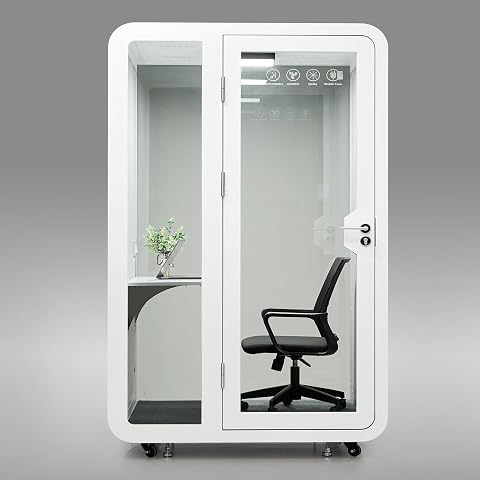
This mobile office pod provides a compact private workspace with an integrated desk and acoustic panels rated RW35 dB (±5 dB). It includes dual fans, a dimmable LED light, AC and USB/USB-C ports, and rolling casters with stabilizing feet.
Pros:
- Acoustic panels help reduce distracting noise
- Includes desk, lighting, ventilation, and power ports
- Casters and support feet allow mobility and stable placement
- Five-year parts warranty
Cons:
- Chair is not included
- Heavy at 827.8 pounds
- Requires at least two people for assembly
Best for: Creators with room for a mobile booth setup
Not ideal for: People who need a compact, desk-only accessory
Bottom line: Confirm dimensions, power needs, and sound specifications before planning around this booth.
Vocal Reflection Filter
A reflection filter is a piece of equipment to consider when arranging the microphone area. This pick is described as a microphone isolation shield with a tripod stand and pop filter. Check the listing to understand how the shield mounts, how much space it occupies, and whether the included stand is suitable for the microphone and recording position you have planned.
A common mistake is assuming a filter will solve every room sound issue or that the word “isolation” guarantees a particular result. The supplied product name does not give performance details, so review the listing for dimensions, materials, setup instructions, and any stated compatibility information. Confirm that the tripod can fit safely in your recording area and that the shield can be positioned without blocking access to the microphone. Since the name includes a pop filter, verify that it is included and check how it attaches. Consider how this setup fits with your desktop stand or other support; avoid buying overlapping gear without checking whether both pieces can work together. Mounting and fit are the practical starting points for judging this shield.
What to look for:
- Check shield dimensions and listed materials.
- Confirm tripod stability and required floor space.
- Verify compatibility with your microphone and intended support.
- Check that the pop filter is included and can be positioned.
- Review stated performance details without assuming a specific result.
Microphone Isolation Shield with Tripod Stand & Pop Filter

This professional microphone isolation shield features an acoustic sandwich structure with high-density foam to reduce reflections and interference, ensuring clear sound for studio recording, podcasts, and broadcasting. It includes a sturdy tripod stand, adjustable height, and a pop filter, suitable for both desktop and studio setups.
Pros:
- Effective sound reflection reduction for clear recordings
- Sturdy tripod base with adjustable height
- Compatible with most microphone stands and boom arms
- Foldable design for easy storage
Cons:
- May be bulky for small desk setups
- Assembly required
- Limited color options
Best for: Recordists who want a shield with a listed tripod stand
Not ideal for: Shoppers without room for a tripod setup
Bottom line: Check the shield’s dimensions, mounting details, and included pop filter before buying.
Build in a practical order: start with the microphone and confirm it works with your recording device, then choose support and monitoring gear that fits your desk and workflow. Add the pop filter or reflection filter after checking what each listing includes, and consider the booth only once you have measured the space and reviewed its specifications. Prioritize the items that solve the clearest setup constraint first.
You can make a useful vocal corner one compatible piece at a time. Check measurements and connections against your own room and equipment, and keep the setup comfortable enough to use consistently. With those details in hand, this checklist can help you make a confident, well-matched choice for your recording space.